Summary information and primary citation
- PDB-id
-
2pwt;
DSSR-derived features in text and
JSON formats
- Class
- RNA-antibiotic
- Method
- X-ray (1.8 Å)
- Summary
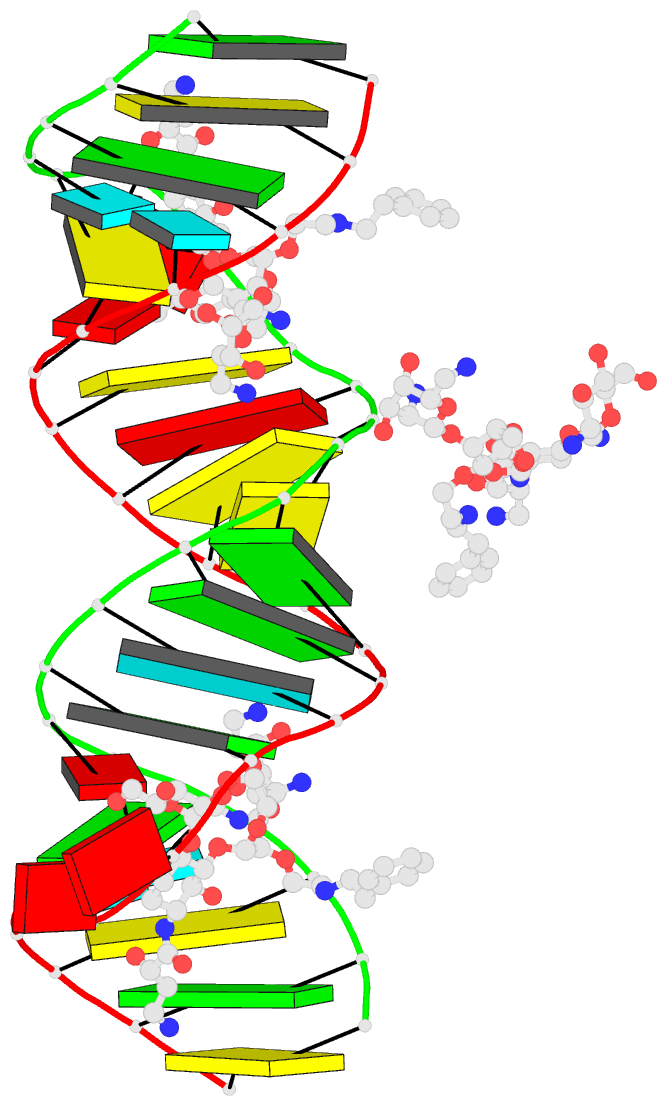
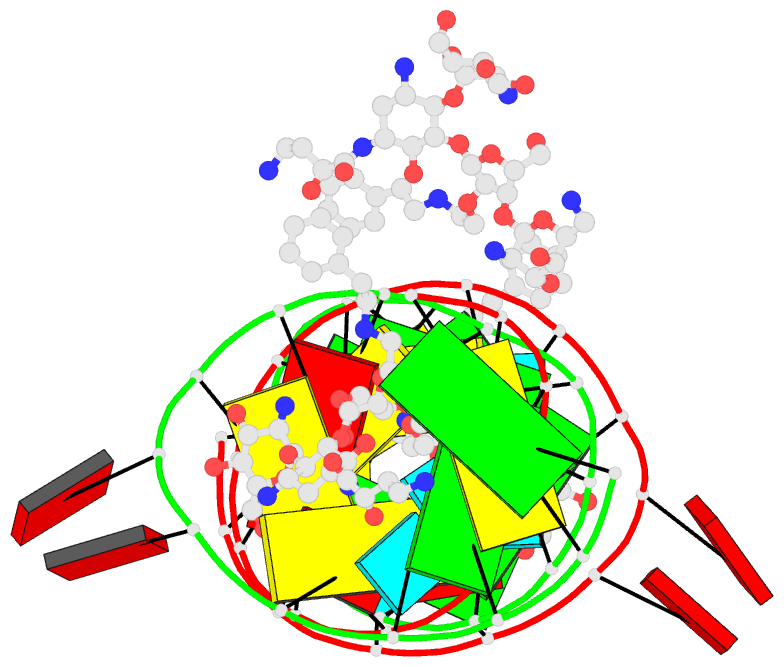
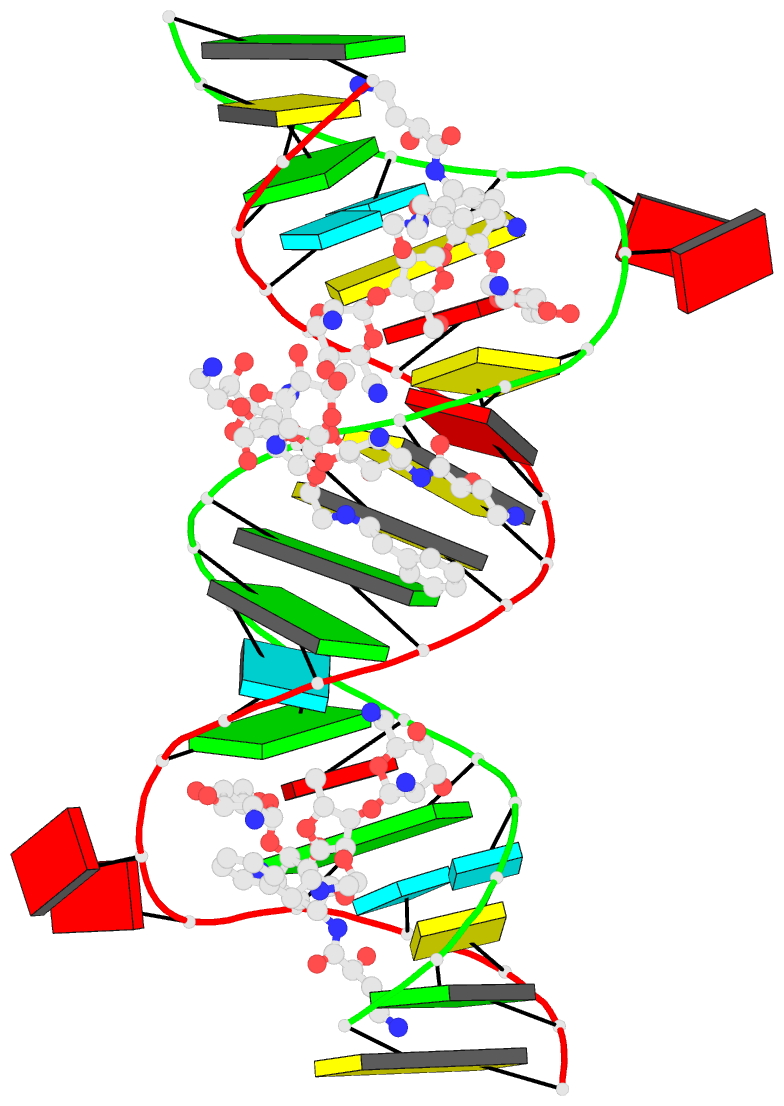
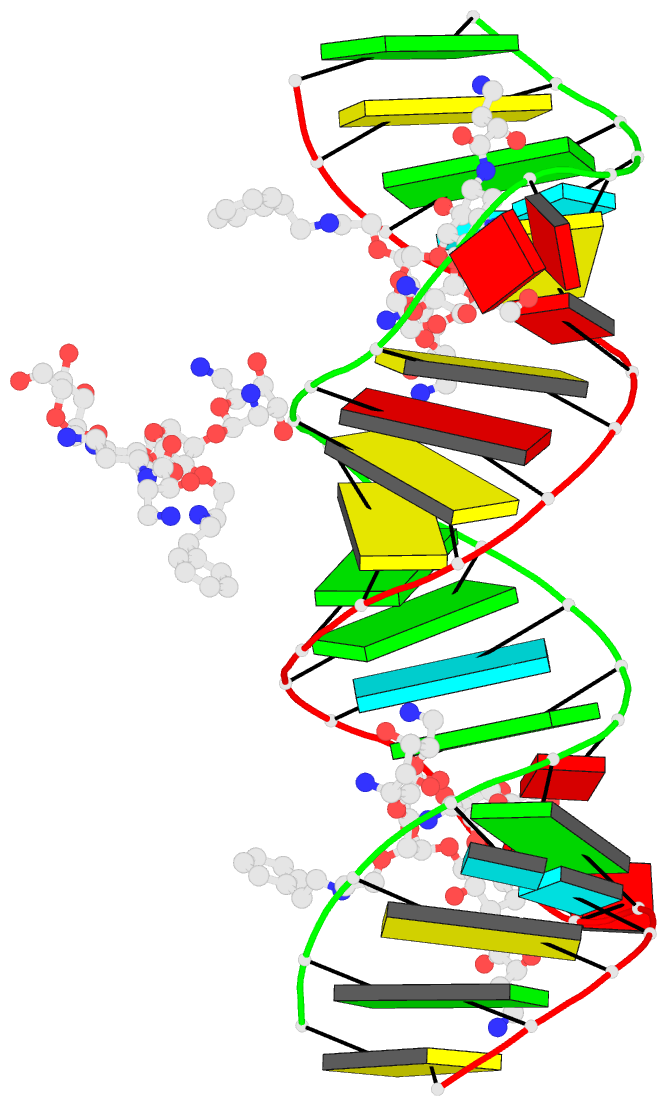
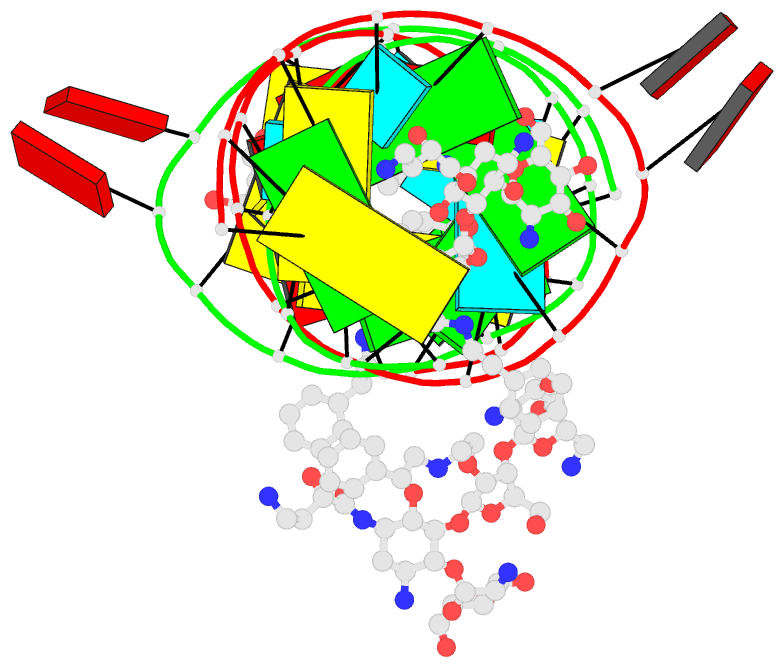
- Crystal structure of the bacterial ribosomal decoding
site complexed with aminoglycoside containing the l-haba
group
- Reference
-
Kondo J, Pachamuthu K, Francois B, Szychowski J,
Hanessian S, Westhof E (2007): "Crystal
Structure of the Bacterial Ribosomal Decoding Site
Complexed with a Synthetic Doubly Functionalized
Paromomycin Derivative: a New Specific Binding Mode to an
A-Minor Motif Enhances in vitro Antibacterial
Activity." Chemmedchem, 2,
1631-1638. doi: 10.1002/cmdc.200700113.
- Abstract
- The crystal structure of the complex between
oligonucleotide containing the bacterial ribosomal decoding
site (A site) and the synthetic paromomycin analogue 1,
which contains the gamma-amino-alpha-hydroxybutyryl
(L-haba) group at position N1 of ring II (2-DOS ring), and
an ether chain with an O-phenethylaminoethyl group at
position C2'' of ring III, is reported. Interestingly, next
to the paromomycin analogue 1 specifically bound to the A
site, a second molecule of 1 with a different conformation
is observed at the crystal packing interface which mimics
the A-minor interaction between two bulged-out adenines
from the A site and the codon-anticodon stem of the
mRNA-tRNA complex. Improved antibacterial activity supports
the conclusion that analogue 1 might affect protein
synthesis on the ribosome in two different ways: 1)
specific binding to the A site forces maintenance of the
"on" state with two bulged out adenines, and 2) a new
binding mode of 1 to an A-minor motif which stabilizes
complex formation between the ribosome and the mRNA-tRNA
complex regardless of whether the codon-anticodon stem is
of the cognate or near-cognate type.