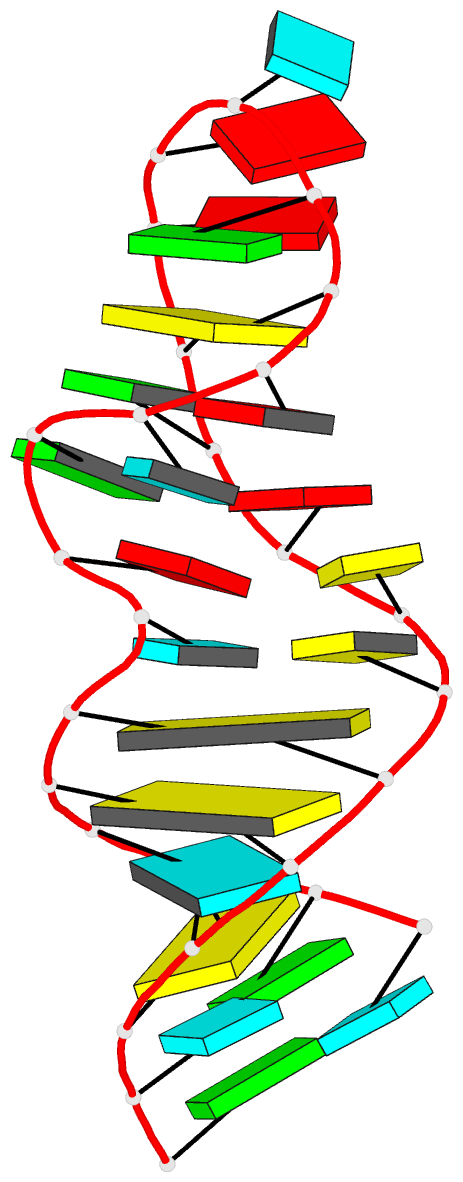
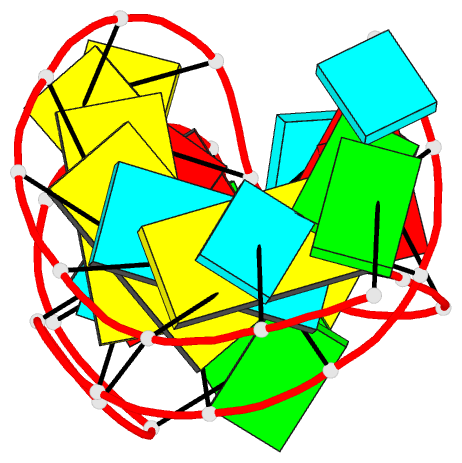
Summary information and primary citation
- PDB-id
-
1msy;
DSSR-derived features in text and
JSON formats
- Class
- RNA
- Method
- X-ray (1.41 Å)
- Summary
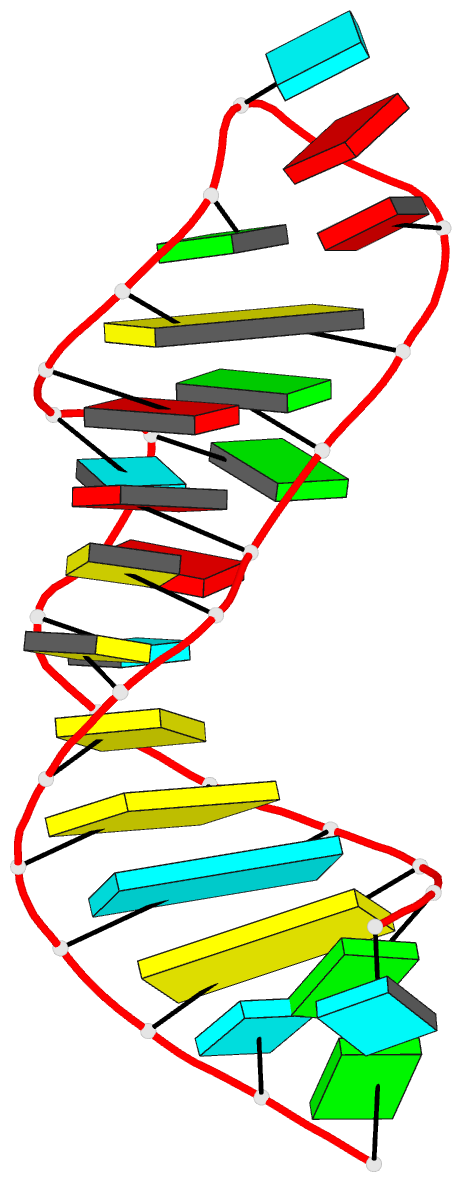
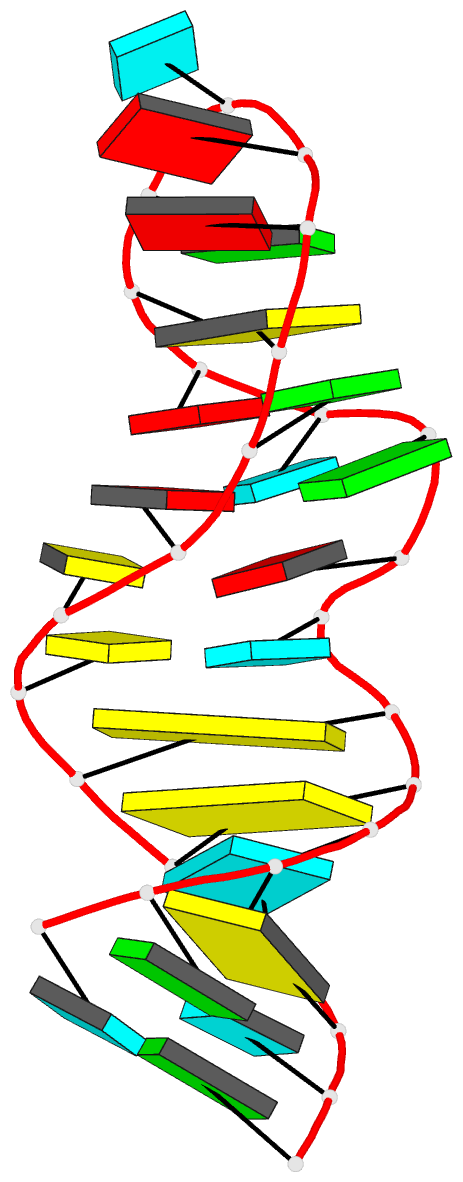
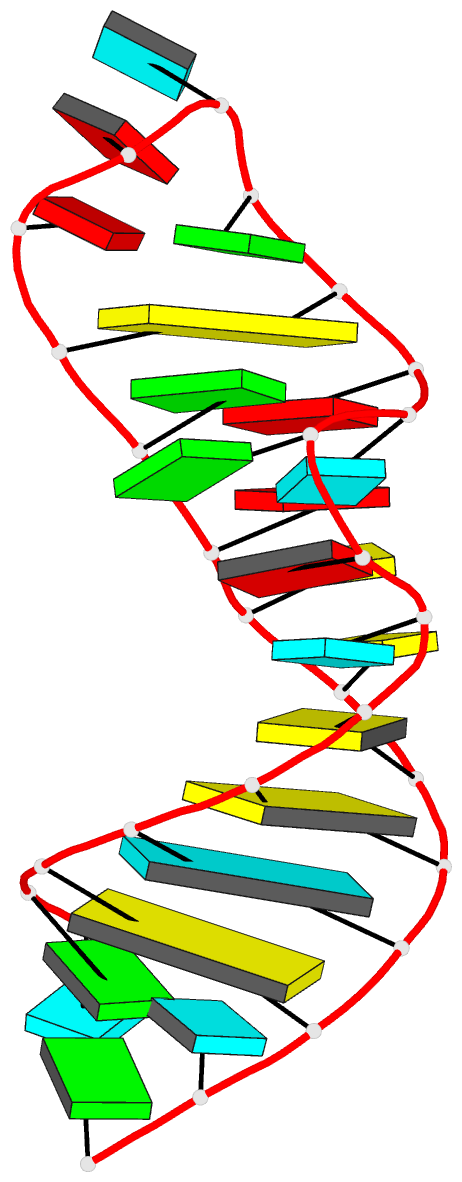
- Guaa tetraloop mutant of sarcin-ricin domain from e.
coli 23 s rrna
- Reference
-
Correll CC, Swinger K (2003): "Common and
distinctive features of GNRA tetraloops based on a GUAA
tetraloop structure at 1.4 A resolution."
RNA, 9, 355-363. doi: 10.1261/rna.2147803.
- Abstract
- GNRA tetraloops (N is A, C, G, or U; R is A or G) are
basic building blocks of RNA structure that often interact
with proteins or other RNA structural elements.
Understanding sequence-dependent structural variation among
different GNRA tetraloops is an important step toward
elucidating the molecular basis of specific GNRA tetraloop
recognition by proteins and RNAs. Details of the geometry
and hydration of this motif have been based on
high-resolution crystallographic structures of the GRRA
subset of tetraloops; less is known about the GYRA subset
(Y is C or U). We report here the structure of a GUAA
tetraloop determined to 1.4 A resolution to better define
these details and any distinctive features of GYRA
tetraloops. The tetraloop is part of a 27-nt structure that
mimics the universal sarcin/ricin loop from Escherichia
coli 23S ribosomal RNA in which a GUAA tetraloop replaces
the conserved GAGA tetraloop. The adenosines of the GUAA
tetraloop form an intermolecular contact that is a
commonplace RNA tertiary interaction called an A-minor
motif. This is the first structure to reveal in great
detail the geometry and hydration of a GUAA tetraloop and
an A-minor motif. Comparison of tetraloop structures shows
a common backbone geometry for each of the eight possible
tetraloop sequences and suggests a common hydration. After
backbone atom superposition, equivalent bases from
different tetraloops unexpectedly depart from coplanarity
by as much as 48 degrees. This variation displaces the
functional groups of tetraloops implicated in protein and
RNA binding, providing a recognition feature.