Summary information and primary citation
- PDB-id
-
9v89;
DSSR-derived features in text and
JSON formats
- Class
- DNA
- Method
- X-ray (1.27 Å)
- Summary
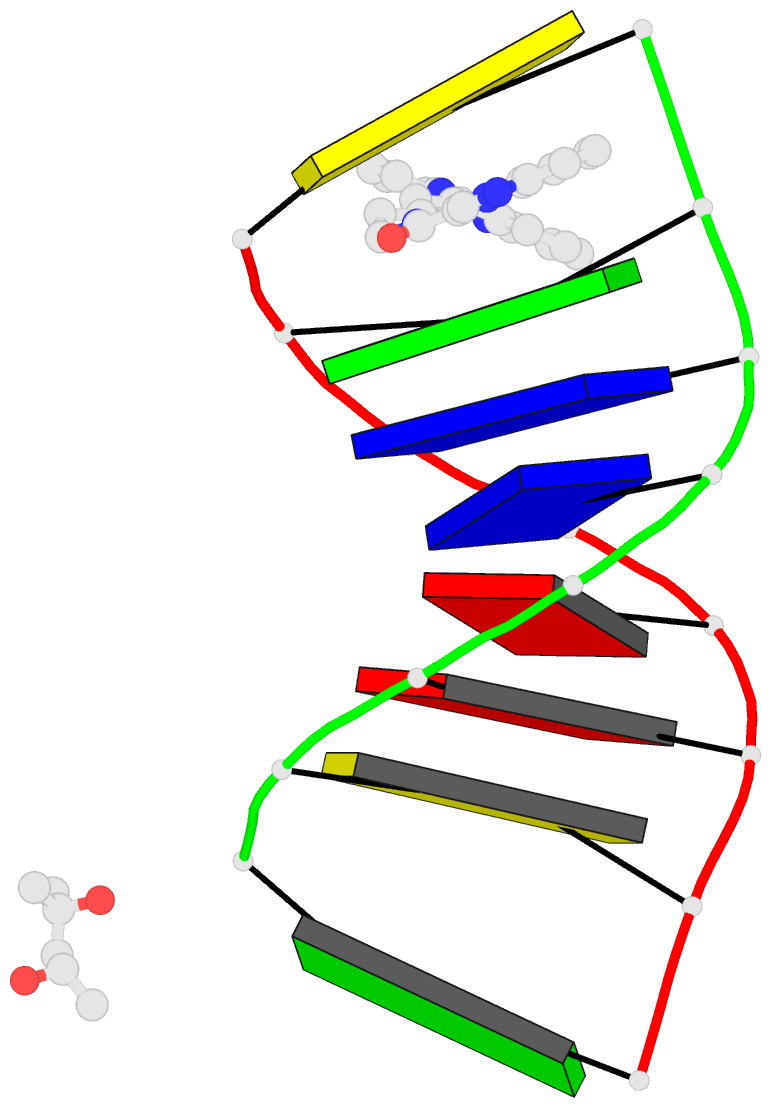
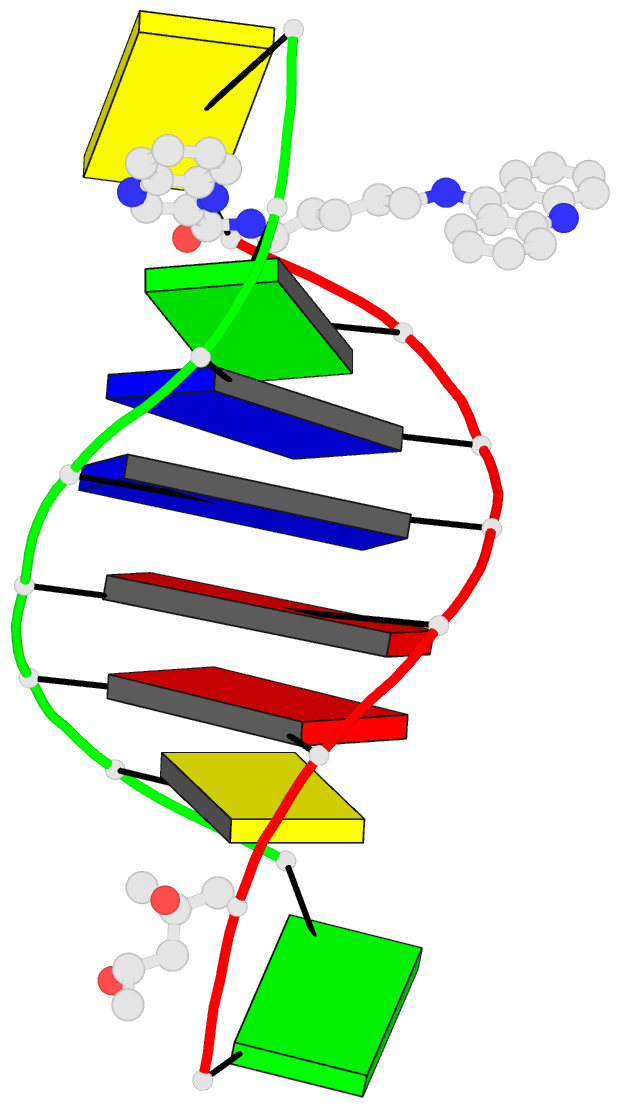
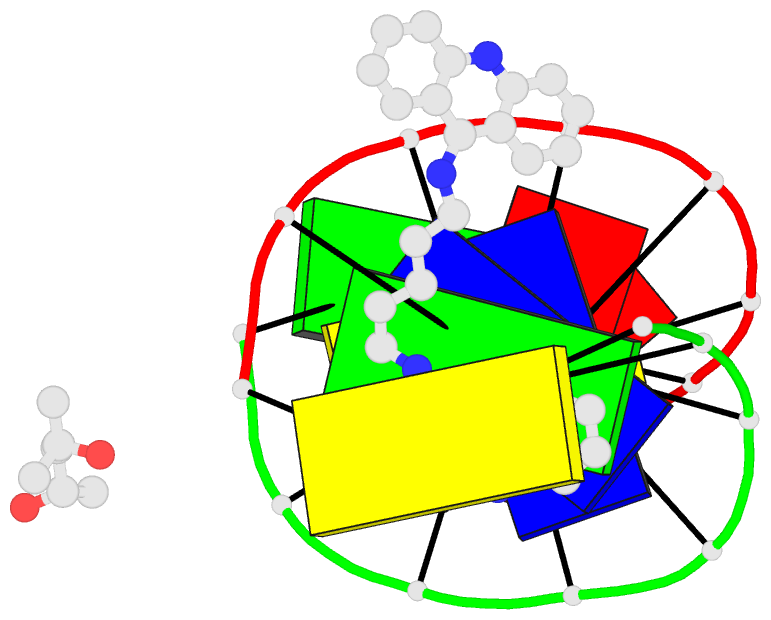
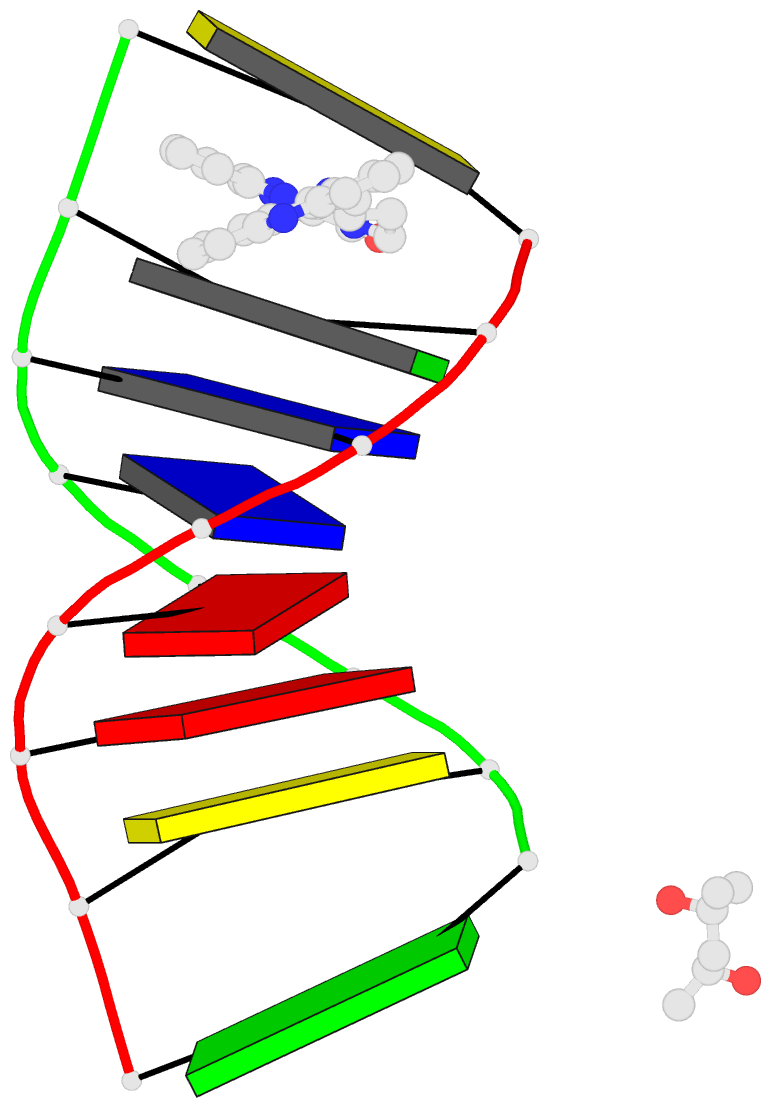
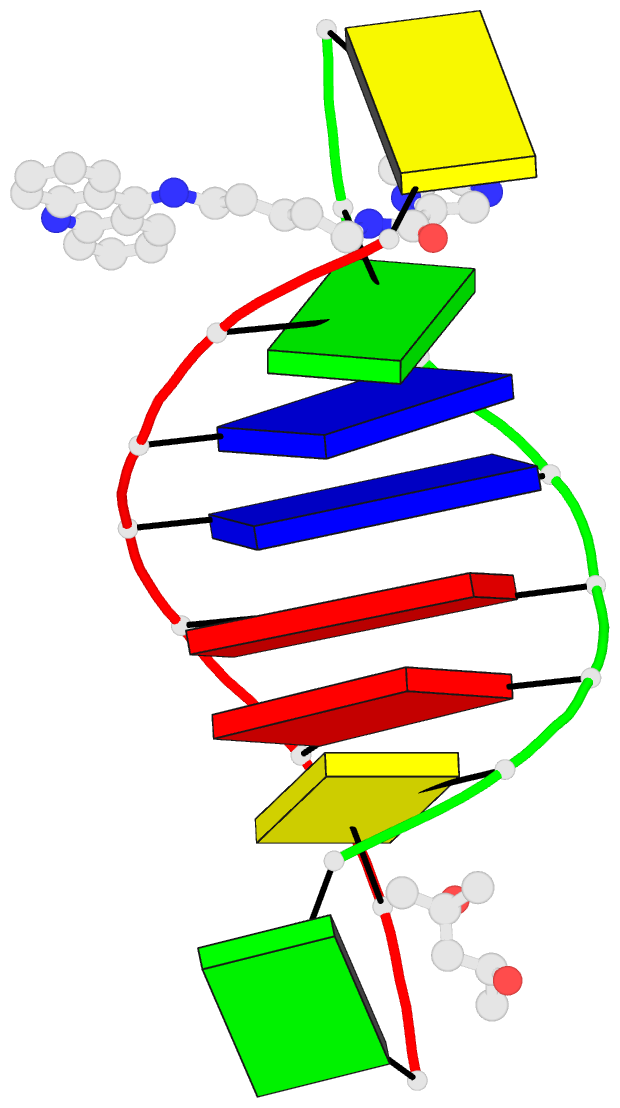
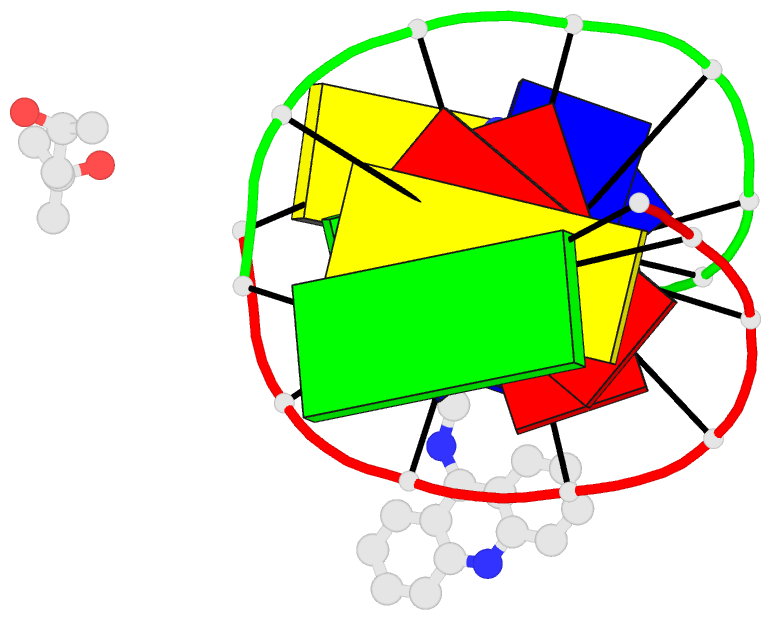
- Crystal structure of d(cgttaacg)2 with a five-carbon
linker containing quinoxaline-acridine asymmetric
intercalator compound
- Reference
-
Wang SC, Hsieh CC, Yuan TC, Lin SM, Chen CW, Chang CC,
Huang SC, Wang EC, Huang YJ, Chiang MH, Horng YC, Hou MH
(2026): "Structural
basis for asymmetric bis-intercalator targeting of DNA
triplex junctions enabling dual inhibition of
topoisomerase I and oncogene transcription."
Nucleic Acids Res., 54. doi:
10.1093/nar/gkag520.
- Abstract
- Achieving multi-pathway suppression with minimal
toxicity remains a major goal in anticancer drug design.
Here, we present the structural and mechanistic basis for
asymmetric bis-intercalators QA4 and QA5, which integrate
weak (quinoxaline) and strong (acridine) chromophores
through optimized alkyl linkers to achieve preference
recognition of non-canonical DNA triplex junctions.
High-resolution crystal structures reveal a
spermine-stabilized triplex junction comprising
minor-groove-mediated C:G-G triplets and sheared G-G
interactions, distinct from classical Hoogsteen triplexes.
QA compounds engage this topology via CpG step
bis-intercalation, disrupting junction integrity and
inducing localized DNA deformation. QA4, with a four-carbon
linker, provides optimal spacing for dual chromophore
engagement, producing pronounced helical distortion.
Structure-function analyses indicate that acridine-mediated
DNA distortion preferentially suppresses topoisomerase I,
whereas quinoxaline-induced groove deformation is
correlated with transcriptional repression of multiple
oncogenes, including CEACAM6. In colorectal and lung cancer
xenograft models, QA4 demonstrates potent antitumor
activity with negligible hepatotoxicity. These findings
define the structural principles underlying topology-driven
DNA recognition and establish DNA triplex junctions as
druggable targets for dual-function anticancer
therapeutics.