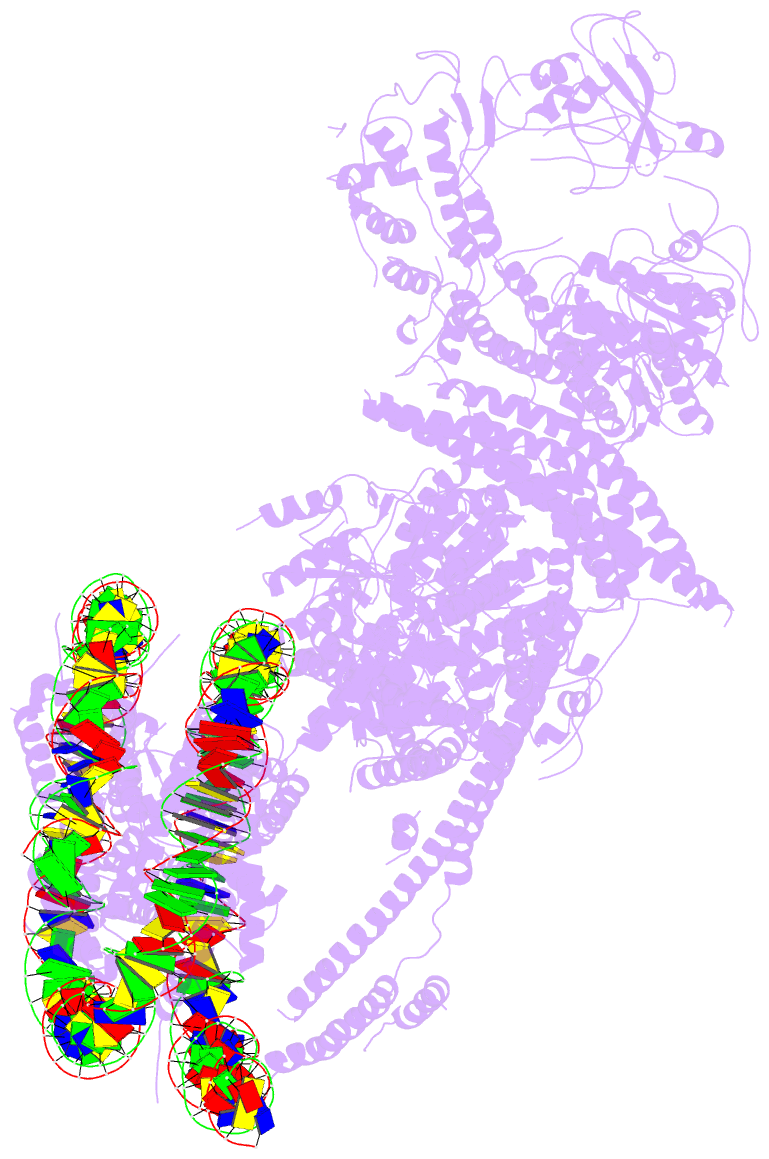
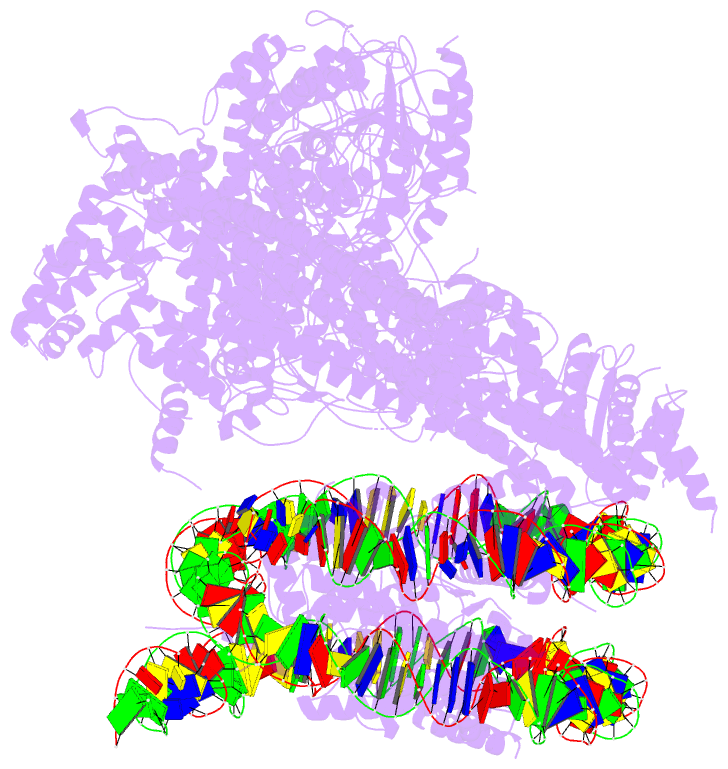
Summary information and primary citation
- PDB-id
-
9v2v;
DSSR-derived features in text and
JSON formats
- Class
- gene regulation-DNA
- Method
- cryo-EM (3.0 Å)
- Summary
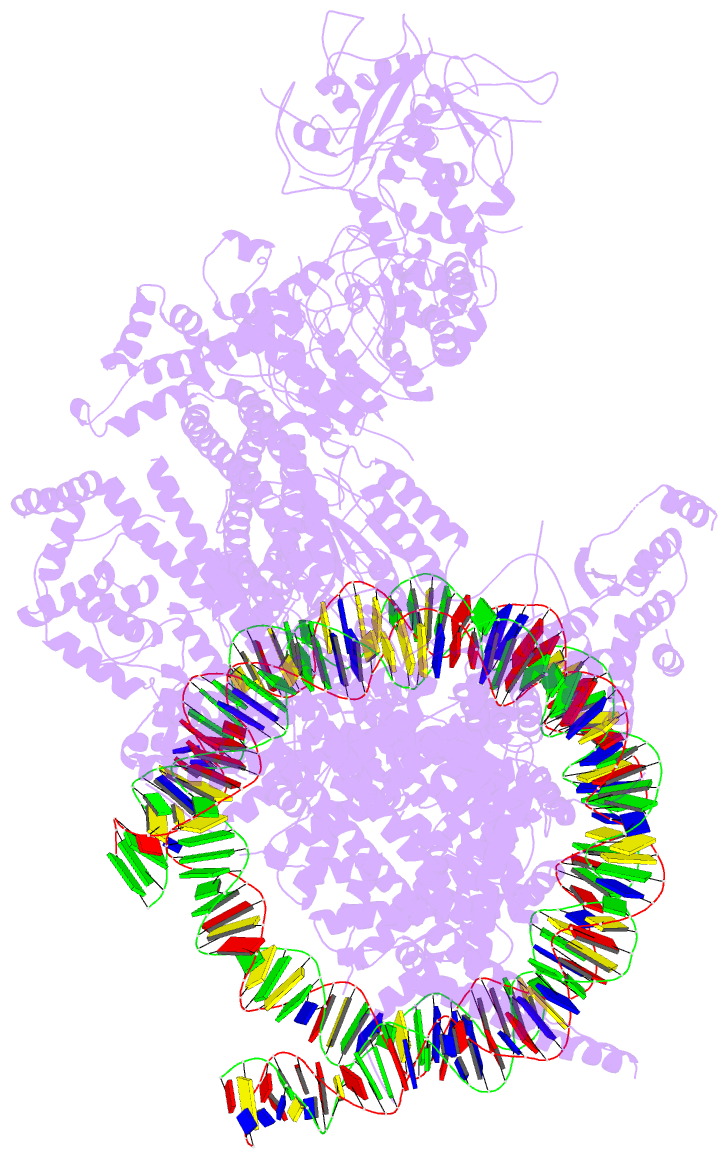
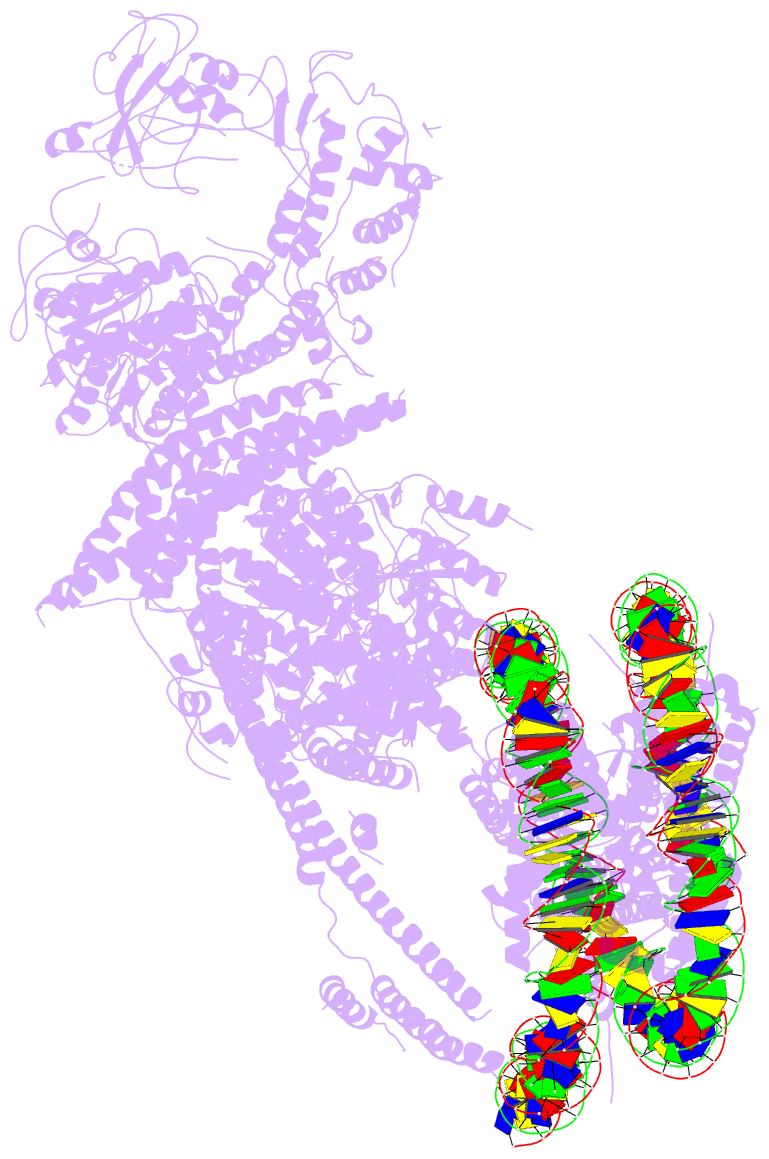
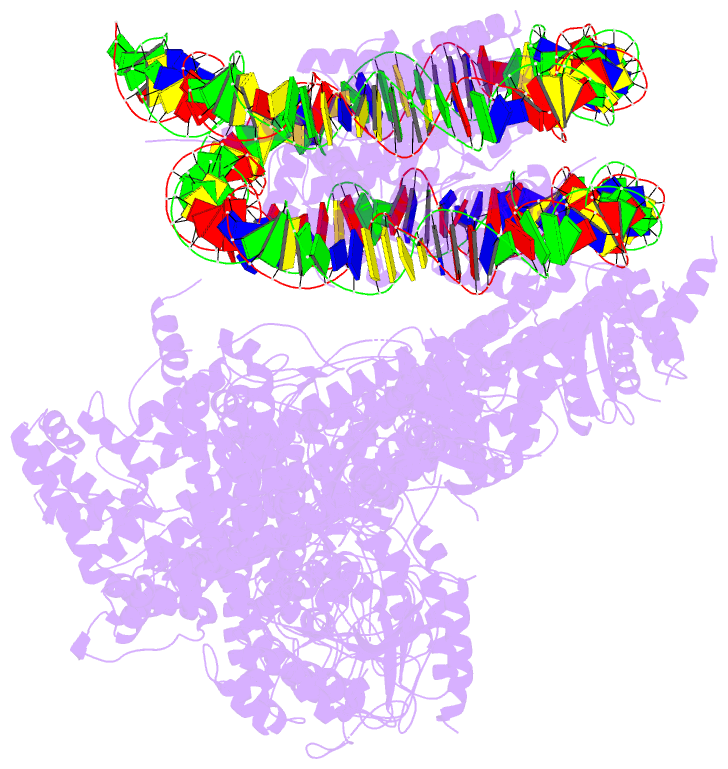
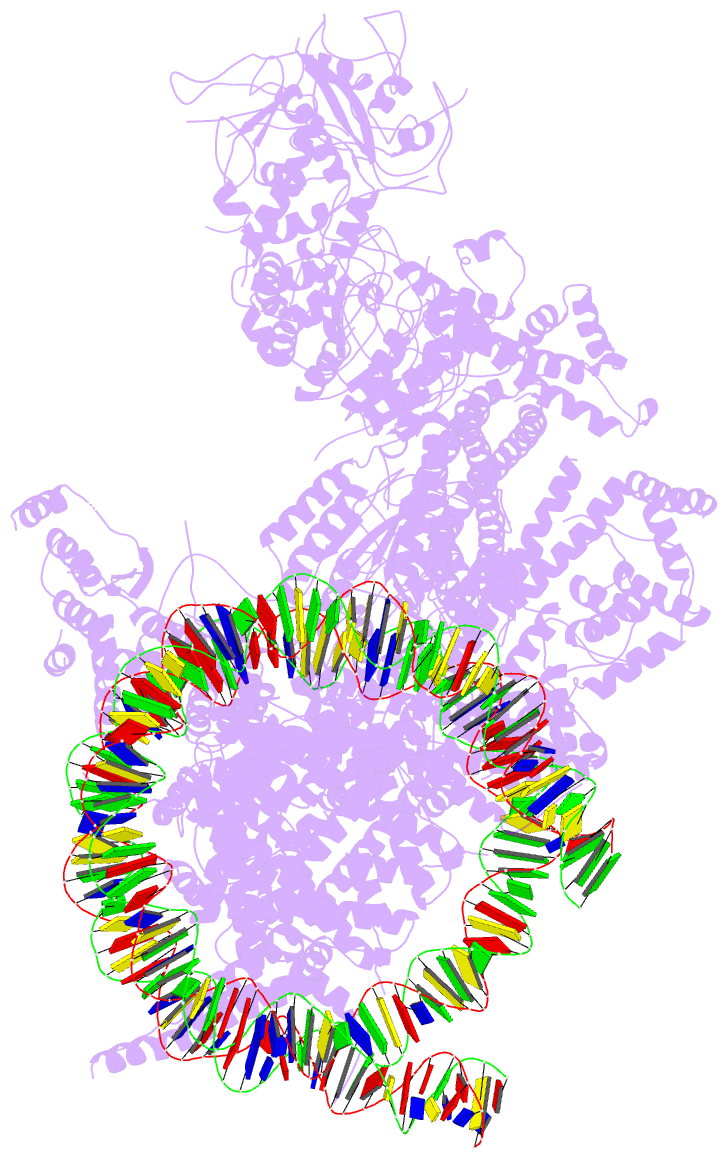
- cryo-EM structure of the histone deacetylase complex
rpd3l in complex with mono-nucleosome
- Reference
-
Zhao H, Li H, Wang C, Yang X, Zou B, Dong S, Zhang N,
Zhou Y, Yi L, Zhang Y, Xie Y, Qin D, Chao WCH, Pei D, He
J (2026): "Chromatin
context-dependent deacetylation by the asymmetric
Rpd3L." Nucleic Acids Res.,
54. doi: 10.1093/nar/gkag443.
- Abstract
- The regulation of gene expression requires precise
control of chromatin-associated complexes that respond to
diverse structural and epigenetic cues. The Rpd3 Large
(Rpd3L) complex is a Sin3 histone deacetylase complex
(HDAC) that dynamically adapt to chromatin states to
reinforce transcriptional silencing, yet the mechanisms
governing the catalytic activation in chromatin
context-dependent manner remain unclear. Here we present
the cryo-electron microscopy structure of Rpd3L bound to
both mono- and di-nucleosome substrate at near-atomic
resolution, uncovering a substrate-guided allosteric
activation mechanism. Rpd3L adopts an asymmetric
architecture, in which the proximal catalytic module
anchors the first nucleosome, while the Sin3 PAH domains
engage linker DNA to reposition a second nucleosome. This
spatial configuration brings the distal catalytic module
into proximity with chromatin and unlocks its latent
deacetylase activity. Biochemical and mass spectrometry
analyses confirm that dual nucleosome engagement
selectively enhances Rpd3L activity and broadens substrate
specificity. Together, these findings establish a
hierarchical mechanism by which Rpd3L interprets histone
modifications and nucleosome organization to modulate its
enzymatic output at promoter regions. Our study provides a
framework for understanding higher-order chromatin
repression mechanisms by chromatin-regulation complexes and
co-repressors.