Summary information and primary citation
- PDB-id
-
9uw0;
DSSR-derived features in text and
JSON formats
- Class
- RNA
- Method
- X-ray (1.97 Å)
- Summary
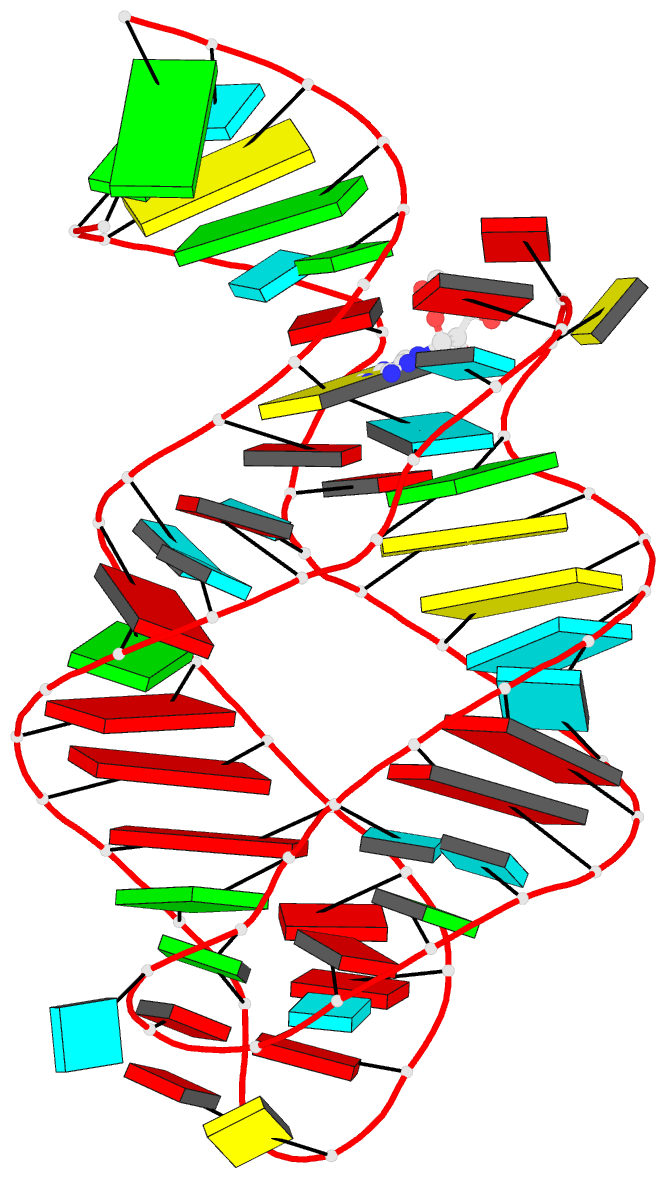
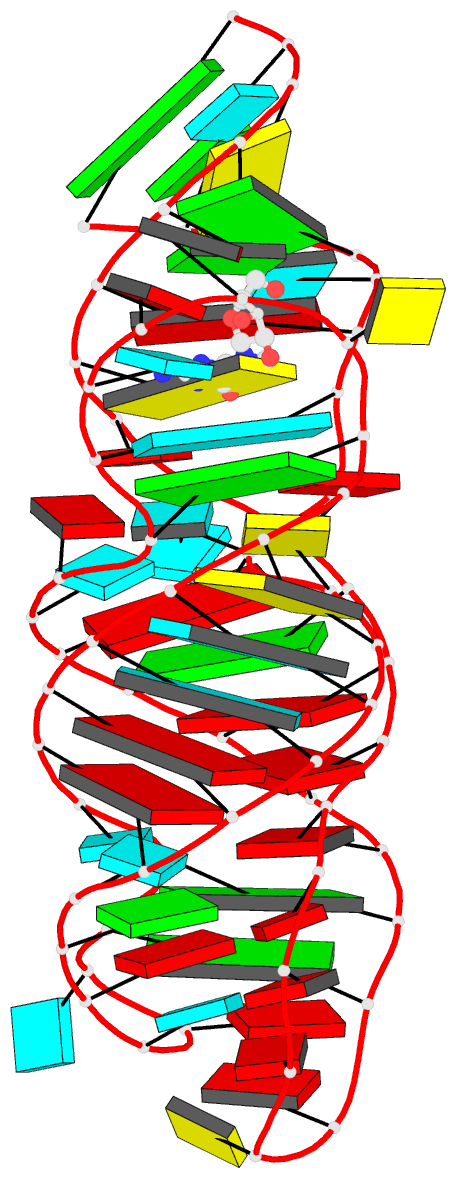
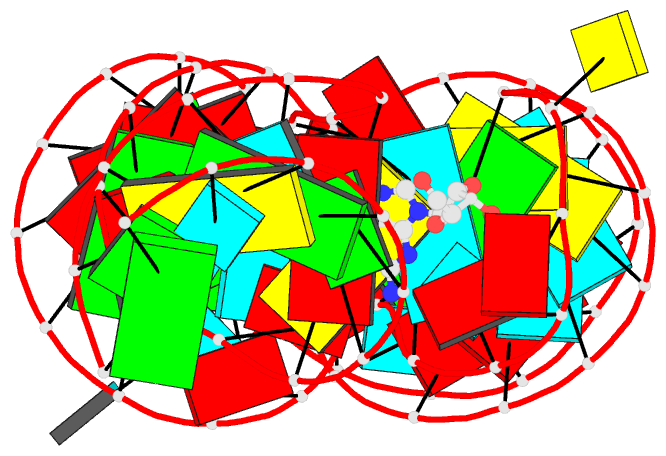
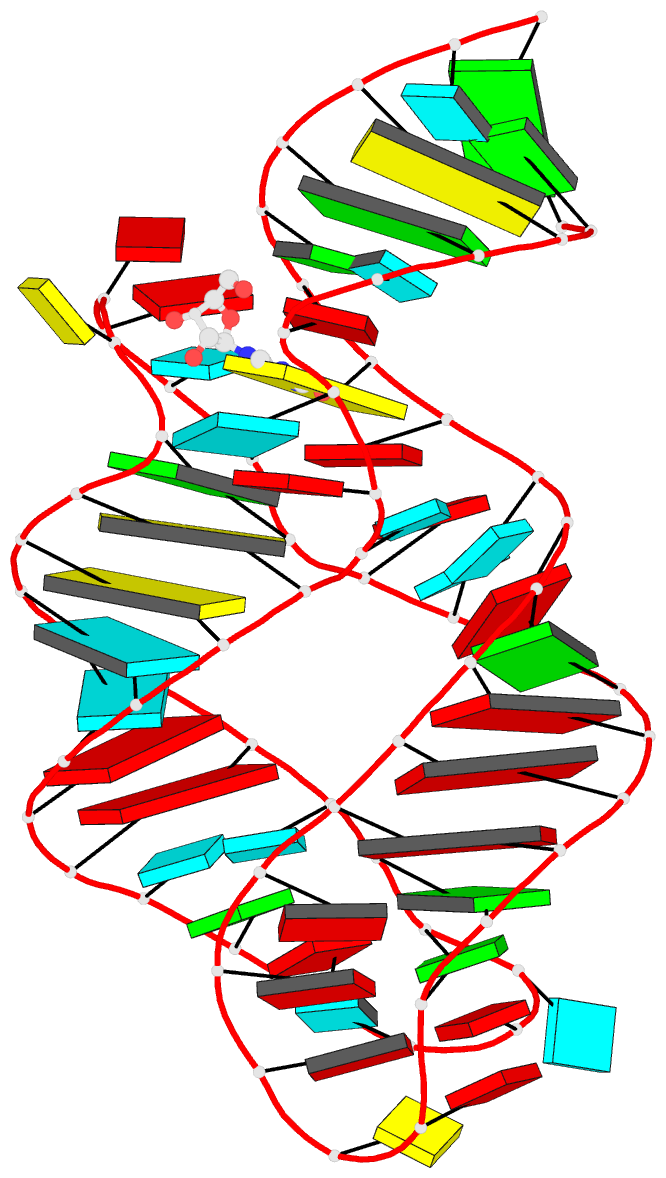
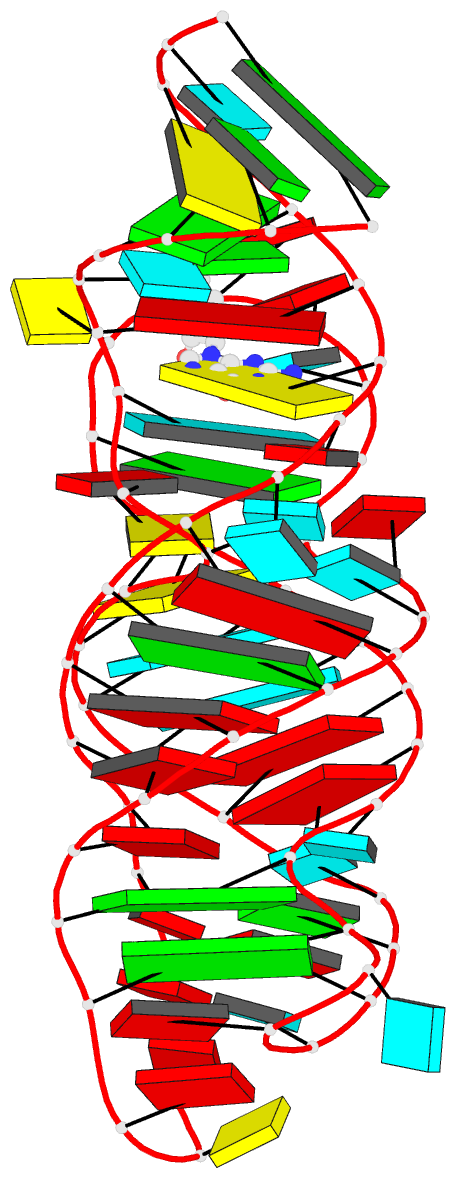
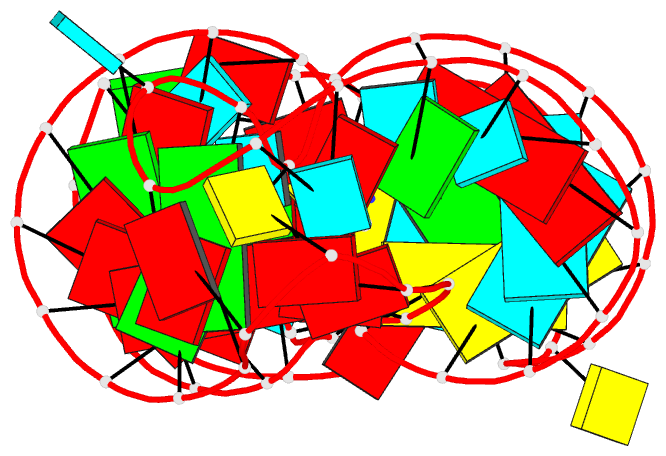
- Crystal structure of 2'-dg-iii riboswitch with
guanosine, manganese saok
- Reference
-
Shen X, Li H, Xu X, Song Q, Tai X, He M, Ren A (2025):
"Structure-based
insights into the ligand specificity tuning of 2'-dG-III
riboswitch." Nucleic Acids Res.,
53. doi: 10.1093/nar/gkaf773.
- Abstract
- Riboswitches are conserved non-coding RNA domains
predominantly located at the 5'-end of the bacterial mRNAs,
serving as gene expression regulators. Recently, a
third class of 2'-deoxyguanosine riboswitch (2'-dG-III) has
been identified from guanine riboswitch family, exhibiting
comparable binding affinity toward 2'-dG, guanine, and
guanosine. To elucidate the unique ligand recognition
mechanism of this riboswitch, we solved its crystal
structures in complex with different purine derivatives,
including 2'-dG, guanine, and guanosine. The tertiary
structure reveals a typical tuning-fork-like architecture,
with three stems converging at a central three-way
junction. The bound ligand, 2'-dG, is anchored within the
junctional core through specific molecular interactions
involving certain critical nucleotides. Through systemic
comparative analysis of the binding pocket across different
ligand-bound states, as well as related guanine family
riboswitches, including 2'-dG-I, 2'-dG-II, and Guanine-I
riboswitches, we identified subtle yet significant
structural variations that modulate binding affinity and
specificity. Leveraging these findings, we further
engineered RNA biosensors by fusing the 2'-dG-III
riboswitch with Pepper fluorogenic RNA aptamer, which
exhibits a robust, positive correlation between
fluorescence intensity and 2'-dG levels in vitro. Together,
this work not only advances our understanding of the ligand
recognition mechanisms underlying the 2'-dG-III riboswitch
and related guanine riboswitch family but also lays the
groundwork for fine-tuning riboswitch specificity, paving
the way for the development of highly specific RNA-based
biosensors.