Summary information and primary citation
- PDB-id
-
9uk6;
DSSR-derived features in text and
JSON formats
- Class
- DNA
- Method
- X-ray (1.94 Å)
- Summary
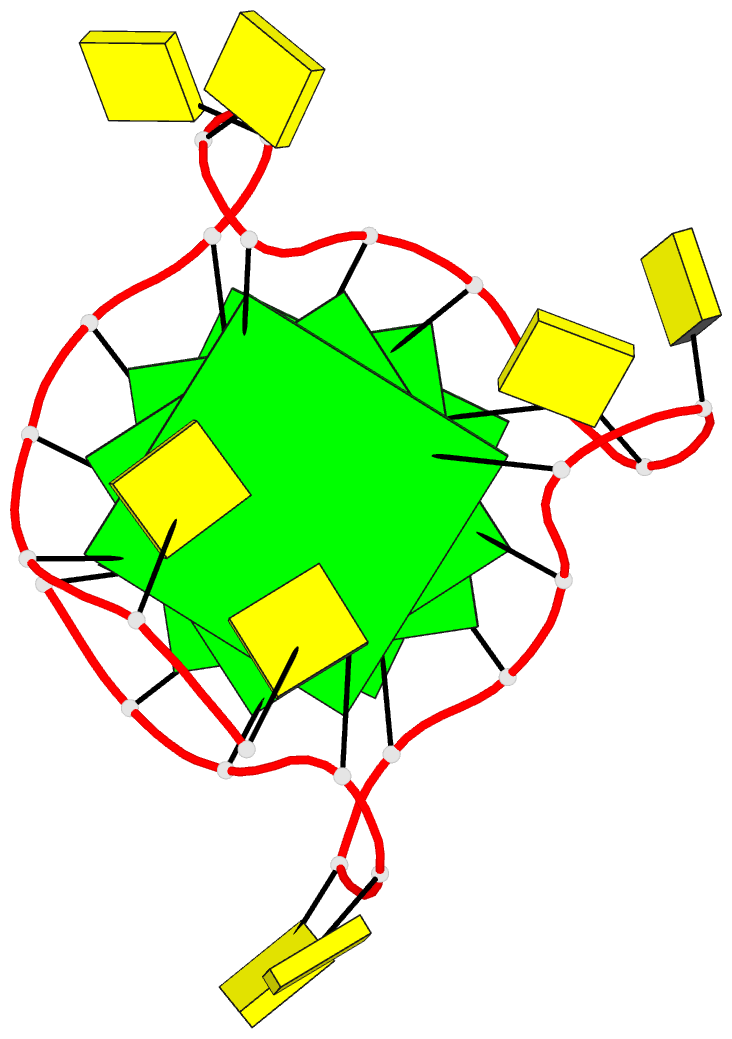
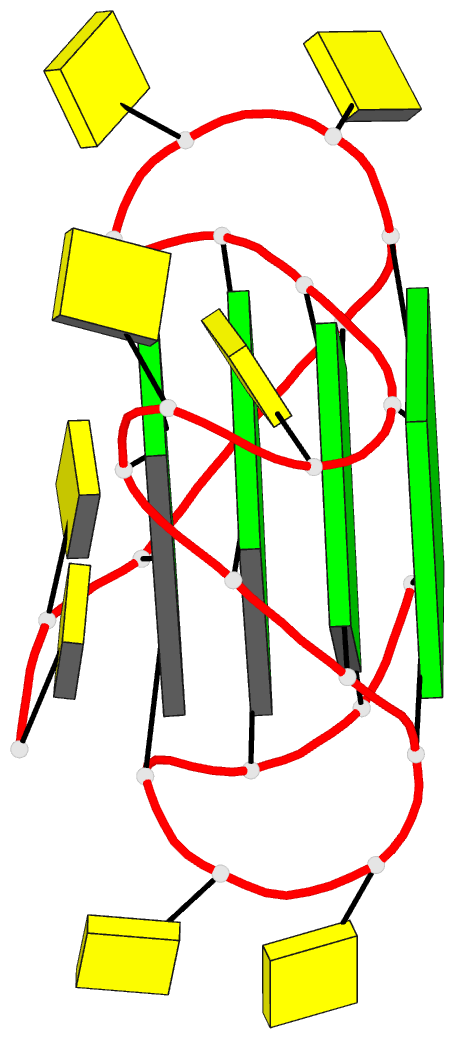
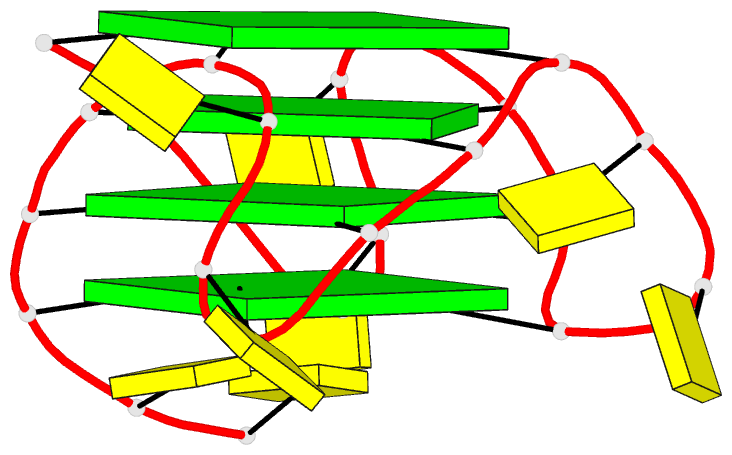
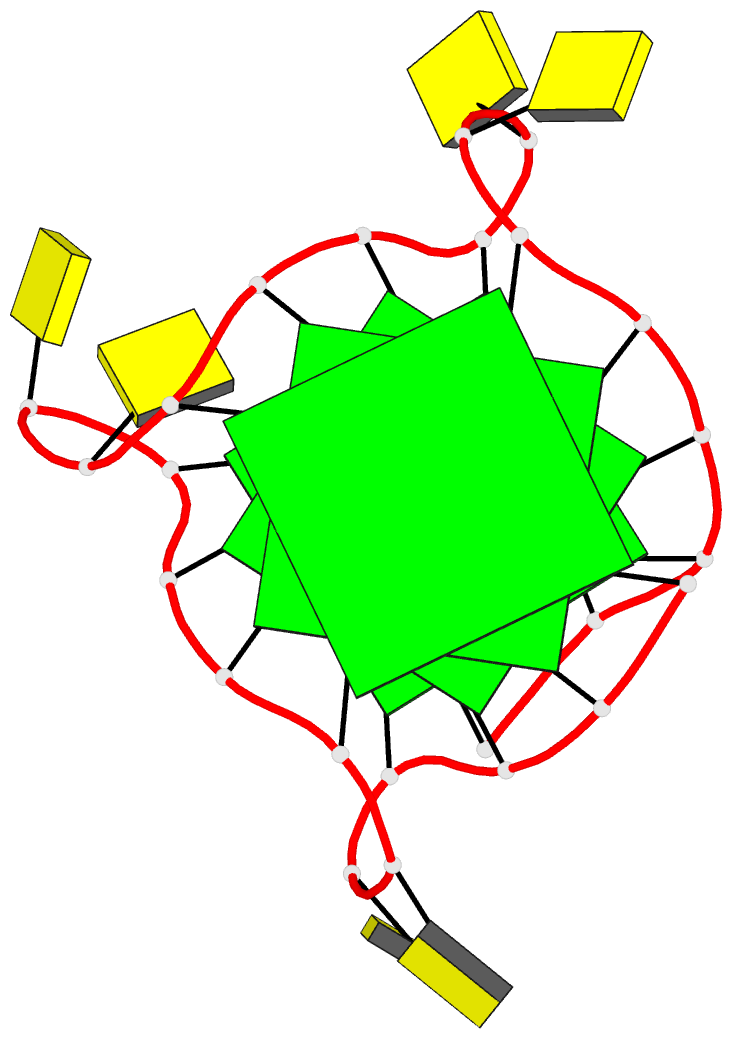
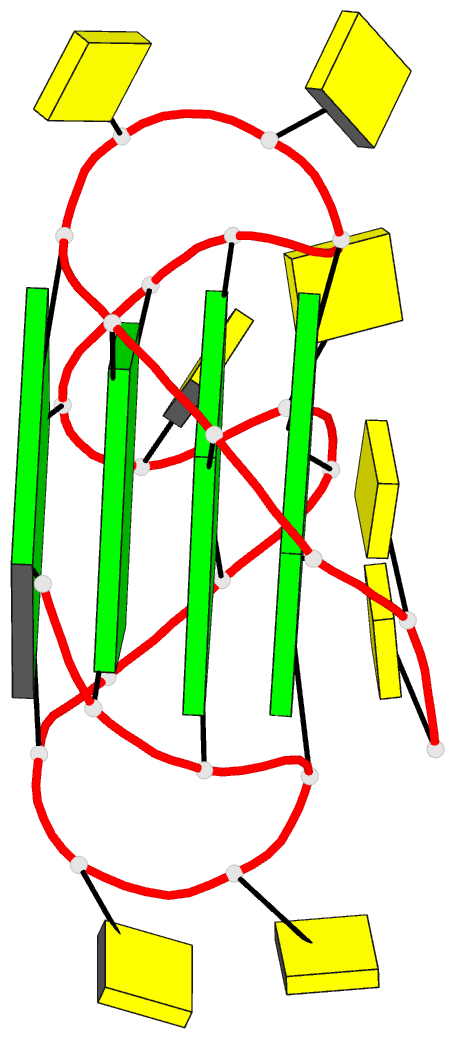
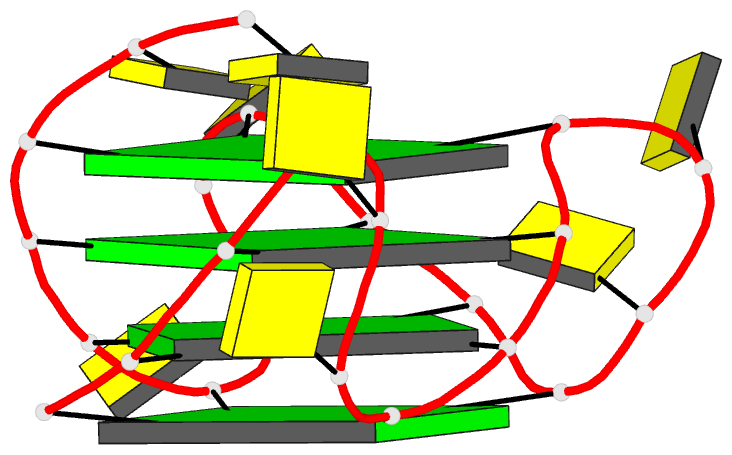
- Dimeric parallel g-quadruplex formed by d(g4c2)4
- Reference
-
Geng Y, Liu C, Miao H, Suen MC, Xie Y, Zhang B, Han W, Wu
C, Ren H, Chen X, Tai HC, Wang Z, Zhu G, Cai Q (2025):
"Crystal
structures of distinct parallel and antiparallel DNA
G-quadruplexes reveal structural polymorphism in C9orf72
G4C2 repeats." Nucleic Acids Res.,
53. doi: 10.1093/nar/gkaf879.
- Abstract
- The abnormal expansion of GGGGCC (G4C2) repeats in the
noncoding region of the C9orf72 gene is a major genetic
cause of two devastating neurodegenerative disorders,
amyotrophic lateral sclerosis (ALS) and frontotemporal
dementia (FTD). These G4C2 repeats are known to form
G-quadruplex (G4) structures, which are hypothesized to
contribute to disease pathogenesis. Here, we demonstrated
that four DNA G4C2 repeats can fold into two structurally
distinct G4 conformations: a parallel and an antiparallel
topology. The high-resolution crystal structure of the
parallel G4 reveals an eight-layered dimeric assembly,
formed by two identical monomeric units. Each unit contains
four stacked G-tetrads connected by three propeller CC
loops and is stabilized through 5'-to-5' π-π interactions
and coordination with a central K+ ion. Notably, the
3'-ending cytosines form a C·C+·C·C+ quadruple base pair
stacking onto the adjacent G-tetrad layer. In contrast, the
antiparallel G4 adopts a four-layered monomeric structure
with three edgewise loops, where the C6 and C18 bases
engage in stacking interaction with neighboring G-tetrad
via a K+ ion. These structurally distinct G-quadruplexes
provide mechanistic insights into C9orf72-associated
neurodegeneration and offer potential targets for the
development of structure-based therapeutic strategies for
ALS and FTD.