Summary information and primary citation
- PDB-id
-
9ui9;
DSSR-derived features in text and
JSON formats
- Class
- DNA binding protein-DNA
- Method
- cryo-EM (3.42 Å)
- Summary
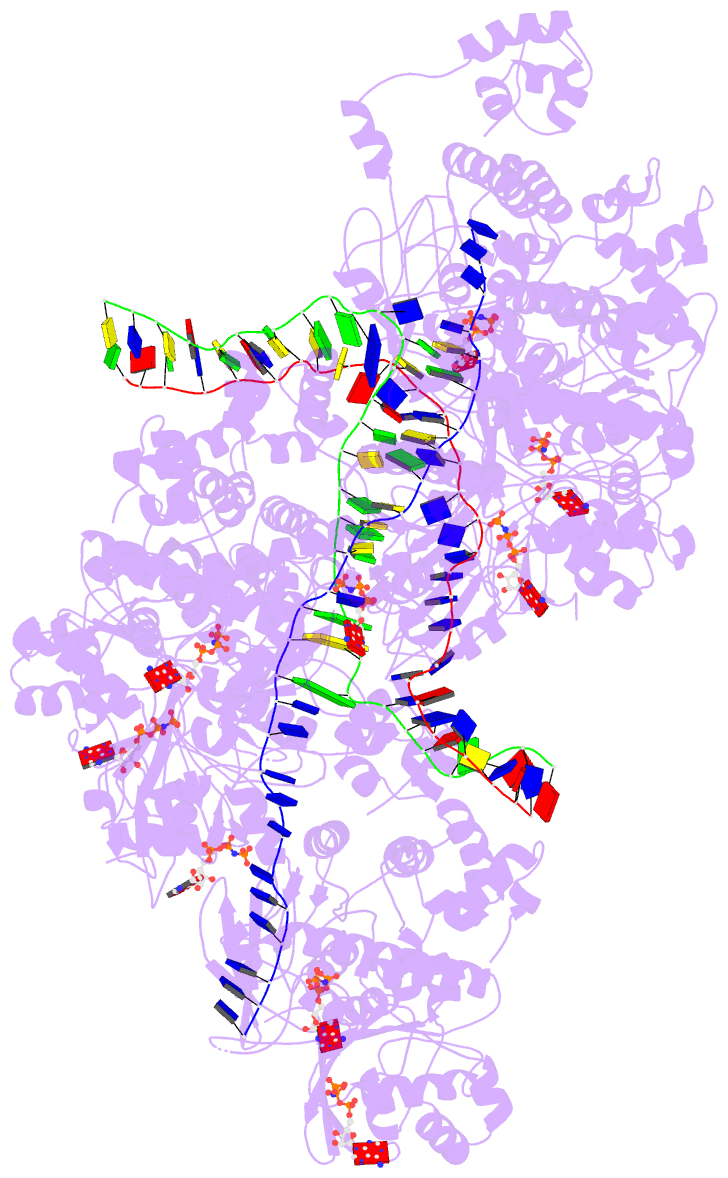
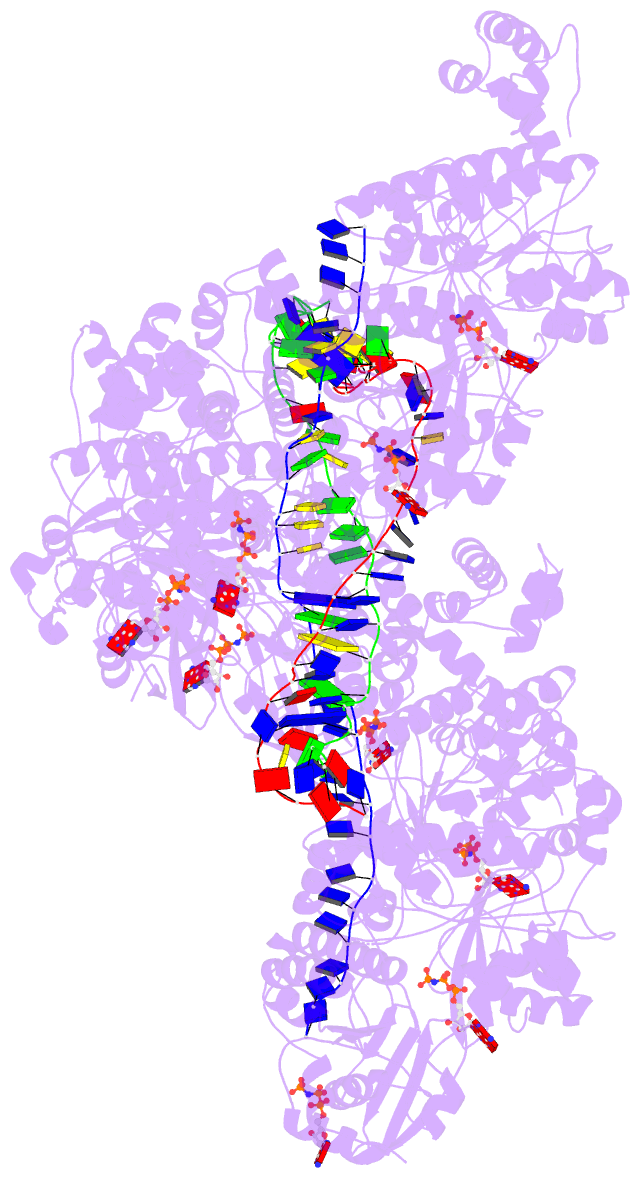
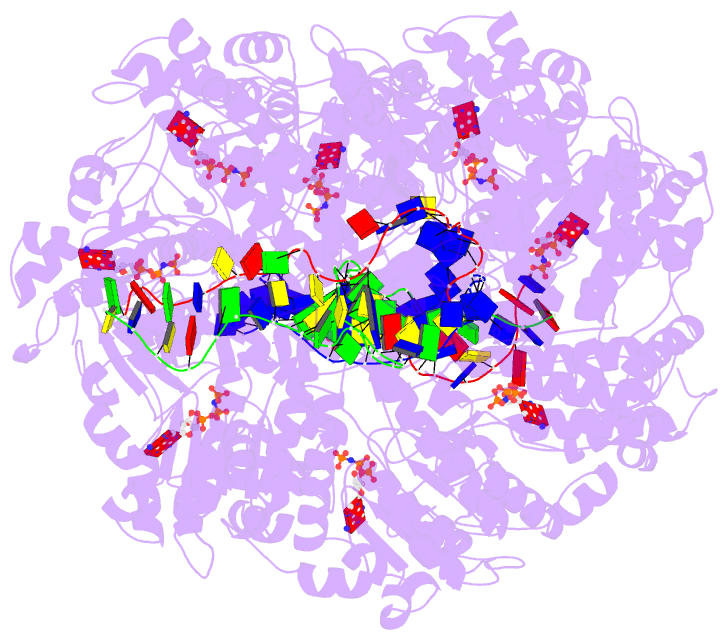
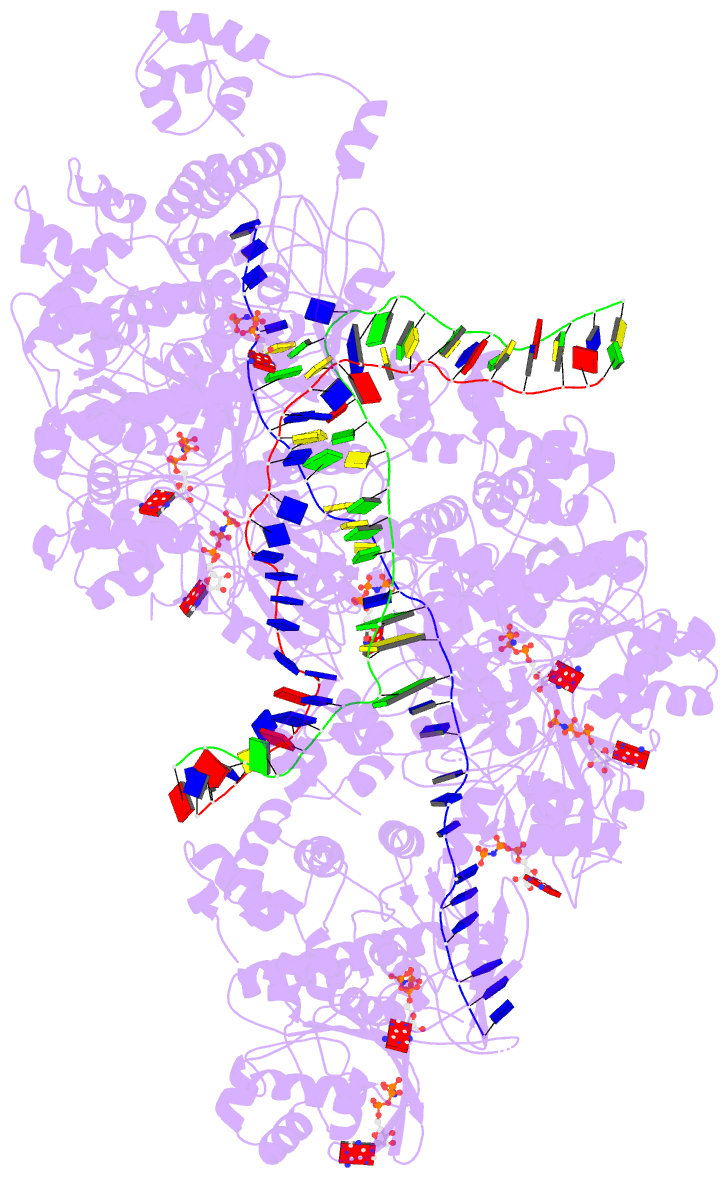
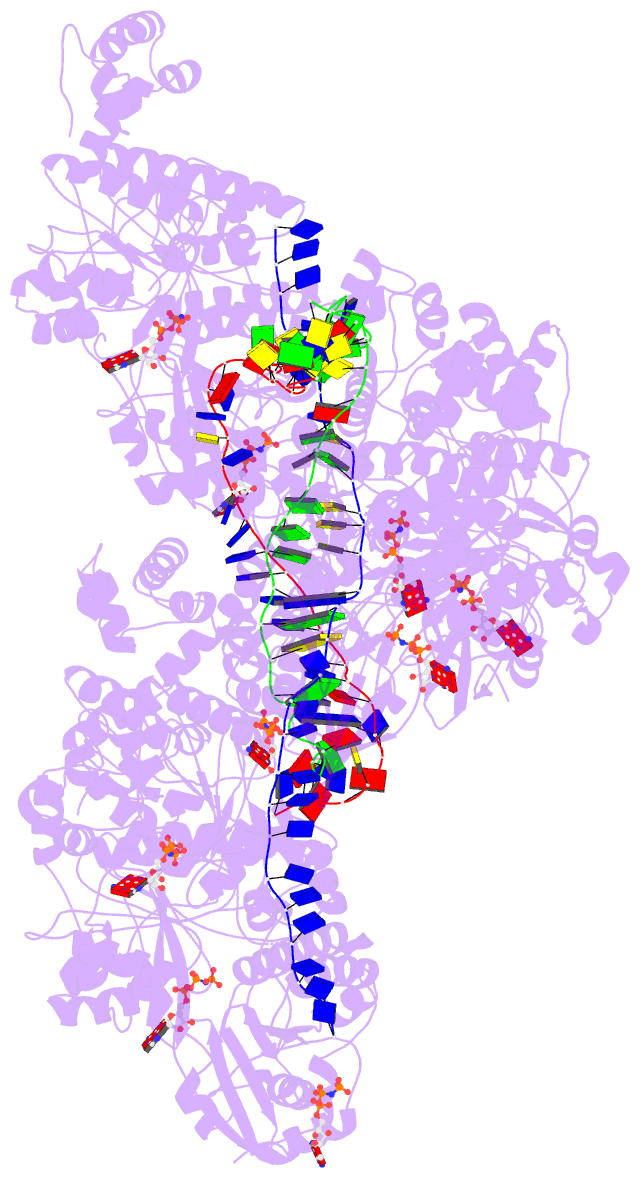
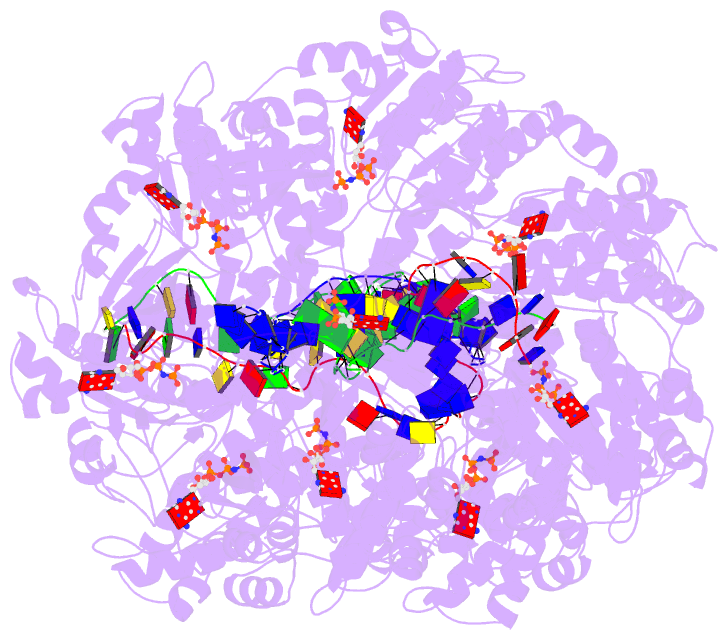
- Structure of a 12 base pair rad51 d-loop complex
- Reference
-
Luo SC, Yang CH, Yeh HY, Lin CW, Yeh MC, Chi P, Ho MC
(2025): "RAD51
D-loop structures reveal the mechanism of eukaryotic
RAD51-mediated strand exchange." Nat Commun,
17, 243. doi: 10.1038/s41467-025-66925-z.
- Abstract
- Strand exchange is a key step in homologous
recombination, enabling template-based repair of DNA
double-strand breaks. Eukaryotic RAD51 forms an
ATP-dependent helical presynaptic filament on
single-stranded DNA (ssDNA), which then searches for
homologous double-stranded DNA (dsDNA), and catalyzes the
strand exchange to form a D-loop in an ATP
hydrolysis-independent manner. The molecular mechanism by
which RAD51 facilitates dsDNA unwinding and pairing remains
unclear. Here, we present cryo-EM structures of RAD51
mini-filaments bound to homologous dsDNA, capturing five
intermediates from dsDNA recruitment to D-loop formation.
These structures, together with molecular dynamics
simulations, suggest a stepwise mechanism: the conserved
N-terminal domain (NTD) recruits and bends the dsDNA,
weakening base pairing near the exchange site. Subsequent
engagement with positively-charged regions, including the
loop L2 and loop Arg303-Arg306, further bends the
homologous dsDNA, thereby not only positioning it closer to
the strand exchange site but also inducing local base-pair
opening. Additionally, the loop L2 (Met278 and Phe279)
inserts between strands, and the secondary DNA binding
sites (S2 sites) capture the displaced strand to prevent
strand reannealing. Together, our findings provide detailed
insight into a spatially coordinated mechanism of strand
exchange by RAD51.