Summary information and primary citation
- PDB-id
-
9oyf;
DSSR-derived features in text and
JSON formats
- Class
- replication-DNA
- Method
- cryo-EM (3.12 Å)
- Summary
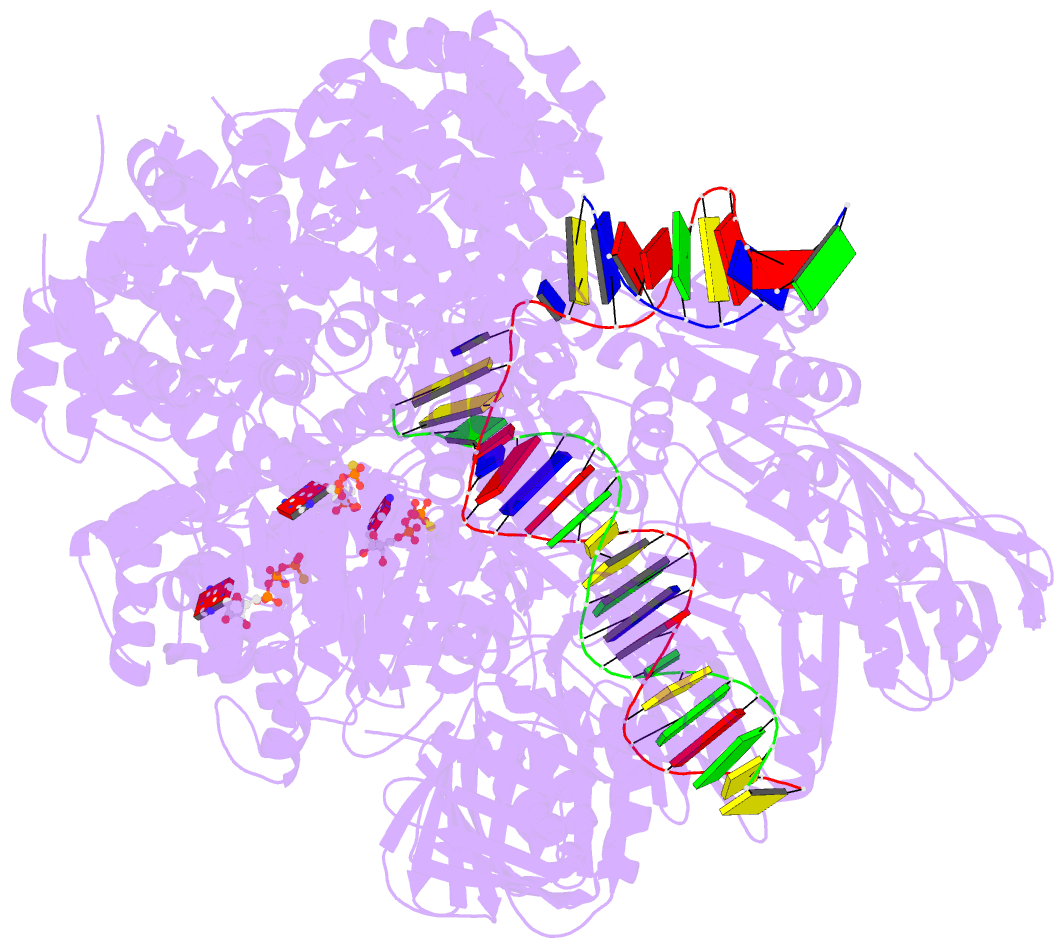
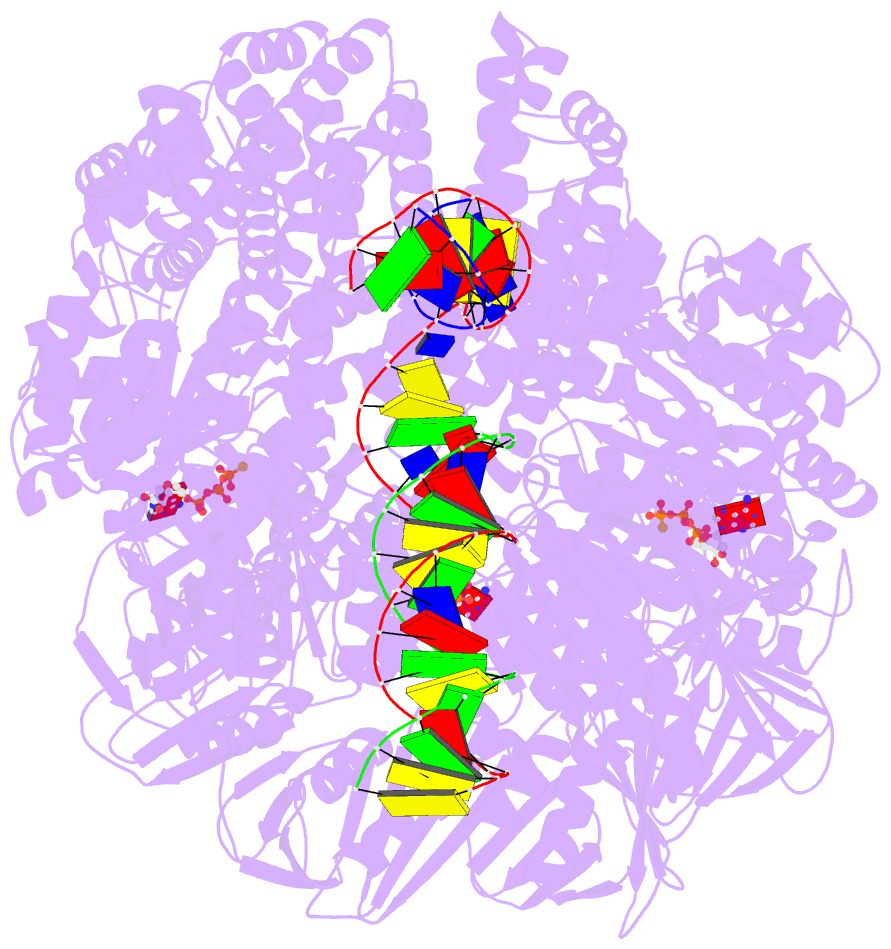
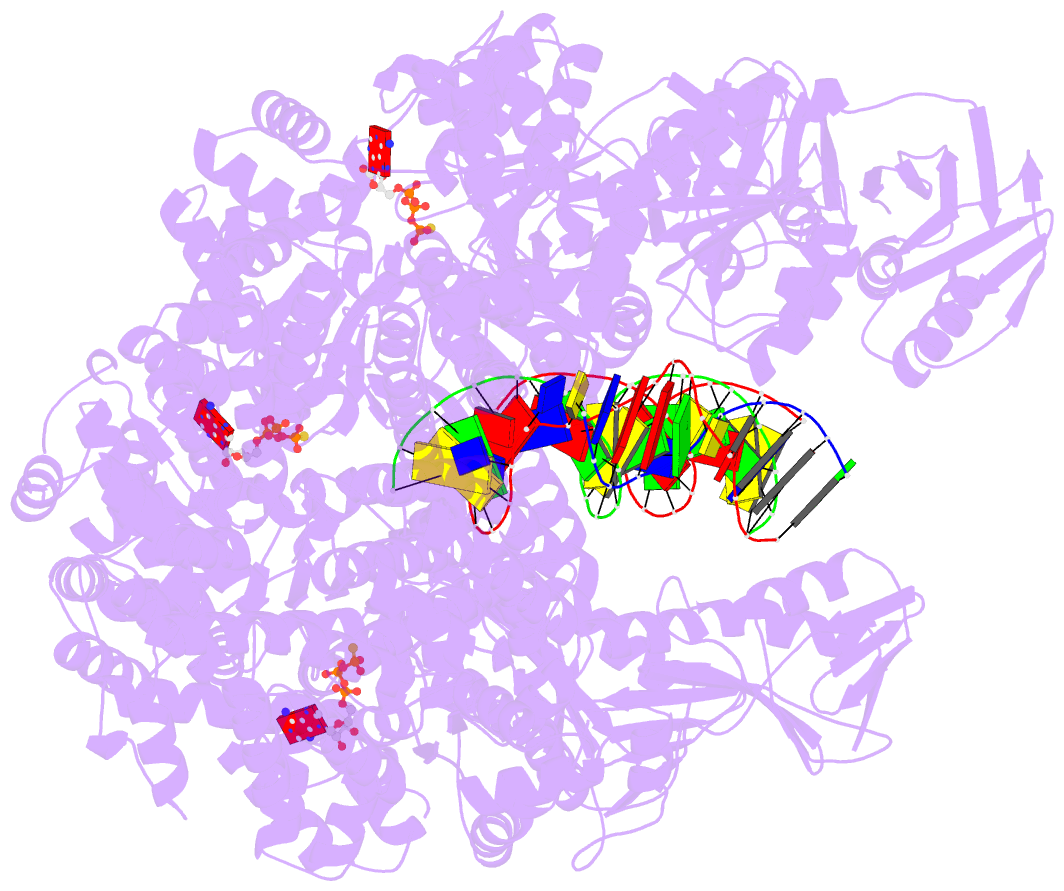
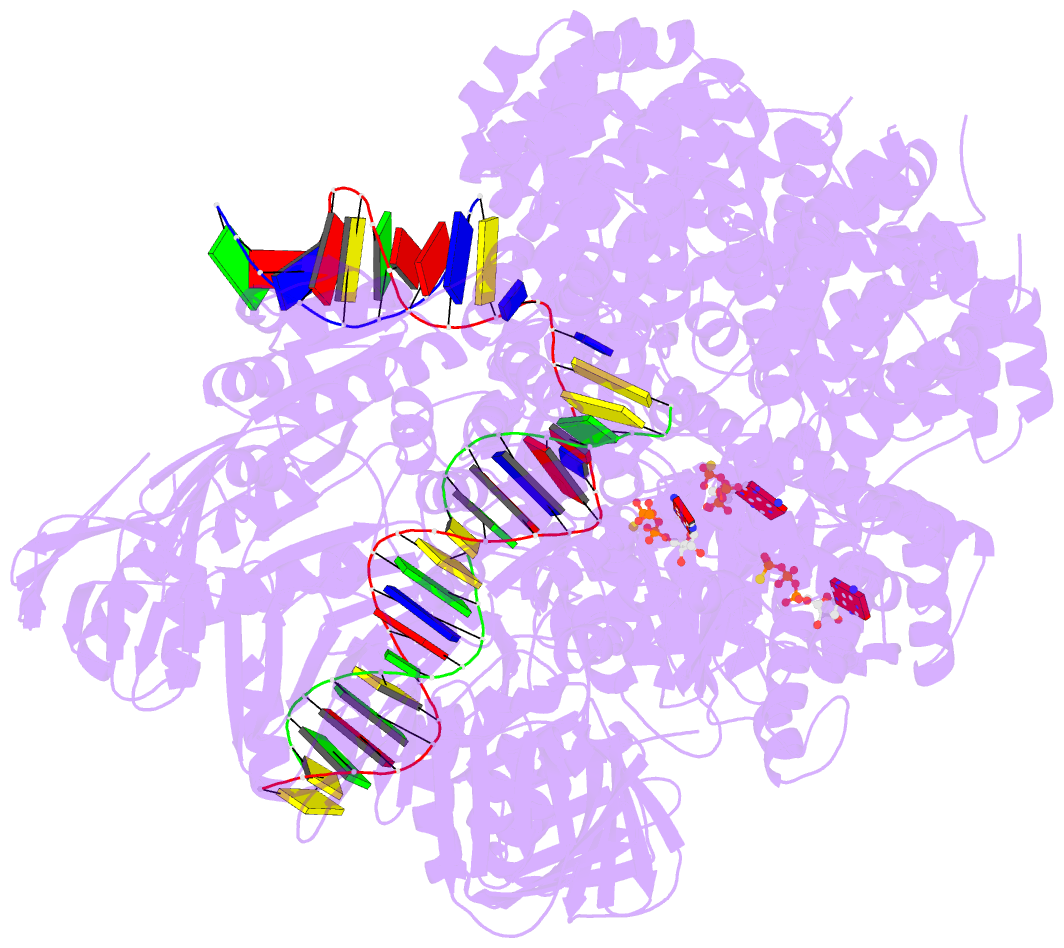
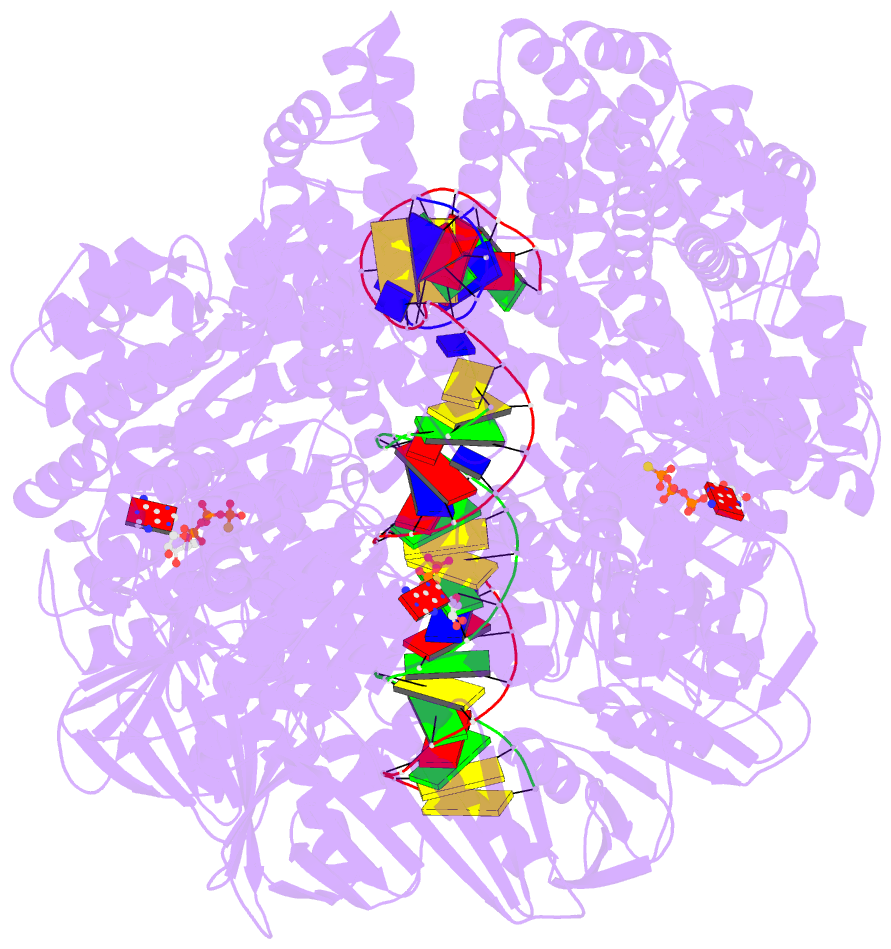
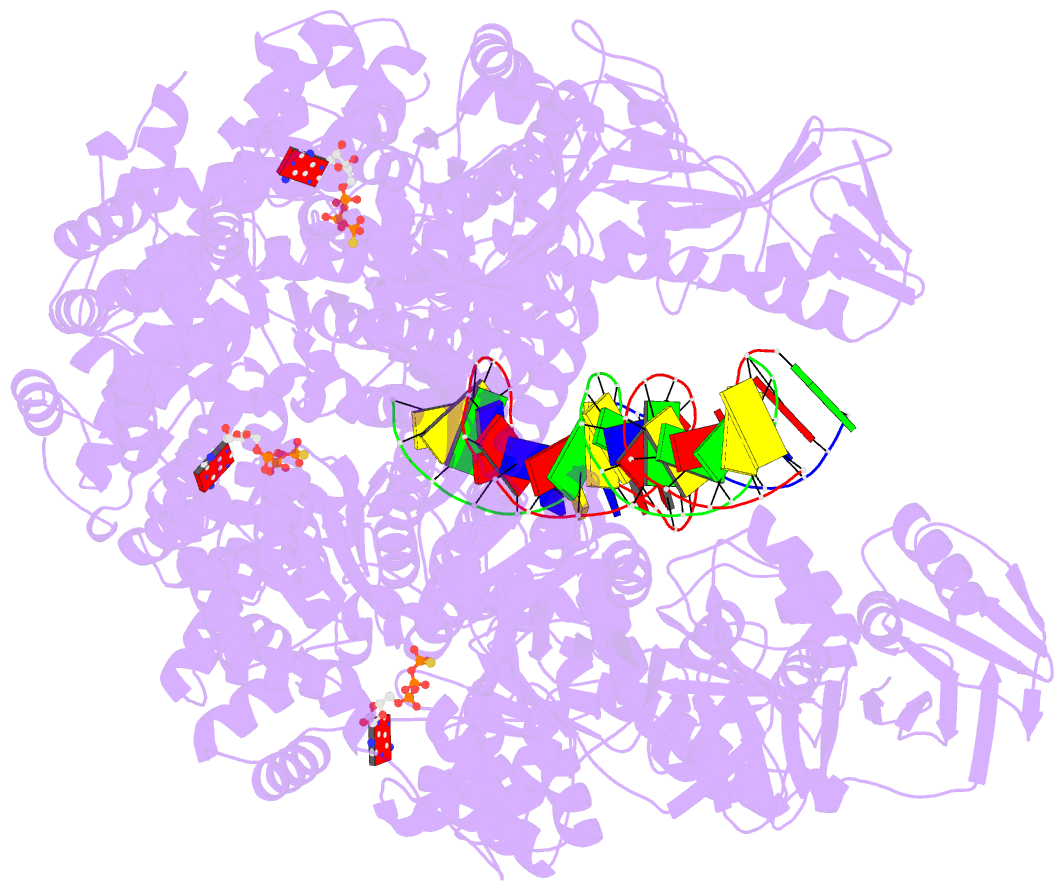
- Structure of the e. coli clamp loader dnax-complex
loading beta-clamp onto 1-nt gapped DNA in state 2
conformer 2 with less bent DNA
- Reference
-
Zheng F, Yao NY, Georgescu RE, Lyu M, O'Donnell ME, Li H
(2026): "The E.
coli DnaX clamp loader sharply bends DNA to load
beta-clamp at nicks and small gaps."
Biorxiv. doi: 10.64898/2026.01.17.700081.
- Abstract
- DNA sliding clamps are essential for processive DNA
synthesis in all domains of life and are loaded by
ATP-dependent clamp loaders that recognize recessed 3'
ends. How clamp loaders function at nicks and small ssDNA
gaps-common intermediates during DNA repair-remains
incompletely understood. Here, we show that the bacterial
<i>Escherichia coli</i> DnaX clamp loader
employs a fundamentally different mechanism from its
eukaryotic counterpart. Whereas eukaryotic RFC unwinds DNA
at the recessed 3' end and stabilizes the 5'-dsDNA at a
dedicated shoulder site, the bacterial DnaX-complex neither
unwinds DNA nor stably binds the 5'-dsDNA in vitro.
Instead, cryo-EM structures reveal that the β-clamp itself
contains a conserved external DNA-binding site that enables
sharp bending of gapped DNA by ~150°, promoting insertion
of the 3'-dsDNA into the clamp. This DNA-bending mechanism
allows efficient β-clamp loading at nicks and small gaps
and reveals a distinct bacterial strategy for clamp
loading. Because small DNA gaps are frequently associated
with DNA damage, clamps loaded at these sites are likely
important for DNA repair.