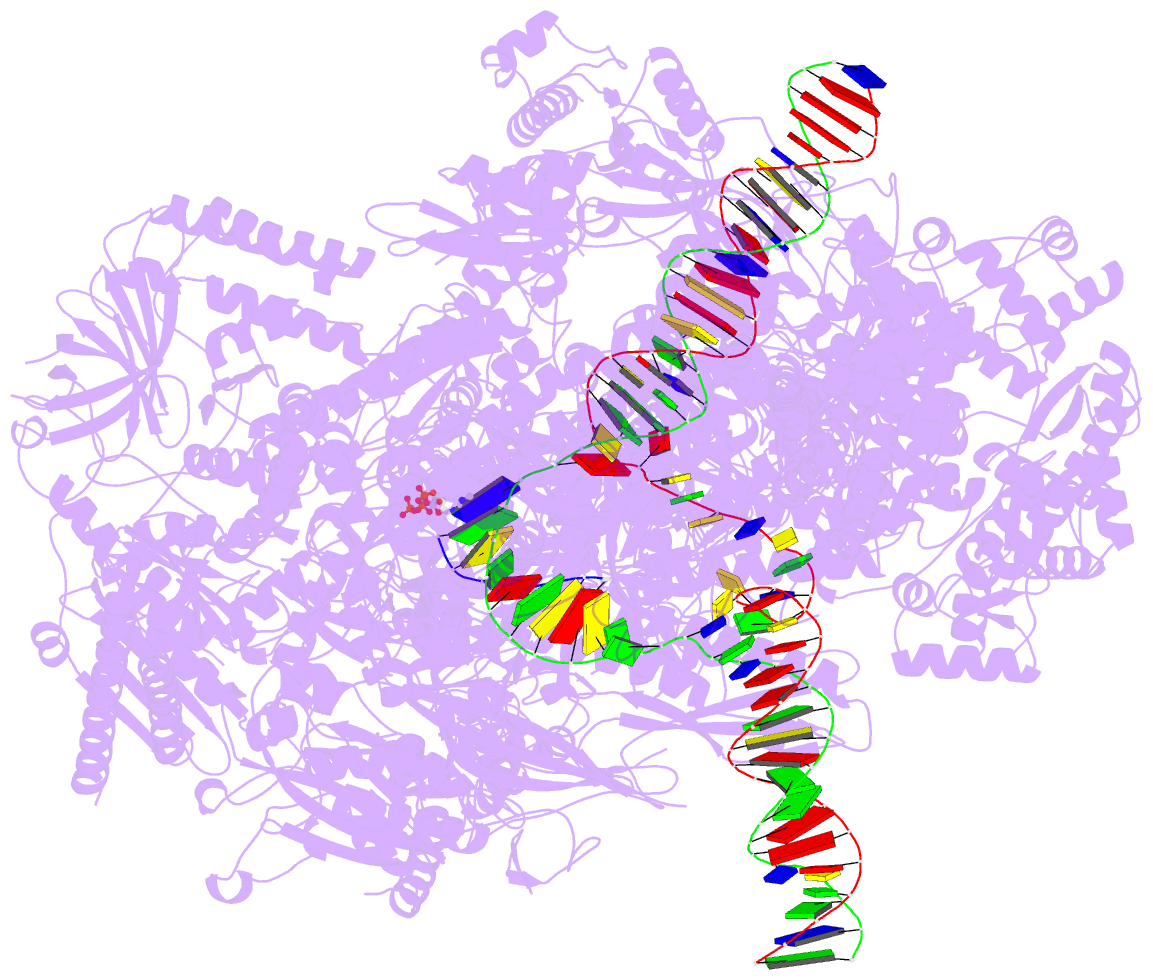
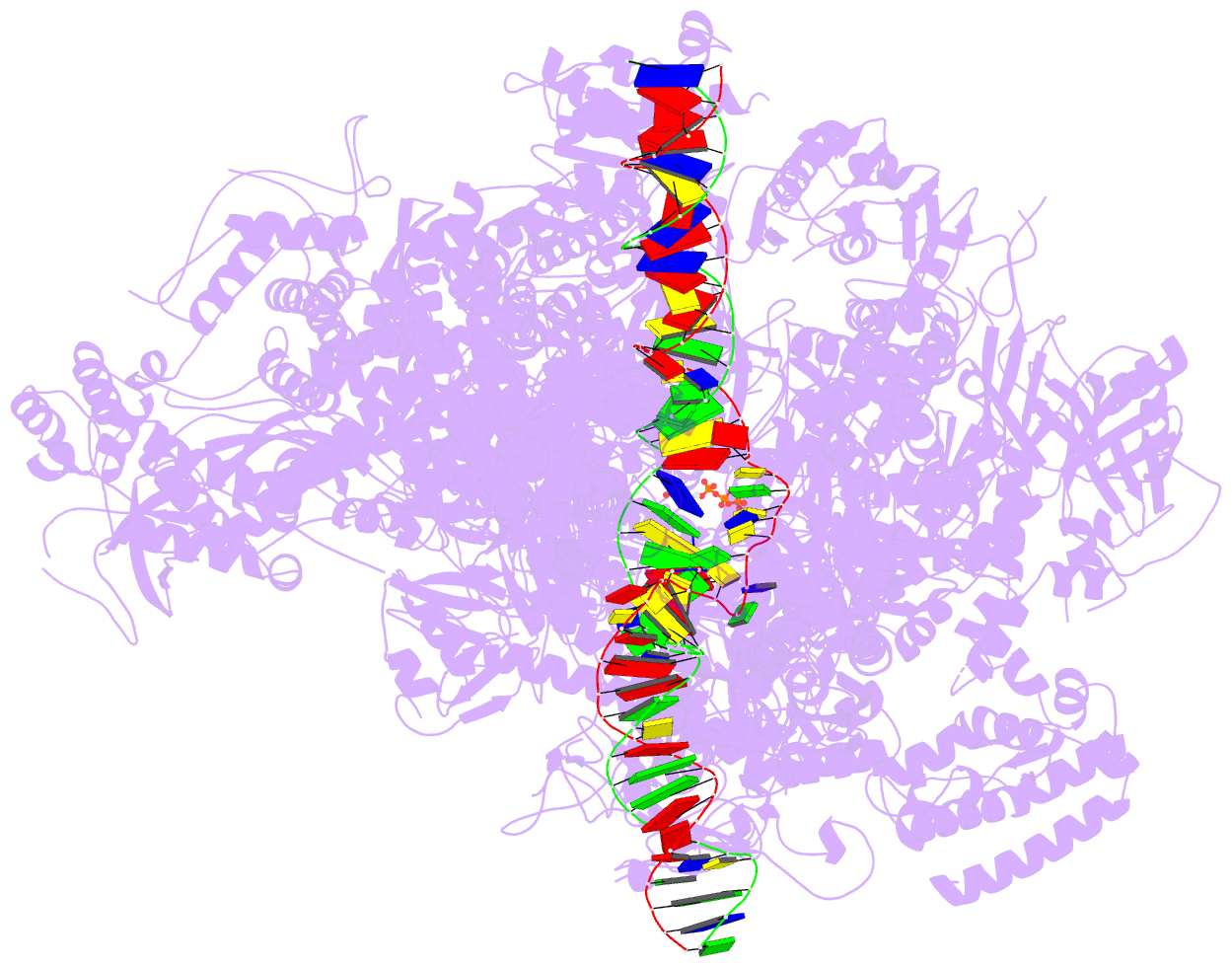
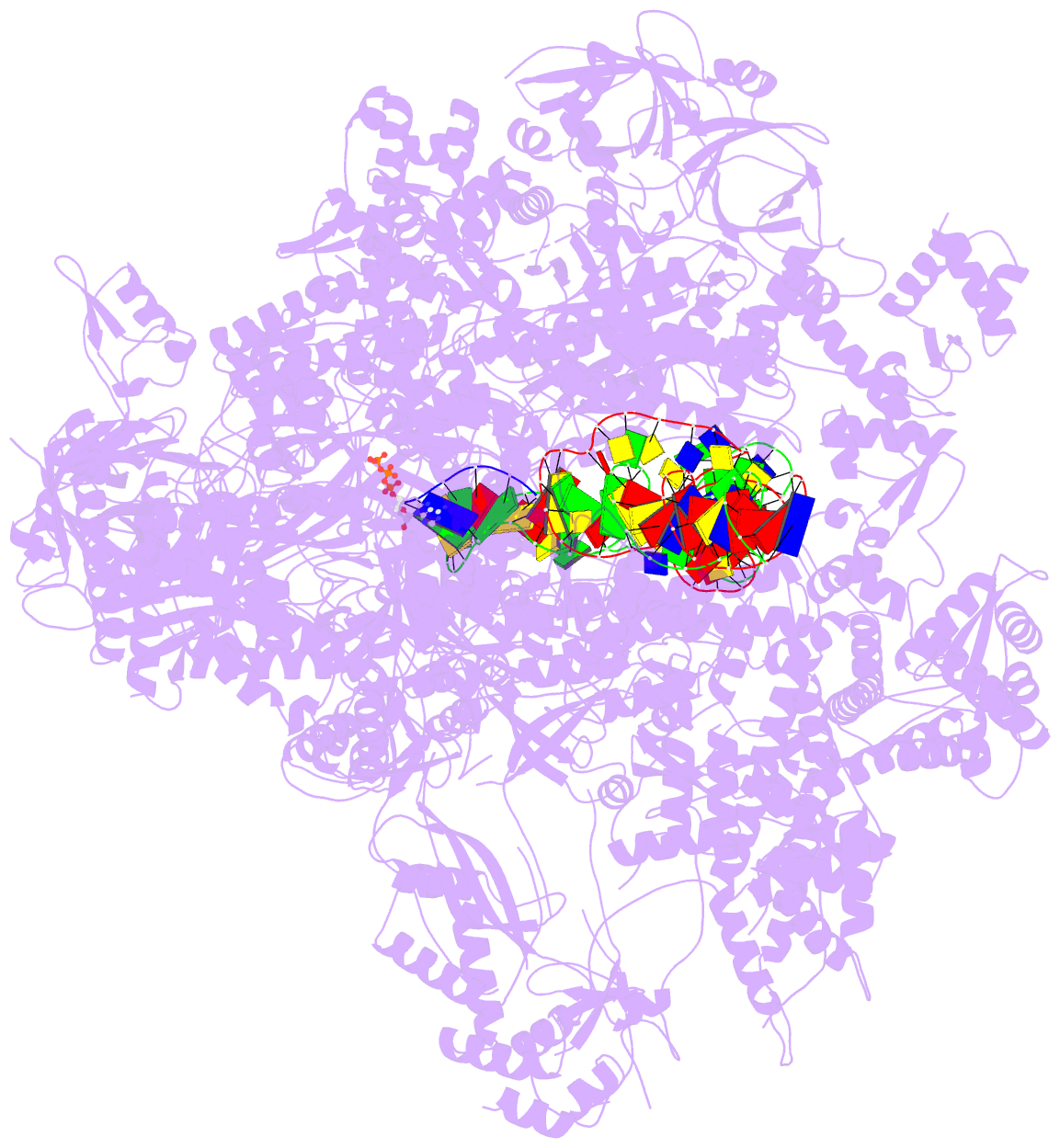
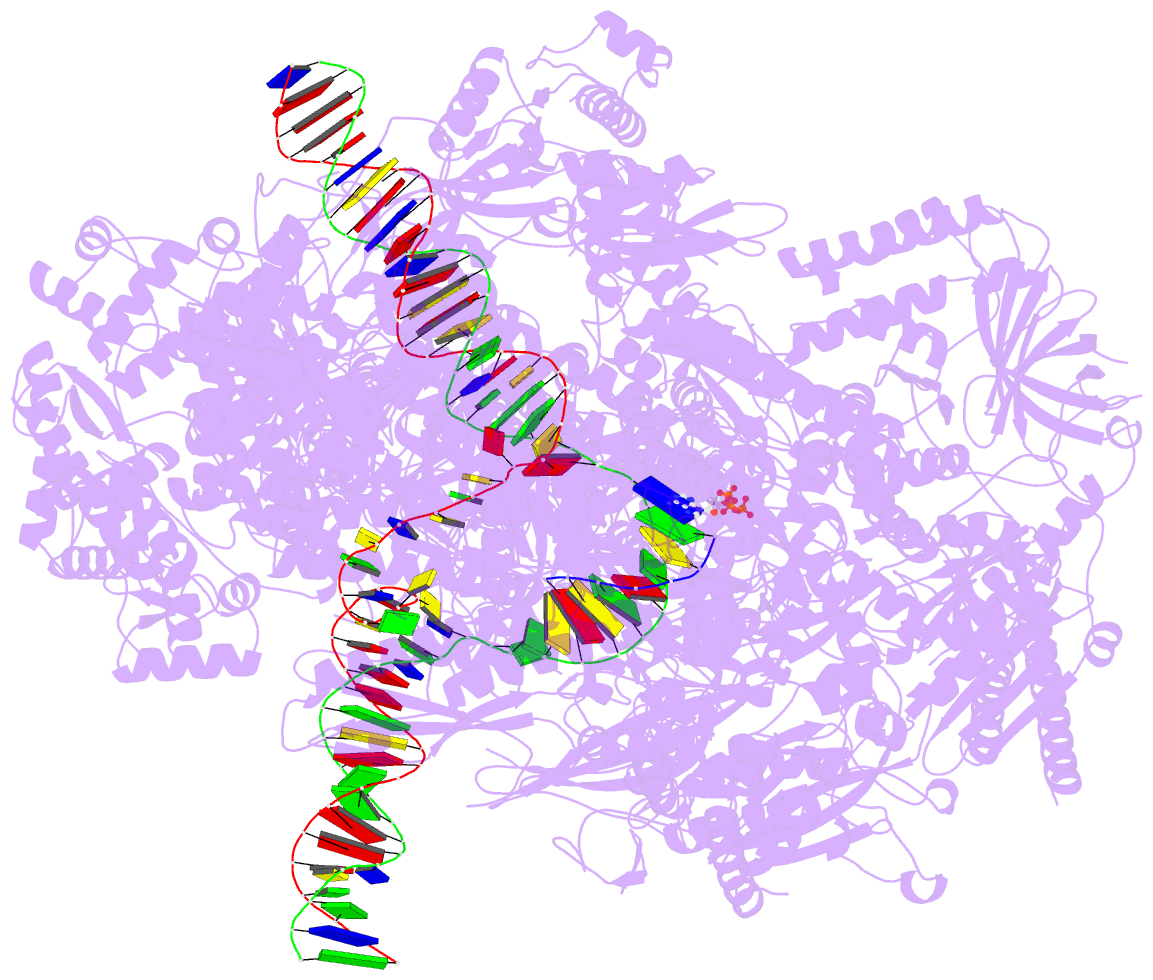
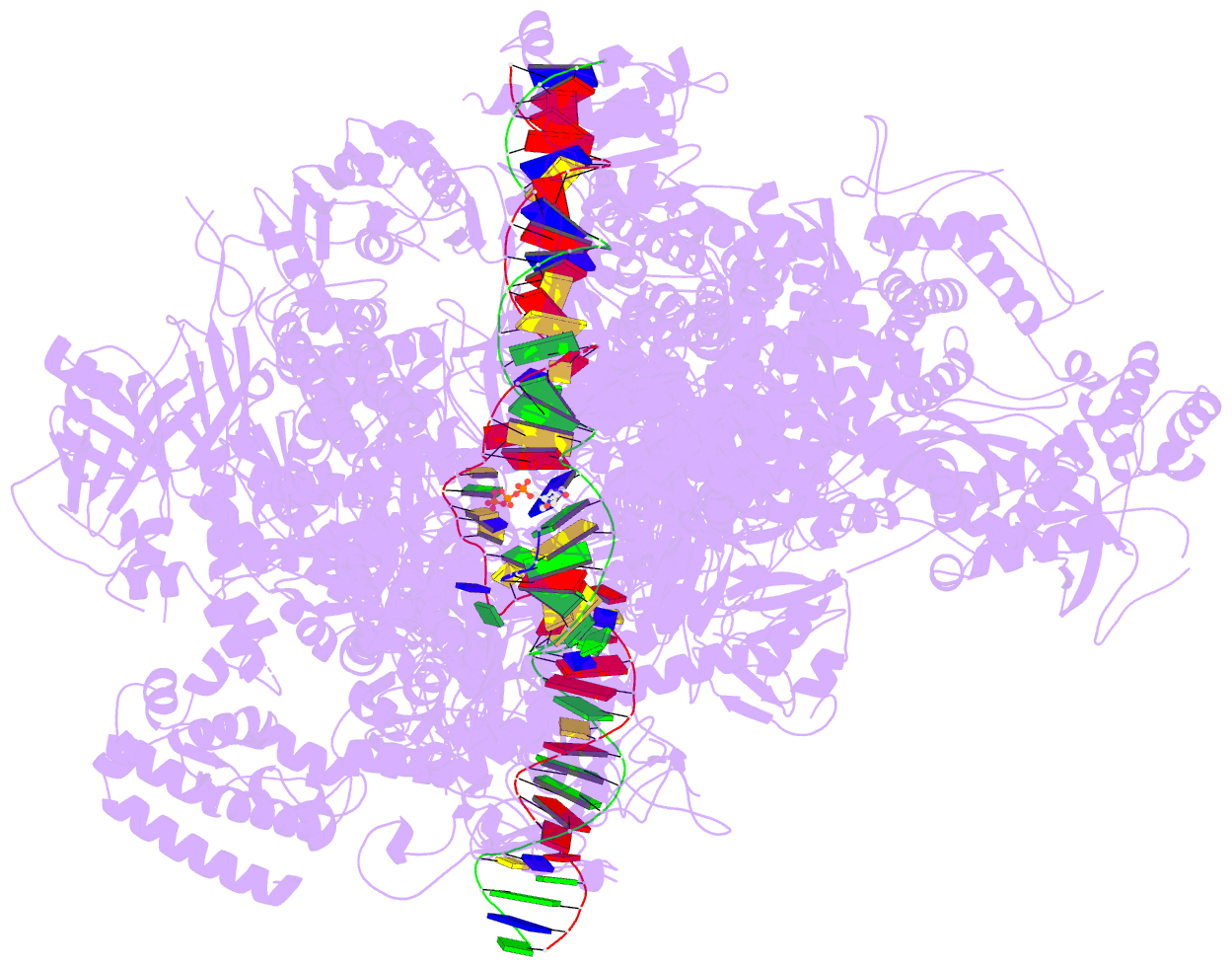
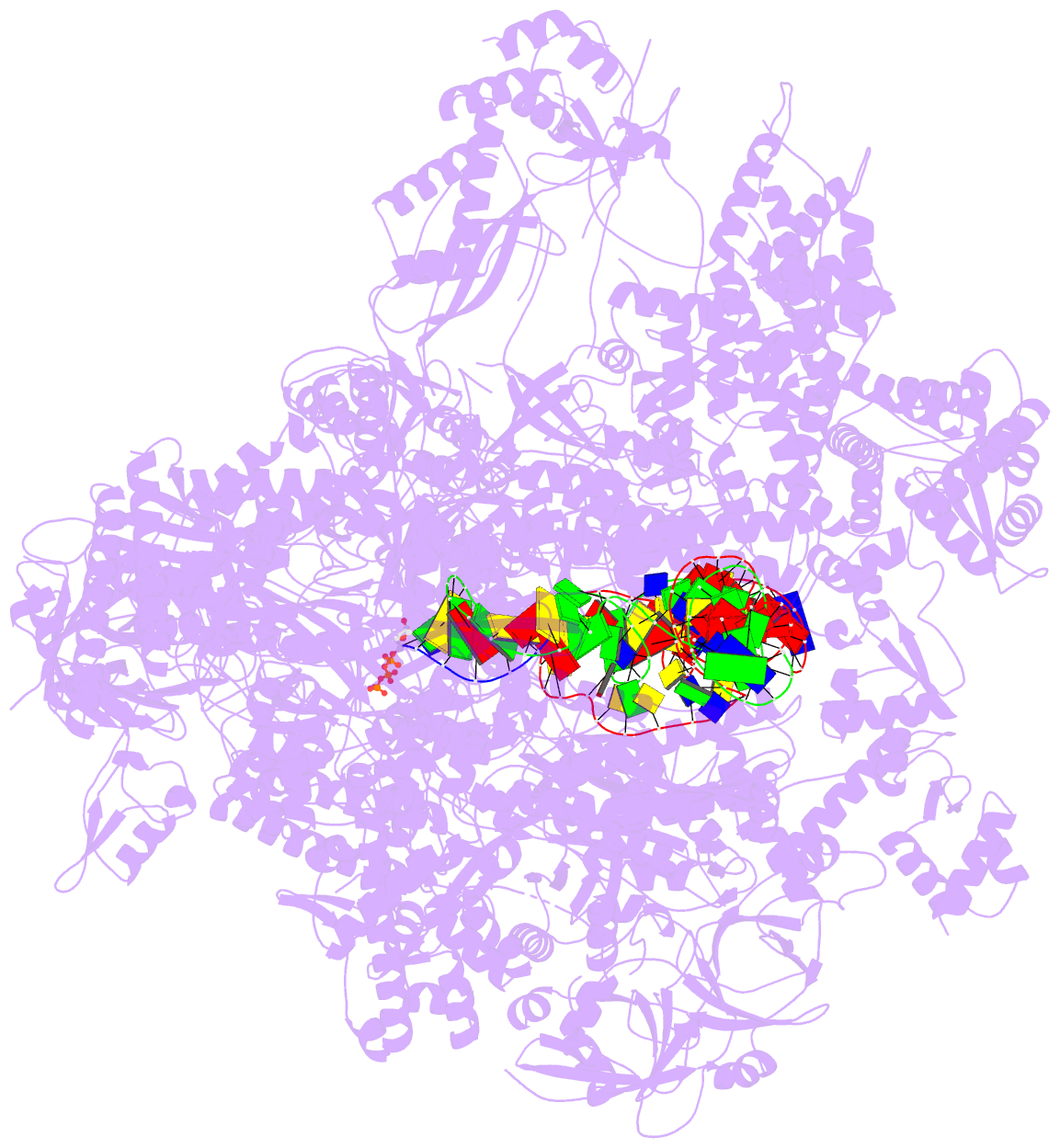
Summary information and primary citation
- PDB-id
-
9k39;
DSSR-derived features in text and
JSON formats
- Class
- transcription-DNA-RNA
- Method
- cryo-EM (2.8 Å)
- Summary
- Human RNA polymerase iii de novo transcribing complex 8
(tc8)
- Reference
-
Wang Q, Ren Y, Jin Q, Chen X, Xu Y (2025): "Structural
insights into human Pol III transcription initiation in
action." Nature, 643,
1127-1134. doi: 10.1038/s41586-025-09093-w.
- Abstract
- RNA polymerase III (Pol III) transcribes highly
demanded RNAs grouped into three types of classical
promoters, including type 1 (5S rRNA), type 2 (tRNA) and
type 3 (short non-coding RNAs, such as U6, 7SK and RNase
H1) promoters<sub>1-7</sub>. While structures
of the Pol III preinitiation complex
(PIC)<sub>8-11</sub> and elongation complex
(EC)<sub>12-16</sub> have been determined, the
mechanism underlying the transition from initiation to
elongation remains unclear. Here we reconstituted seven
human Pol III transcribing complexes (TC4, TC5, TC6, TC8,
TC10, TC12 and TC13) halted on U6 promoters with nascent
RNAs of 4-13 nucleotides. Cryo-electron microscopy
structures captured initially transcribing complexes (ITCs;
TC4 and TC5) and ECs (TC6-13). Together with
KMnO<sub>4</sub> footprinting, the data reveal
extensive modular rearrangements: the transcription bubble
expands from PIC to TC5, followed by general transcription
factor (GTF) dissociation and abrupt bubble collapse from
TC5 to TC6, marking the ITC-EC transition. In TC5, SNAPc
and TFIIIB remain bound to the promoter and Pol III, while
the RNA-DNA hybrid adopts a tilted conformation with
template DNA blocked by BRF2, a TFIIIB subunit. Hybrid
forward translocation during ITC-EC transition triggers
BRF2-finger retraction, GTF release and
transcription-bubble collapse. Pol III then escapes the
promoter while GTFs stay bound upstream, potentially
enabling reinitiation. These findings reveal molecular
insights into Pol III dynamics and reinitiation mechanisms
on type 3 promoters of highly demanded small RNAs, with the
earliest documented initiation-elongation transition for an
RNA polymerase.