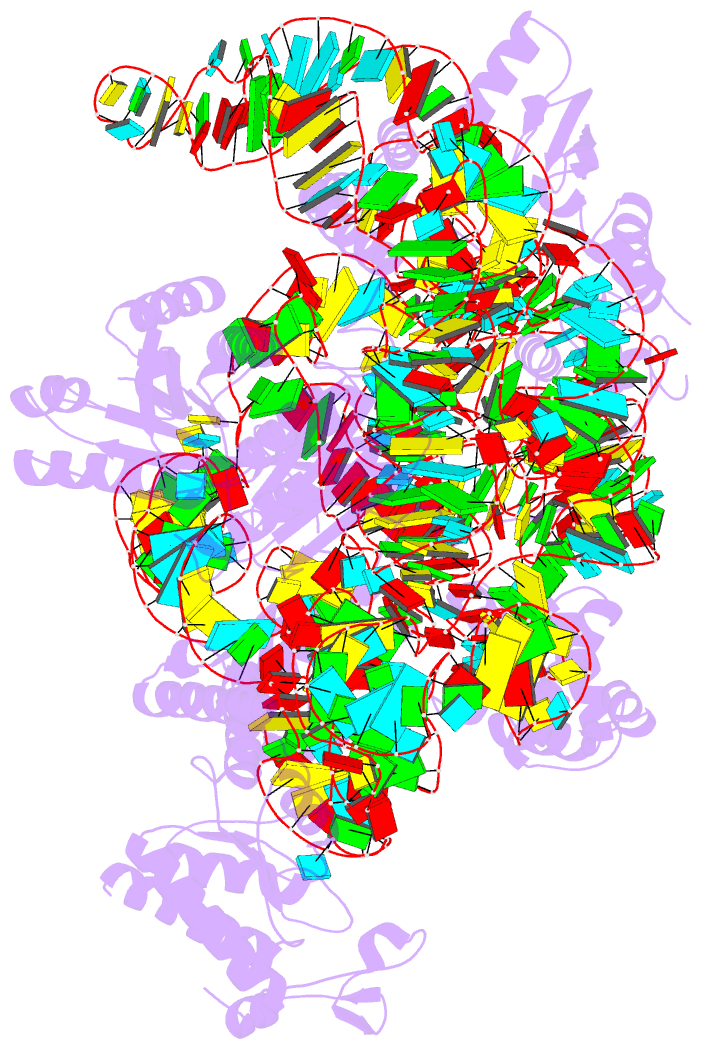
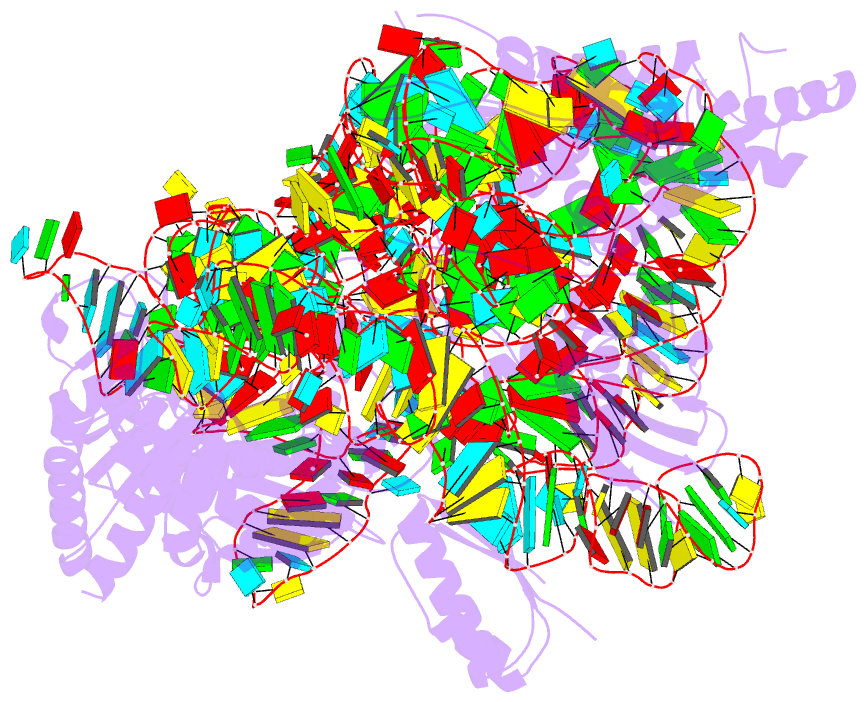
Summary information and primary citation
- PDB-id
-
9h9m;
DSSR-derived features in text and
JSON formats
- Class
- ribosome
- Method
- cryo-EM (3.1 Å)
- Summary
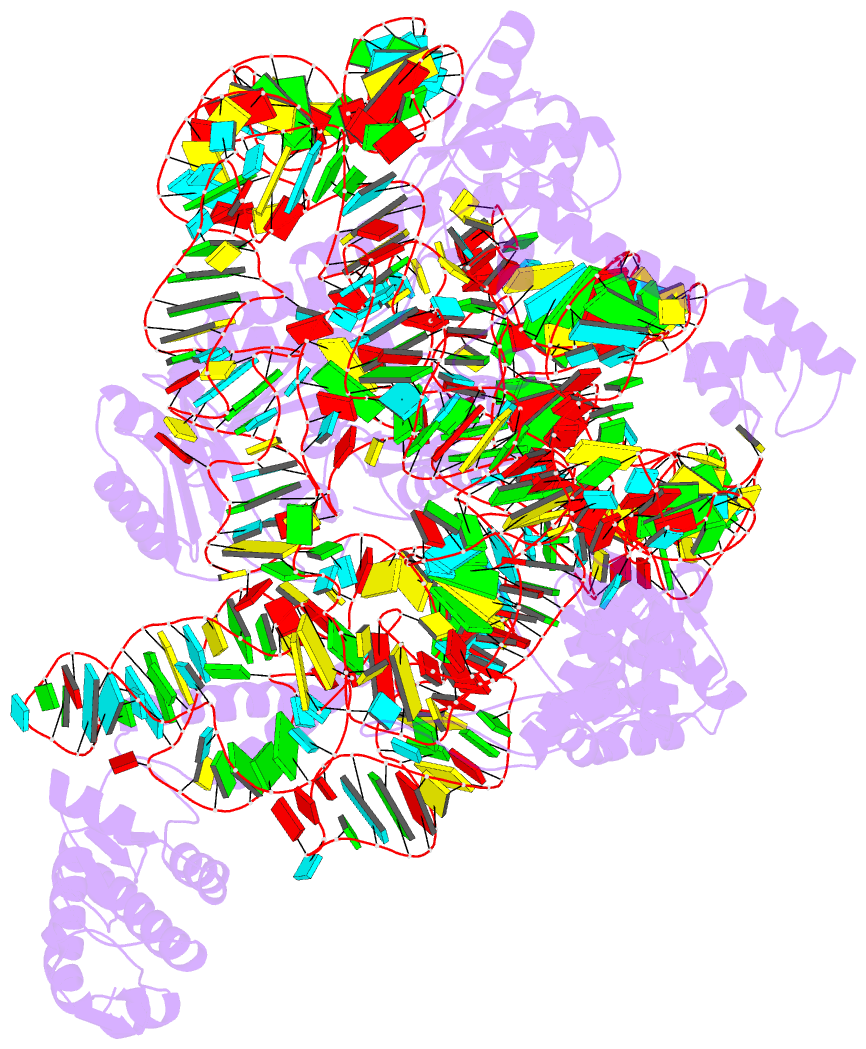
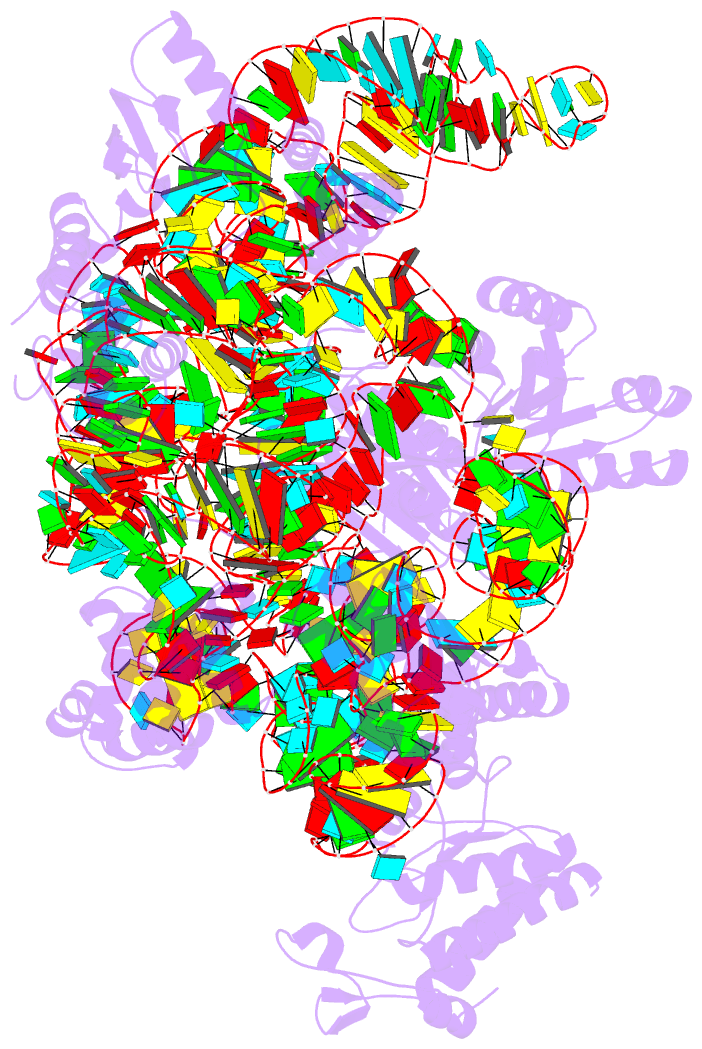
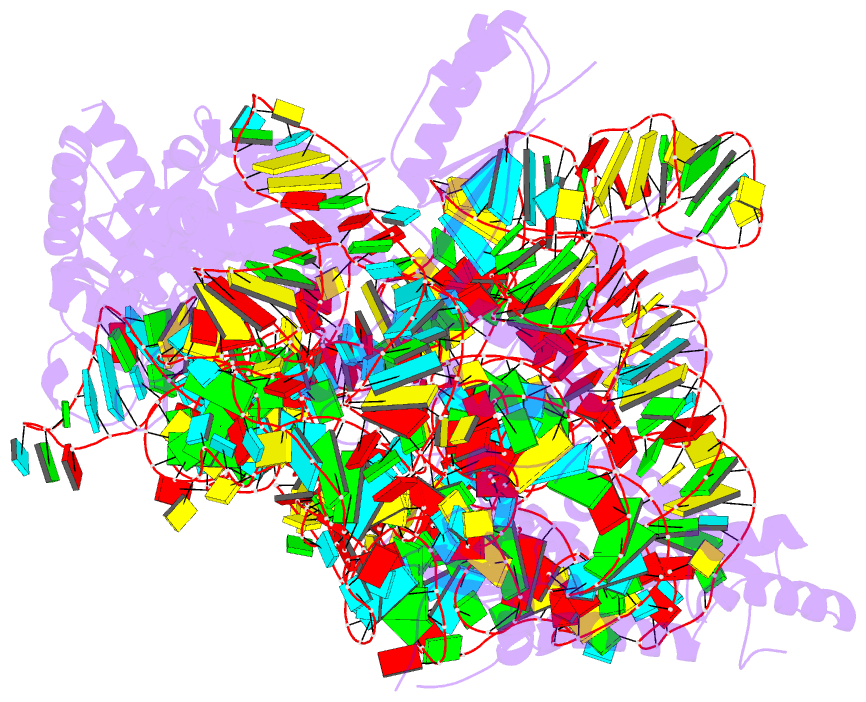
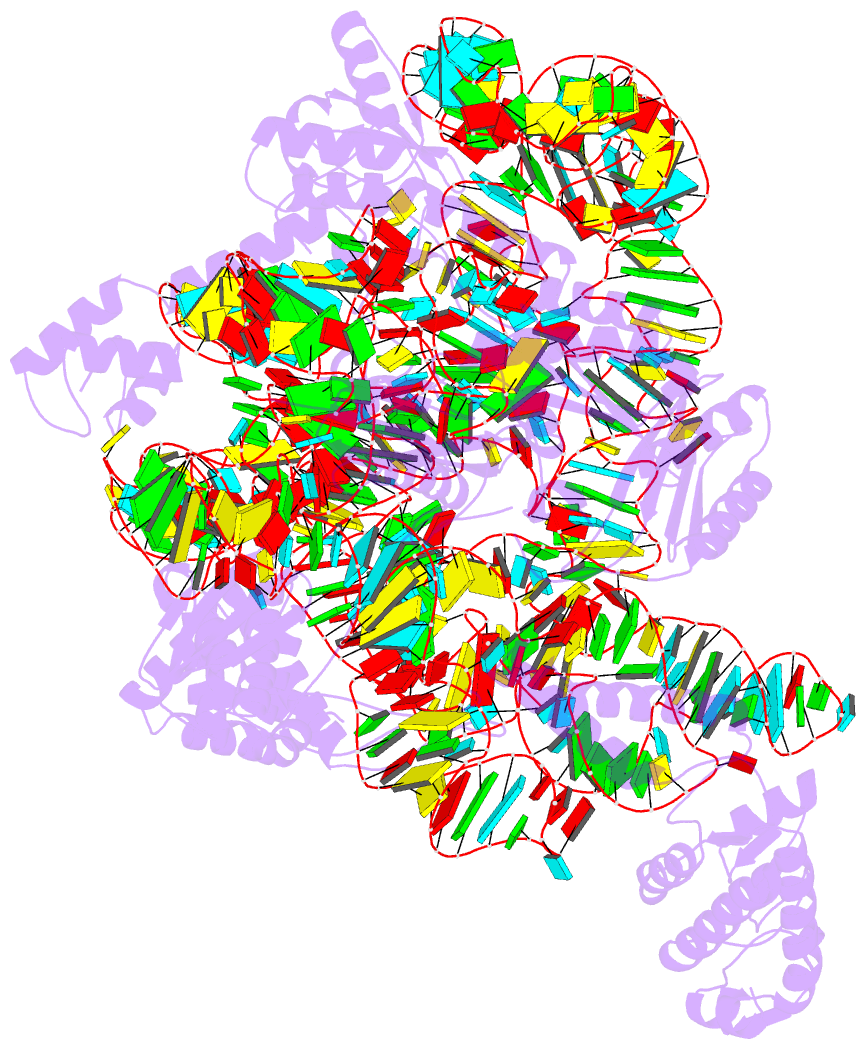
- Complex 4 (head) 30s-ge81112 (weak residual trna)
- Reference
-
Schedlbauer A, Han X, van Bakel W, Kaminishi T,
Ochoa-Lizarralde B, Iturrioz I, Capuni R, Parry R,
Zegarra R, Gil-Carton D, Lopez-Alonso JP, Barragan Sanz
K, Brandi L, Gualerzi CO, Fucini P, Connell SR (2024):
"A
binding site for the antibiotic GE81112 in the ribosomal
mRNA channel." bioRxiv. doi: 10.1101/2024.09.26.614503.
- Abstract
- The initiation phase is the rate-limiting step of
protein synthesis (translation) and is finely regulated,
making it an important drug target. In bacteria, initiation
is guided by three initiation factors and involves
positioning the start site on the messenger RNA within the
P-site on the small ribosomal subunit (30S), where it is
decoded by the initiator tRNA. This process can be
efficiently inhibited by GE81112, a natural hydrophilic,
noncyclic, nonribosomal tetrapeptide. It is found in nature
in three structural variants (A, B and B1 with molecular
masses of 643-658 Da). Previous biochemical and structural
characterisation of GE81112 indicates that the primary
mechanism of action of this antibiotic is to (1) prevent
the initiator tRNA from binding correctly to the P-site and
(2) block conformational rearrangements in initiation
factor IF3, resulting in an <i>unlocked</i> 30S
pre/C state. In this study, using cryoEM, we have
determined the binding site of GE81112 in initiation
complexes (3.2-3.7Å) and on empty ribosomes (2.09 Å). This
binding site is within the mRNA channel (E-site) but remote
from the binding site of the initiation factors and
initiator tRNA. This suggests that it acts allosterically
to prevent the initiator tRNA from being locked into place.
The binding mode is consistent with previous biochemical
studies and recent work identifying the key pharmacophores
of GE81112.