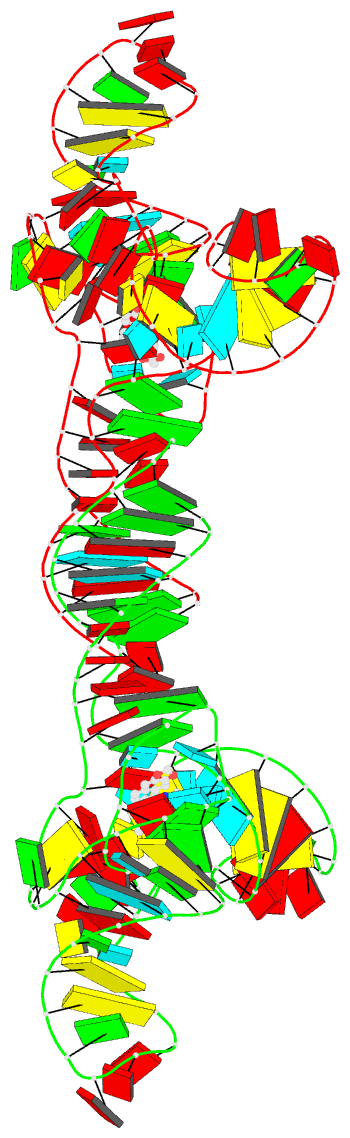
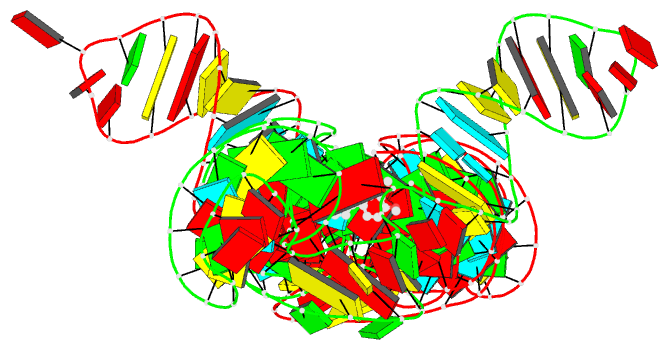
Summary information and primary citation
- PDB-id
-
9ec4;
DSSR-derived features in text and
JSON formats
- Class
- RNA
- Method
- X-ray (2.853 Å)
- Summary
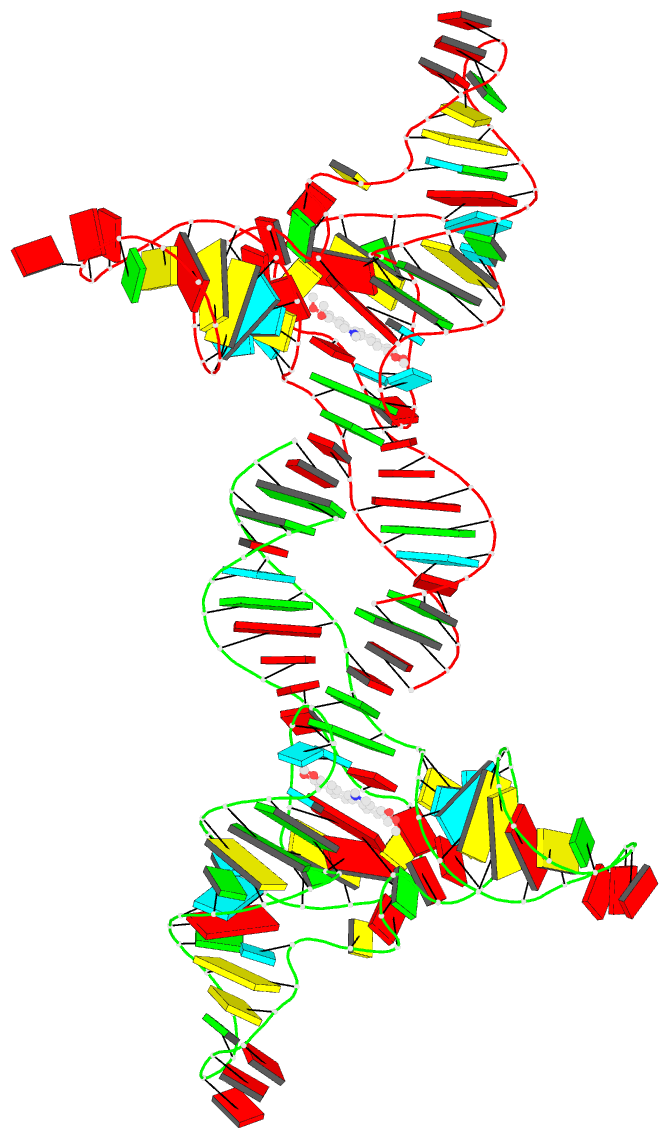
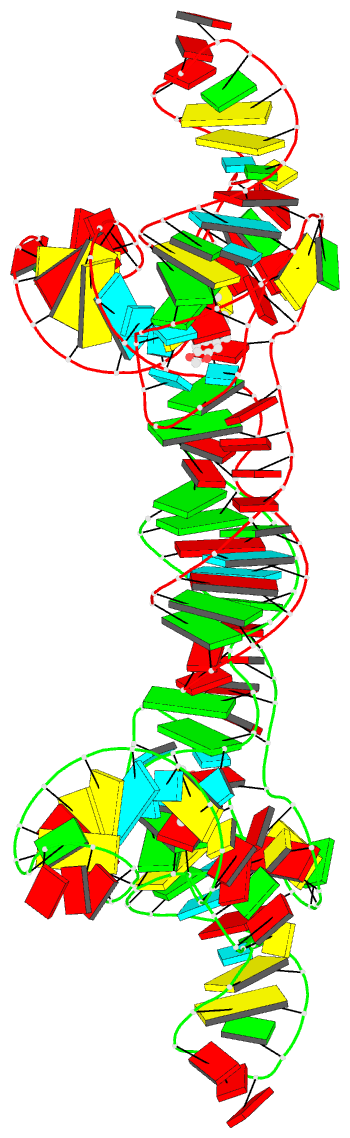
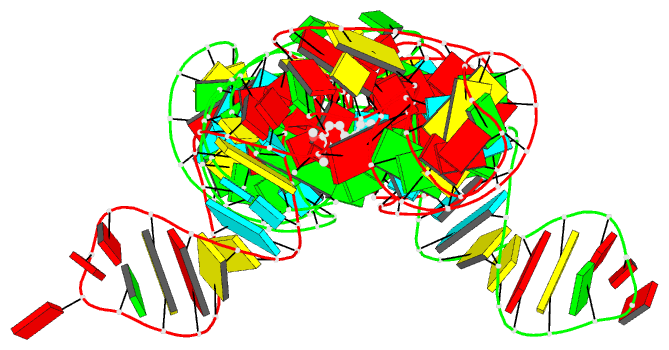
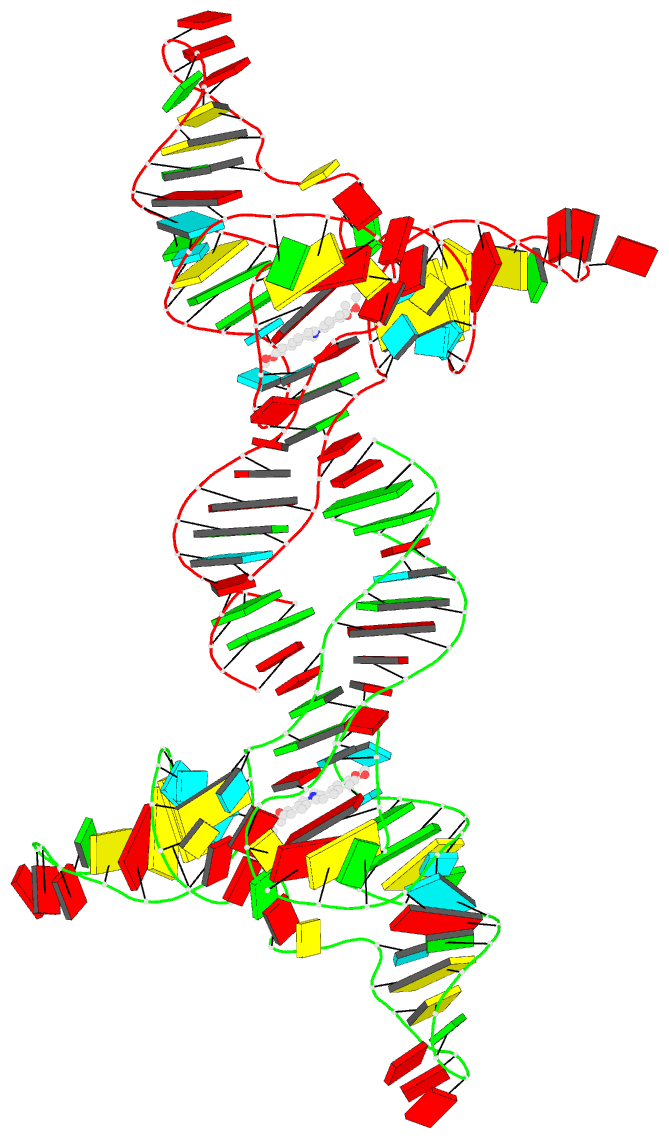
- Structure of the bacillus subtilis yjdf riboswitch
aptamer domain in complex with chelerythrine
- Reference
-
Spradlin SF, Dickerson KA, Batey RT (2025): "Structural
and functional clues challenge the hypothesis that the
yjdF riboswitch is natively regulated through broad
recognition of azaaromatic compounds." Nucleic
Acids Res., 53. doi: 10.1093/nar/gkaf1278.
- Abstract
- While most riboswitches are highly selective for their
cognate ligand, the yjdF riboswitch is distinct in its
ability to bind a broad set of aromatic compounds. This
observation has led to the hypothesis that this RNA is
regulated by toxic azaaromatic compounds, triggering a
detoxification mechanism by activating translation of the
YjdF protein in response to ligand binding. To understand
how these compounds turn on gene expression by the yjdF
riboswitch, we determined the crystal structure of the
Bacillus subtilis yjdF riboswitch in complex with
activating (chelerythrine) and nonactivating (lumichrome)
ligands. These structures reveal that the RNA binds these
compounds in a near-identical fashion, adopting the same
local and global conformation. However, the unexpected
extension of the regulatory helix through formation of
several base pairs from highly conserved nucleotides
suggests that this element plays an important role in
ligand-dependent gene expression. Using a reporter assay in
B. subtilis, we found that chelerythrine-dependent
activation is insensitive to mutation of these conserved
nucleotides that are essential for activation of the
riboswitch. These data suggest that the yjdF riboswitch is
responsive to a yet unknown cellular metabolite and remains
an orphan riboswitch.