Summary information and primary citation
- PDB-id
-
9dzm;
DSSR-derived features in text and
JSON formats
- Class
- transcription-DNA
- Method
- X-ray (2.54 Å)
- Summary
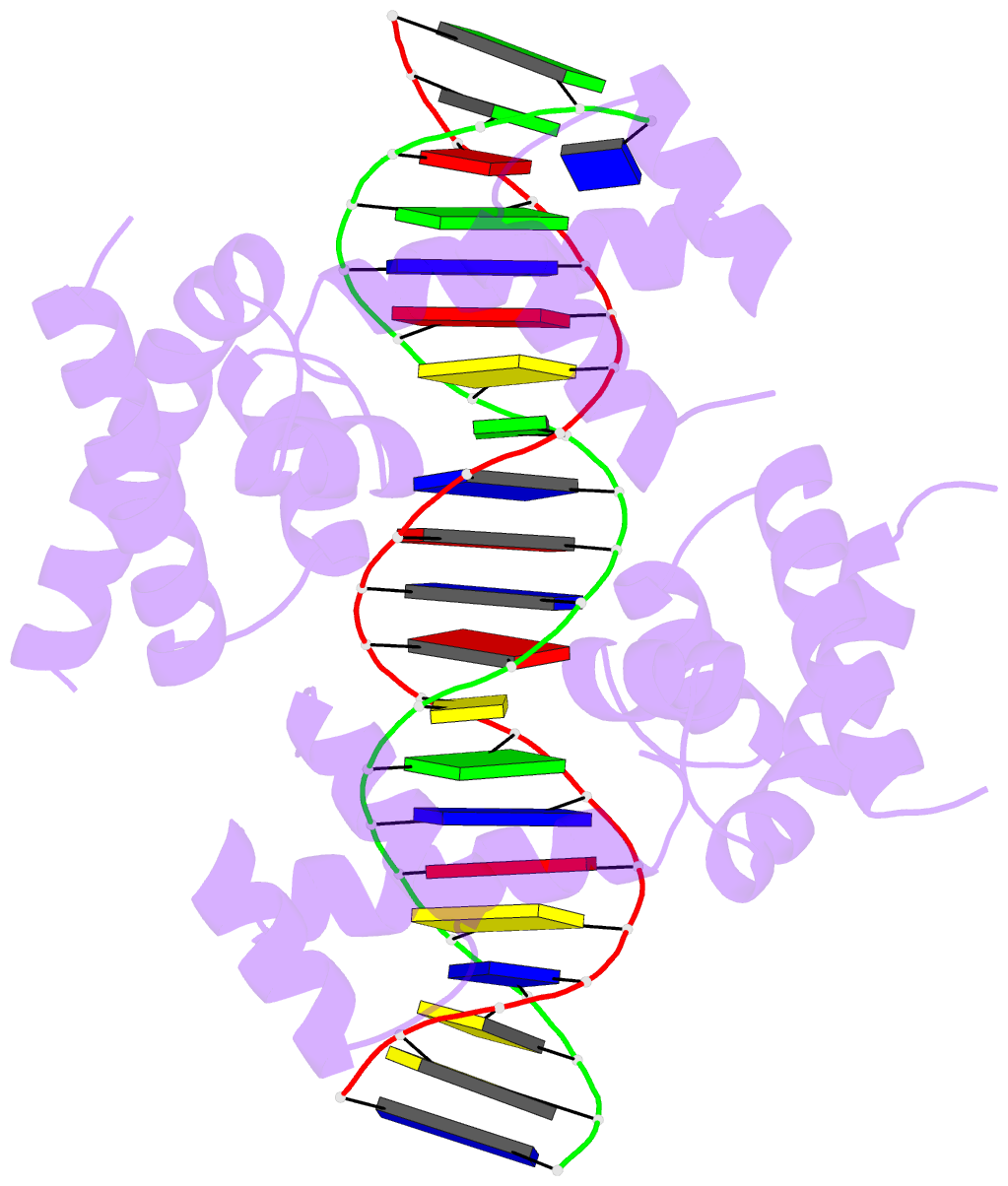
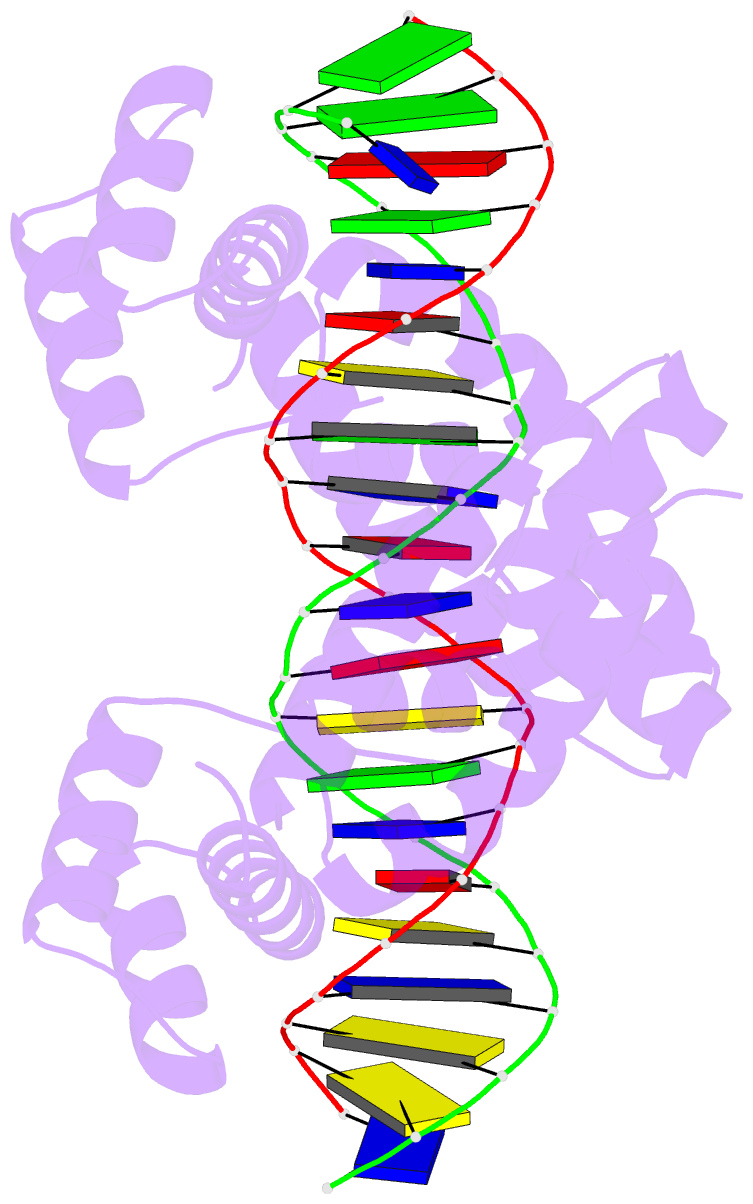
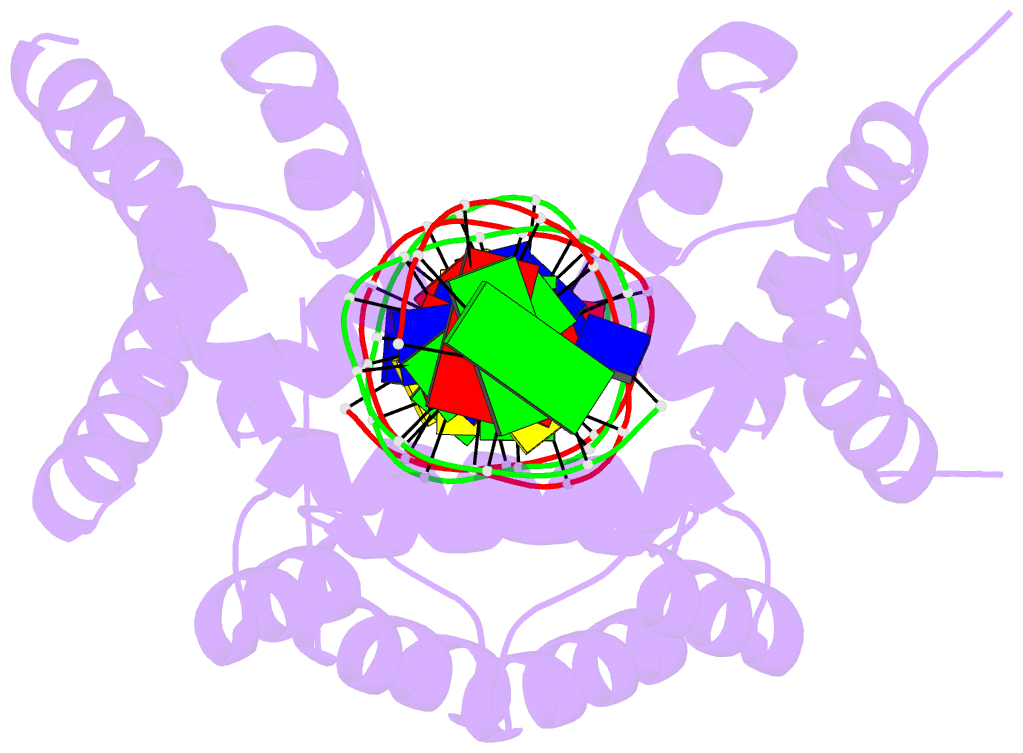
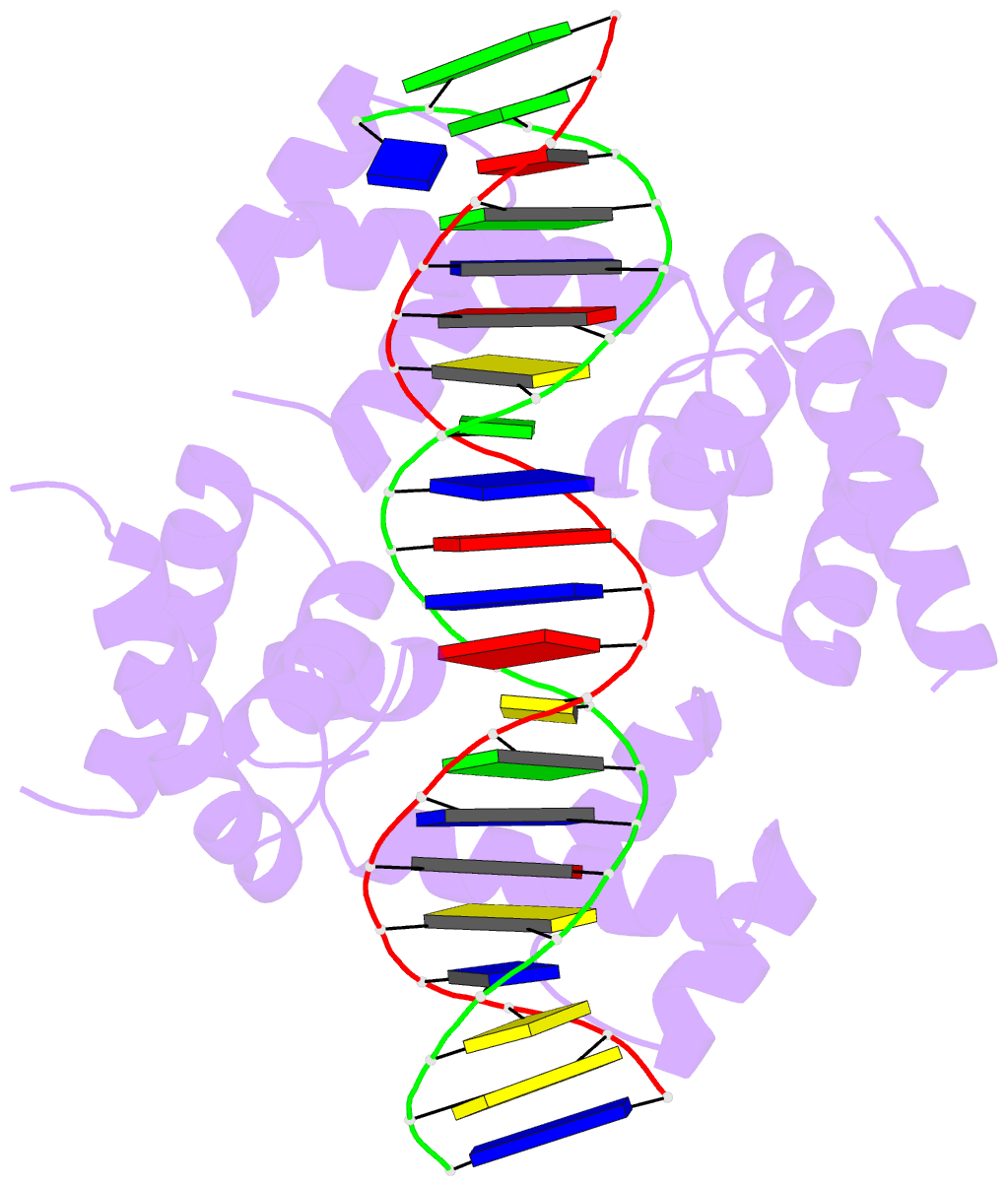
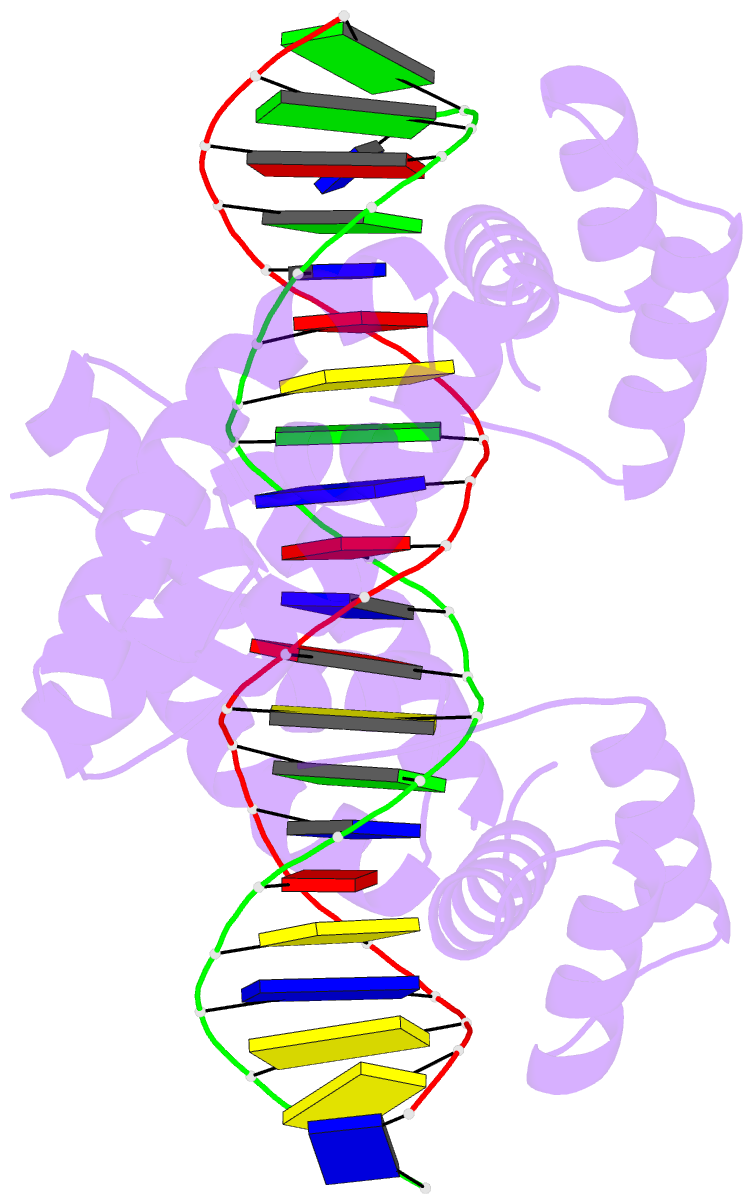
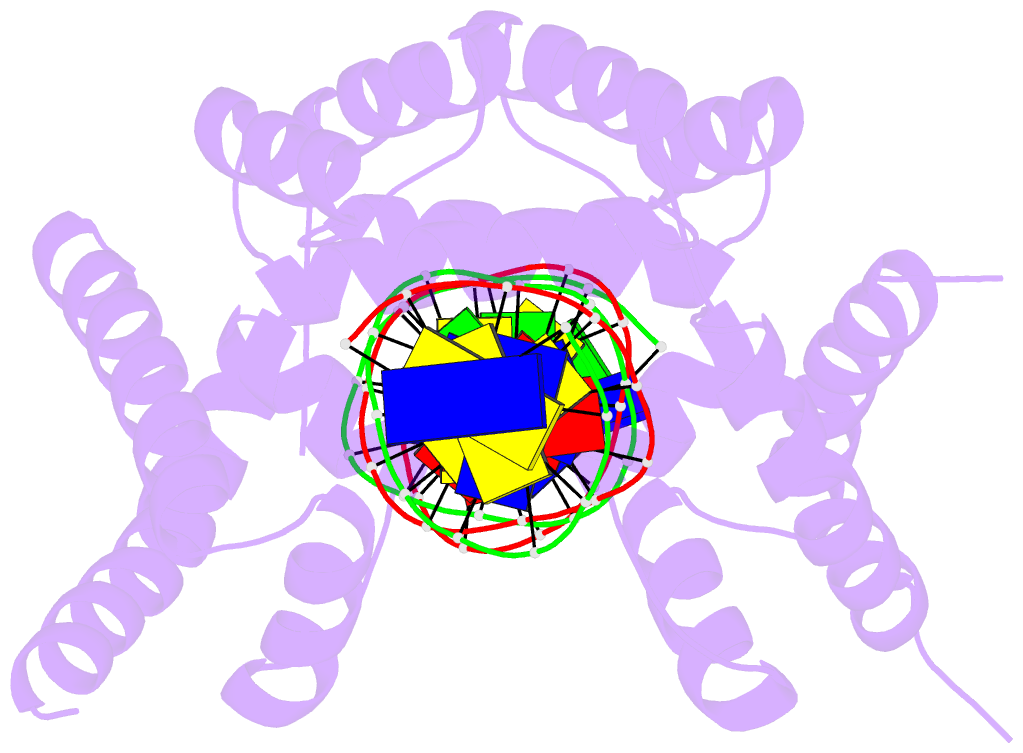
- Dimeric human oct2 (pou2f2) pou domain bound to
palindromic more DNA
- Reference
-
Terrell JR, Poon GMK (2025): "Coupled
Heterogeneity to Dimeric Site-Specific Binding by the
POU-Family Transcription Factor OCT2."
J.Phys.Chem.B, 129, 2138-2148.
doi: 10.1021/acs.jpcb.4c07071.
- Abstract
- POU-family transcription factors regulate metazoan gene
expression via a bipartite DNA-binding domain consisting of
two covalently linked helix-turn-helix subdomains,
POU<sub>S</sub> and
POU<sub>H</sub>. POU factors bind as dimers to
DNA half-sites to form complexes with a variable quaternary
structure. To enhance the knowledge of the physical
chemistry of dimeric POU/DNA recognition, we carried out a
crystallographic and titration analysis of the cooperative
homodimer formed by the POU factor OCT2 and an optimized
palindromic DNA site known as MORE. The data evidence
strong heterogeneity in the binding and formation of
secondary complexes in site-specific DNA recognition by
OCT2 at thermodynamic equilibrium. These secondary
complexes are strictly contingent to the site-specific
complex, detectable at subsaturating OCT2 concentrations,
and cooperate with nonspecific binding to guide the
affinity of the site-specific complex. Modulation with salt
and poly[d(I-C)] unmasks the compensation between
nonspecific DNA depleting unbound OCT2 on the one hand
while driving specific binding by intermolecular transfer
of OCT2 via secondary complexes on the other. Molecular
dynamics simulations extend a mechanism, previously
proposed for POU monomers, in which the two subdomains
dynamically cross-link DNA strands to form supramolecular
dimeric POU/DNA complexes at equilibrium.