Summary information and primary citation
- PDB-id
-
9d89;
DSSR-derived features in text and
JSON formats
- Class
- ribosome
- Method
- cryo-EM (1.95 Å)
- Summary
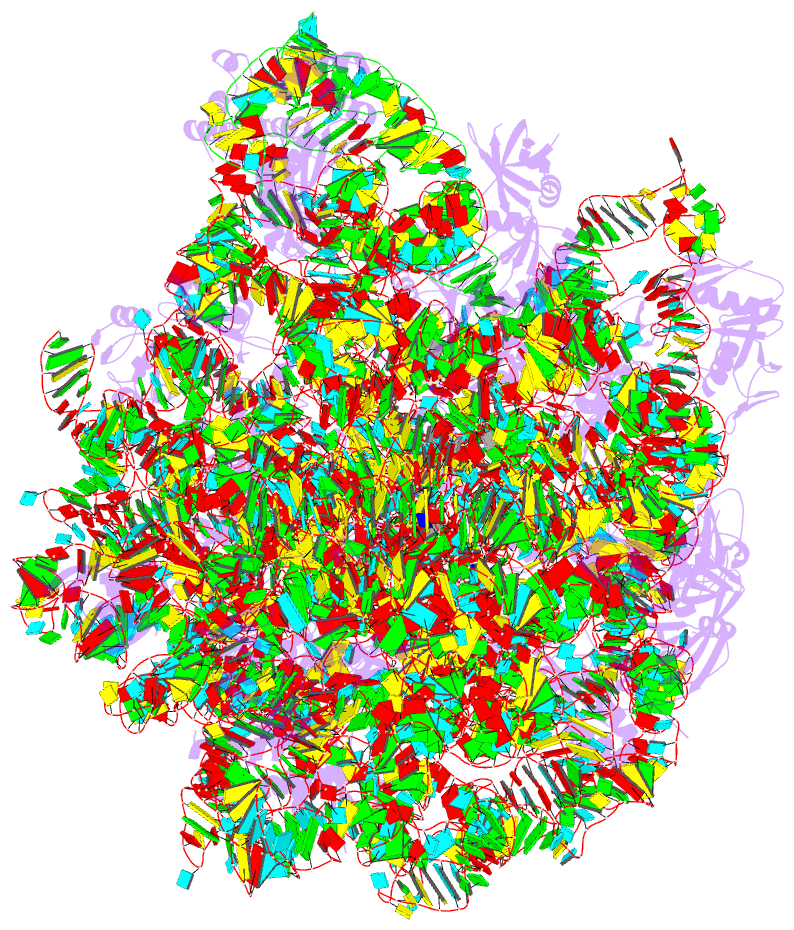
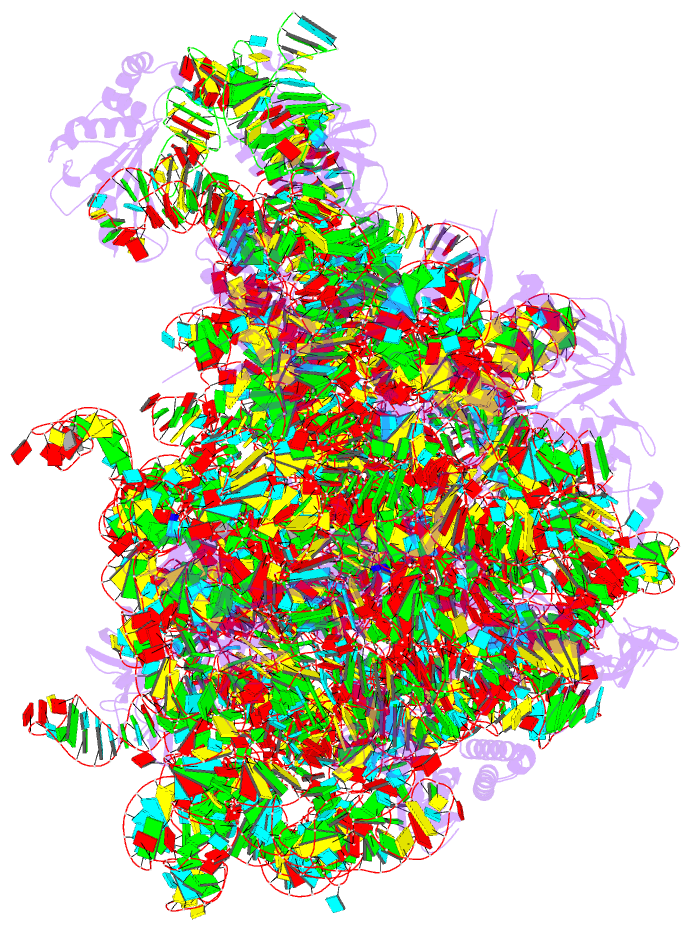
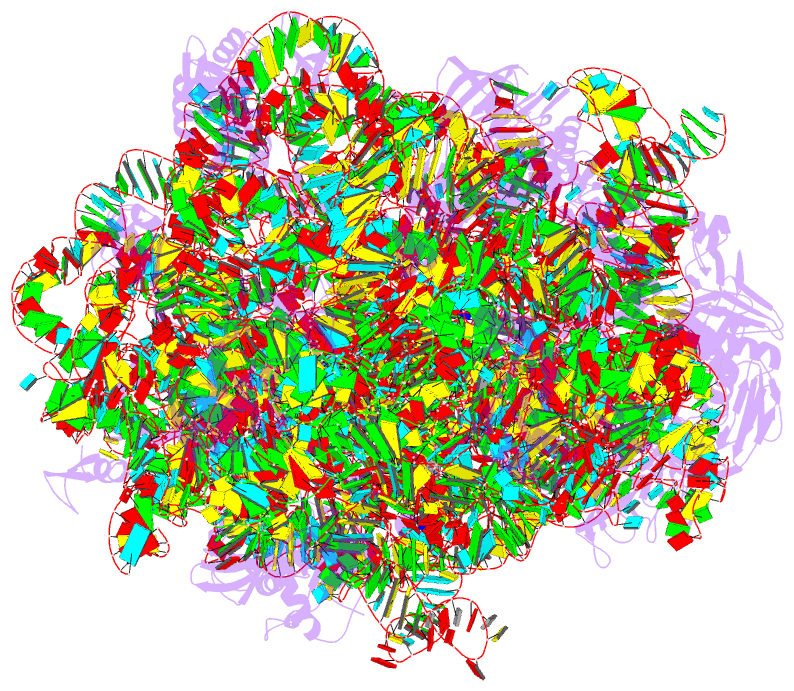
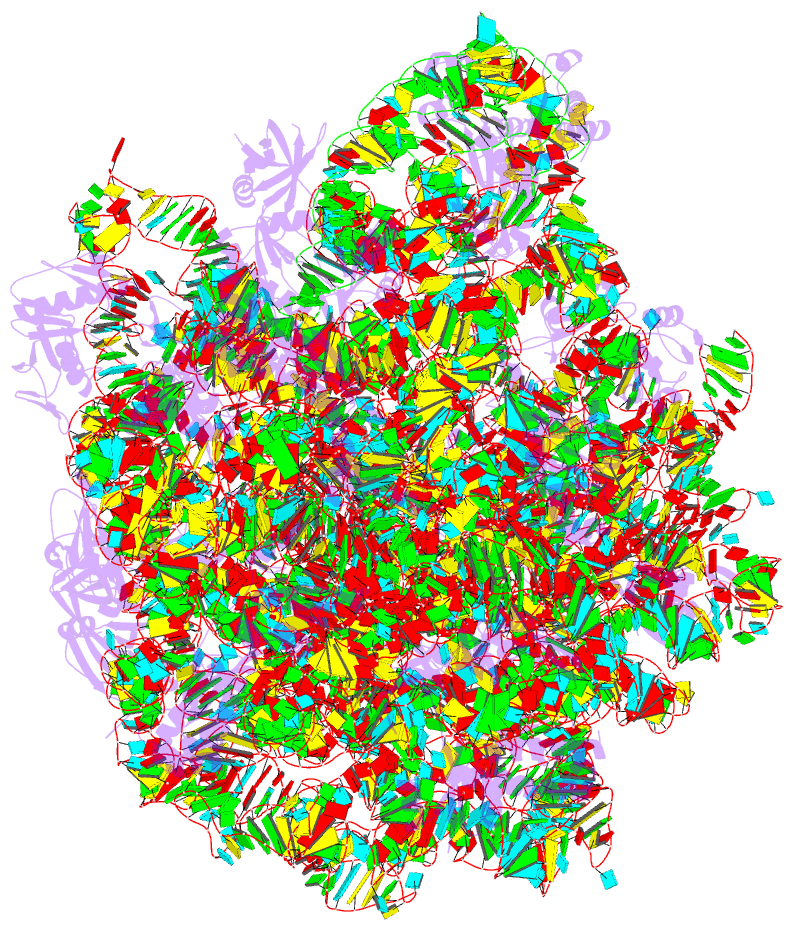
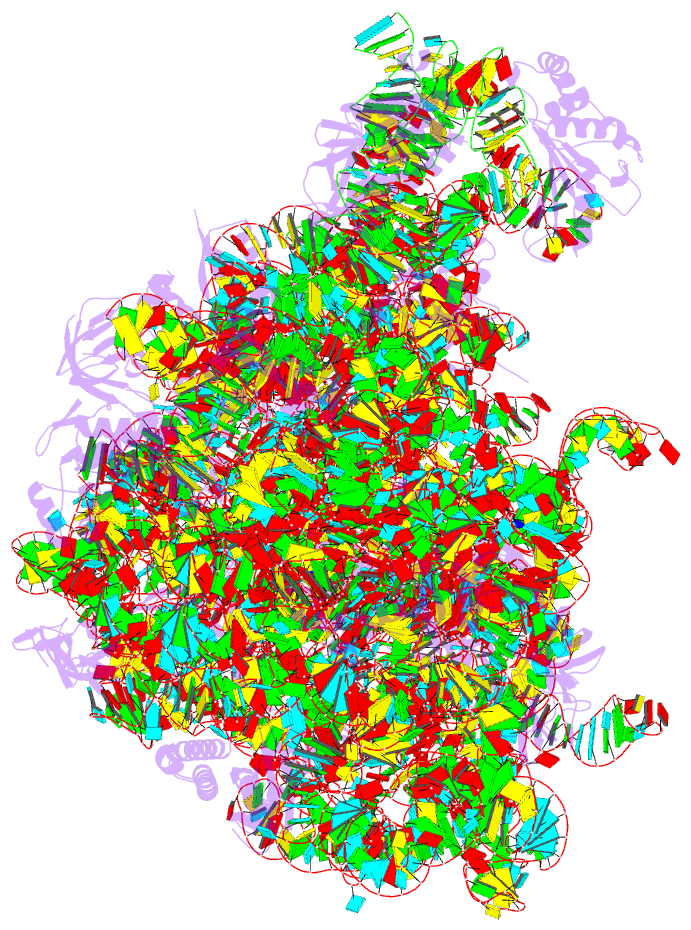
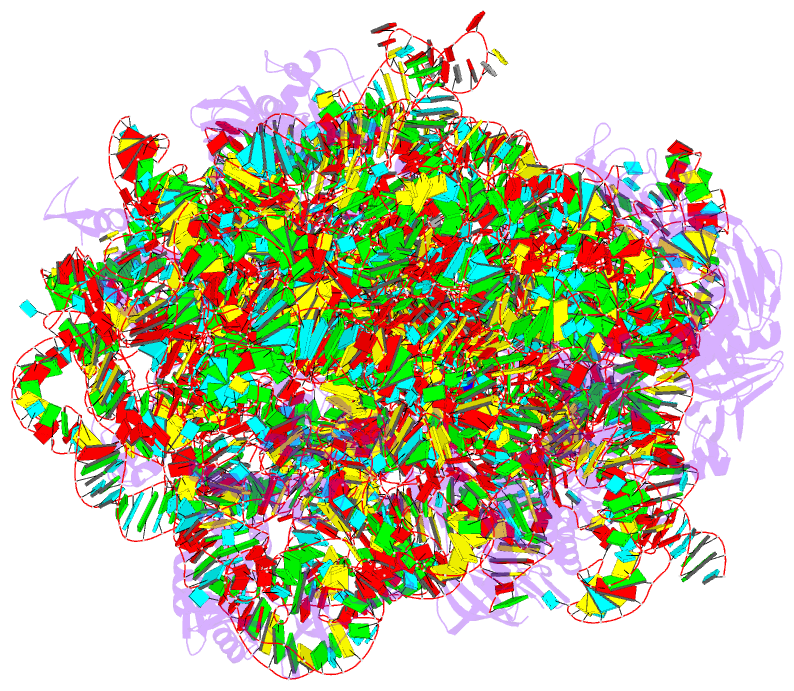
- E. coli 50s ribosomal subunit in complex with pramp
rumicidin-2 (focused refinement)
- Reference
-
Panteleev PV, Pichkur EB, Kruglikov RN, Paleskava A,
Shulenina OV, Bolosov IA, Bogdanov IV, Safronova VN,
Balandin SV, Marina VI, Kombarova TI, Korobova OV,
Shamova OV, Myasnikov AG, Borzilov AI, Osterman IA,
Sergiev PV, Bogdanov AA, Dontsova OA, Konevega AL,
Ovchinnikova TV (2024): "Rumicidins
are a family of mammalian host-defense peptides plugging
the 70S ribosome exit tunnel." Nat Commun,
15, 8925. doi: 10.1038/s41467-024-53309-y.
- Abstract
- The antimicrobial resistance crisis along with
challenges of antimicrobial discovery revealed the vital
necessity to develop new antibiotics. Many of the animal
proline-rich antimicrobial peptides (PrAMPs) inhibit the
process of bacterial translation. Genome projects allowed
to identify immune-related genes encoding animal host
defense peptides. Here, using genome mining approach, we
discovered a family of proline-rich cathelicidins, named
rumicidins. The genes encoding these peptides are
widespread among ruminant mammals. Biochemical studies
indicated that rumicidins effectively inhibited the
elongation stage of bacterial translation. The cryo-EM
structure of the Escherichia coli 70S ribosome in complex
with one of the representatives of the family revealed that
the binding site of rumicidins span the ribosomal A-site
cleft and the nascent peptide exit tunnel interacting with
its constriction point by the conservative Trp23-Phe24
dyad. Bacterial resistance to rumicidins is mediated by
knockout of the SbmA transporter or modification of the
MacAB-TolC efflux pump. A wide spectrum of antibacterial
activity, a high efficacy in the animal infection model,
and lack of adverse effects towards human cells in vitro
make rumicidins promising molecular scaffolds for
development of ribosome-targeting antibiotics.