Summary information and primary citation
- PDB-id
-
9cmp;
DSSR-derived features in text and
JSON formats
- Class
- hydrolase-RNA
- Method
- cryo-EM (3.3 Å)
- Summary
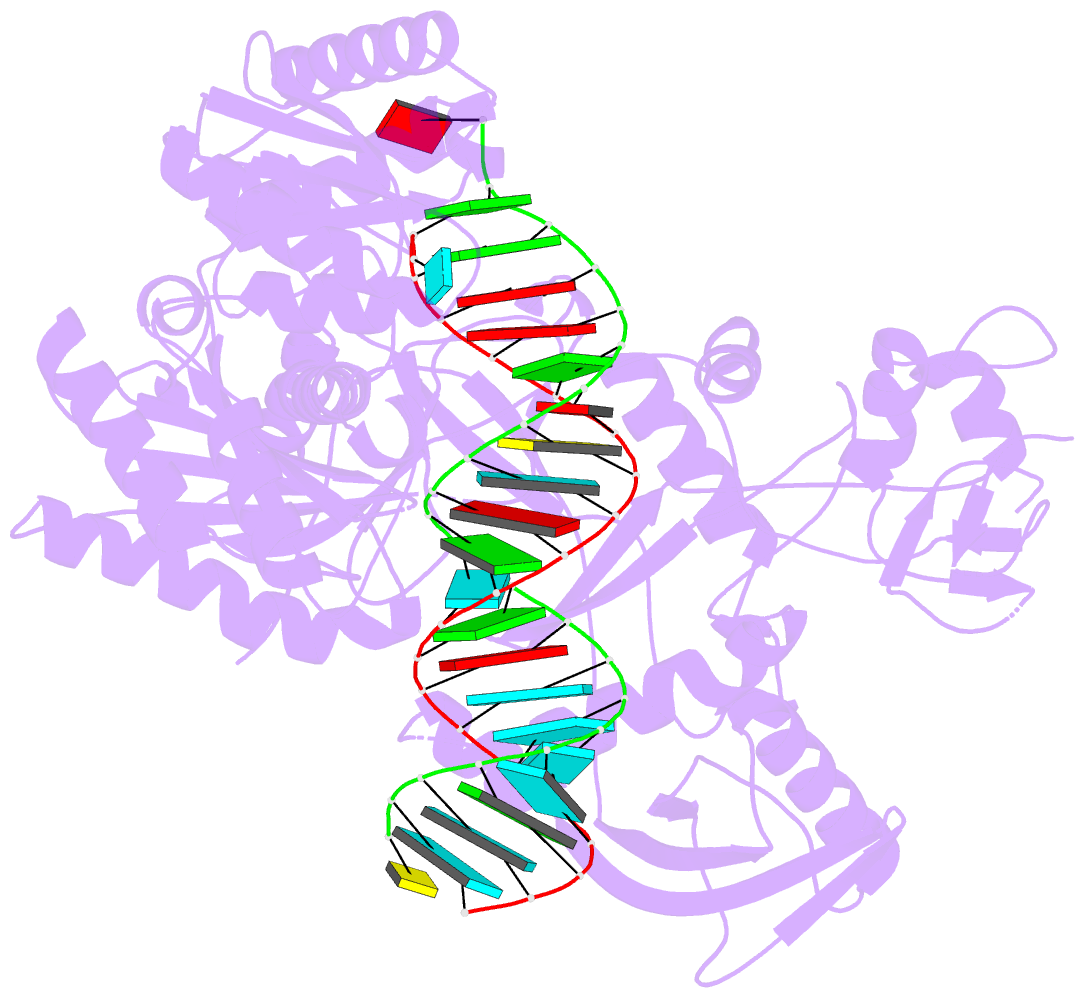
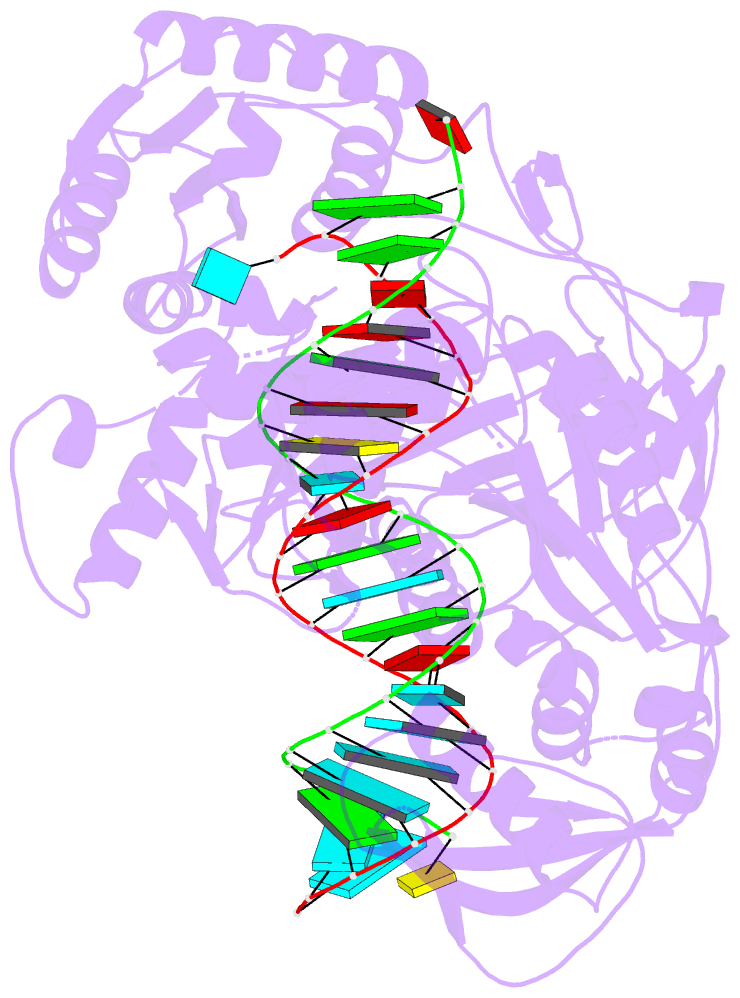
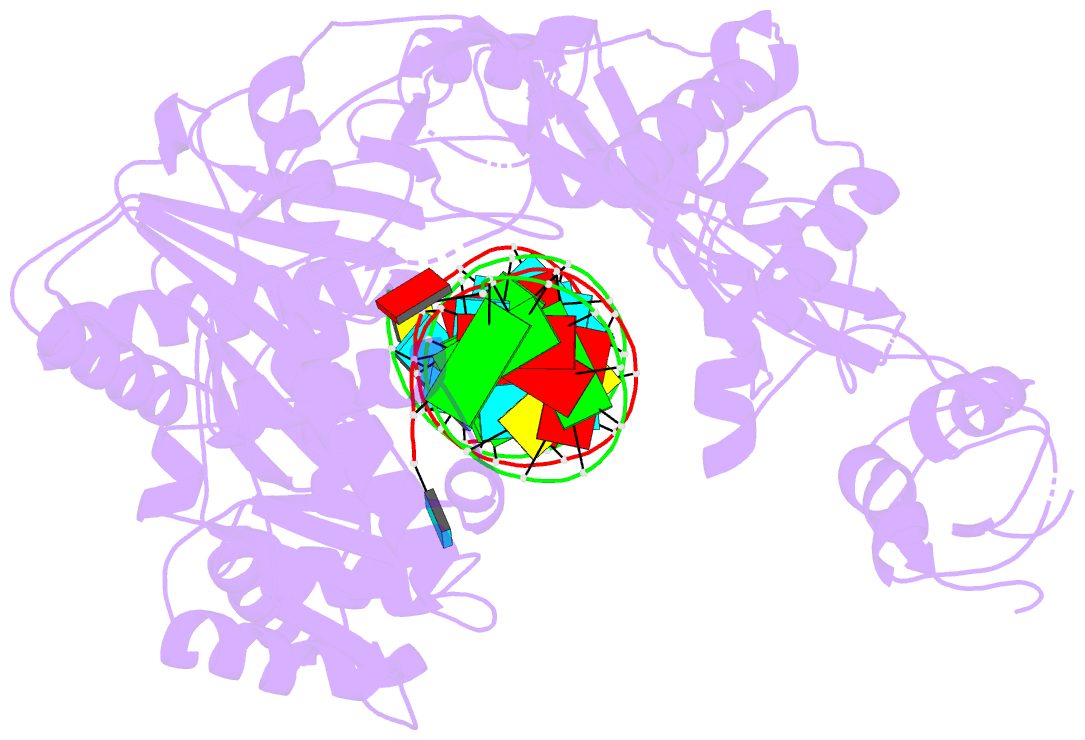
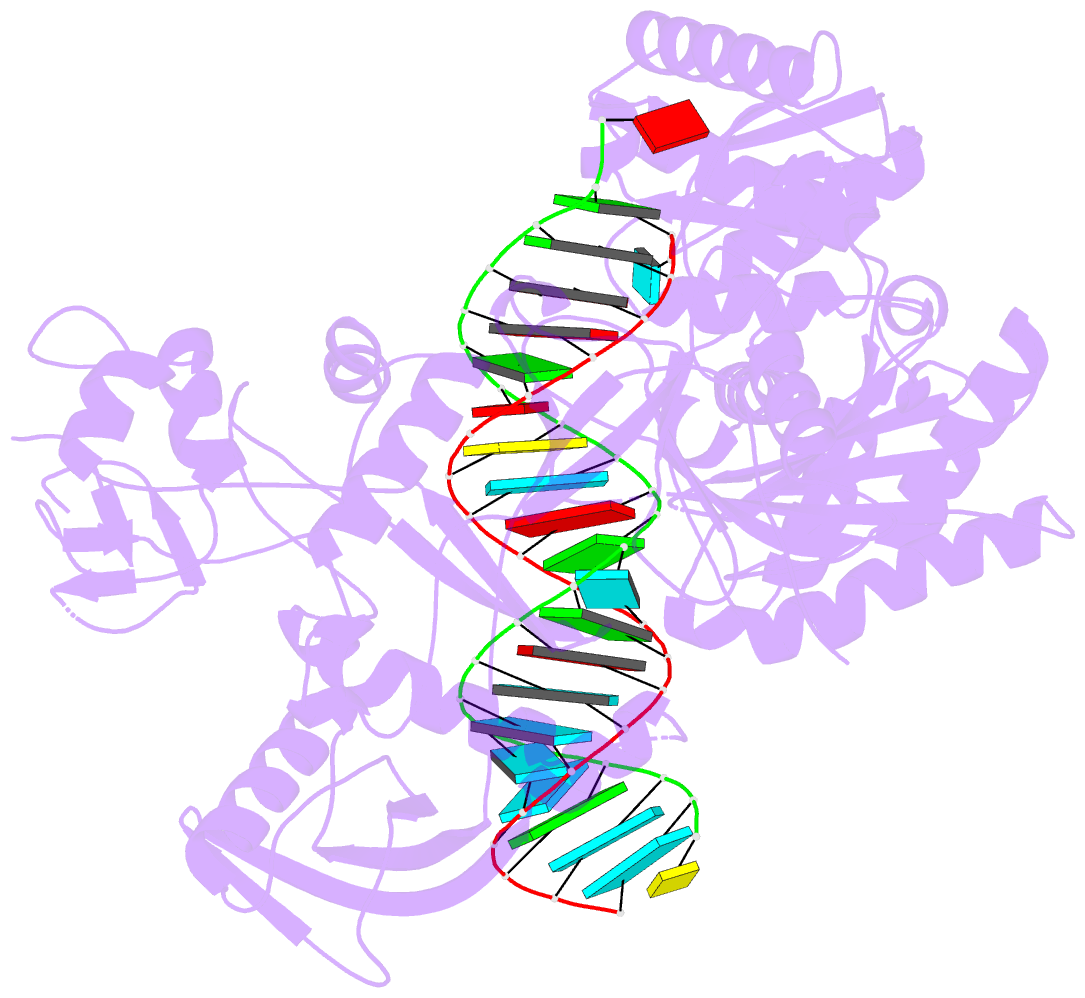
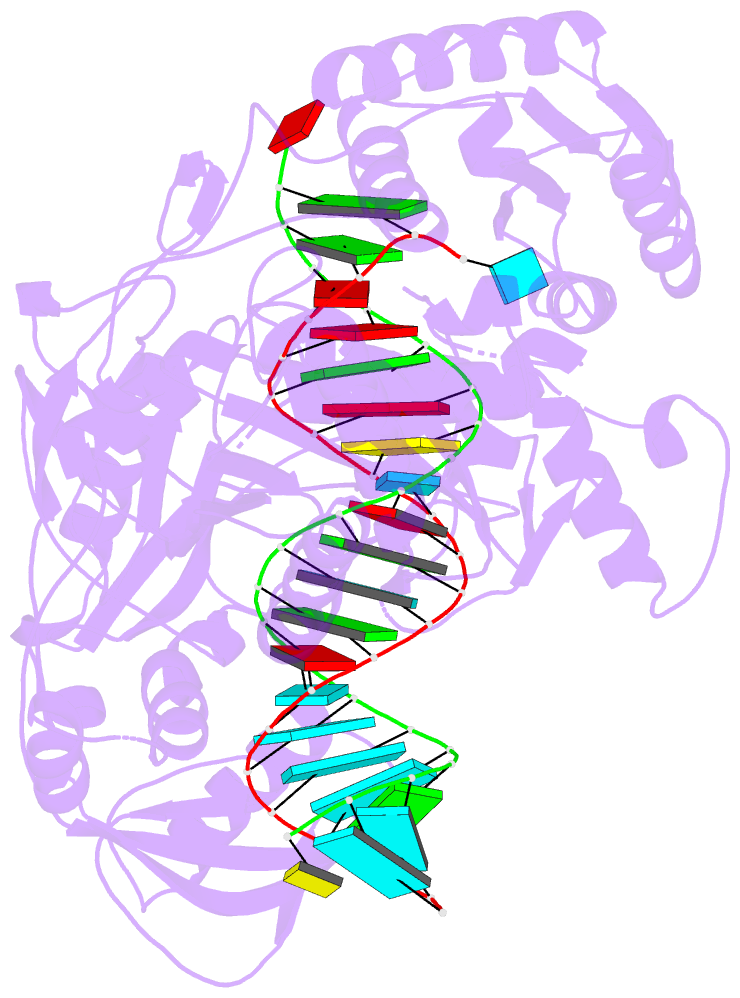
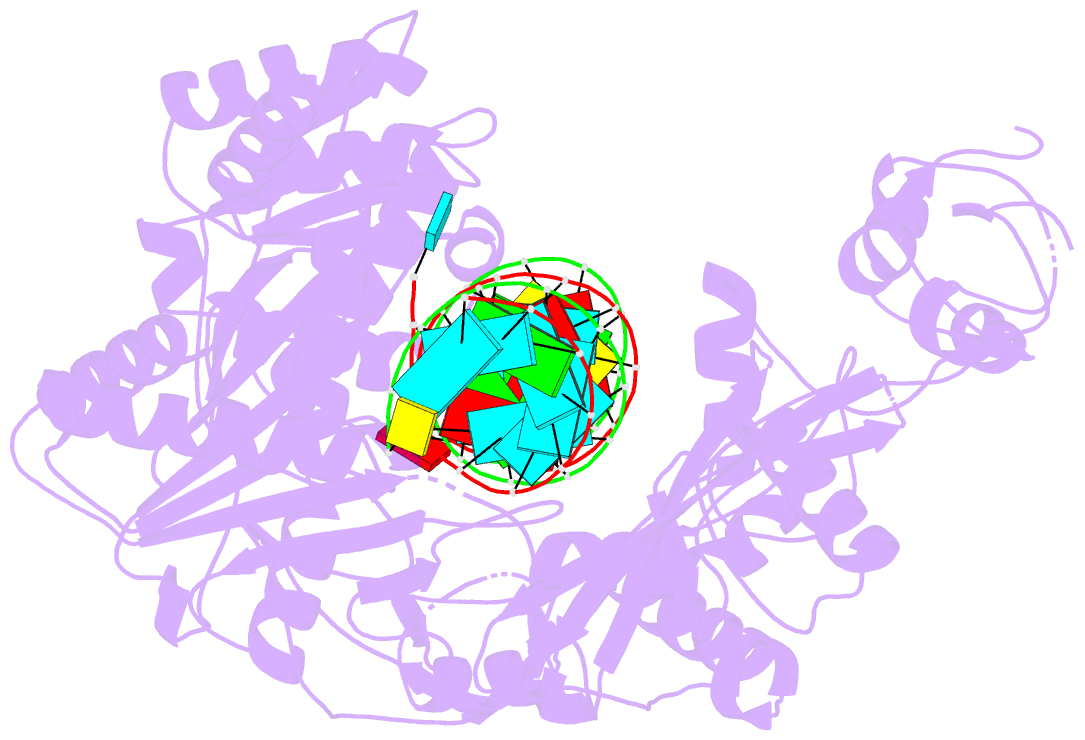
- Structure of human argonaute2-guide-target complex in a
fully paired, slicing-competent conformation
- Reference
-
Mohamed AA, Wang PY, Bartel DP, Vos SM (2025): "The
structural basis for RNA slicing by human
Argonaute2." Cell Rep, 44,
115166. doi: 10.1016/j.celrep.2024.115166.
- Abstract
- Argonaute (AGO) proteins associate with guide RNAs to
form complexes that slice transcripts that pair to the
guide. This slicing drives post-transcriptional gene
silencing through RNA interference (RNAi), which is
essential for many eukaryotes and the basis for new
clinical therapies. Despite this importance, structural
information on eukaryotic AGOs in a fully paired,
slicing-competent conformation-hypothesized to be
intrinsically unstable-has been lacking. Here, we present
the cryogenic electron microscopy structure of a human
AGO-guide complex bound to a fully paired target, revealing
structural rearrangements that enable this conformation.
Critically, the N domain of AGO rotates to allow the RNA
full access to the central channel and forms contacts that
license rapid slicing. Moreover, a conserved loop in the
PIWI domain secures the RNA near the active site to enhance
slicing rate and specificity. These results explain how AGO
accommodates targets possessing pairing specificity
typically observed in biological and clinical slicing
substrates.