Summary information and primary citation
- PDB-id
-
8ybk;
DSSR-derived features in text and
JSON formats
- Class
- DNA binding protein-DNA
- Method
- cryo-EM (2.69 Å)
- Summary
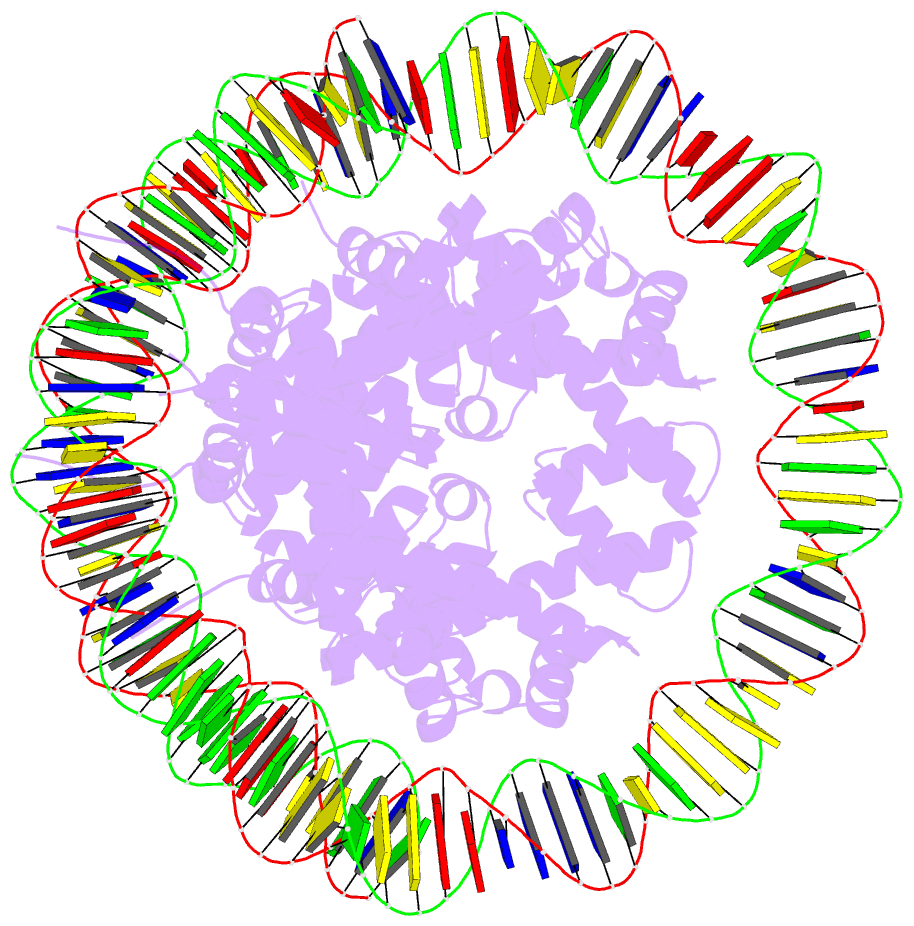
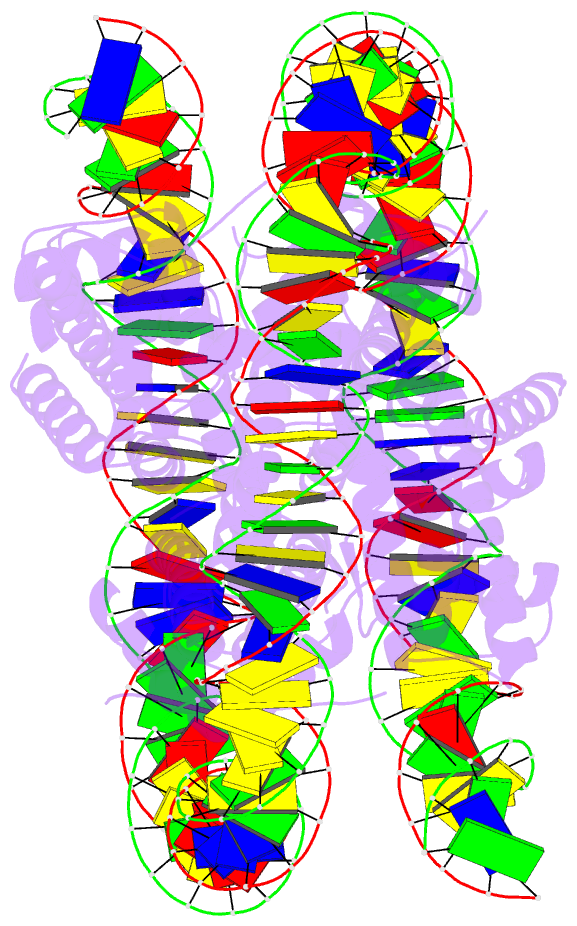
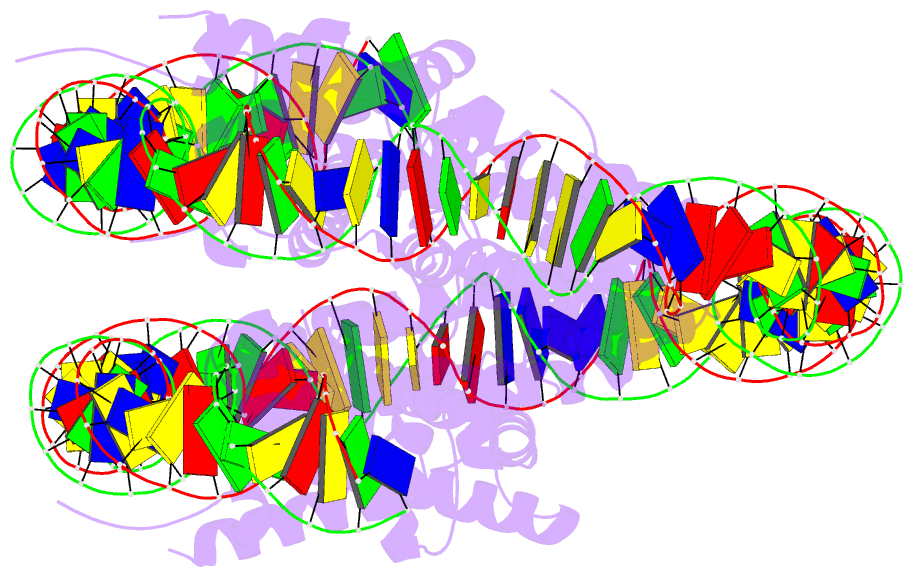
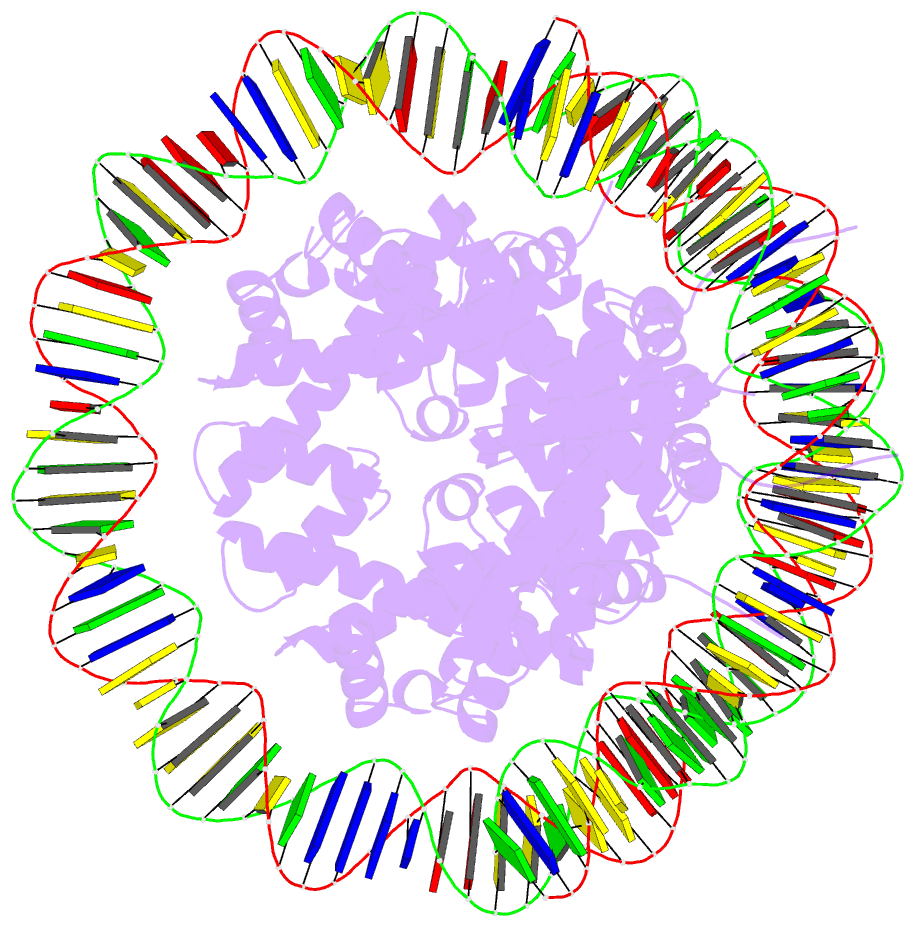
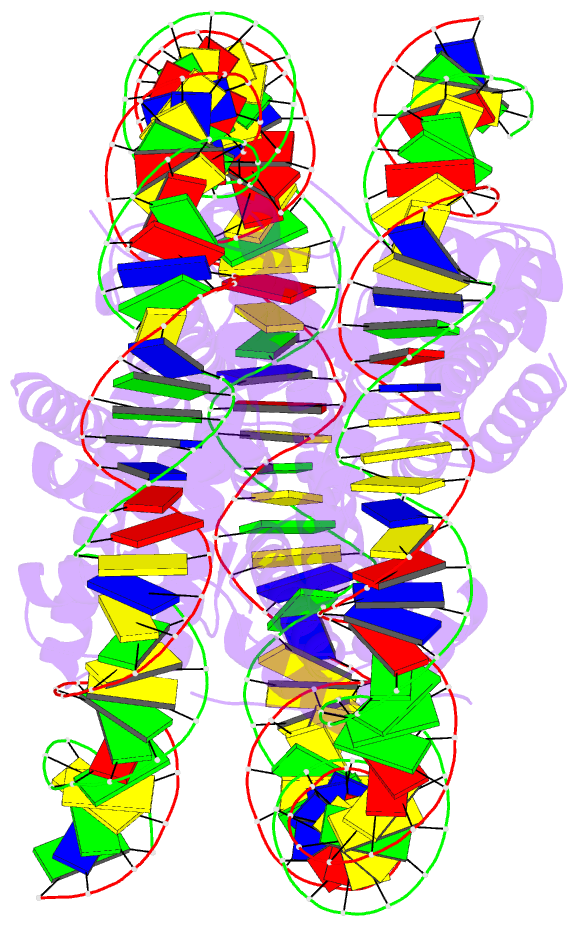
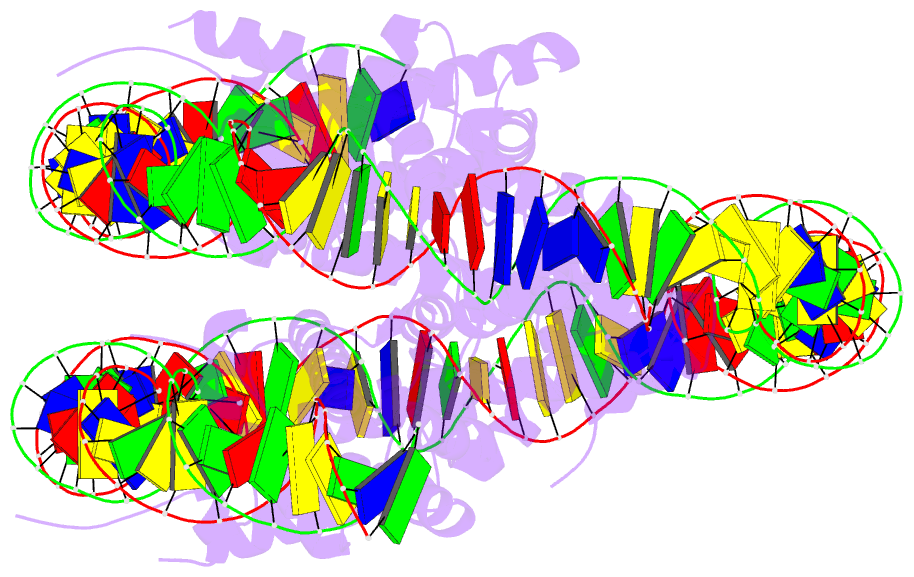
- cryo-EM structure of the human nucleosome containing
the h3.1 e97k mutant
- Reference
-
Kimura T, Hirai S, Kujirai T, Fujita R, Ogasawara M,
Ehara H, Sekine SI, Takizawa Y, Kurumizaka H (2024):
"Cryo-EM
structure and biochemical analyses of the nucleosome
containing the cancer-associated histone H3 mutation
E97K." Genes Cells, 29,
769-781. doi: 10.1111/gtc.13143.
- Abstract
- The Lys mutation of the canonical histone H3.1 Glu97
residue (H3E97K) is found in cancer cells. Previous
biochemical analyses revealed that the nucleosome
containing the H3E97K mutation is extremely unstable as
compared to the wild-type nucleosome. However, the
mechanism by which the H3E97K mutation causes nucleosome
instability has not been clarified yet. In the present
study, the cryo-electron microscopy structure of the
nucleosome containing the H3E97K mutation revealed that the
entry/exit DNA regions of the H3E97K nucleosome are
disordered, probably by detachment of the nucleosomal DNA
from the H3 N-terminal regions. This may change the
intra-molecular amino acid interactions with the replaced
H3 Lys97 residue, inducing structural distortion around the
mutated position in the nucleosome. Consistent with the
nucleosomal DNA end flexibility and the nucleosome
instability, the H3E97K mutation exhibited reduced binding
of linker histone H1 to the nucleosome, defective
activation of PRC2 (the essential methyltransferase for
facultative heterochromatin formation) with a
poly-nucleosome, and enhanced nucleosome transcription by
RNA polymerase II.