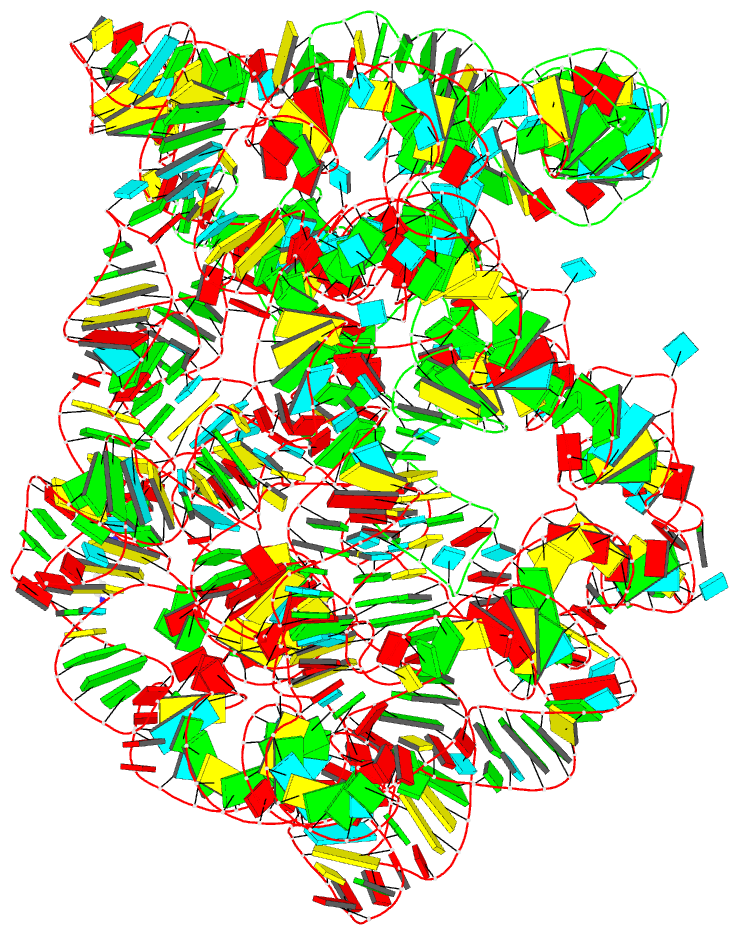
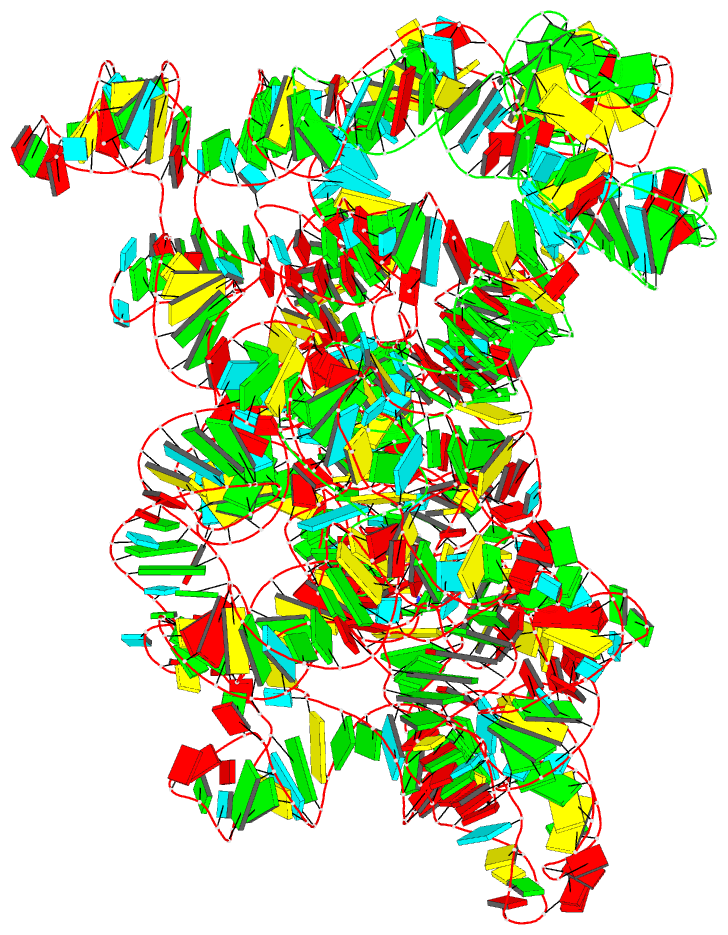
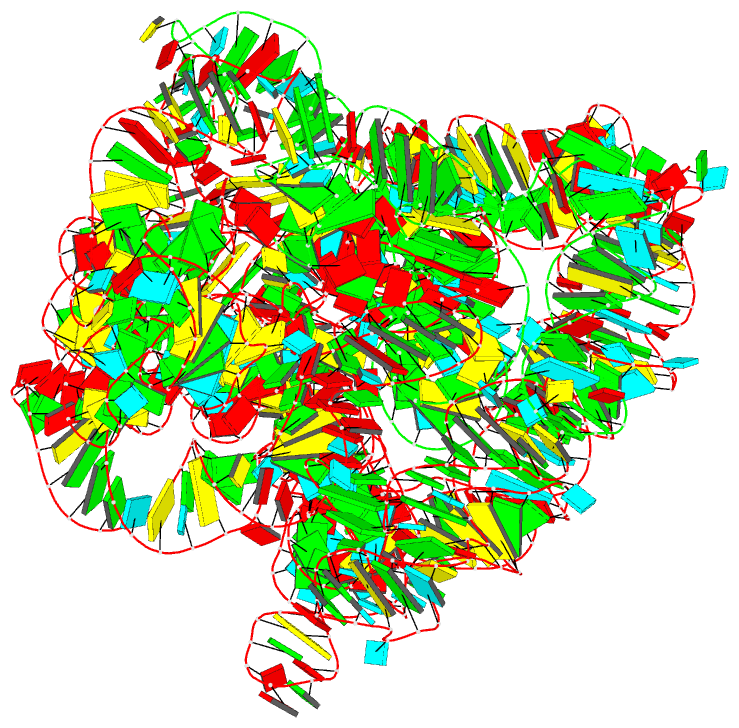
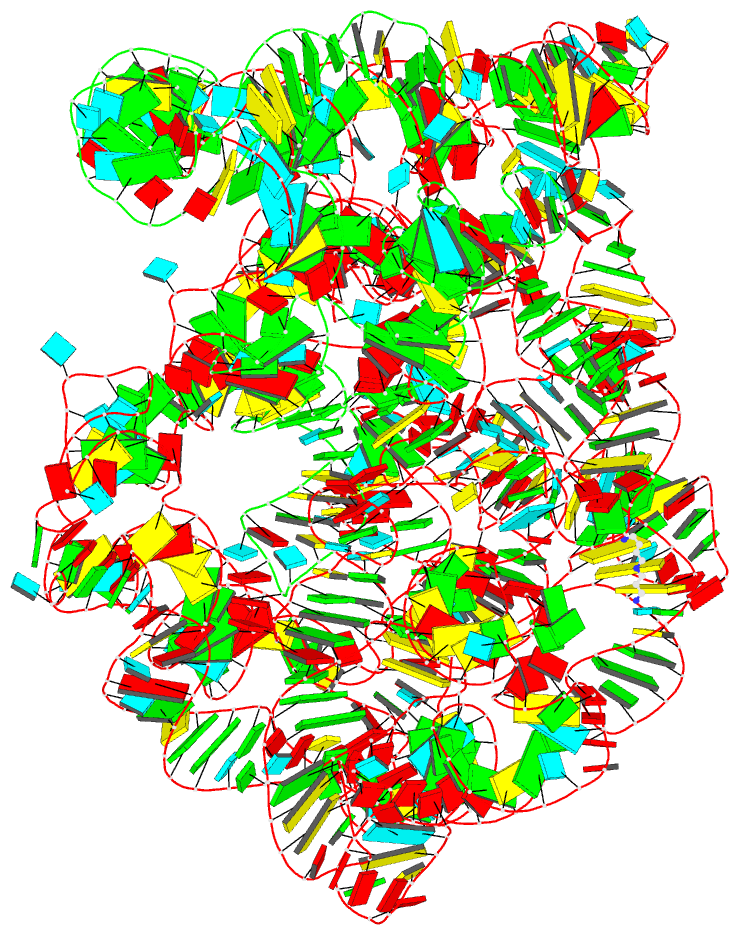
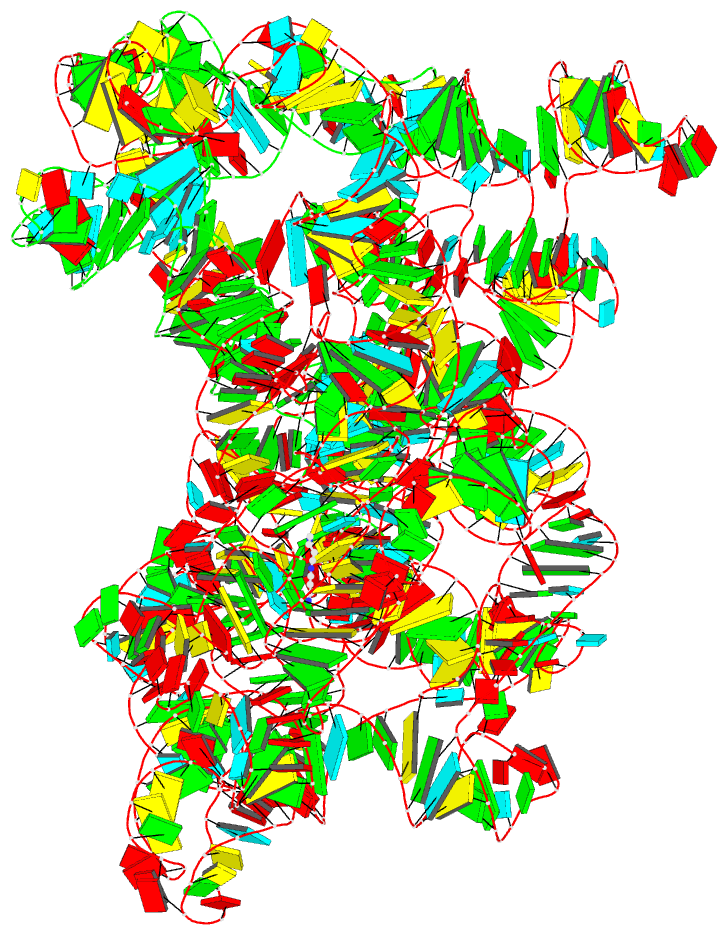
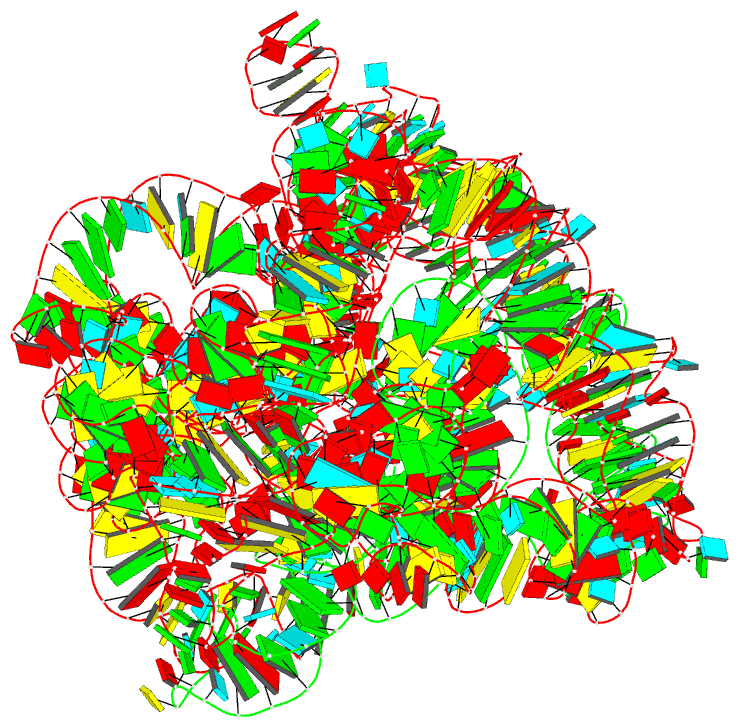
Summary information and primary citation
- PDB-id
-
8xtp;
DSSR-derived features in text and
JSON formats
- Class
- RNA
- Method
- cryo-EM (2.9 Å)
- Summary
- Comamonas testosteroni kf-1 circularly permuted group
ii intron post-2s state
- Reference
-
Wang L, Xie J, Zhang C, Zou J, Huang Z, Shang S, Chen X,
Yang Y, Liu J, Dong H, Huang D, Su Z (2025): "Structural
basis of circularly permuted group II intron
self-splicing." Nat.Struct.Mol.Biol.,
32, 1091-1100. doi: 10.1038/s41594-025-01484-x.
- Abstract
- Circularly permuted group II introns (CP introns)
consist of rearranged structural domains separated by two
tethered exons, generating branched introns and circular
exons via back-splicing. Structural and mechanistic
understanding of circular RNA (circRNA) generation by CP
introns remains elusive. We resolve cryo-electron
microscopy structures of a natural CP intron in different
states during back-splicing at a resolution of 2.5-2.9 Å.
Domain 6 (D6) undergoes a conformational change of 65°
after branching, to facilitate 3'-exon recognition and
circularization. Previously unseen tertiary interactions
compact the catalytic triad and D6 for splicing without
protein, whereas a metal ion, M<sub>35</sub>,
is observed to stabilize the 5'-exon during splicing. While
these unique features were not observed in canonical group
II introns and spliceosomes, they are common in CP introns,
as demonstrated by the cryo-EM structure of another CP
intron discovered by comparative genomics analysis. Our
results elucidate the mechanism of CP intron back-splicing
dynamics, with potential applications in circRNA research
and therapeutics.