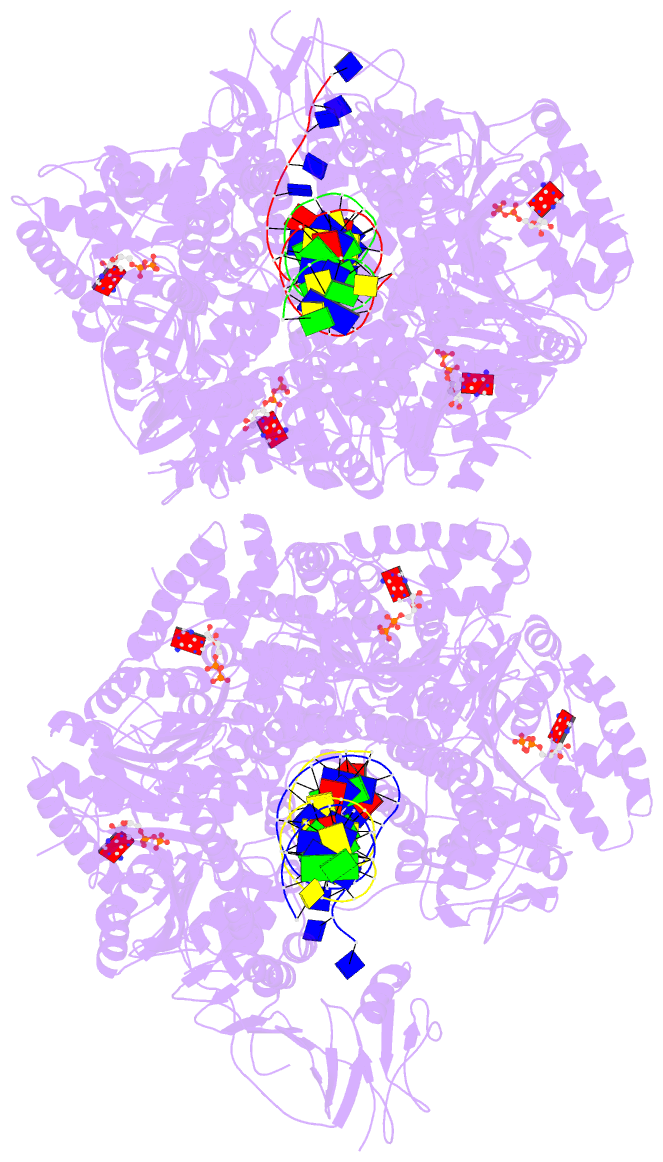
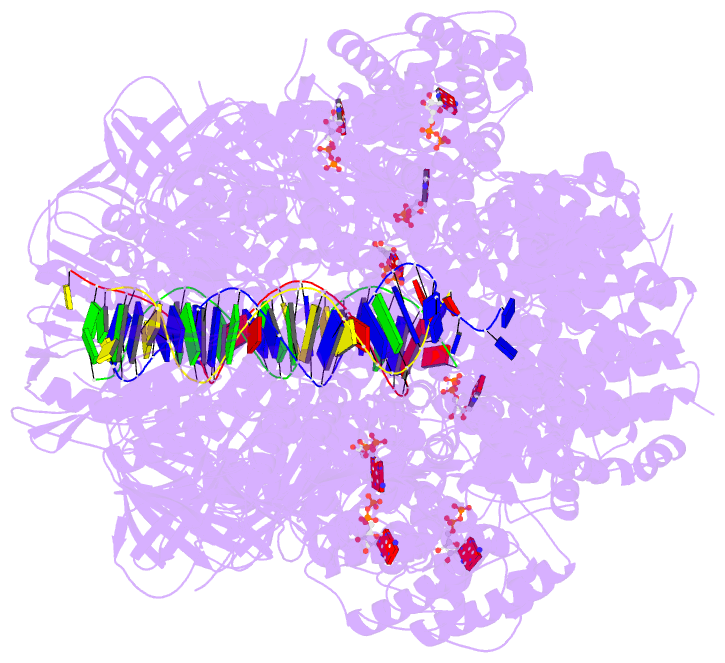
Summary information and primary citation
- PDB-id
-
8uk9;
DSSR-derived features in text and
JSON formats
- Class
- DNA binding protein-DNA
- Method
- X-ray (3.1 Å)
- Summary
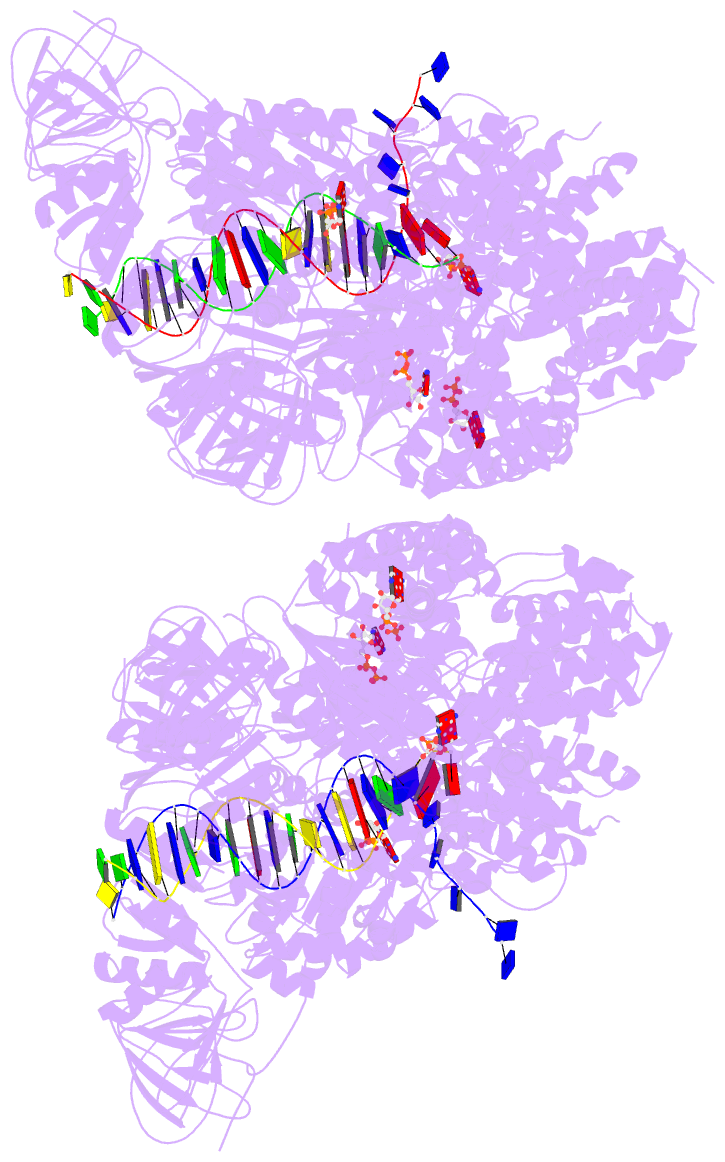
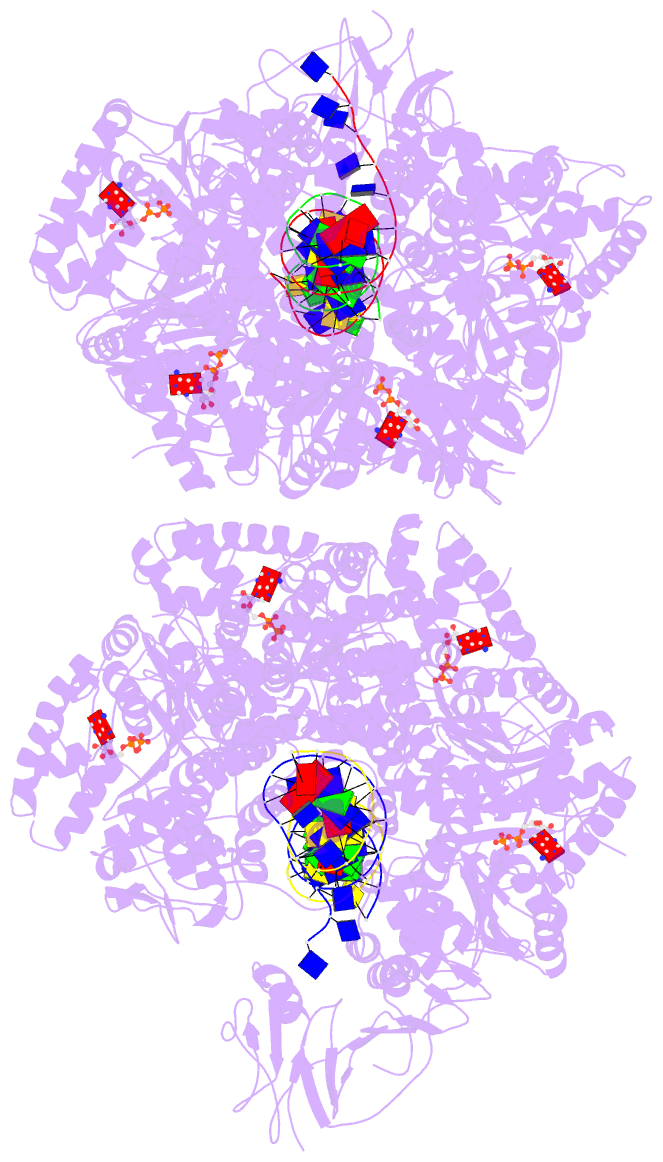
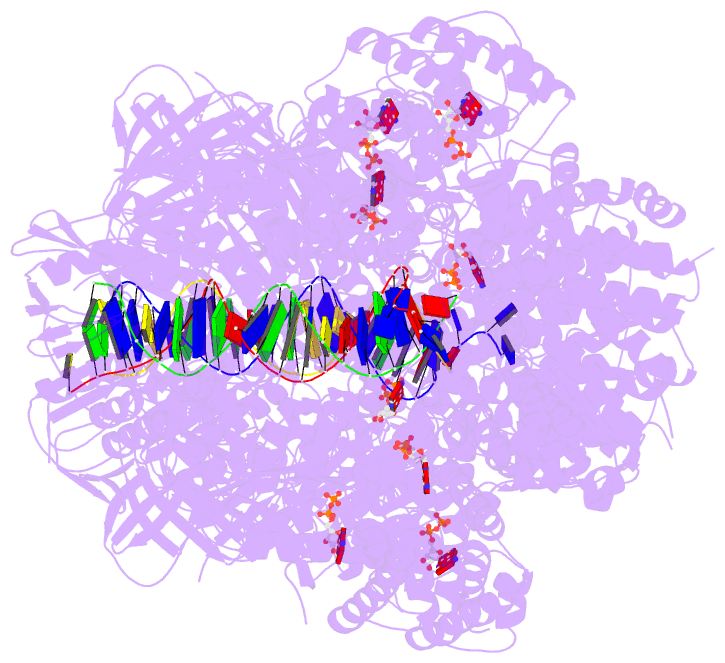
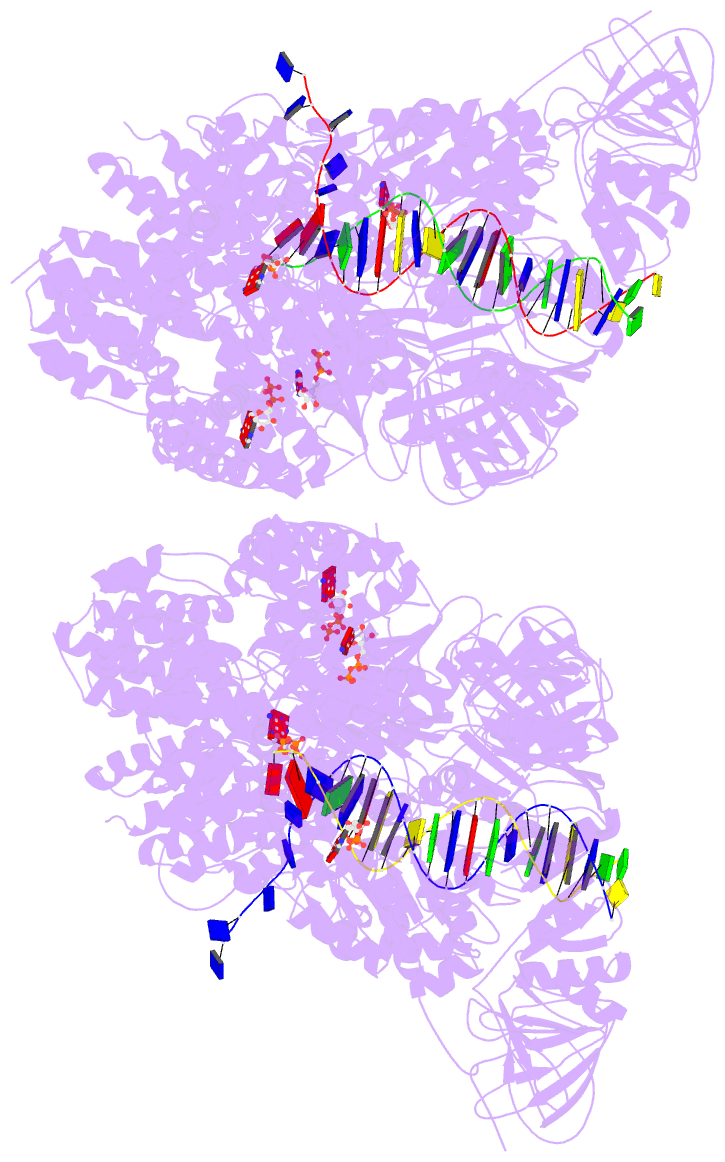
- Structure of t4 bacteriophage clamp loader mutant d110c
bound to the t4 clamp, primer-template DNA, and atp
analog
- Reference
-
Marcus K, Huang Y, Subramanian S, Gee CL, Gorday K,
Ghaffari-Kashani S, Luo XR, Zheng L, O'Donnell M,
Subramaniam S, Kuriyan J (2024): "Autoinhibition
of a clamp-loader ATPase revealed by deep mutagenesis and
cryo-EM." Nat.Struct.Mol.Biol.,
31, 424-435. doi: 10.1038/s41594-023-01177-3.
- Abstract
- Clamp loaders are AAA+ ATPases that facilitate
high-speed DNA replication. In eukaryotic and bacteriophage
clamp loaders, ATP hydrolysis requires interactions between
aspartate residues in one protomer, present in conserved
'DEAD-box' motifs, and arginine residues in adjacent
protomers. We show that functional defects resulting from a
DEAD-box mutation in the T4 bacteriophage clamp loader can
be compensated by widely distributed single mutations in
the ATPase domain. Using cryo-EM, we discovered an
unsuspected inactive conformation of the clamp loader, in
which DNA binding is blocked and the catalytic sites are
disassembled. Mutations that restore function map to
regions of conformational change upon activation,
suggesting that these mutations may increase DNA affinity
by altering the energetic balance between inactive and
active states. Our results show that there are extensive
opportunities for evolution to improve catalytic efficiency
when an inactive intermediate is involved.