Summary information and primary citation
- PDB-id
-
8txv;
DSSR-derived features in text and
JSON formats
- Class
- transferase
- Method
- cryo-EM (3.8 Å)
- Summary
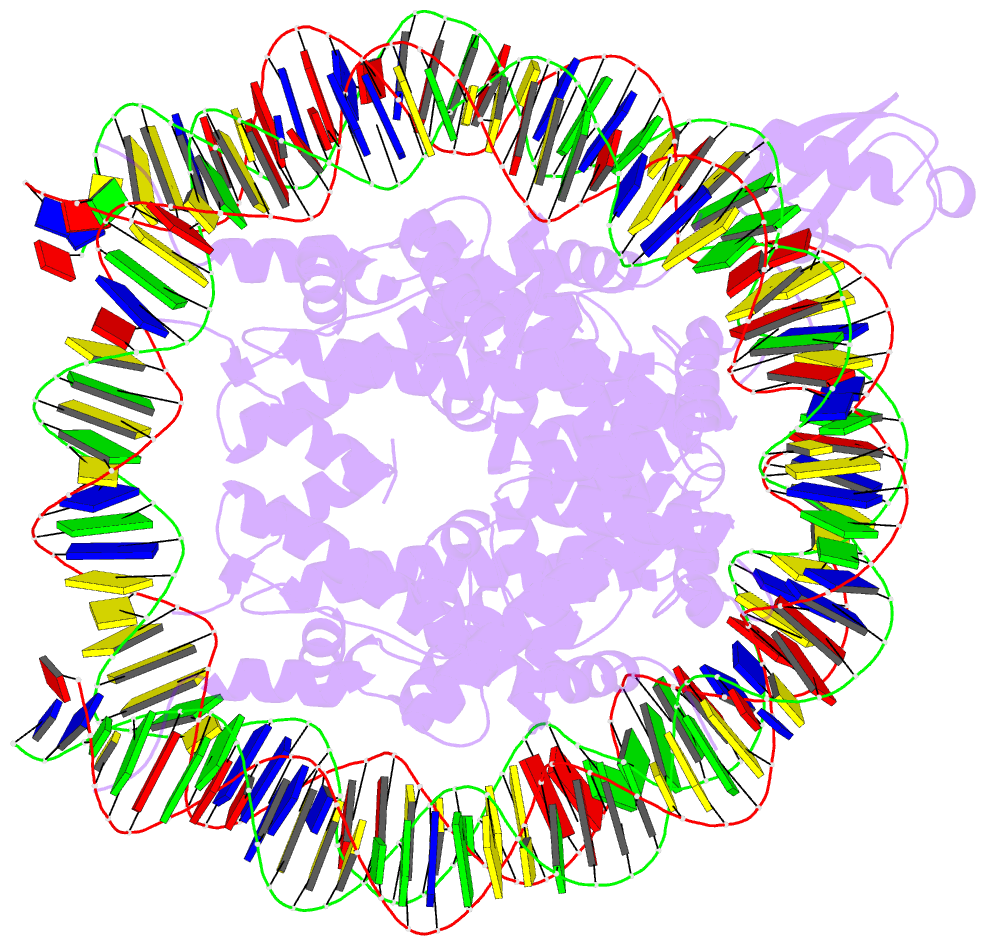
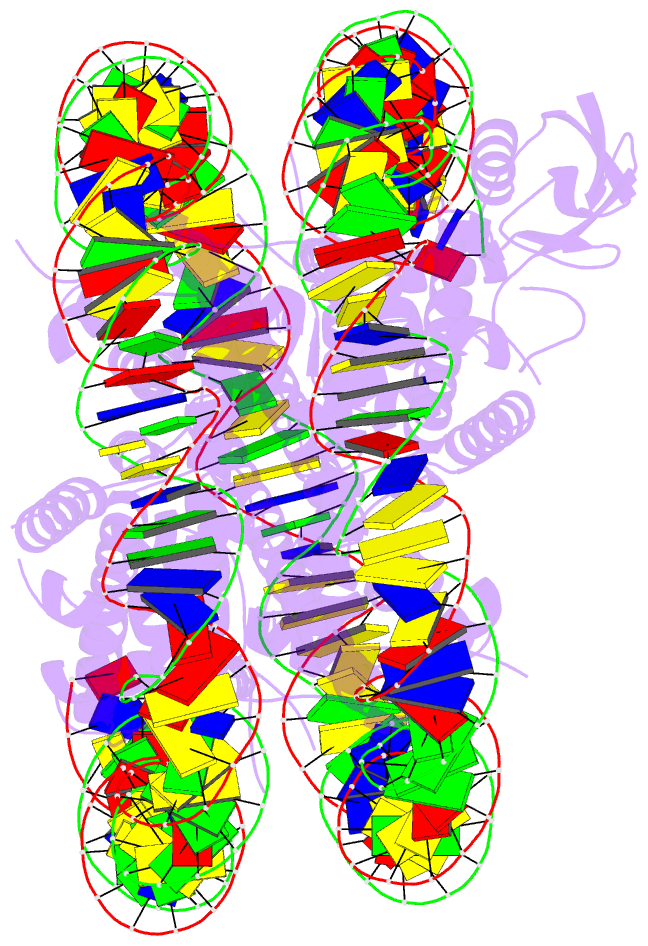
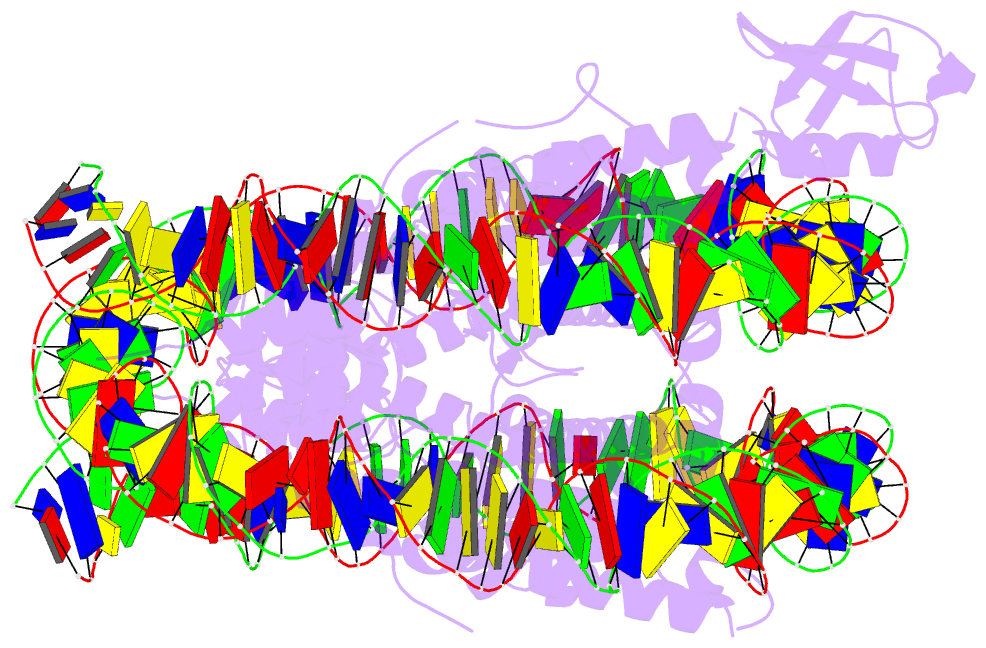
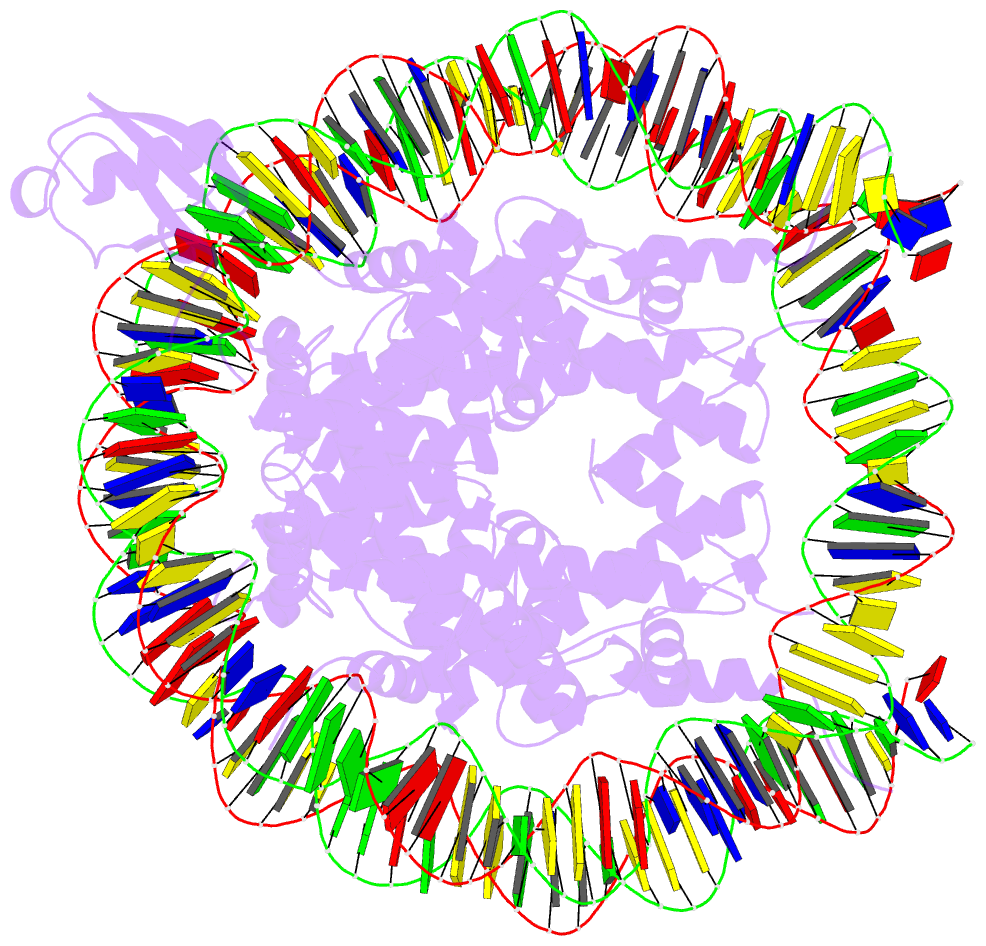
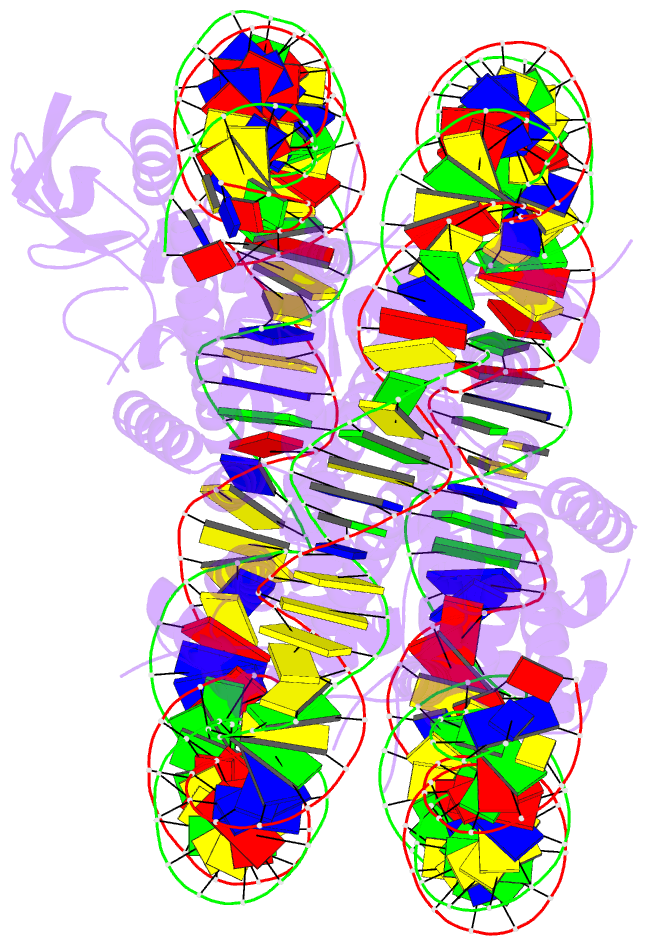
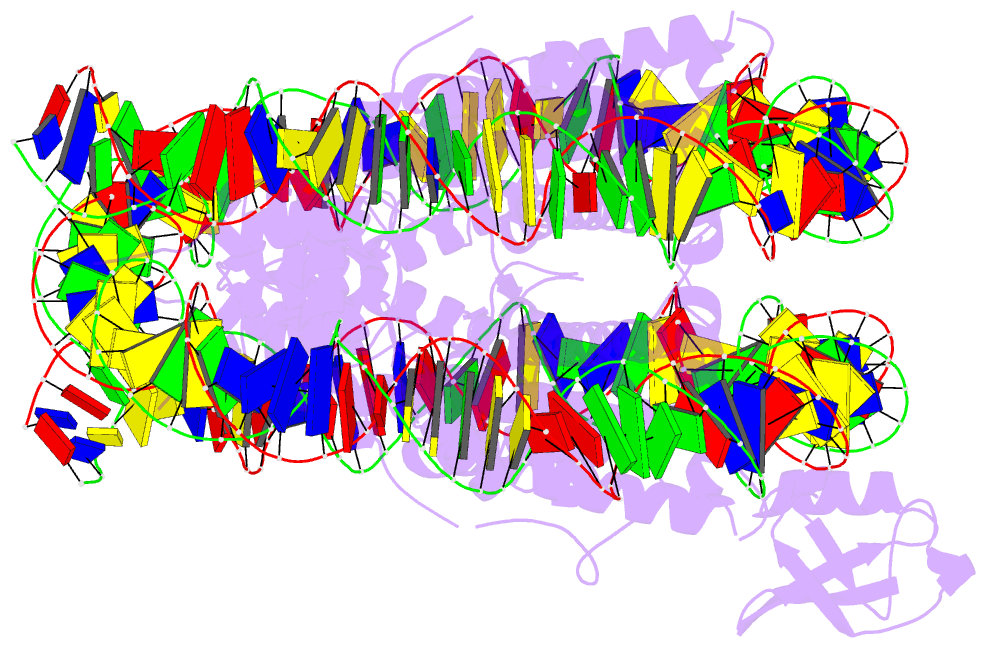
- cryo-EM structure of the human nucleosome core particle
ubiquitylated at histone h2a k15 in complex with rnf168
(class 1)
- Reference
-
Hu Q, Zhao D, Cui G, Bhandari J, Thompson JR, Botuyan MV,
Mer G (2024): "Mechanisms
of RNF168 nucleosome recognition and ubiquitylation."
Mol.Cell, 84, 839-853.e12. doi:
10.1016/j.molcel.2023.12.036.
- Abstract
- RNF168 plays a central role in the DNA damage response
(DDR) by ubiquitylating histone H2A at K13 and K15. These
modifications direct BRCA1-BARD1 and 53BP1 foci formation
in chromatin, essential for cell-cycle-dependent DNA
double-strand break (DSB) repair pathway selection. The
mechanism by which RNF168 catalyzes the targeted
accumulation of H2A ubiquitin conjugates to form repair
foci around DSBs remains unclear. Here, using cryoelectron
microscopy (cryo-EM), nuclear magnetic resonance (NMR)
spectroscopy, and functional assays, we provide a molecular
description of the reaction cycle and dynamics of RNF168 as
it modifies the nucleosome and recognizes its
ubiquitylation products. We demonstrate an interaction of a
canonical ubiquitin-binding domain within full-length
RNF168, which not only engages ubiquitin but also the
nucleosome surface, clarifying how such site-specific
ubiquitin recognition propels a signal amplification loop.
Beyond offering mechanistic insights into a key DDR
protein, our study aids in understanding site specificity
in both generating and interpreting chromatin
ubiquitylation.