Summary information and primary citation
- PDB-id
-
8tvq;
DSSR-derived features in text and
JSON formats
- Class
- transcription-DNA-RNA
- Method
- cryo-EM (4.6 Å)
- Summary
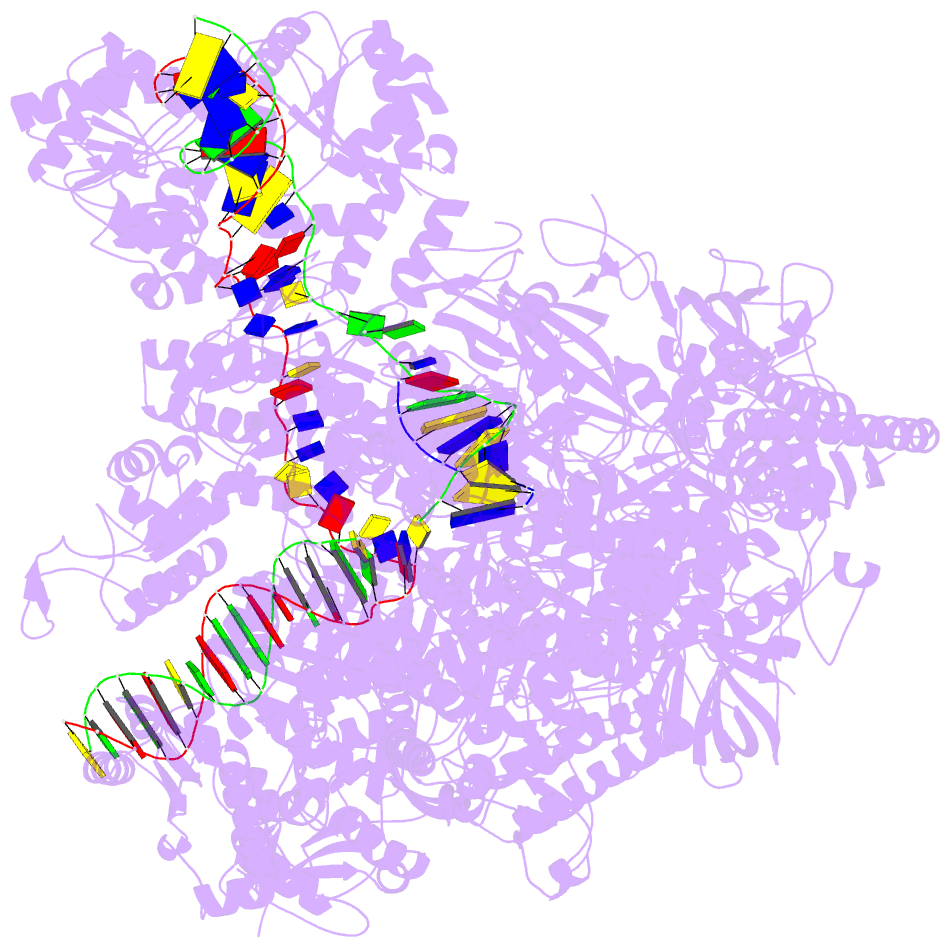
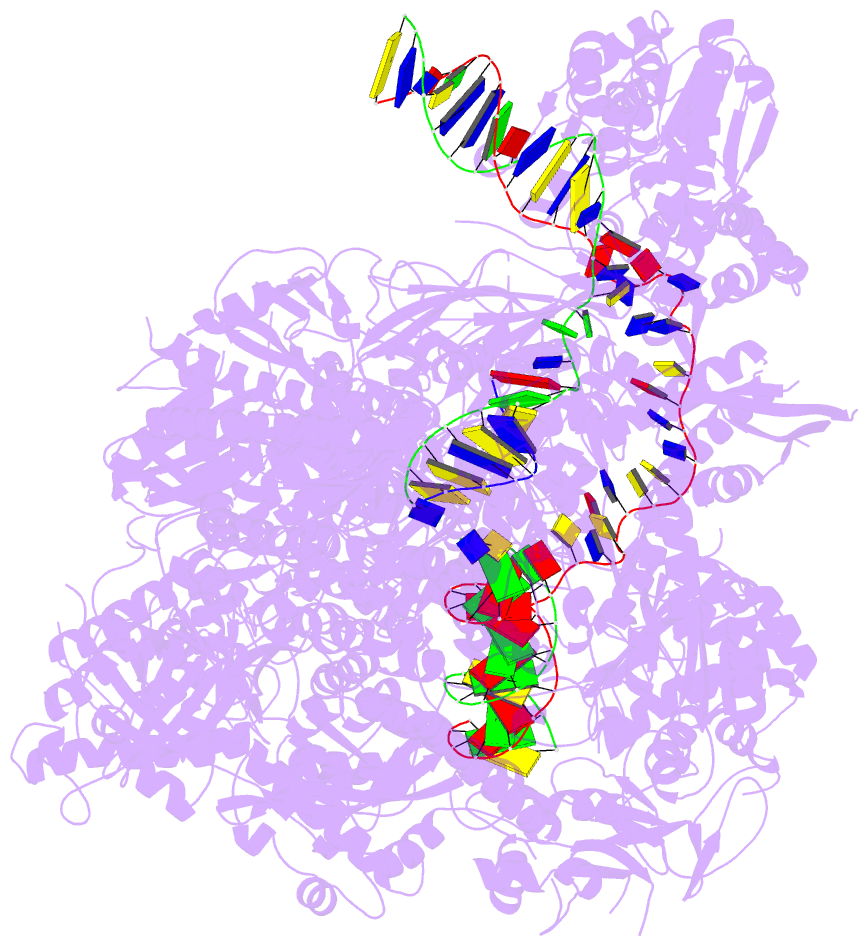
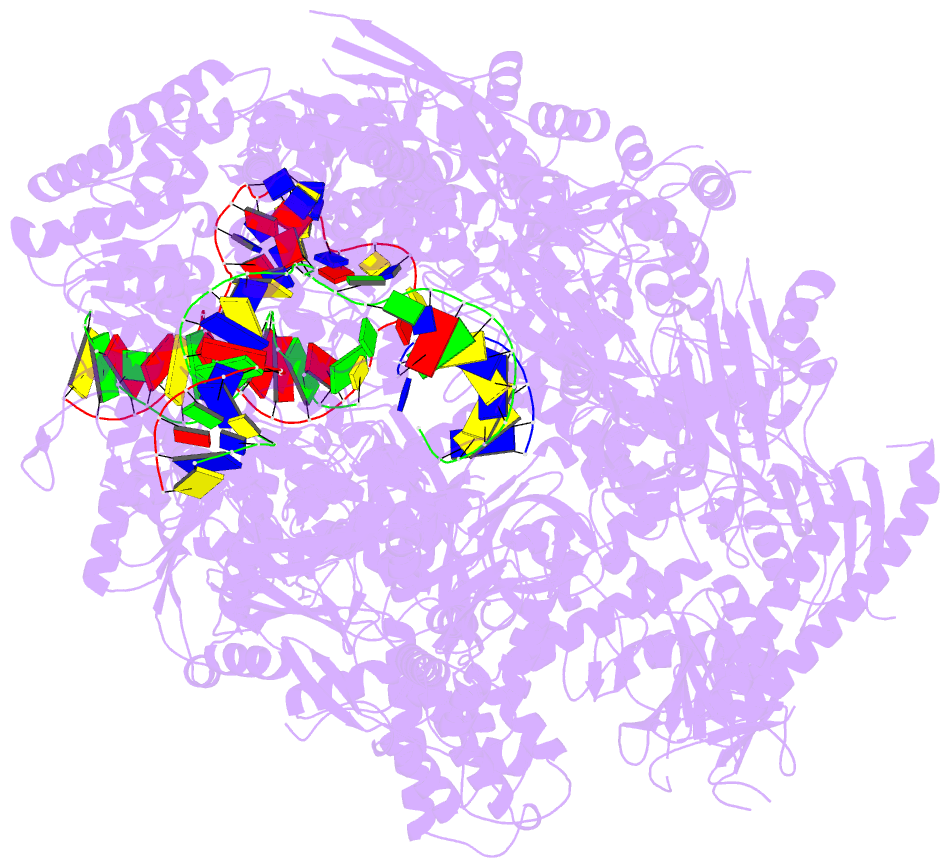
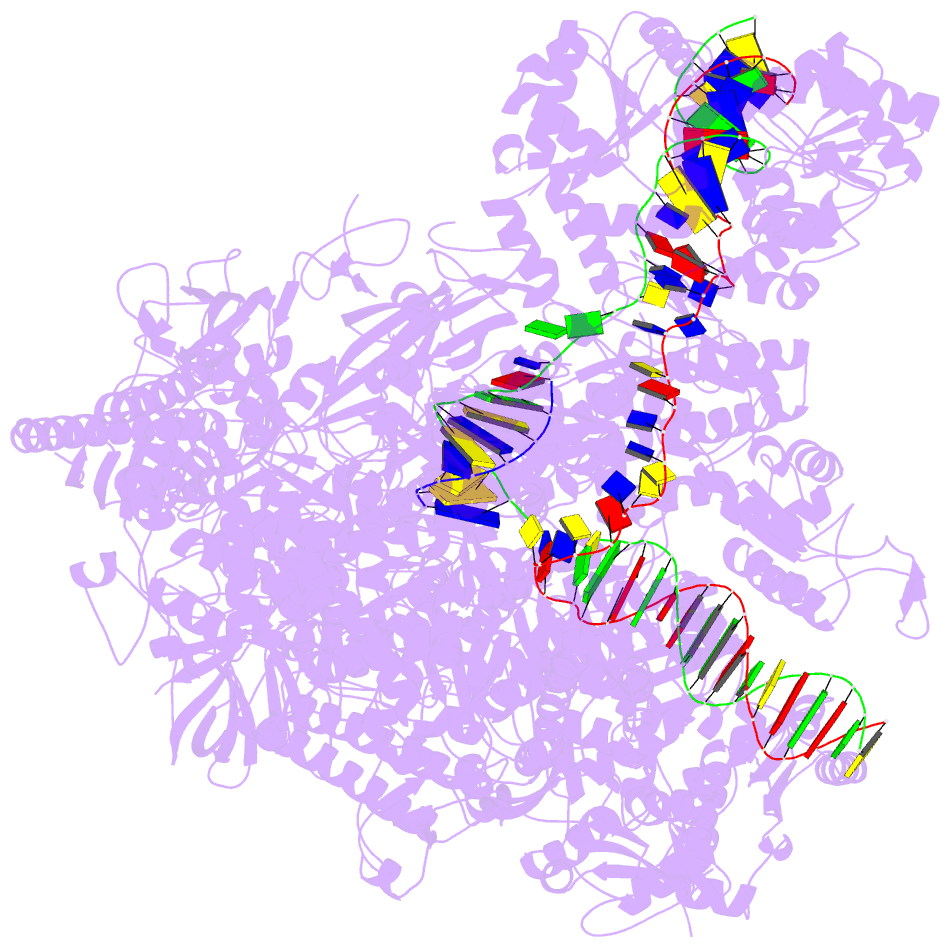
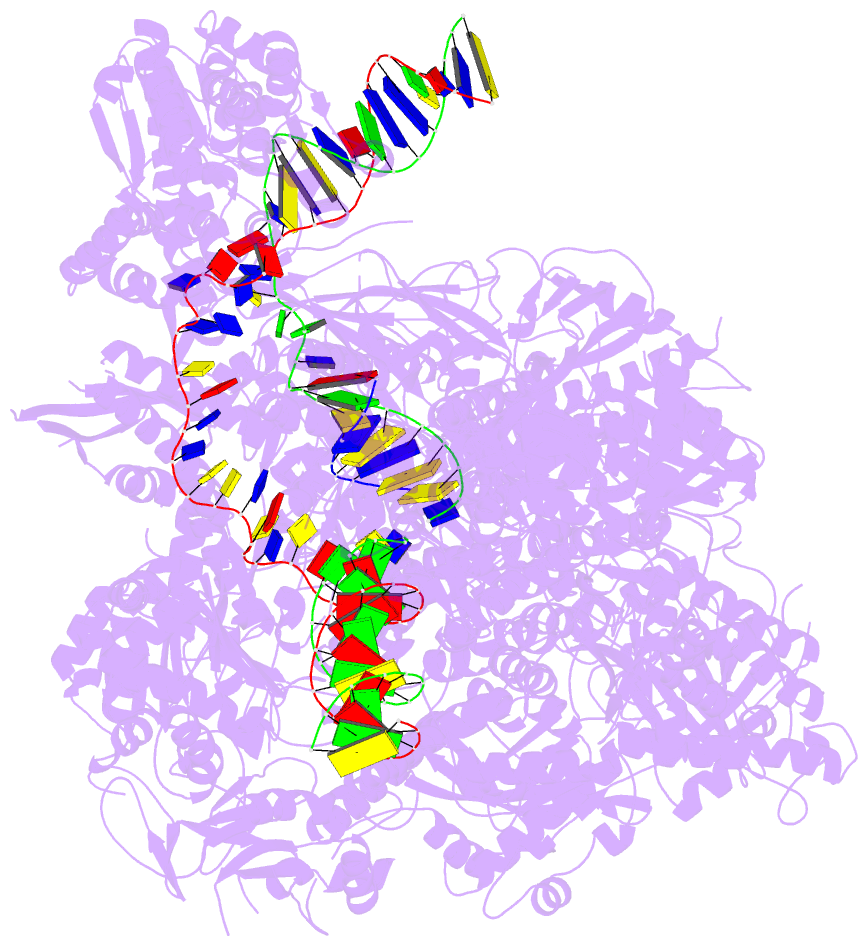
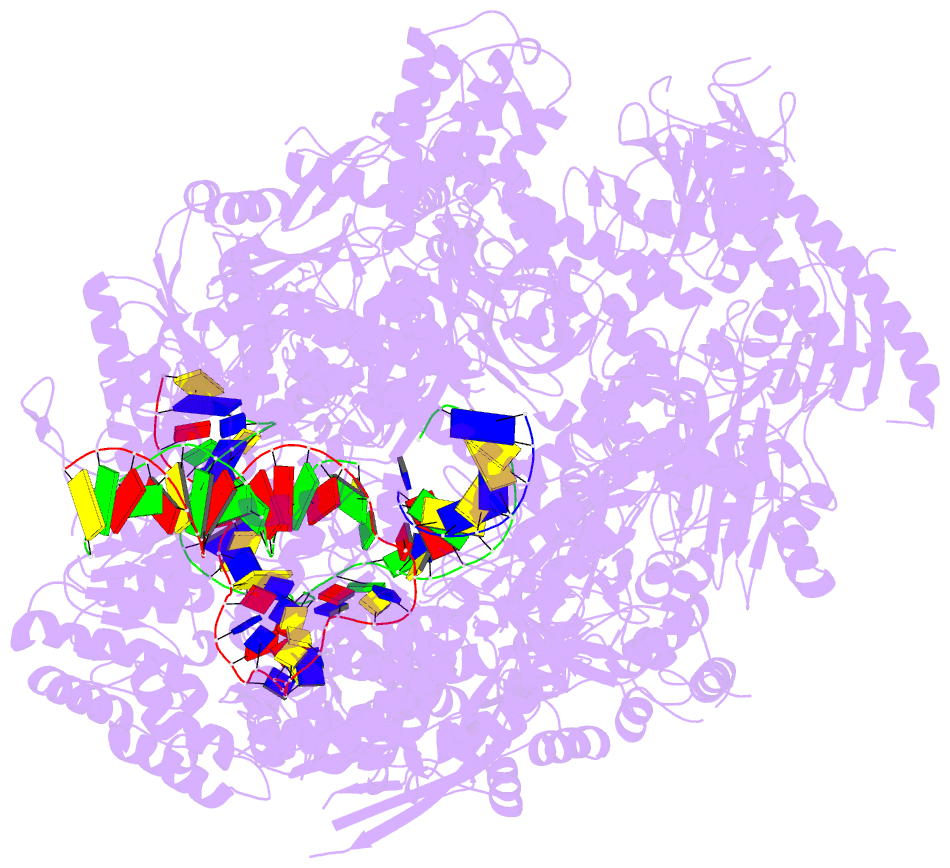
- cryo-EM structure of cpd stalled 10-subunit pol ii in
complex with rad26
- Reference
-
Sarsam RD, Xu J, Lahiri I, Gong W, Li Q, Oh J, Zhou Z,
Hou P, Chong J, Hao N, Li S, Wang D, Leschziner AE
(2024): "Elf1
promotes Rad26's interaction with lesion-arrested Pol II
for transcription-coupled repair."
Proc.Natl.Acad.Sci.USA, 121,
e2314245121. doi: 10.1073/pnas.2314245121.
- Abstract
- Transcription-coupled nucleotide excision repair
(TC-NER) is a highly conserved DNA repair pathway that
removes bulky lesions in the transcribed genome. Cockayne
syndrome B protein (CSB), or its yeast ortholog Rad26, has
been known for decades to play important roles in the
lesion-recognition steps of TC-NER. Another conserved
protein ELOF1, or its yeast ortholog Elf1, was recently
identified as a core transcription-coupled repair factor.
How Rad26 distinguishes between RNA polymerase II (Pol II)
stalled at a DNA lesion or other obstacles and what role
Elf1 plays in this process remains unknown. Here, we
present cryo-EM structures of Pol II-Rad26 complexes
stalled at different obstacles that show that Rad26 uses a
common mechanism to recognize a stalled Pol II, with
additional interactions when Pol II is arrested at a
lesion. A cryo-EM structure of lesion-arrested Pol II-Rad26
bound to Elf1 revealed that Elf1 induces further
interactions between Rad26 and a lesion-arrested Pol II.
Biochemical and genetic data support the importance of the
interplay between Elf1 and Rad26 in TC-NER initiation.
Together, our results provide important mechanistic
insights into how two conserved transcription-coupled
repair factors, Rad26/CSB and Elf1/ELOF1, work together at
the initial lesion recognition steps of
transcription-coupled repair.