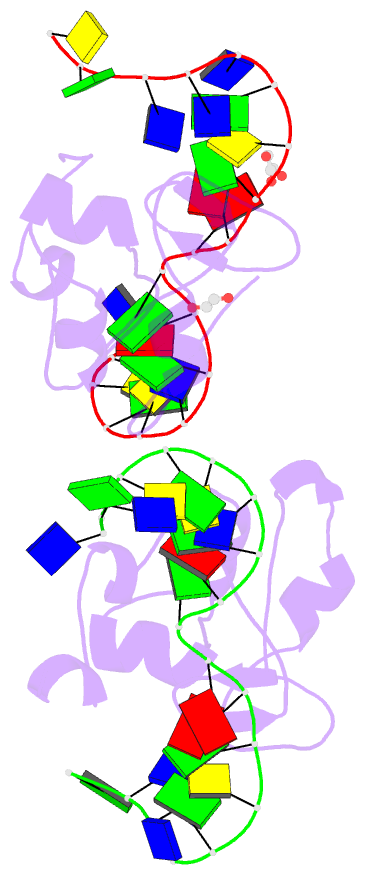
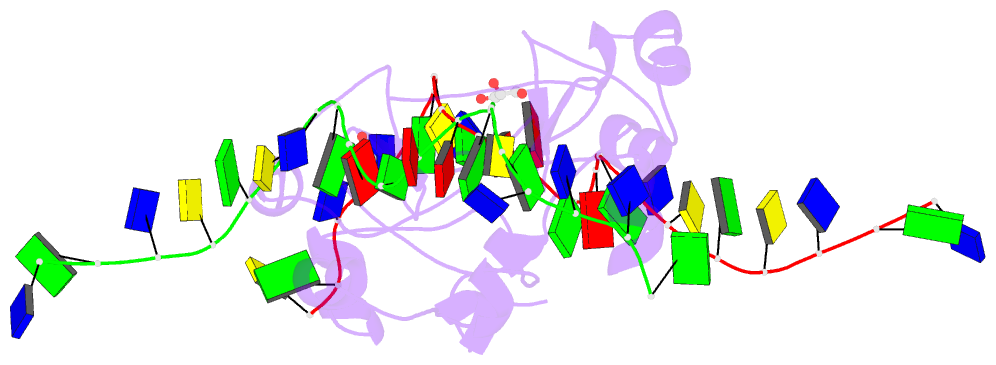
Summary information and primary citation
- PDB-id
-
8tll;
DSSR-derived features in text and
JSON formats
- Class
- DNA binding protein-DNA
- Method
- X-ray (2.58 Å)
- Summary
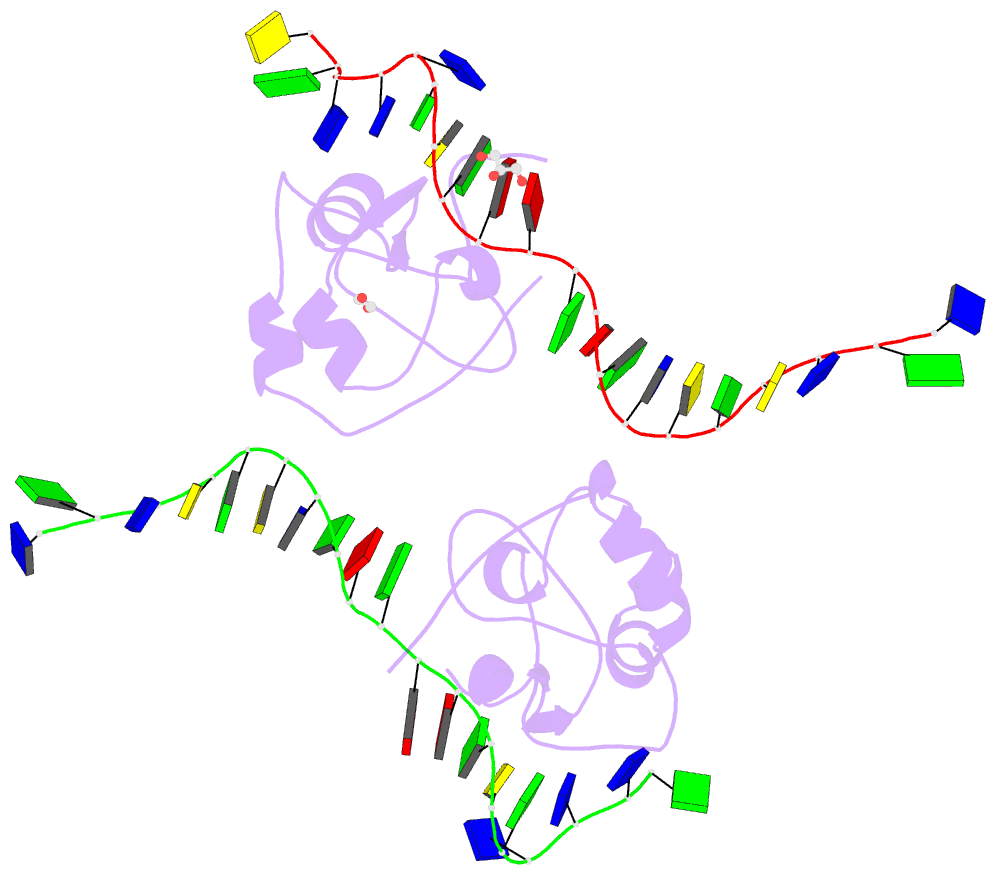
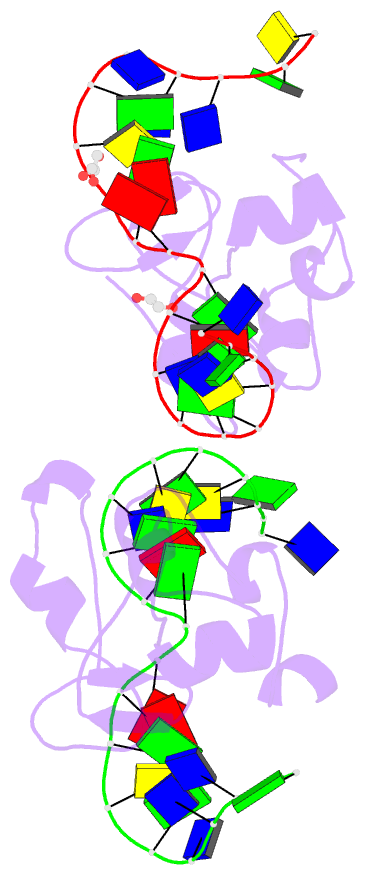
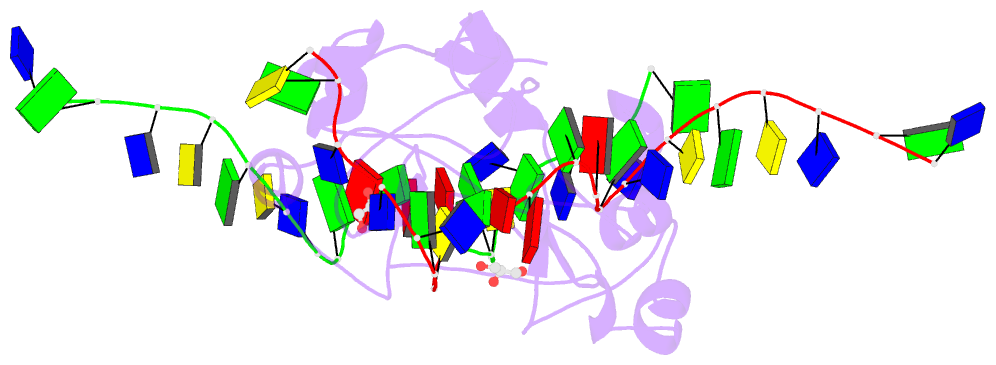
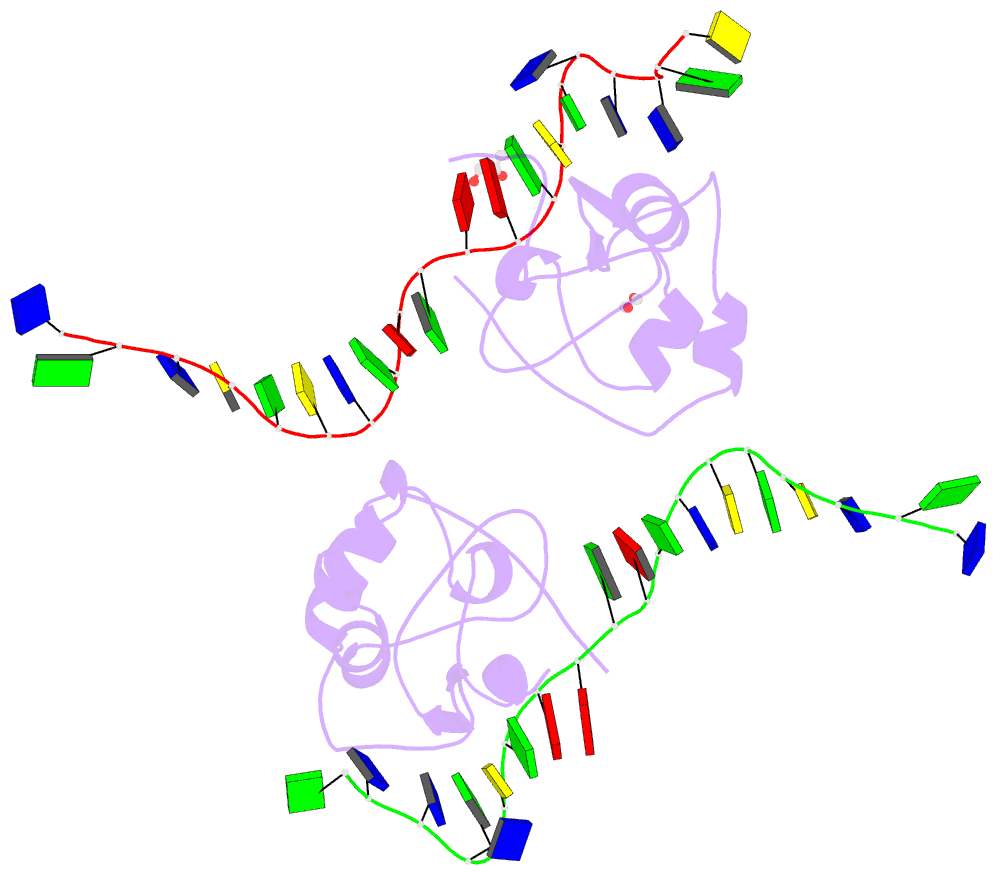
- Cdca7 (mouse) binds non-b-form 26-mer DNA oligo
- Reference
-
Hardikar S, Ren R, Ying Z, Zhou J, Horton JR, Bramble MD,
Liu B, Lu Y, Liu B, Coletta LD, Shen J, Dan J, Zhang X,
Cheng X, Chen T (2024): "The ICF
syndrome protein CDCA7 harbors a unique DNA binding
domain that recognizes a CpG dyad in the context of a
non-B DNA." Sci Adv, 10,
eadr0036. doi: 10.1126/sciadv.adr0036.
- Abstract
- <i>CDCA7</i>, encoding a protein with a
carboxyl-terminal cysteine-rich domain (CRD), is mutated in
immunodeficiency, centromeric instability, and facial
anomalies (ICF) syndrome, a disease related to
hypomethylation of juxtacentromeric satellite DNA. How
CDCA7 directs DNA methylation to juxtacentromeric regions
is unknown. Here, we show that the CDCA7 CRD adopts a
unique zinc-binding structure that recognizes a CpG dyad in
a non-B DNA formed by two sequence motifs. CDCA7, but not
ICF mutants, preferentially binds the non-B DNA with
strand-specific CpG hemi-methylation. The unmethylated
sequence motif is highly enriched at centromeres of human
chromosomes, whereas the methylated motif is distributed
throughout the genome. At S phase, CDCA7, but not ICF
mutants, is concentrated in constitutive heterochromatin
foci, and the formation of such foci can be inhibited by
exogenous hemi-methylated non-B DNA bound by the CRD.
Binding of the non-B DNA formed in juxtacentromeric regions
during DNA replication provides a mechanism by which CDCA7
controls the specificity of DNA methylation.