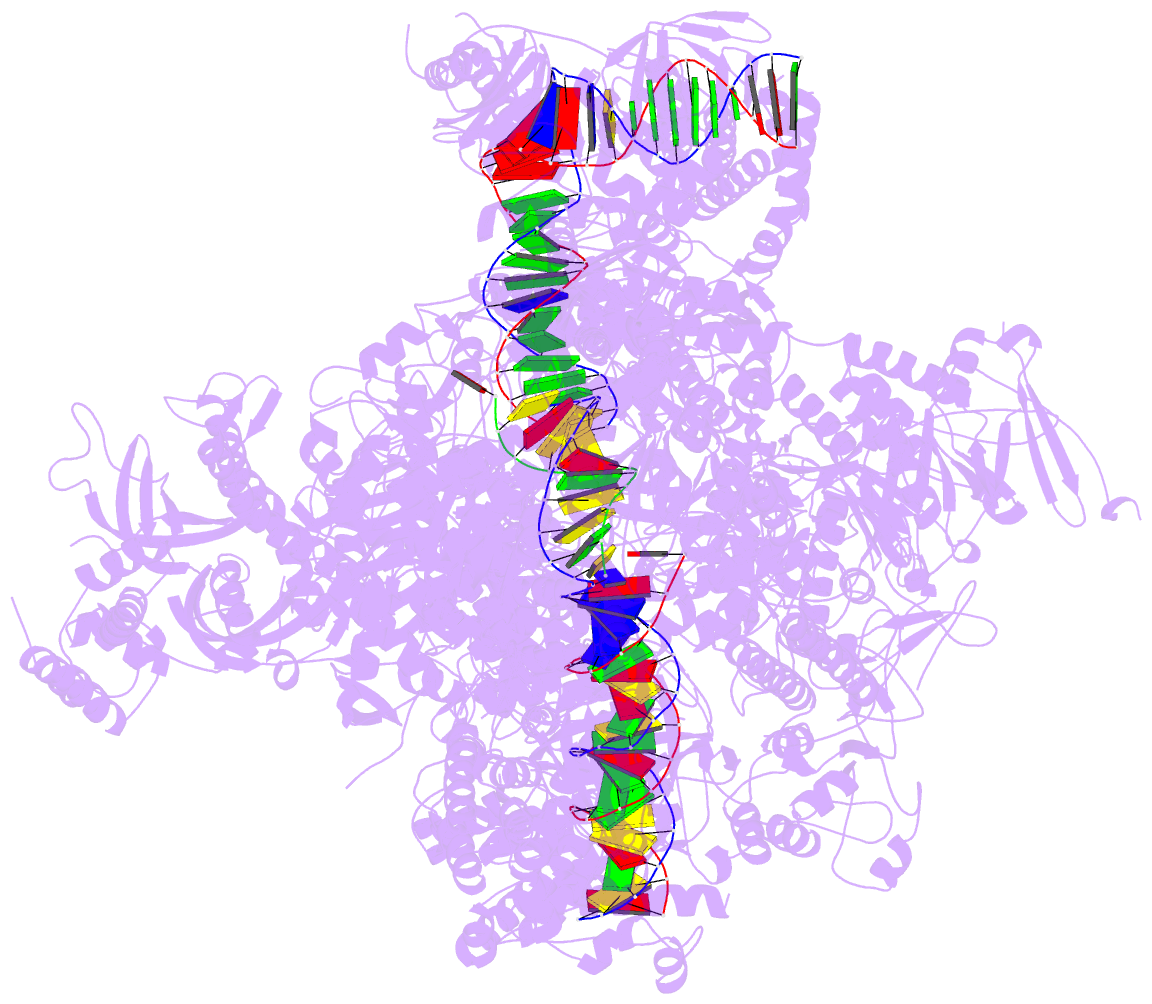
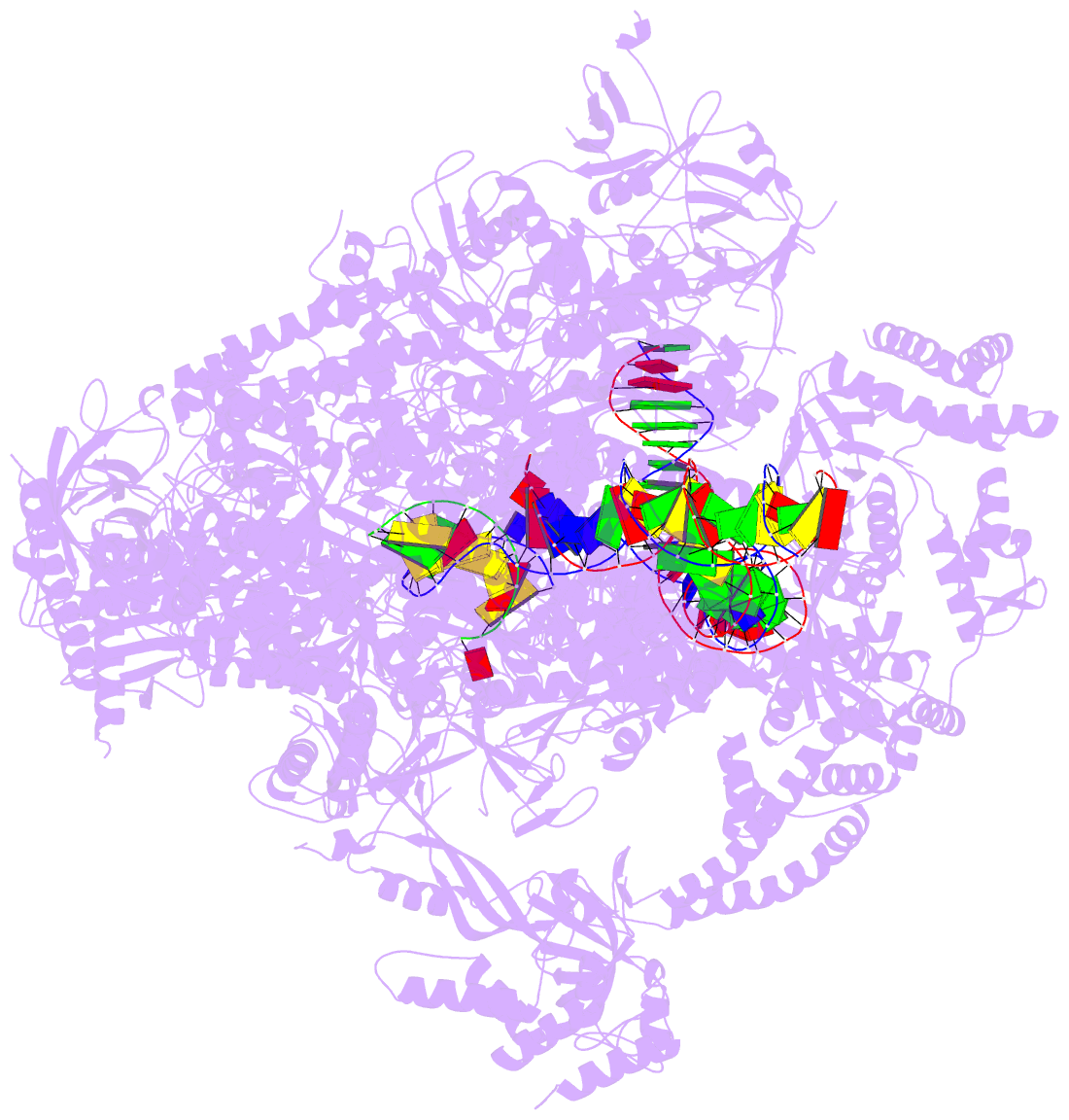
Summary information and primary citation
- PDB-id
-
8s5n;
DSSR-derived features in text and
JSON formats
- Class
- transcription
- Method
- cryo-EM (3.4 Å)
- Summary
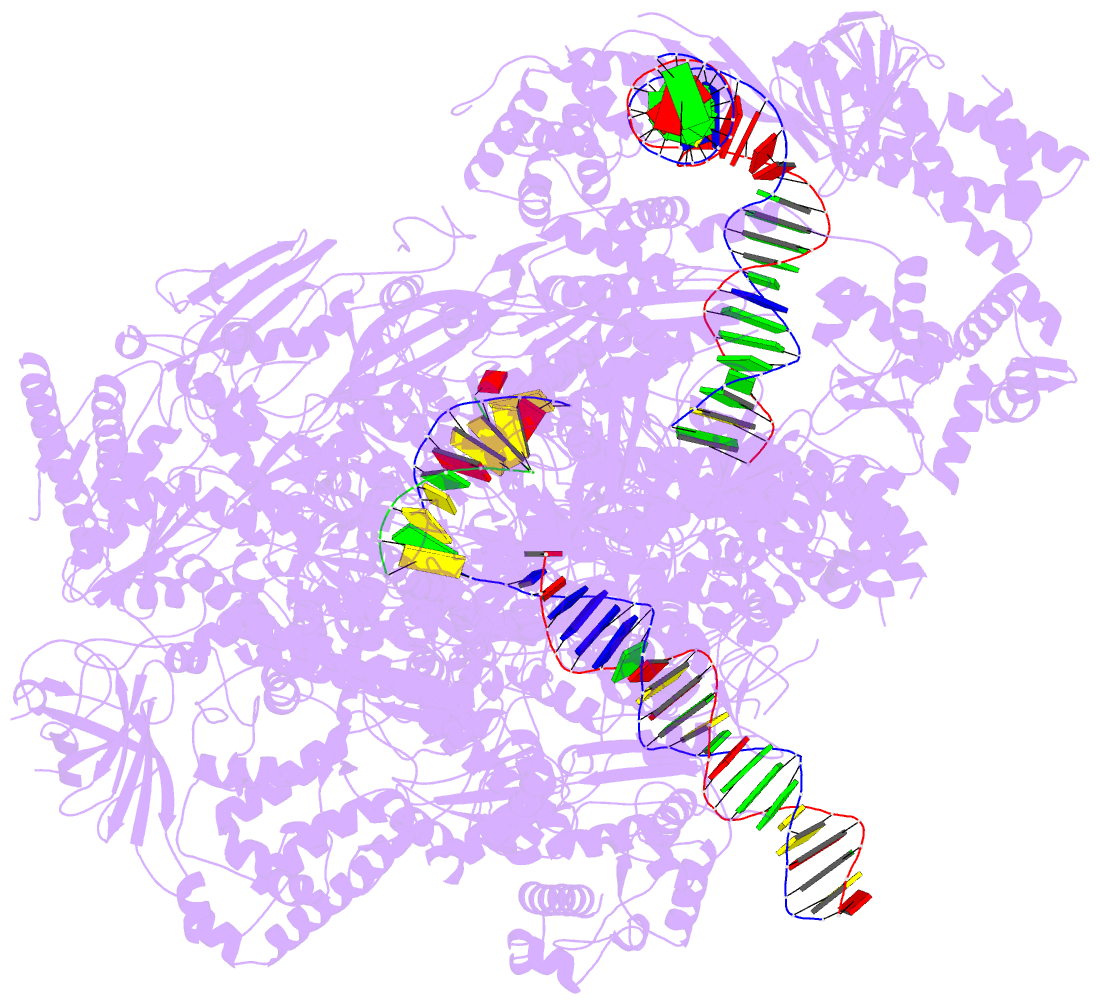
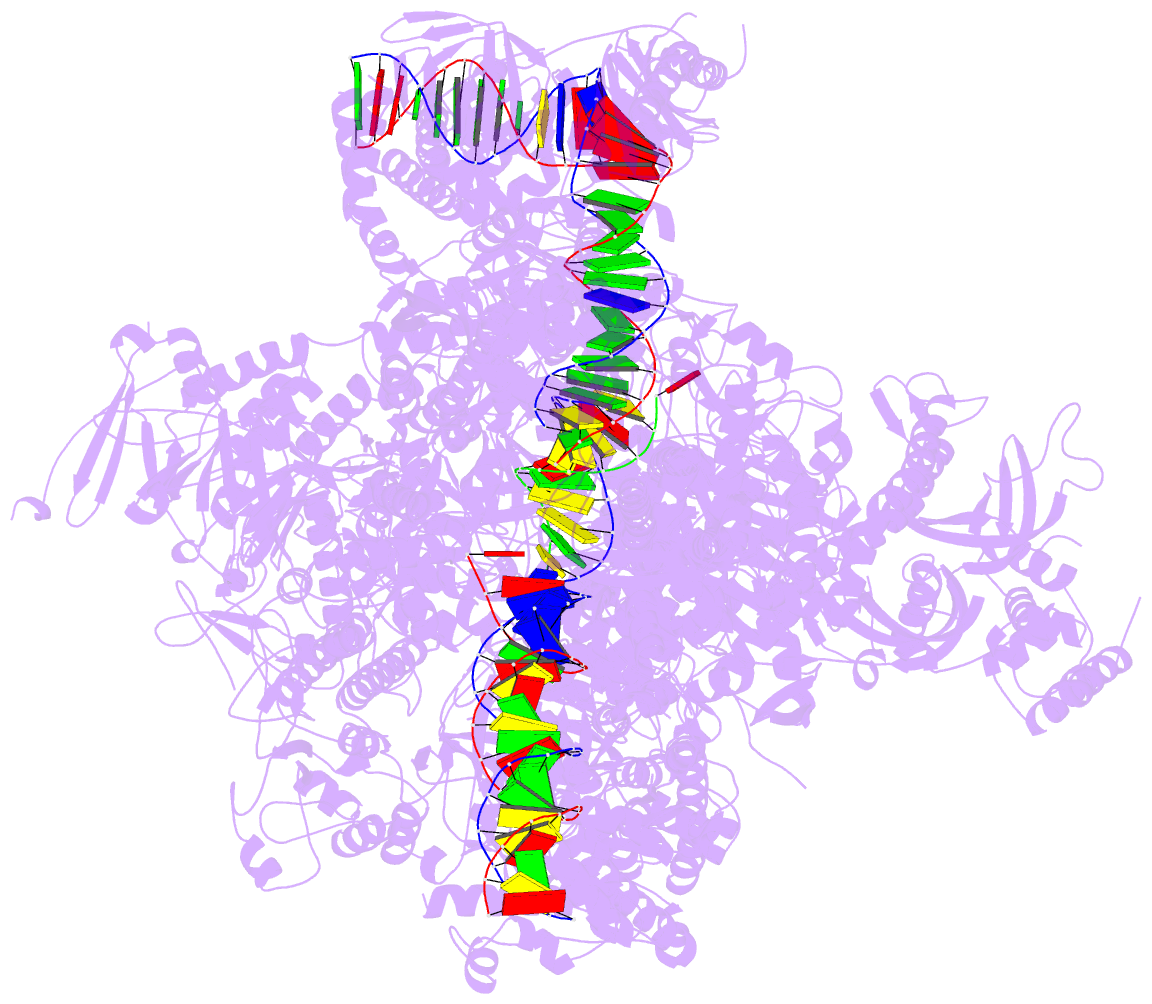
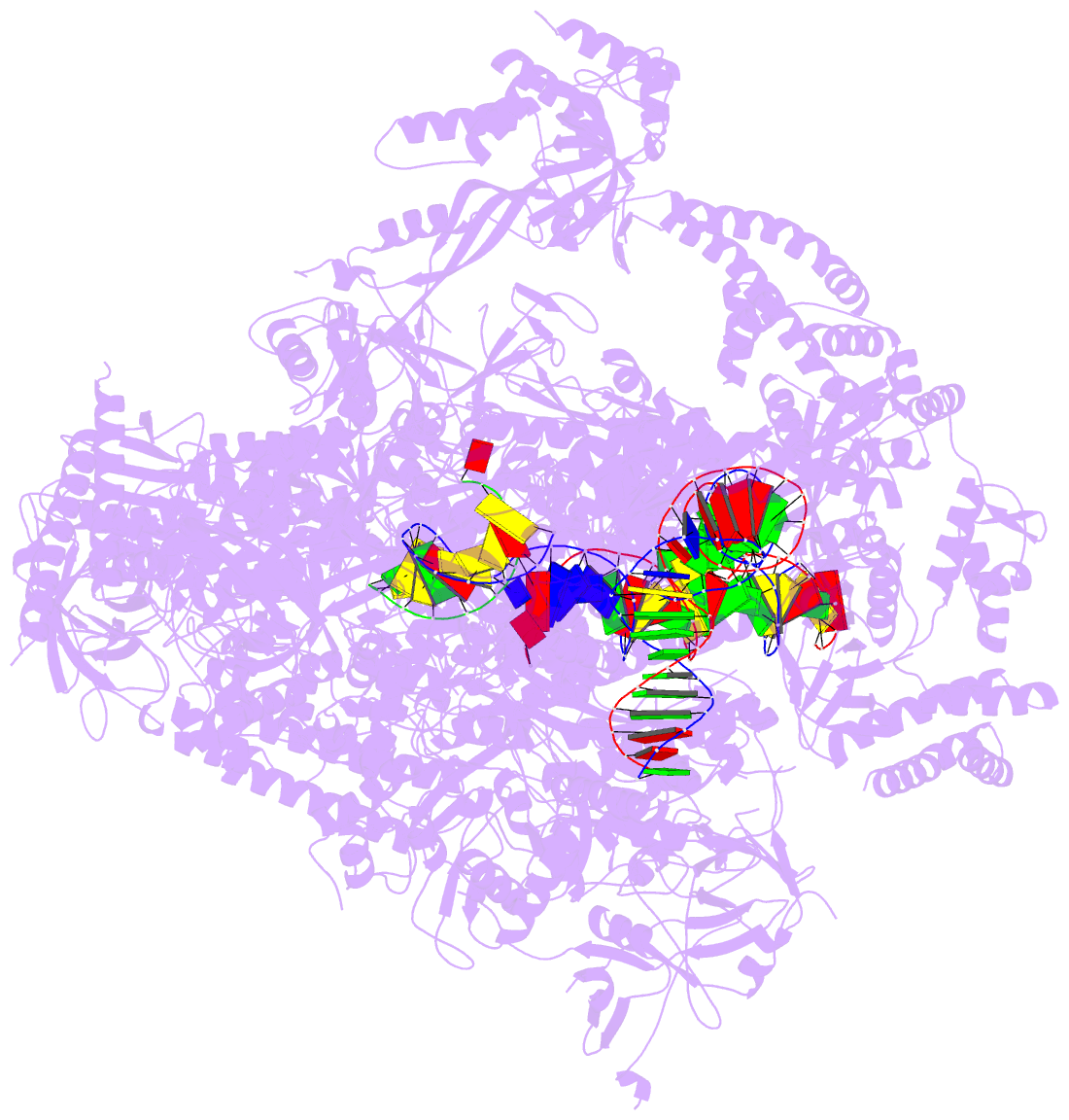
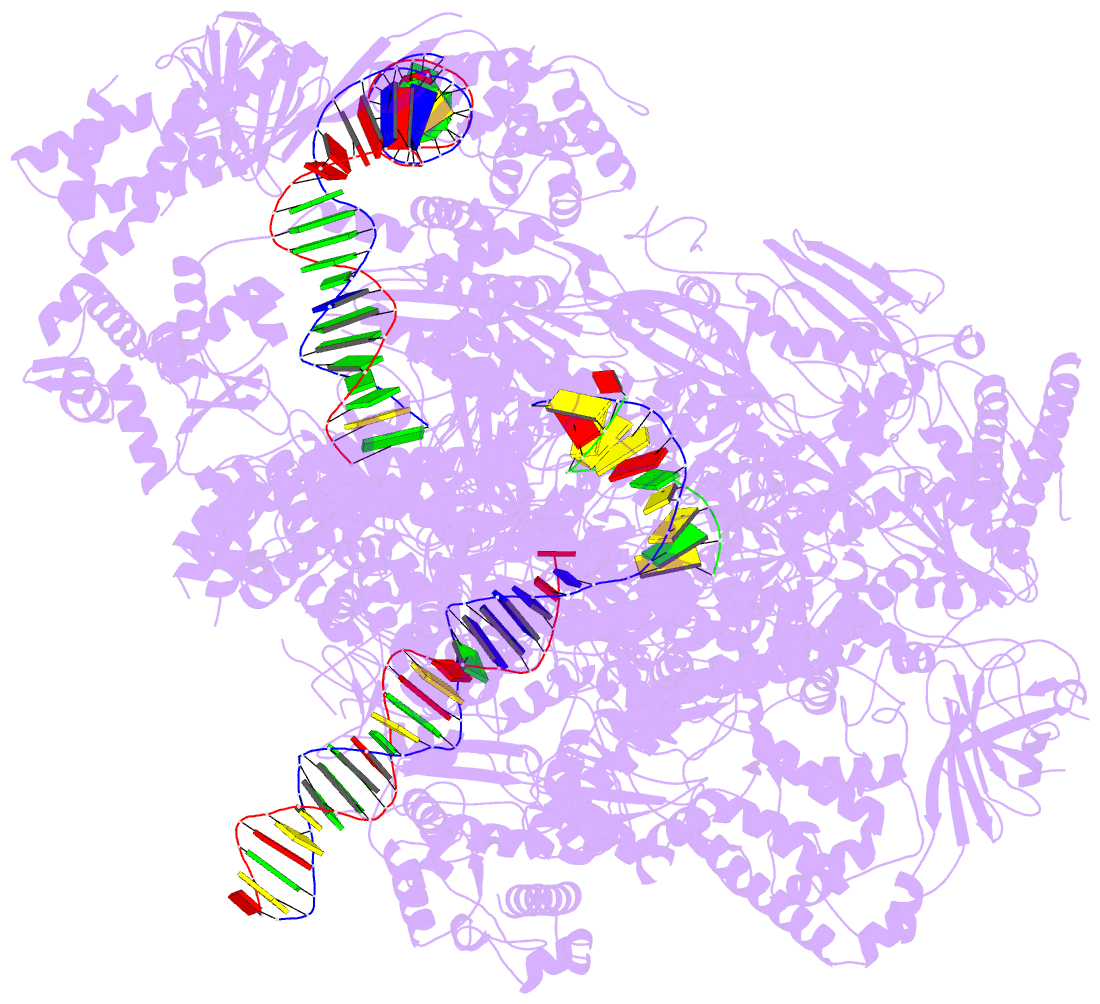
- RNA polymerase ii core initially transcribing complex
with an ordered RNA of 12 nt
- Reference
-
Zhan Y, Grabbe F, Oberbeckmann E, Dienemann C, Cramer P
(2024): "Three-step
mechanism of promoter escape by RNA polymerase II."
Mol.Cell, 84, 1699-1710.e6.
doi: 10.1016/j.molcel.2024.03.016.
- Abstract
- The transition from transcription initiation to
elongation is highly regulated in human cells but remains
incompletely understood at the structural level. In
particular, it is unclear how interactions between RNA
polymerase II (RNA Pol II) and initiation factors are
broken to enable promoter escape. Here, we reconstitute RNA
Pol II promoter escape in vitro and determine
high-resolution structures of initially transcribing
complexes containing 8-, 10-, and 12-nt ordered RNAs and
two elongation complexes containing 14-nt RNAs. We suggest
that promoter escape occurs in three major steps. First,
the growing RNA displaces the B-reader element of the
initiation factor TFIIB without evicting TFIIB. Second, the
rewinding of the transcription bubble coincides with the
eviction of TFIIA, TFIIB, and TBP. Third, the binding of
DSIF and NELF facilitates TFIIE and TFIIH dissociation,
establishing the paused elongation complex. This three-step
model for promoter escape fills a gap in our understanding
of the initiation-elongation transition of RNA Pol II
transcription.