Summary information and primary citation
- PDB-id
-
8s09;
DSSR-derived features in text and
JSON formats
- Class
- replication
- Method
- cryo-EM (3.1 Å)
- Summary
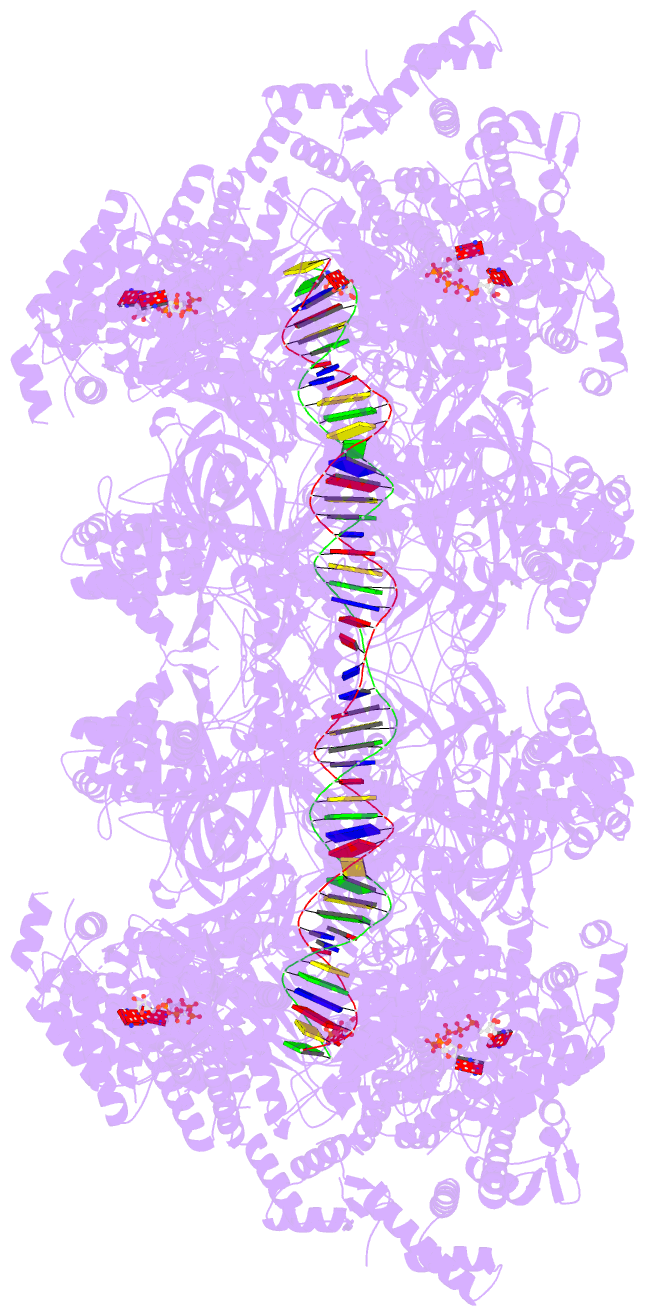
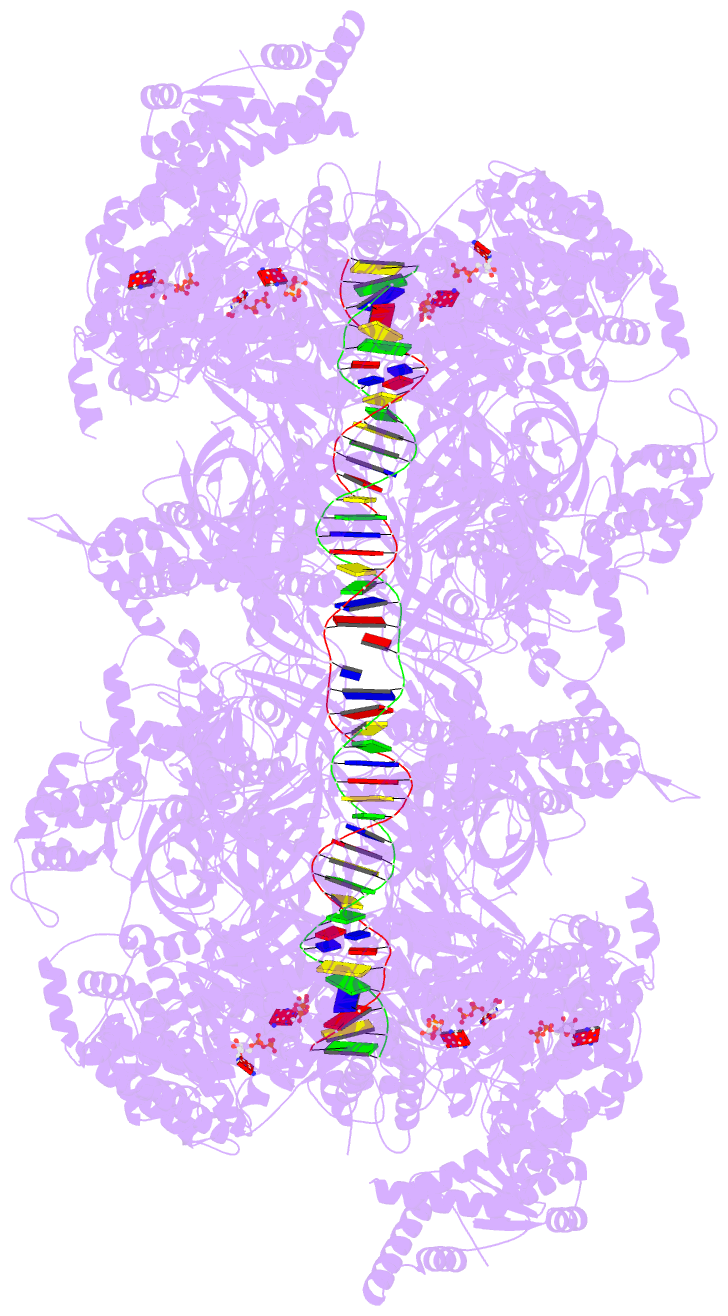
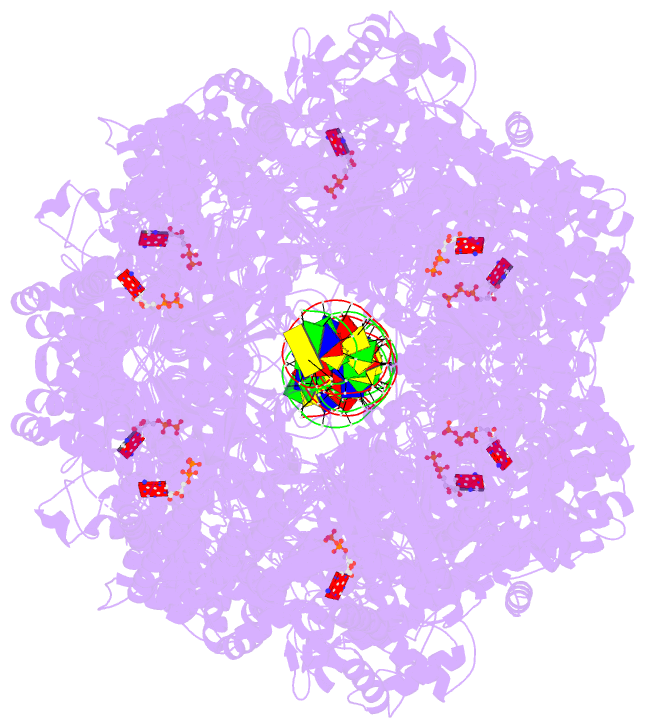
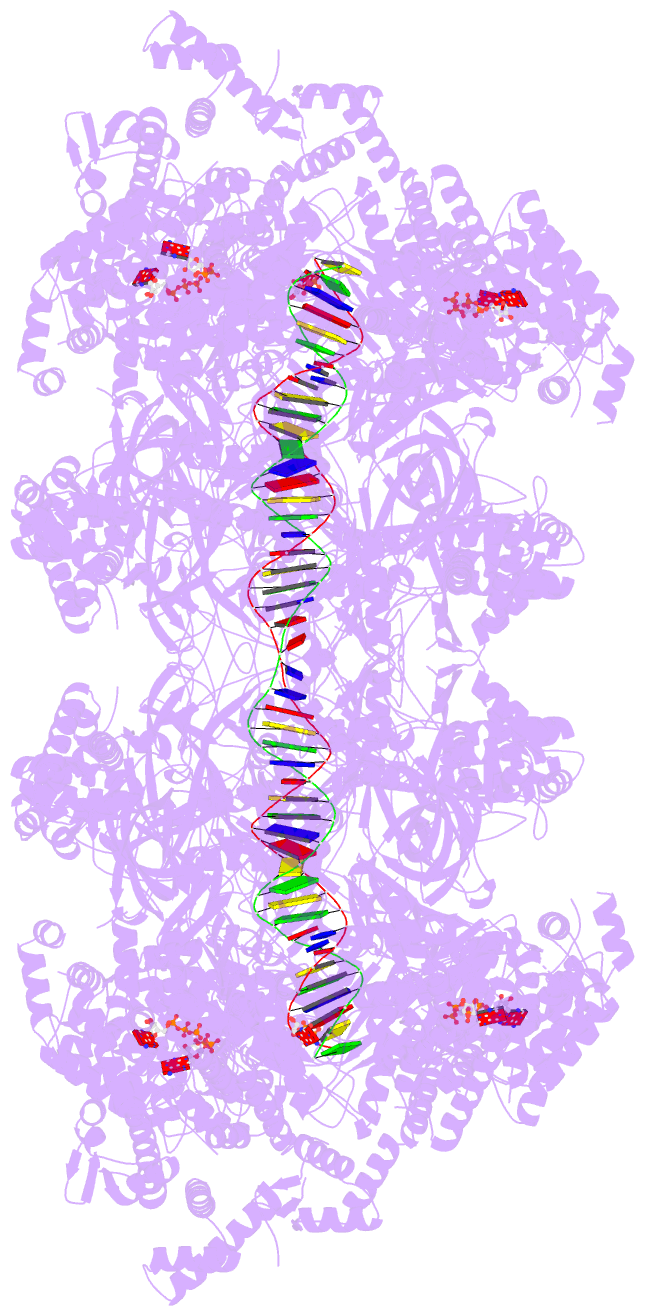
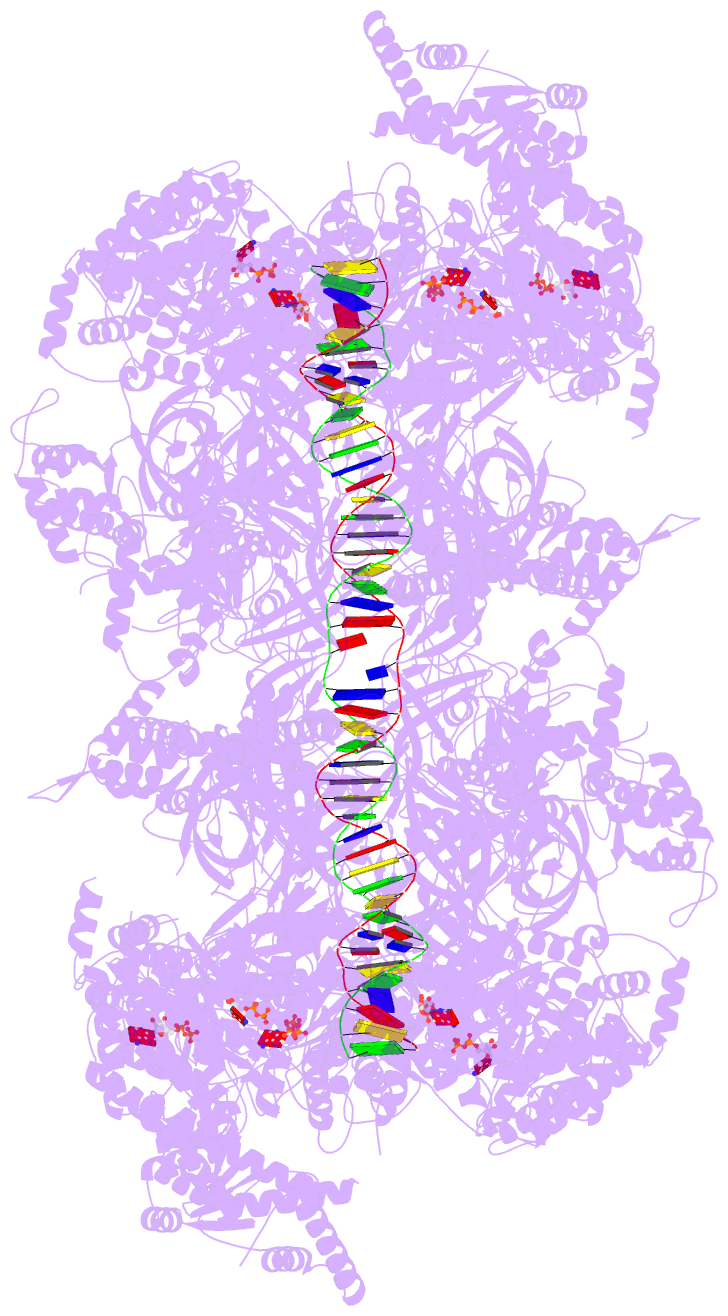
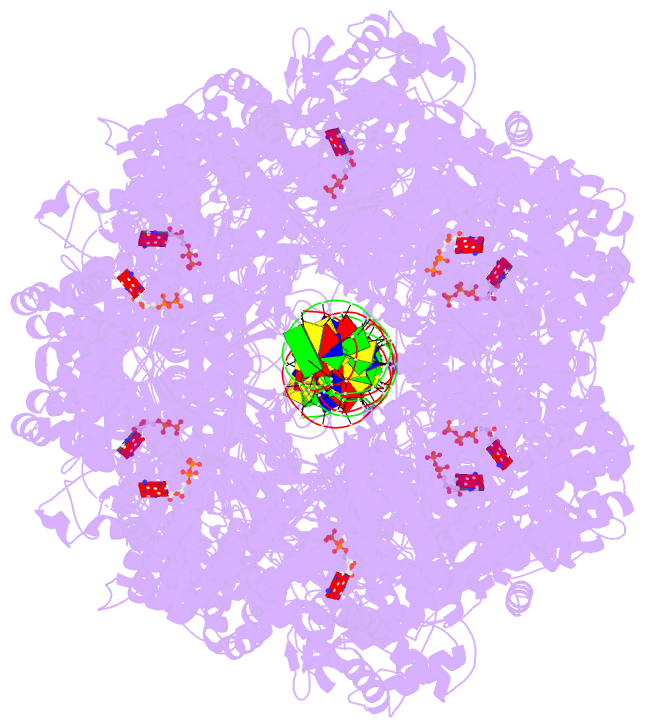
- H. sapiens mcm2-7 double hexamer bound to double
stranded DNA
- Reference
-
Weissmann F, Greiwe JF, Puhringer T, Eastwood EL, Couves
EC, Miller TCR, Diffley JFX, Costa A (2024): "MCM double
hexamer loading visualized with human proteins."
Nature, 636, 499-508. doi:
10.1038/s41586-024-08263-6.
- Abstract
- Eukaryotic DNA replication begins with the loading of
the MCM replicative DNA helicase as a head-to-head double
hexamer at origins of DNA
replication<sub>1-3</sub>. Our current
understanding of how the double hexamer is assembled by the
origin recognition complex (ORC), CDC6 and CDT1 comes
mostly from budding yeast. Here we characterize human
double hexamer (hDH) loading using biochemical
reconstitution and cryo-electron microscopy with purified
proteins. We show that the human double hexamer engages DNA
differently from the yeast double hexamer (yDH), and
generates approximately five base pairs of underwound DNA
at the interface between hexamers, as seen in hDH isolated
from cells<sub>4</sub>. We identify several
differences from the yeast double hexamer in the order of
factor recruitment and dependencies during hDH assembly.
Unlike in yeast<sub>5-8</sub>, the ORC6 subunit
of the ORC is not essential for initial MCM recruitment or
hDH loading, but contributes to an alternative hDH assembly
pathway that requires an intrinsically disordered region in
ORC1, which may work through a MCM-ORC intermediate. Our
work presents a detailed view of how double hexamers are
assembled in an organism that uses sequence-independent
replication origins, provides further evidence for
diversity in eukaryotic double hexamer assembly
mechanisms<sub>9</sub>, and represents a first
step towards reconstitution of DNA replication initiation
with purified human proteins.