Summary information and primary citation
- PDB-id
-
8rwv;
DSSR-derived features in text and
JSON formats
- Class
- replication
- Method
- cryo-EM (6.68 Å)
- Summary
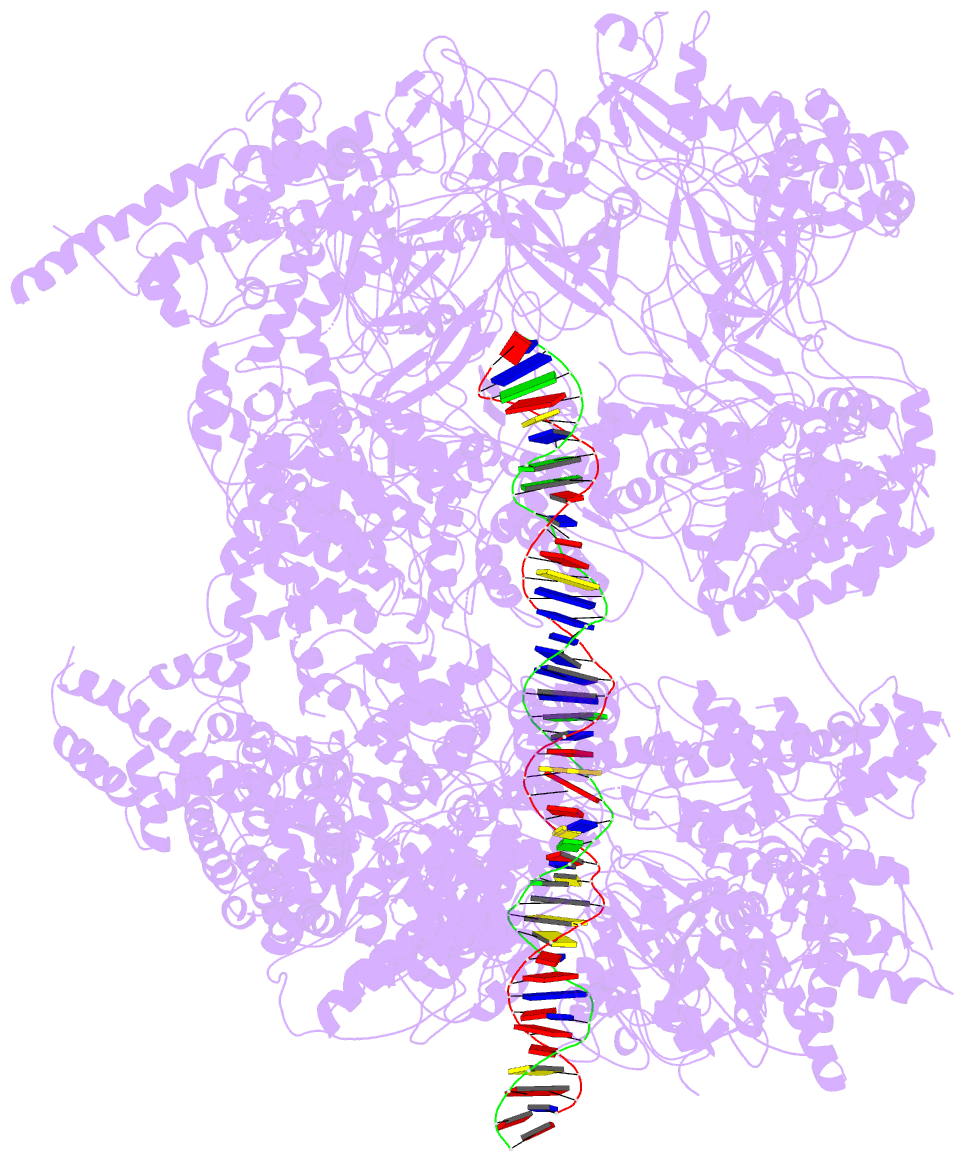
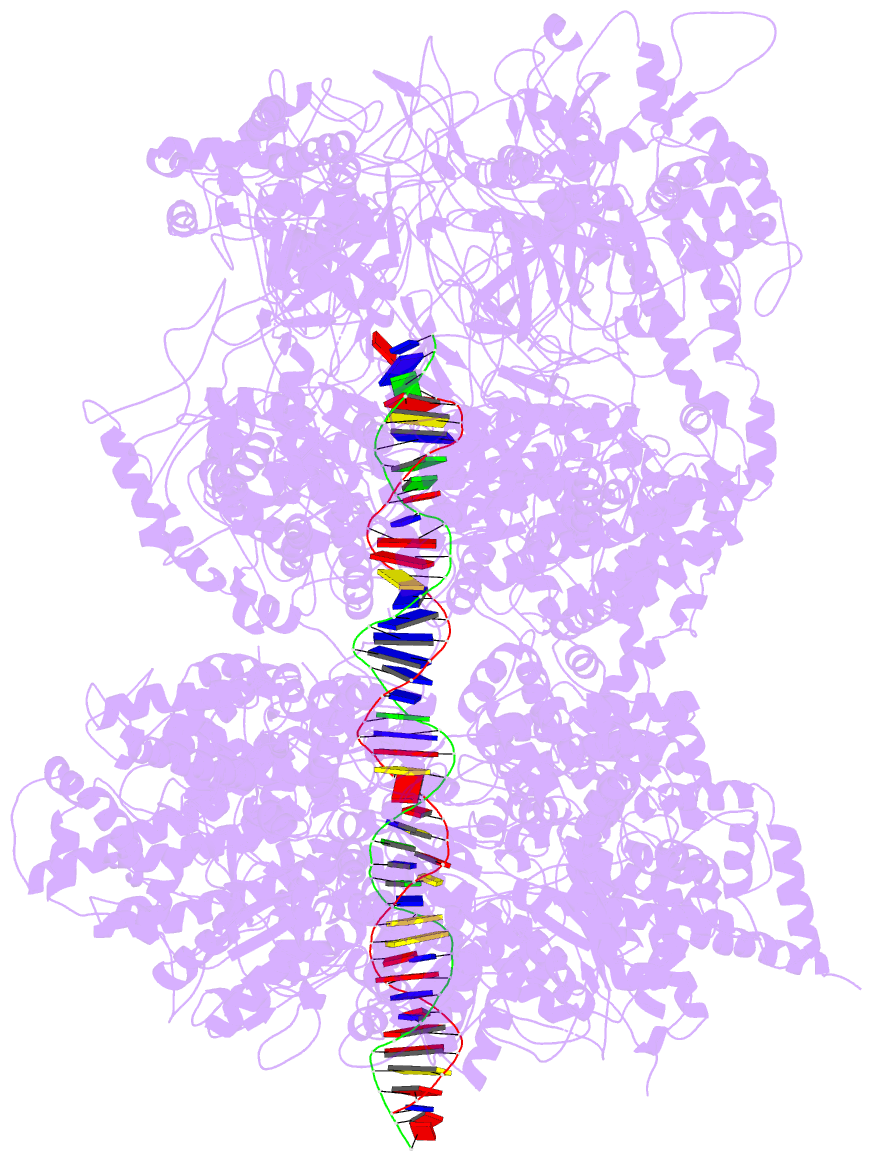
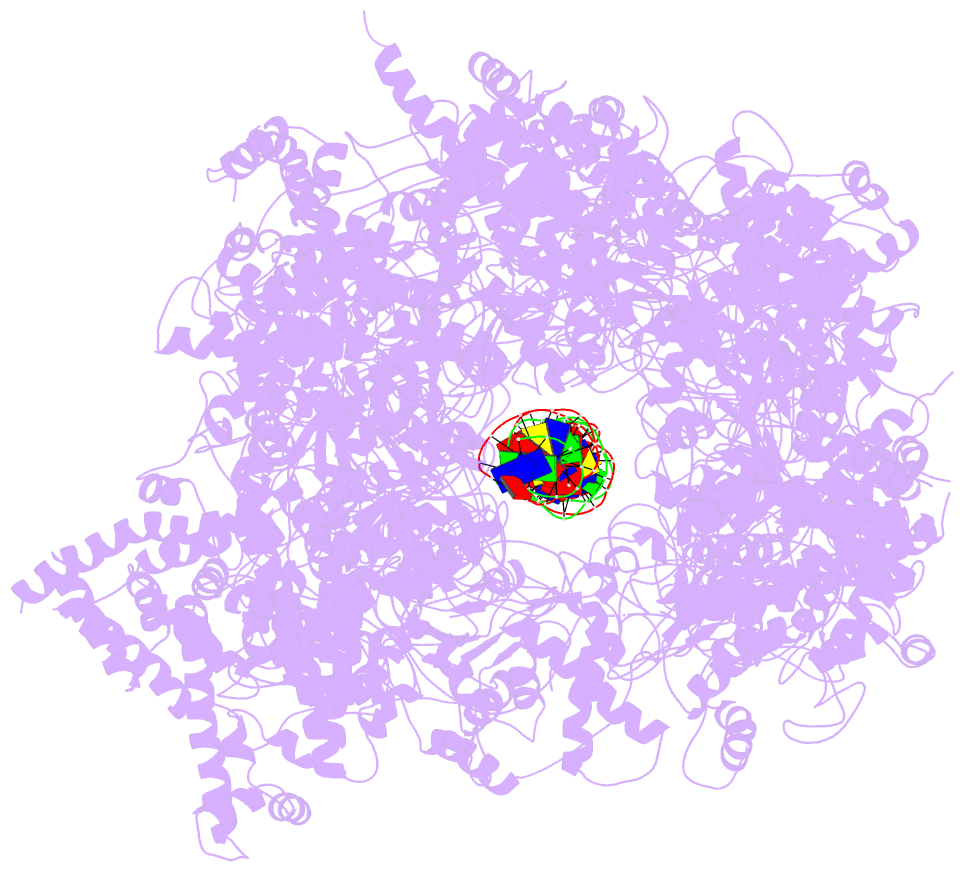
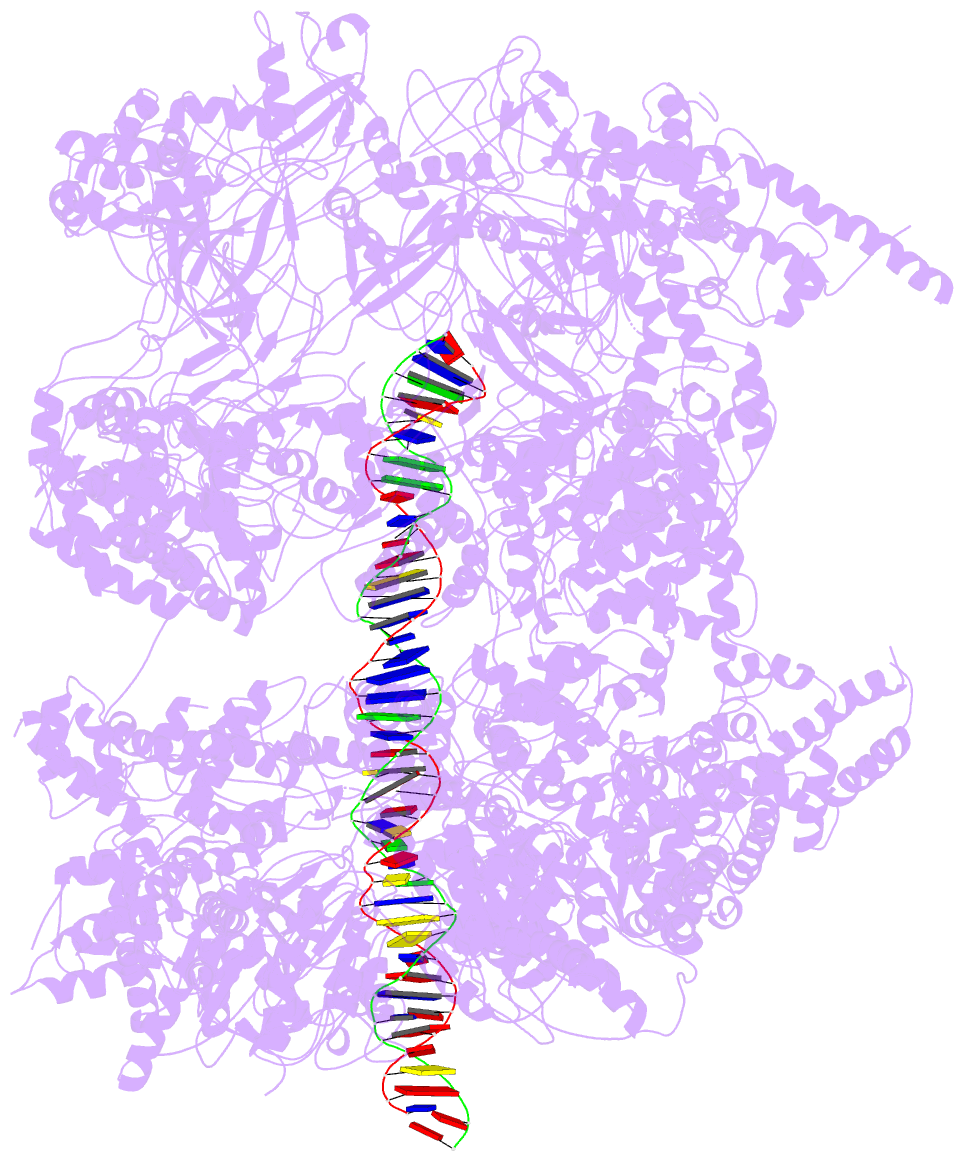
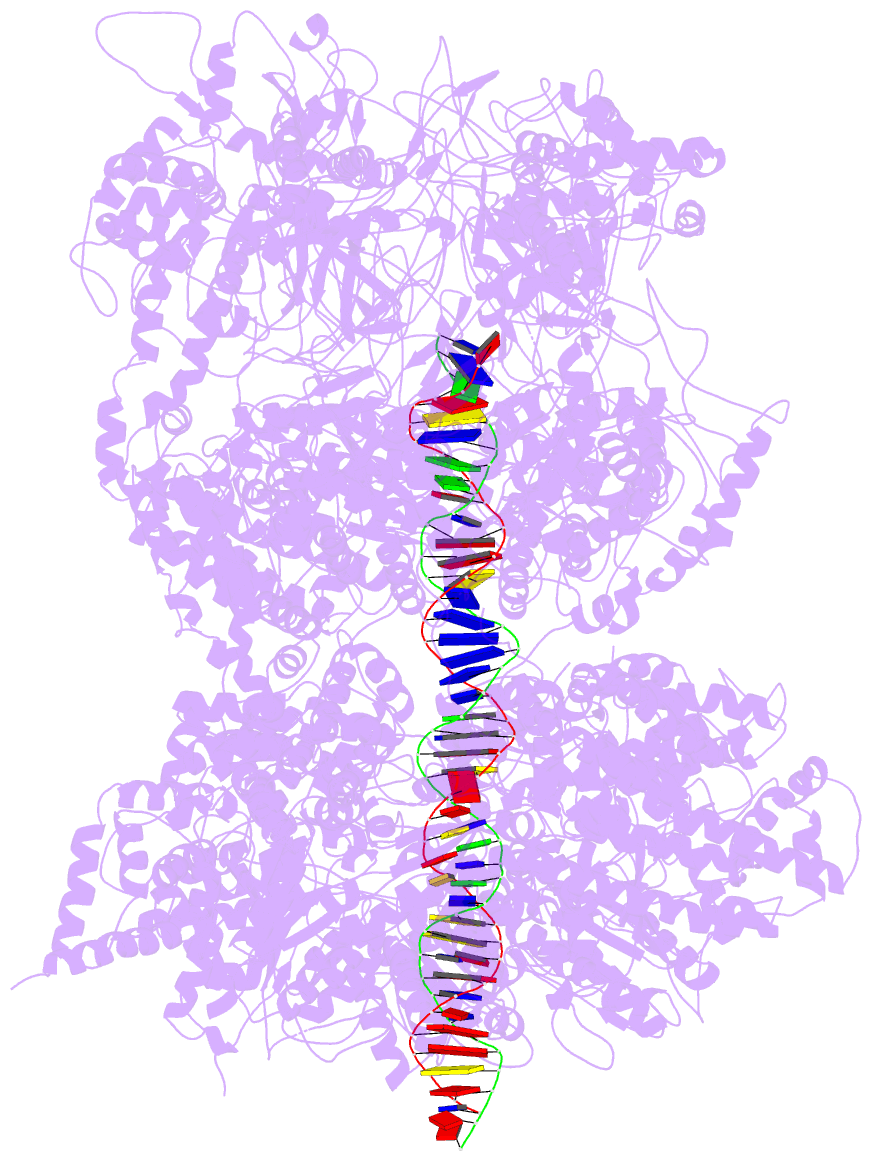
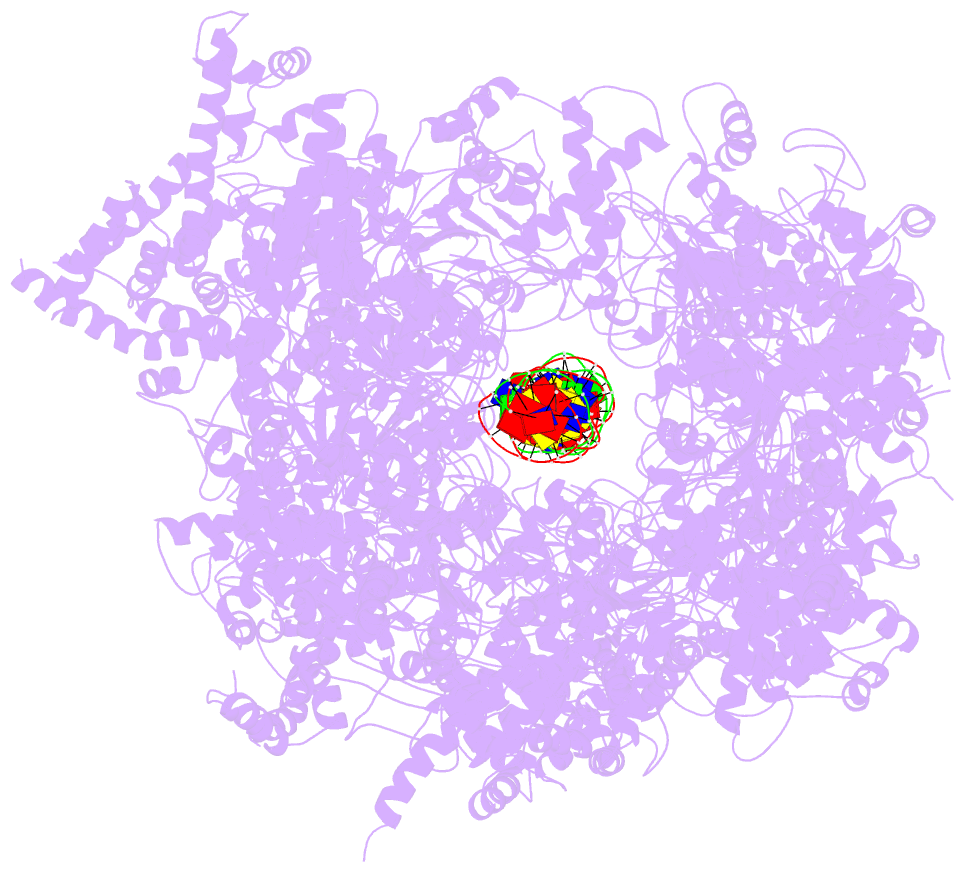
- Human occm DNA licensing intermediate
- Reference
-
Wells JN, Edwardes LV, Leber V, Allyjaun S, Peach M,
Tomkins J, Kefala-Stavridi A, Faull SV, Aramayo R,
Pestana CM, Ranjha L, Speck C (2025): "Reconstitution
of human DNA licensing and the structural and functional
analysis of key intermediates." Nat Commun,
16, 478. doi: 10.1038/s41467-024-55772-z.
- Abstract
- Human DNA licensing initiates replication fork assembly
and DNA replication. This reaction promotes the loading of
the hMCM2-7 complex on DNA, which represents the core of
the replicative helicase that unwinds DNA during S-phase.
Here, we report the reconstitution of human DNA licensing
using purified proteins. We showed that the in vitro
reaction is specific and results in the assembly of
high-salt resistant hMCM2-7 double-hexamers. With ATPγS, an
hORC1-5-hCDC6-hCDT1-hMCM2-7 (hOCCM) assembles independent
of hORC6, but hORC6 enhances double-hexamer formation. We
determined the hOCCM structure, which showed that
hORC-hCDC6 recruits hMCM2-7 via five hMCM winged-helix
domains. The structure highlights how hORC1 activates the
hCDC6 ATPase and uncovered an unexpected role for hCDC6
ATPase in complex disassembly. We identified that hCDC6
binding to hORC1-5 stabilises hORC2-DNA interactions and
supports hMCM3-dependent recruitment of hMCM2-7. Finally,
the structure allowed us to locate cancer-associated
mutations at the hCDC6-hMCM3 interface, which showed
specific helicase loading defects.