Summary information and primary citation
- PDB-id
-
8qmi;
DSSR-derived features in text and
JSON formats
- Class
- RNA
- Method
- X-ray (1.5 Å)
- Summary
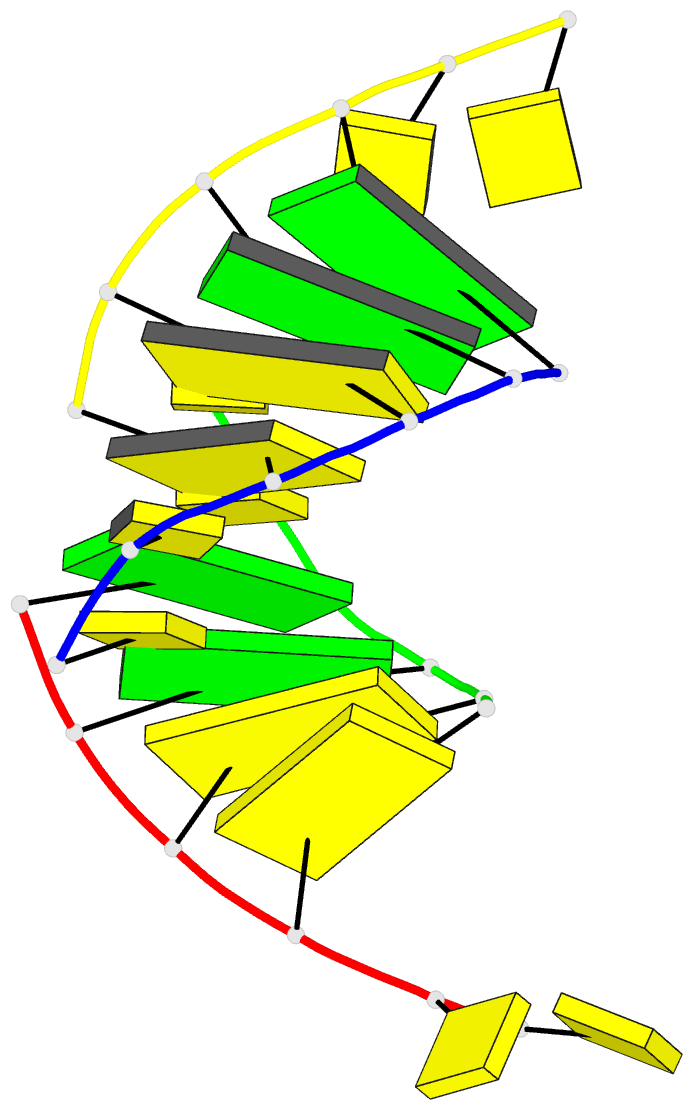
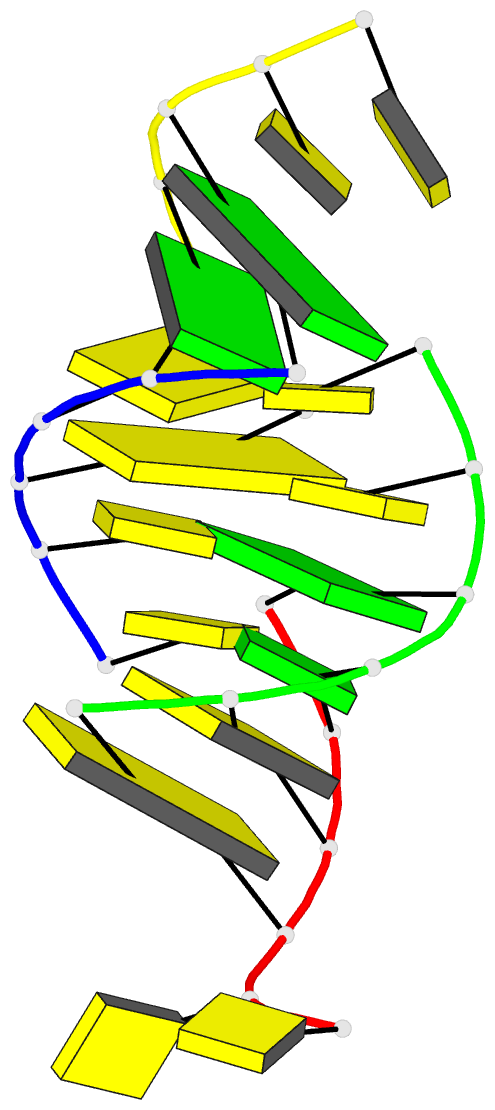
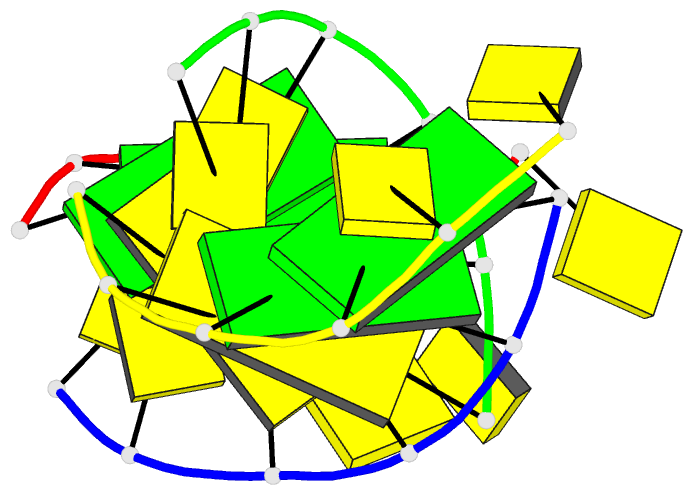
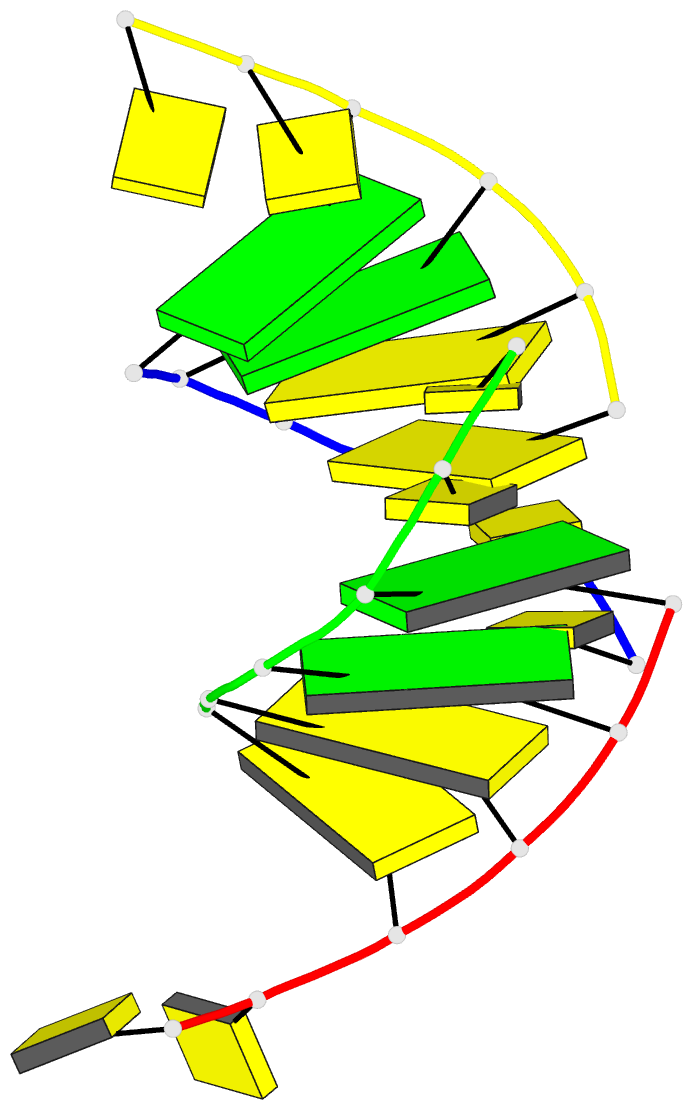
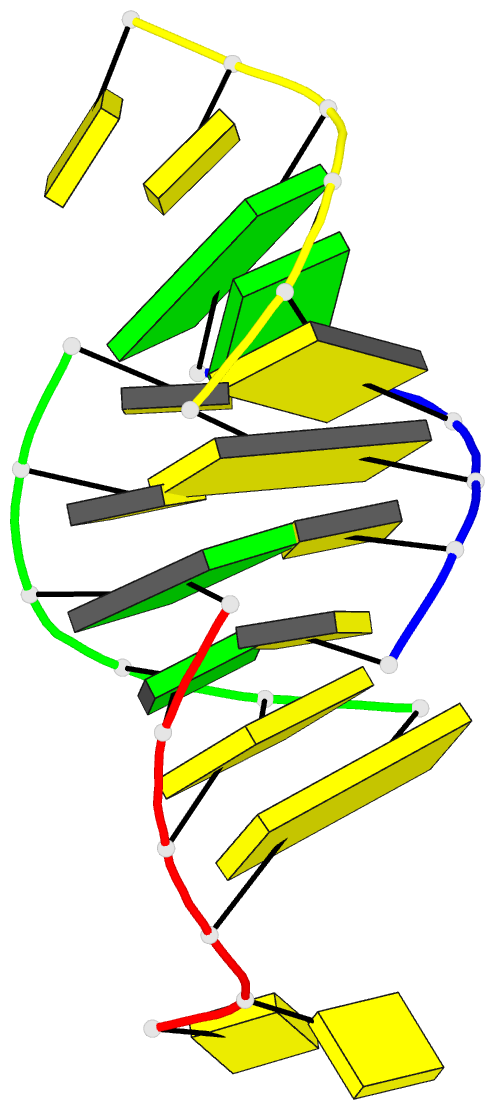
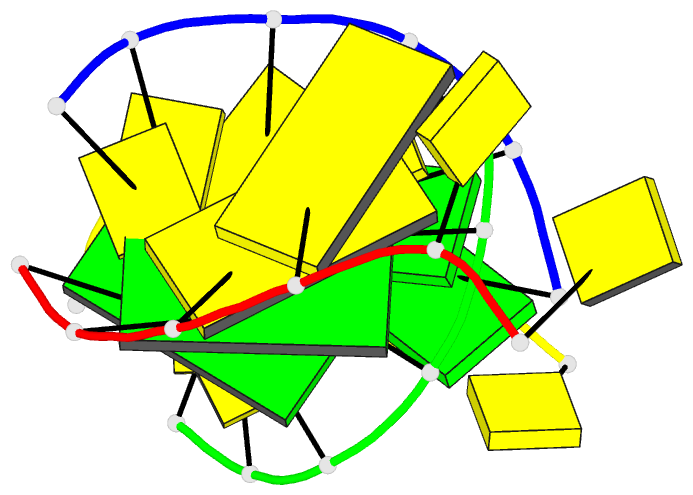
- Crystal structure of RNA g2c4 repeats - native
model
- Reference
-
Blaszczyk L, Ryczek M, Das B, Mateja-Pluta M, Bejger M,
Sliwiak J, Nakatani K, Kiliszek A (2024): "Antisense
RNA C9orf72 hexanucleotide repeat associated with
amyotrophic lateral sclerosis and frontotemporal dementia
forms a triplex-like structure and binds small synthetic
ligand." Nucleic Acids Res.,
52, 6707-6717. doi: 10.1093/nar/gkae376.
- Abstract
- The abnormal expansion of GGGGCC/GGCCCC hexanucleotide
repeats (HR) in C9orf72 is associated with amyotrophic
lateral sclerosis (ALS) and frontotemporal dementia (FTD).
Structural polymorphisms of HR result in the multifactorial
pathomechanism of ALS/FTD. Consequently, many ongoing
studies are focused at developing therapies targeting
pathogenic HR RNA. One of them involves small molecules
blocking sequestration of important proteins, preventing
formation of toxic nuclear foci. However, rational design
of potential therapeutics is hindered by limited number of
structural studies of RNA-ligand complexes. We determined
the crystal structure of antisense HR RNA in complex with
ANP77 ligand (1.1 Å resolution) and in the free form (0.92
and 1.5 Å resolution). HR RNA folds into a triplex
structure composed of four RNA chains. ANP77 interacted
with two neighboring single-stranded cytosines to form
pseudo-canonical base pairs by adopting sandwich-like
conformation and adjusting the position of its
naphthyridine units to the helical twist of the RNA. In the
unliganded structure, the cytosines formed a peculiar
triplex i-motif, assembled by trans C•C+ pair and a third
cytosine located at the Hoogsteen edge of the C•C+ pair.
These results extend our knowledge of the structural
polymorphisms of HR and can be used for rational design of
small molecules targeting disease-related RNAs.