Summary information and primary citation
- PDB-id
-
8po8;
DSSR-derived features in text and
JSON formats
- Class
- hydrolase
- Method
- X-ray (2.52 Å)
- Summary
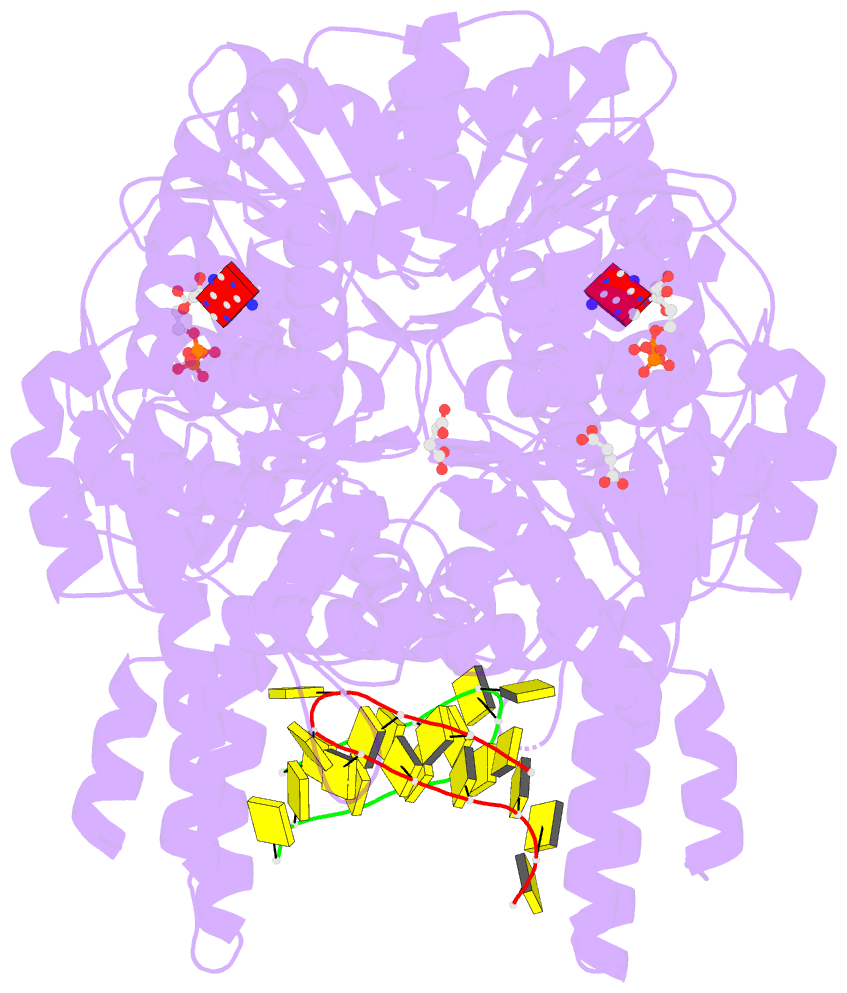
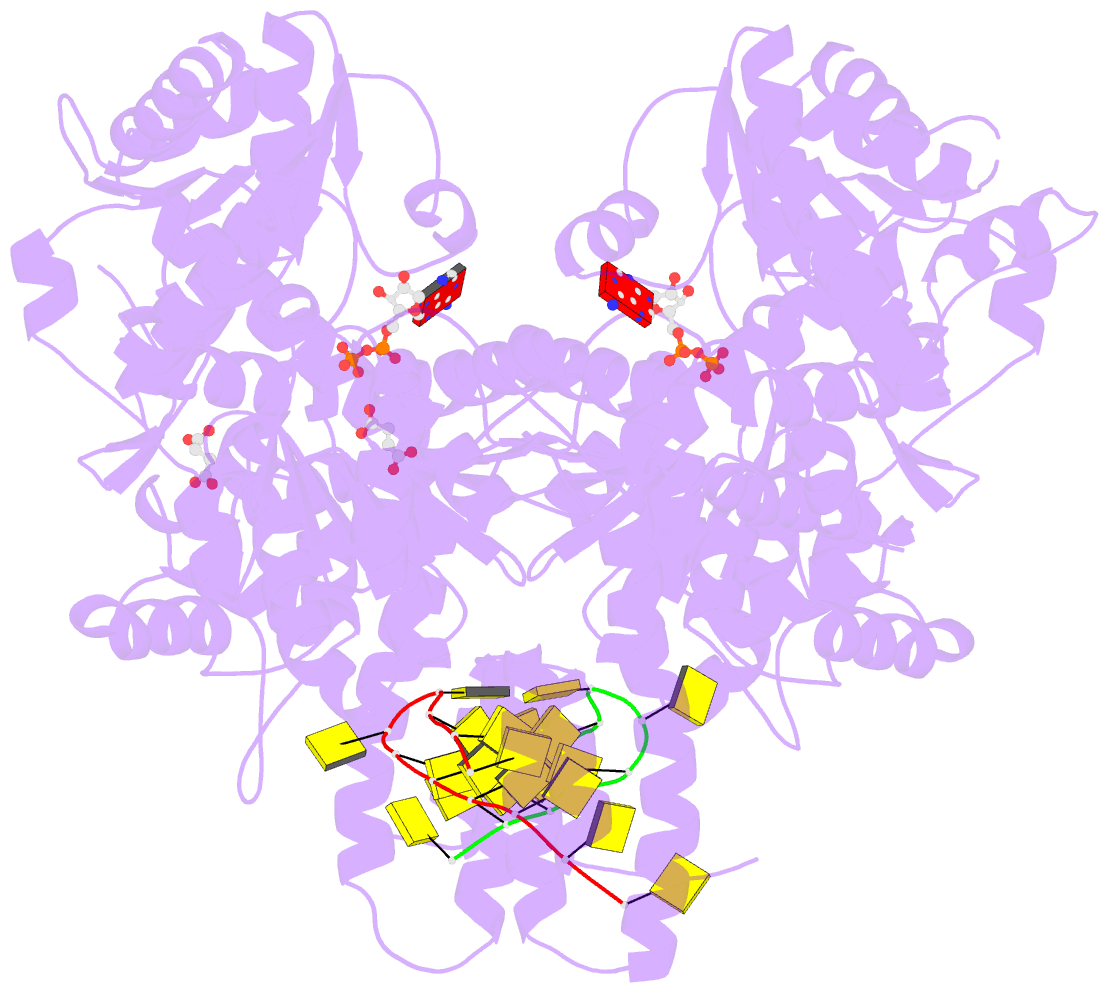
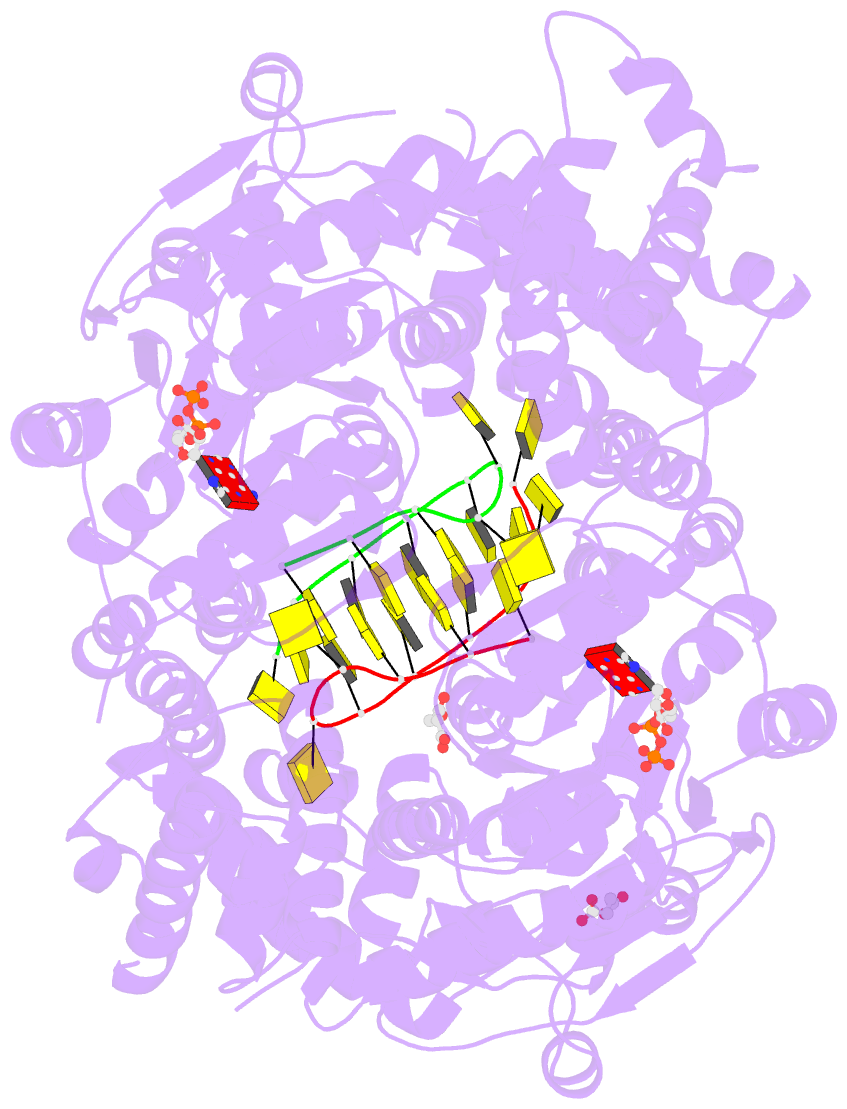
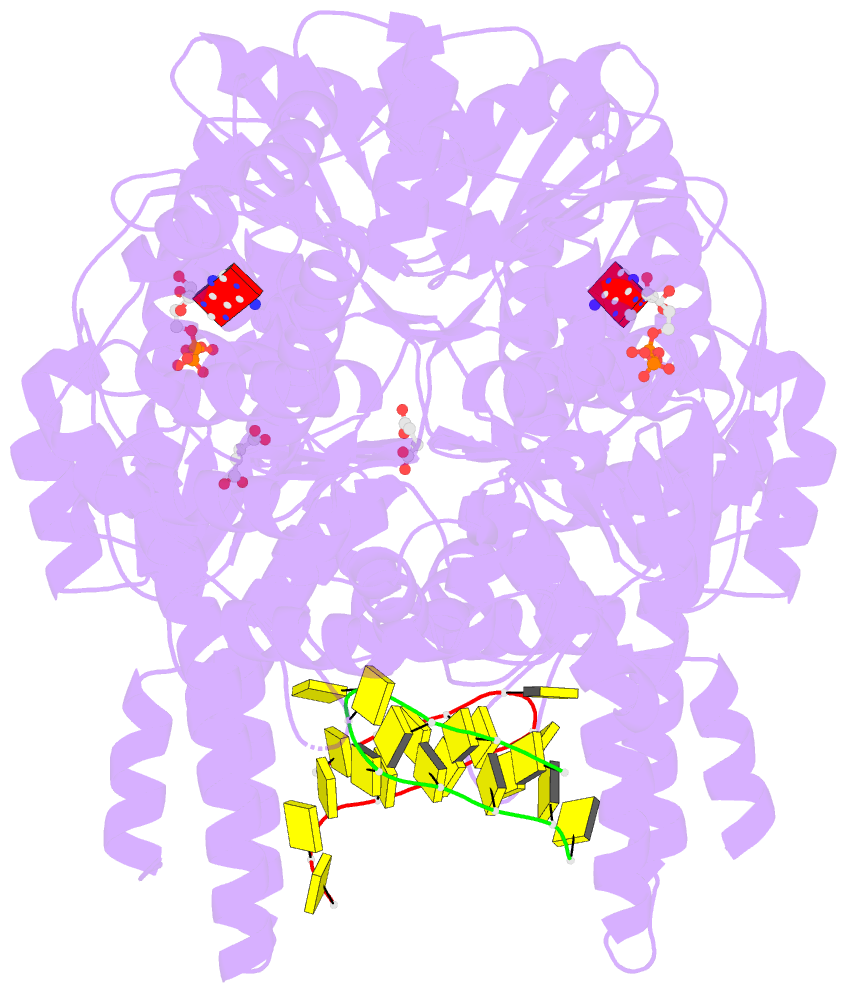
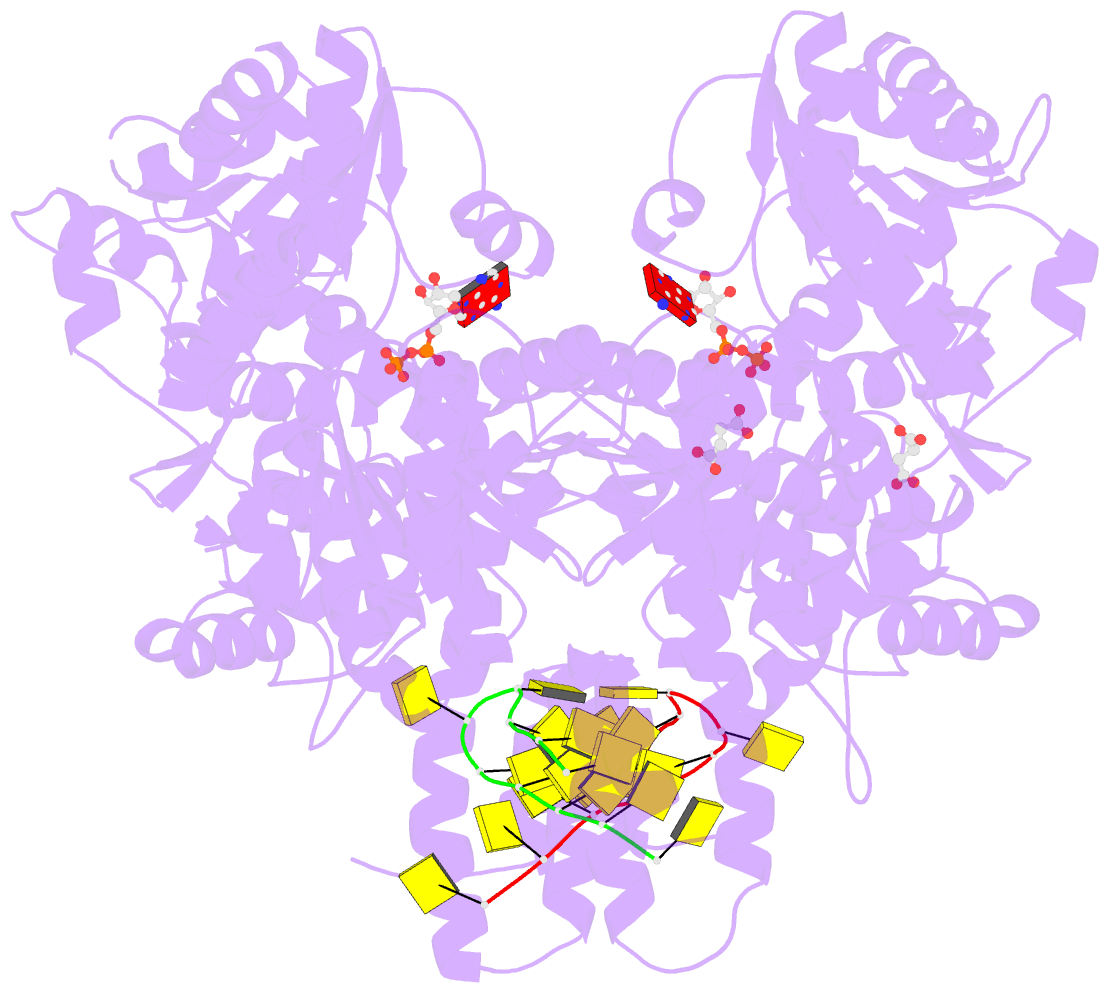
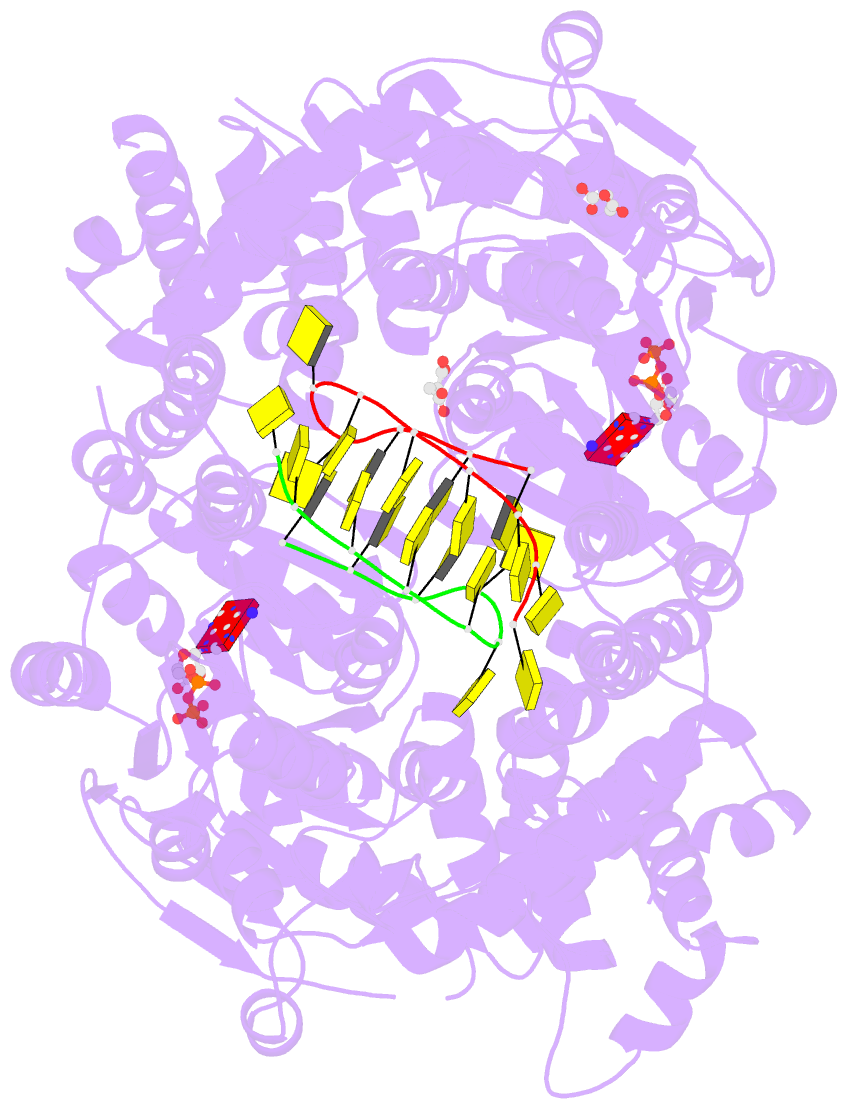
- Structure of escherichia coli hrpa in complex with adp
and oligonucleotide poly(dc)11 forming an i-motif
- Reference
-
Xin BG, Huang LY, Yuan LG, Liu NN, Li HH, Ai X, Lei DS,
Hou XM, Rety S, Xi XG (2024): "Structural
insights into the N-terminal APHB domain of HrpA:
mediating canonical and i-motif recognition."
Nucleic Acids Res., 52,
3406-3418. doi: 10.1093/nar/gkae138.
- Abstract
- RNA helicases function as versatile enzymes primarily
responsible for remodeling RNA secondary structures and
organizing ribonucleoprotein complexes. In our study, we
conducted a systematic analysis of the helicase-related
activities of Escherichia coli HrpA and presented the
structures of both its apo form and its complex bound with
both conventional and non-canonical DNAs. Our findings
reveal that HrpA exhibits NTP hydrolysis activity and binds
to ssDNA and ssRNA in distinct sequence-dependent manners.
While the helicase core plays an essential role in
unwinding RNA/RNA and RNA/DNA duplexes, the N-terminal
extension in HrpA, consisting of three helices referred to
as the APHB domain, is crucial for ssDNA binding and
RNA/DNA duplex unwinding. Importantly, the APHB domain is
implicated in binding to non-canonical DNA structures such
as G-quadruplex and i-motif, and this report presents the
first solved i-motif-helicase complex. This research not
only provides comprehensive insights into the multifaceted
roles of HrpA as an RNA helicase but also establishes a
foundation for further investigations into the recognition
and functional implications of i-motif DNA structures in
various biological processes.