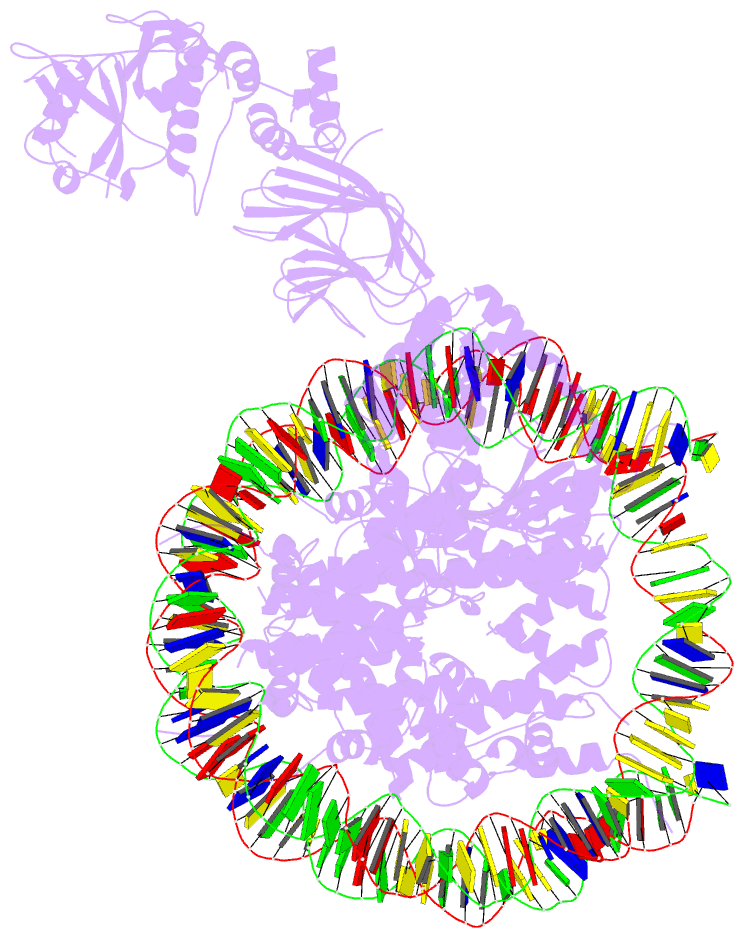
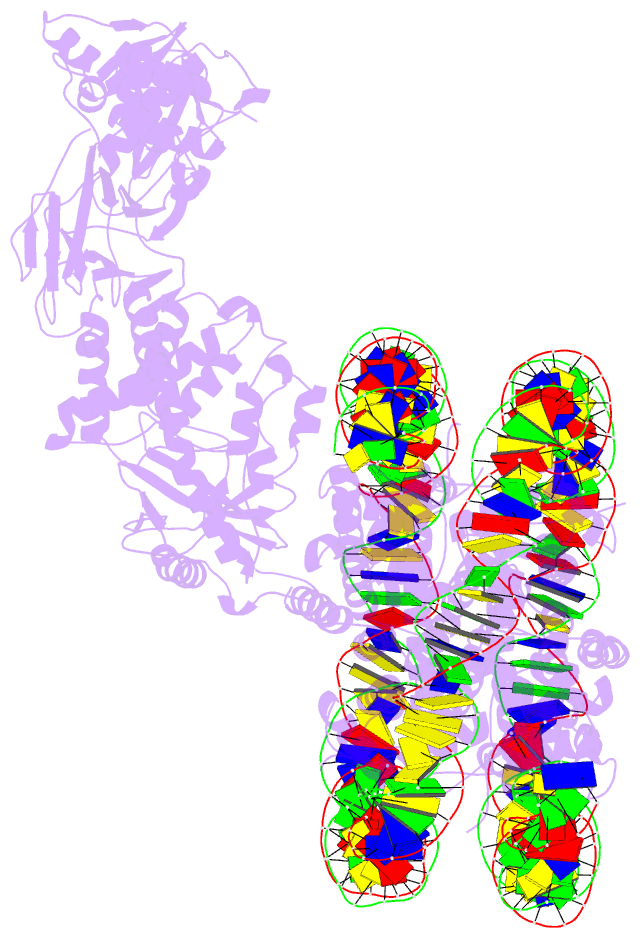
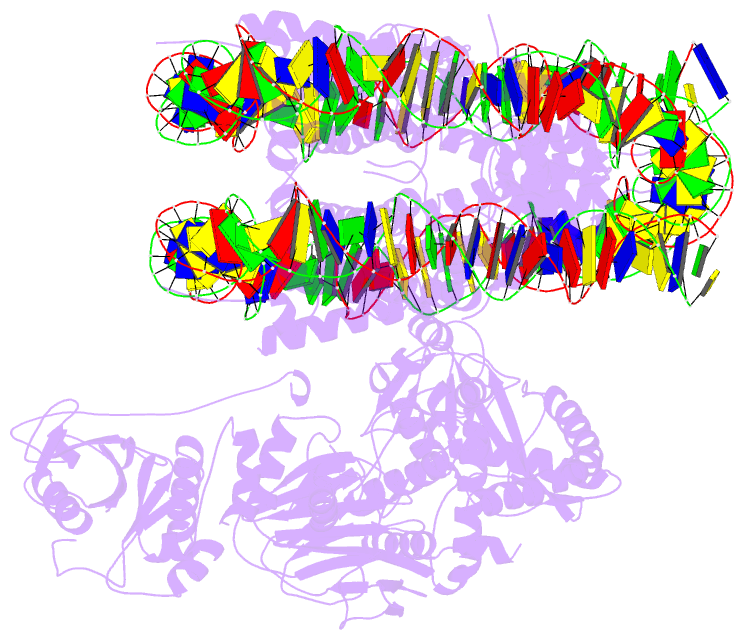
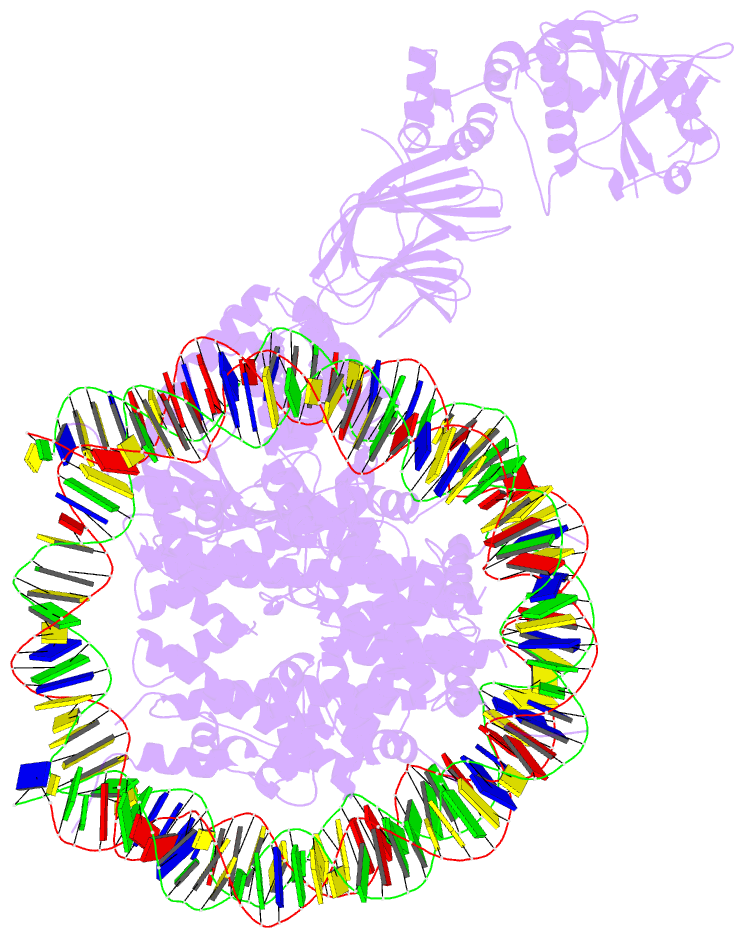
Summary information and primary citation
- PDB-id
-
8ol1;
DSSR-derived features in text and
JSON formats
- Class
- immune system
- Method
- cryo-EM (3.5 Å)
- Summary
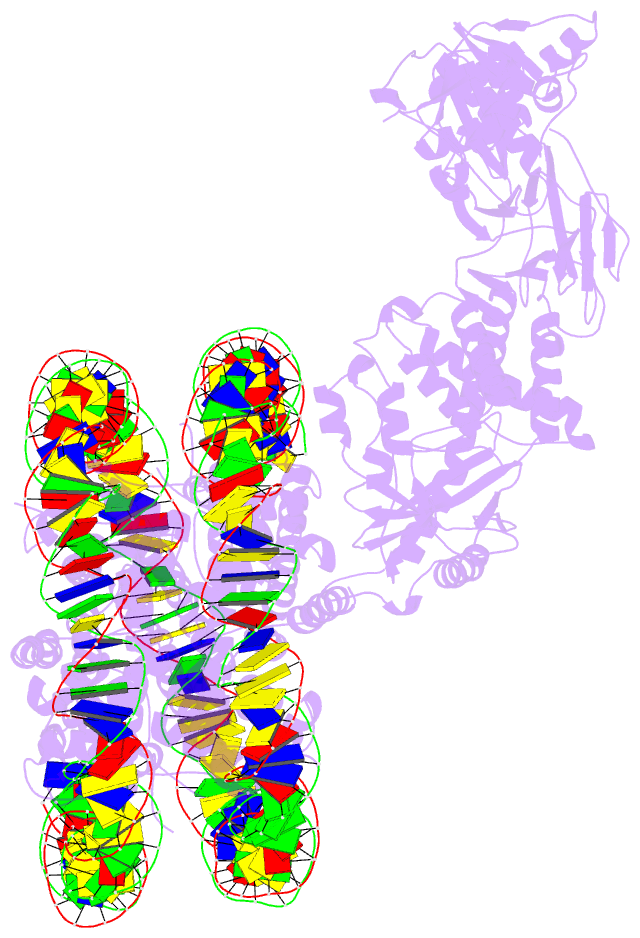
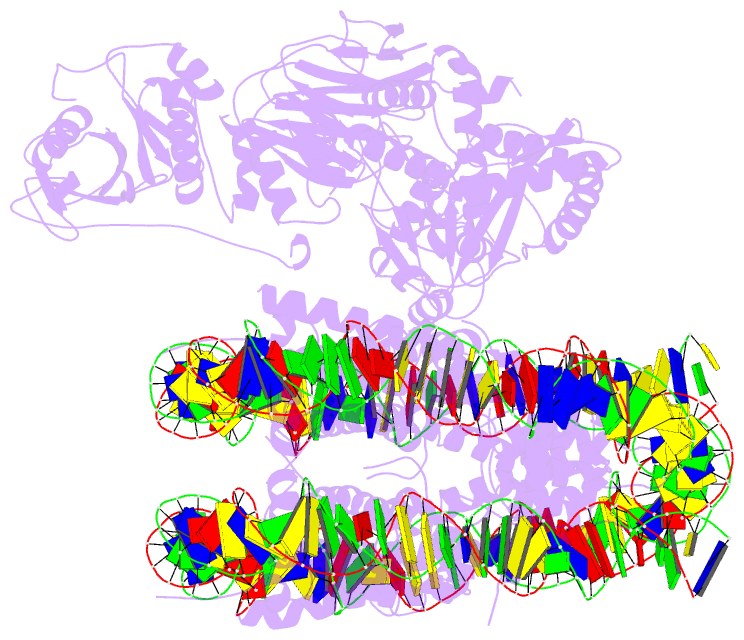
- Cgas-nucleosome in complex with spsb3-elobc (composite
structure)
- Reference
-
Xu P, Liu Y, Liu C, Guey B, Li L, Melenec P, Ricci J,
Ablasser A (2024): "The
CRL5-SPSB3 ubiquitin ligase targets nuclear cGAS for
degradation." Nature, 627,
873-879. doi: 10.1038/s41586-024-07112-w.
- Abstract
- Cyclic GMP-AMP synthase (cGAS) senses aberrant DNA
during infection, cancer and inflammatory disease, and
initiates potent innate immune responses through the
synthesis of 2'3'-cyclic GMP-AMP
(cGAMP)<sub>1-7</sub>. The indiscriminate
activity of cGAS towards DNA demands tight regulatory
mechanisms that are necessary to maintain cell and tissue
homeostasis under normal conditions. Inside the cell
nucleus, anchoring to nucleosomes and competition with
chromatin architectural proteins jointly prohibit cGAS
activation by genomic DNA<sub>8-15</sub>.
However, the fate of nuclear cGAS and its role in cell
physiology remains unclear. Here we show that the ubiquitin
proteasomal system (UPS) degrades nuclear cGAS in
cycling cells. We identify SPSB3 as the cGAS-targeting
substrate receptor that associates with the cullin-RING
ubiquitin ligase 5 (CRL5) complex to ligate ubiquitin
onto nuclear cGAS. A cryo-electron microscopy structure of
nucleosome-bound cGAS in a complex with SPSB3 reveals a
highly conserved Asn-Asn (NN) minimal degron motif at the C
terminus of cGAS that directs SPSB3 recruitment,
ubiquitylation and cGAS protein stability. Interference
with SPSB3-regulated nuclear cGAS degradation primes cells
for type I interferon signalling, conferring heightened
protection against infection by DNA viruses. Our research
defines protein degradation as a determinant of cGAS
regulation in the nucleus and provides structural insights
into an element of cGAS that is amenable to therapeutic
exploitation.