Summary information and primary citation
- PDB-id
-
8jmj;
DSSR-derived features in text and
JSON formats
- Class
- DNA binding protein
- Method
- X-ray (2.57 Å)
- Summary
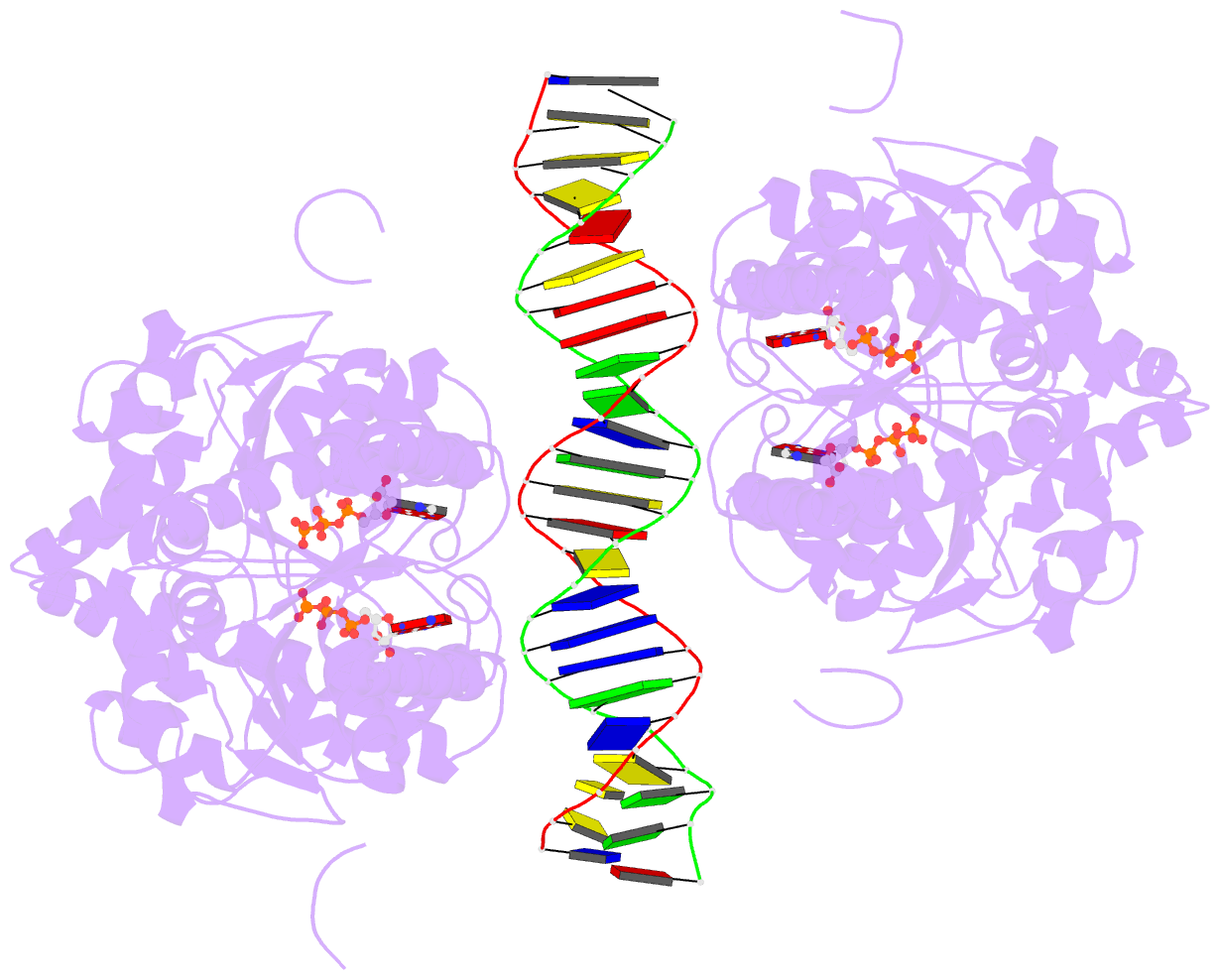
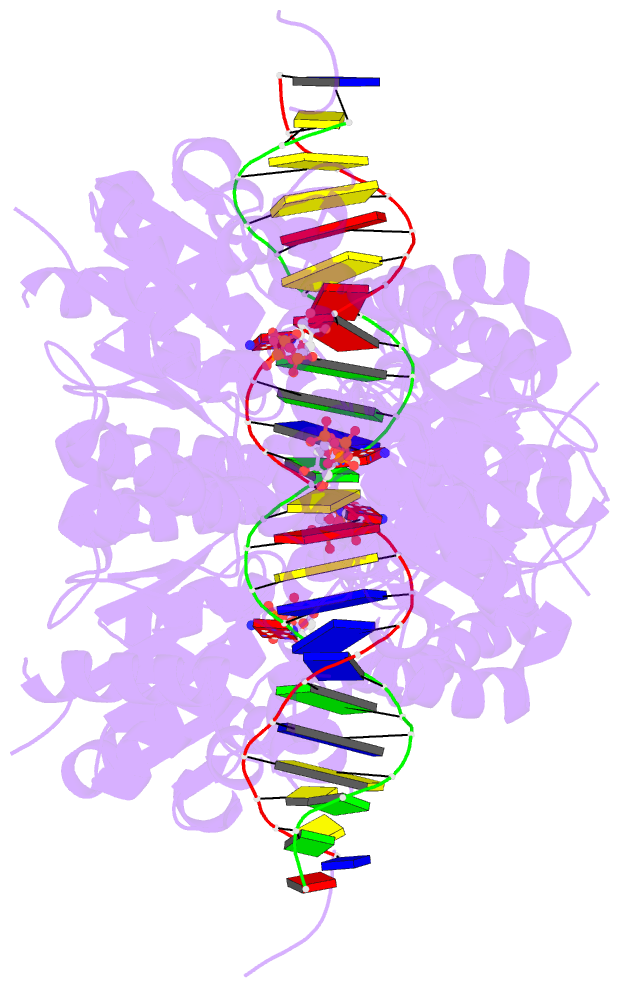
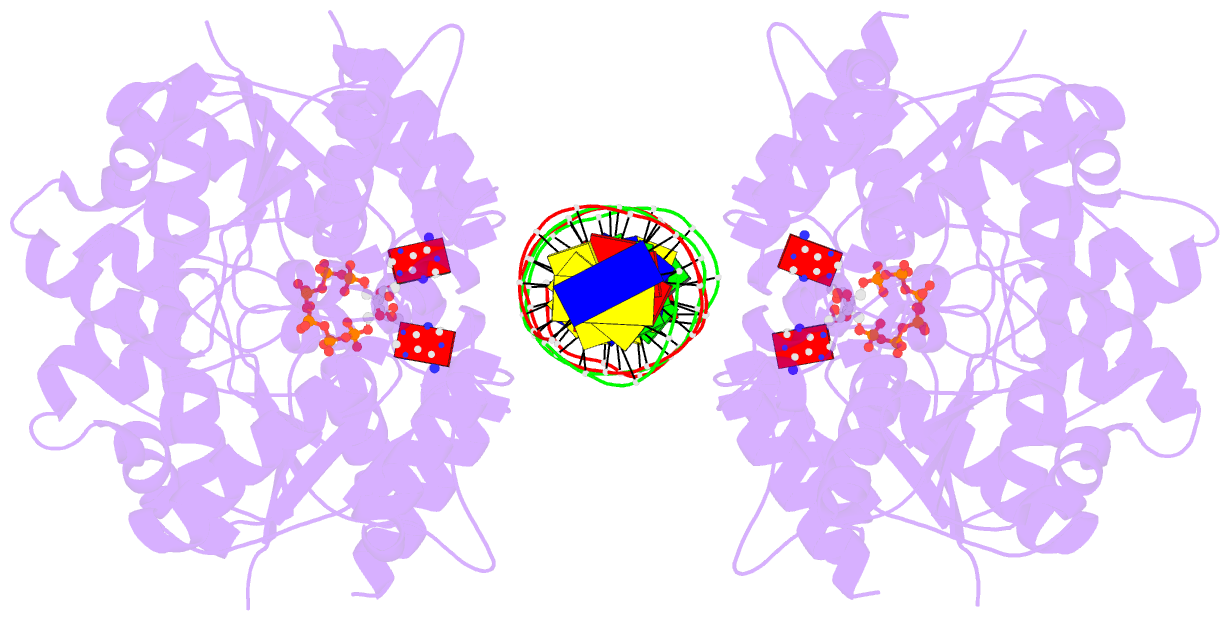
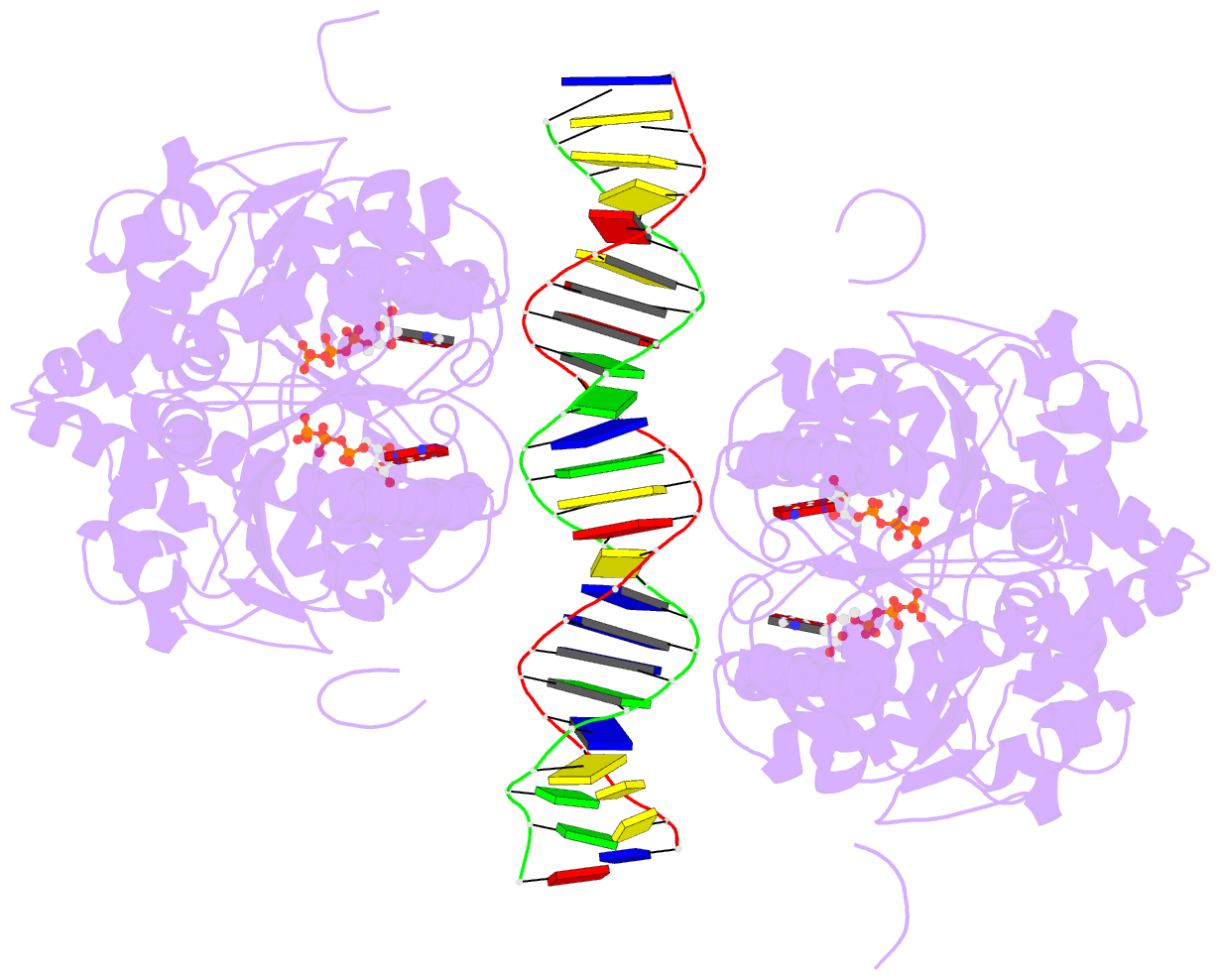
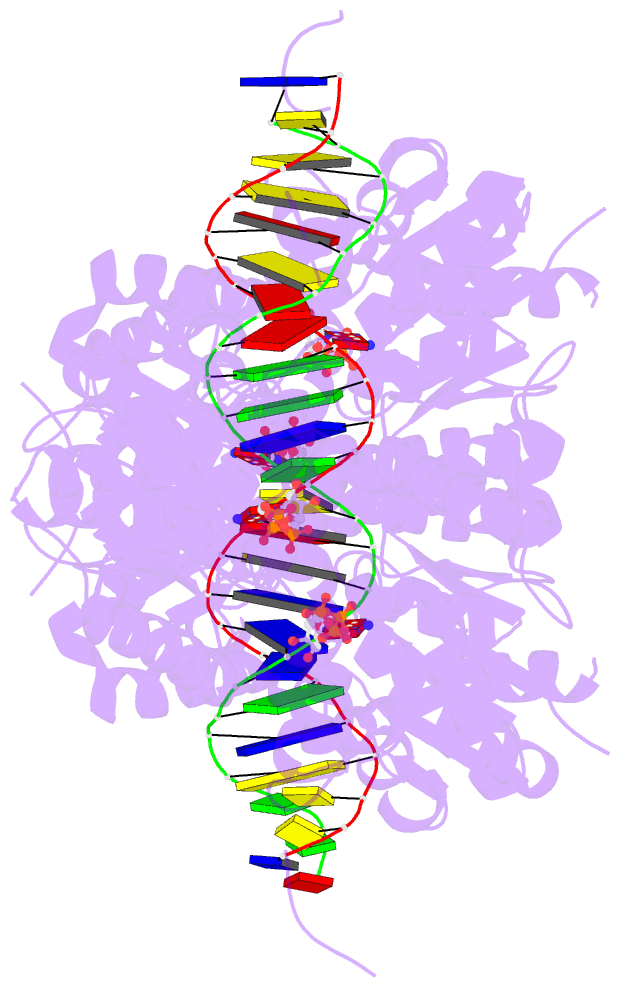
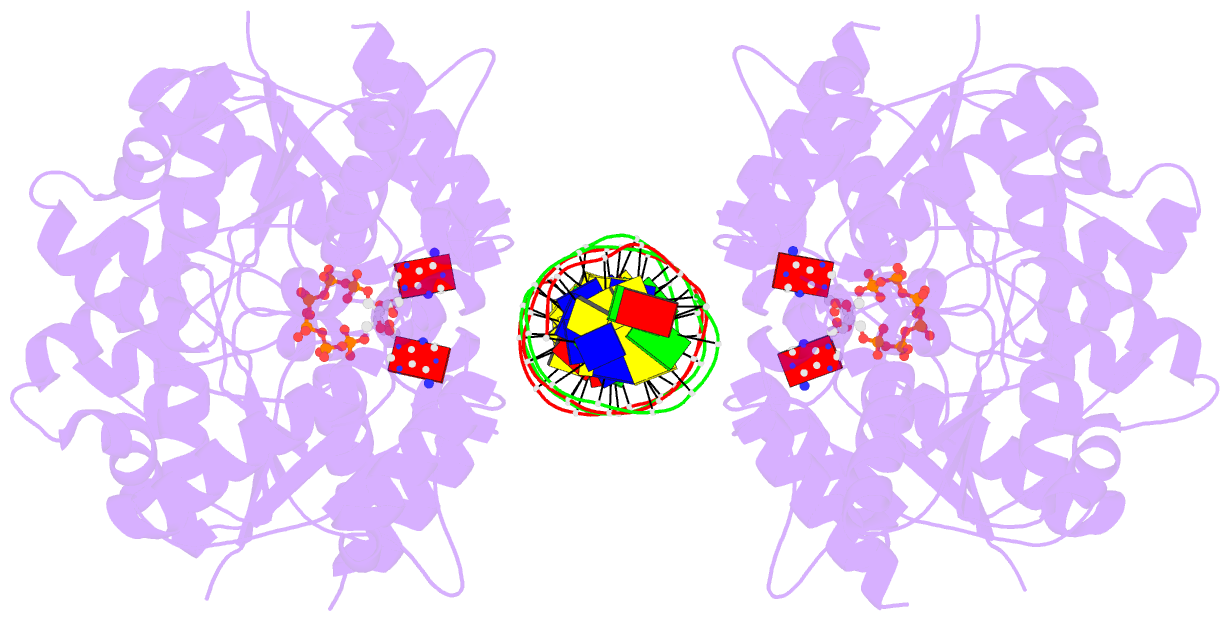
- Structure of helicobacter pylori soj-DNA-spo0j
complex
- Reference
-
Chu CH, Wu CT, Lin MG, Yen CY, Wu YZ, Hsiao CD, Sun YJ
(2024): "Insights
into the molecular mechanism of ParABS system in
chromosome partition by HpParA and HpParB."
Nucleic Acids Res., 52,
7321-7336. doi: 10.1093/nar/gkae450.
- Abstract
- The ParABS system, composed of ParA (an ATPase), ParB
(a DNA binding protein), and parS (a centromere-like DNA),
regulates bacterial chromosome partition. The ParB-parS
partition complex interacts with the nucleoid-bound ParA to
form the nucleoid-adaptor complex (NAC). In Helicobacter
pylori, ParA and ParB homologs are encoded as HpSoj and
HpSpo0J (HpParA and HpParB), respectively. We determined
the crystal structures of the ATP hydrolysis deficient
mutant, HpParAD41A, and the HpParAD41A-DNA complex. We
assayed the CTPase activity of HpParB and identified two
potential DNA binding modes of HpParB regulated by CTP, one
is the specific DNA binding by the DNA binding domain and
the other is the non-specific DNA binding through the
C-terminal domain under the regulation of CTP. We observed
an interaction between HpParAD41A and the N-terminus
fragment of HpParB (residue 1-10, HpParBN10) and determined
the crystal structure of the ternary complex,
HpParAD41A-DNA-HpParBN10 complex which mimics the NAC
formation. HpParBN10 binds near the HpParAD41A dimer
interface and is clamped by flexible loops, L23 and L34,
through a specific cation-π interaction between Arg9 of
HpParBN10 and Phe52 of HpParAD41A. We propose a molecular
mechanism model of the ParABS system providing insight into
chromosome partition in bacteria.