Summary information and primary citation
- PDB-id
-
8ejo;
DSSR-derived features in text and
JSON formats
- Class
- DNA binding protein-DNA
- Method
- X-ray (2.67 Å)
- Summary
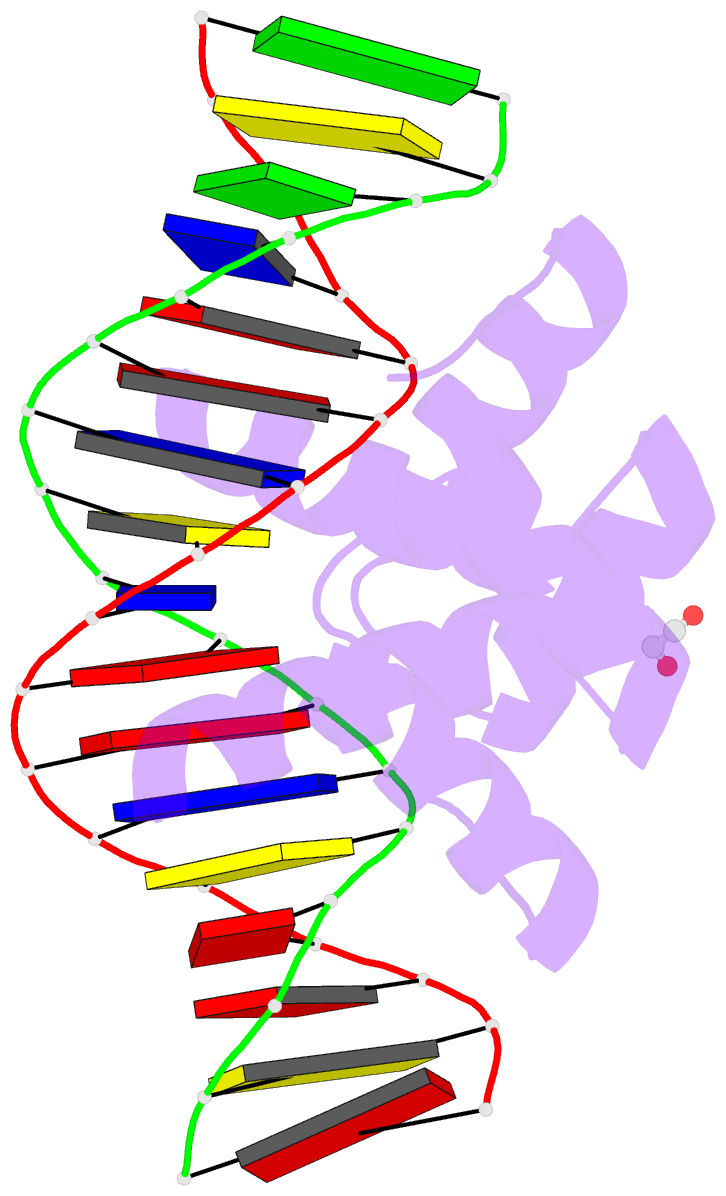
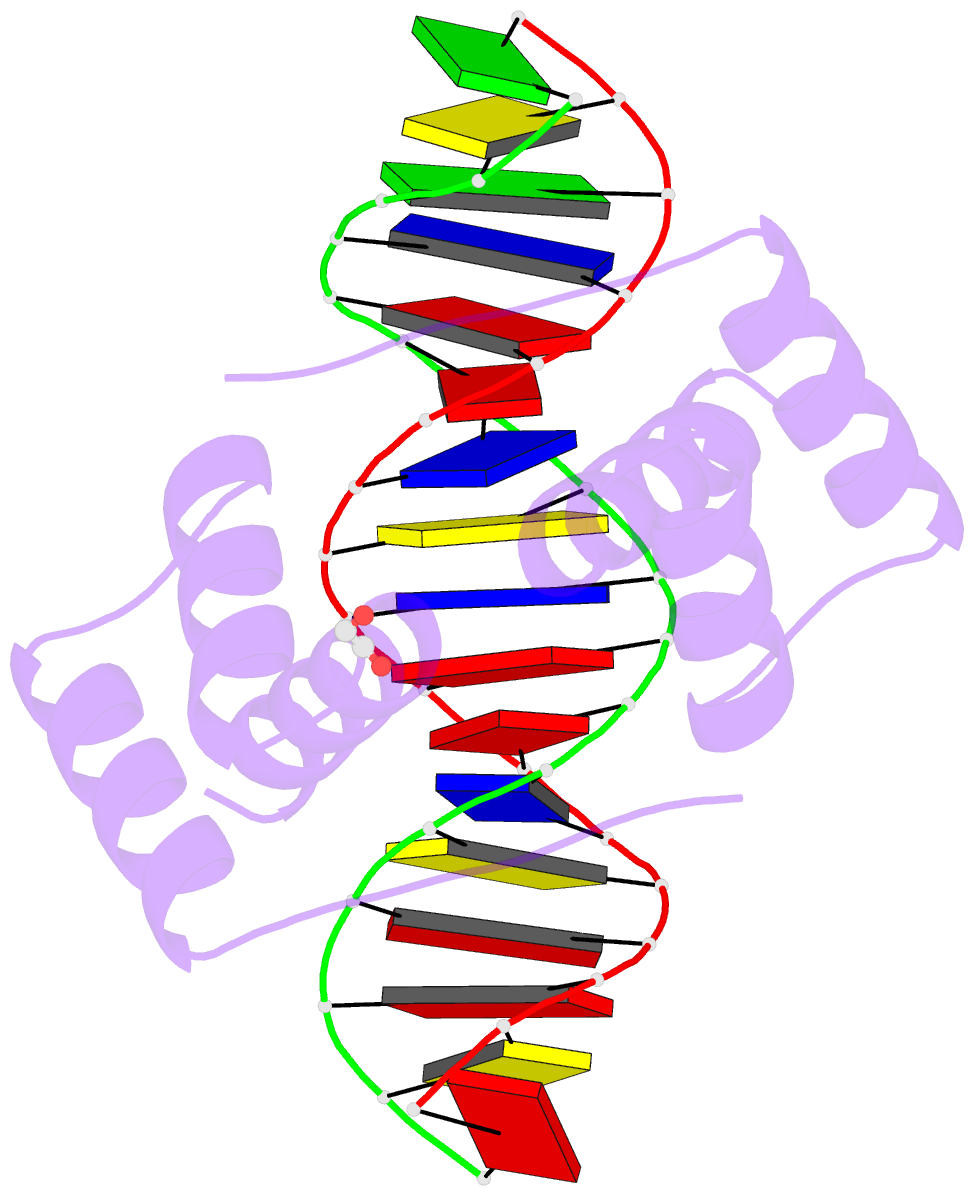
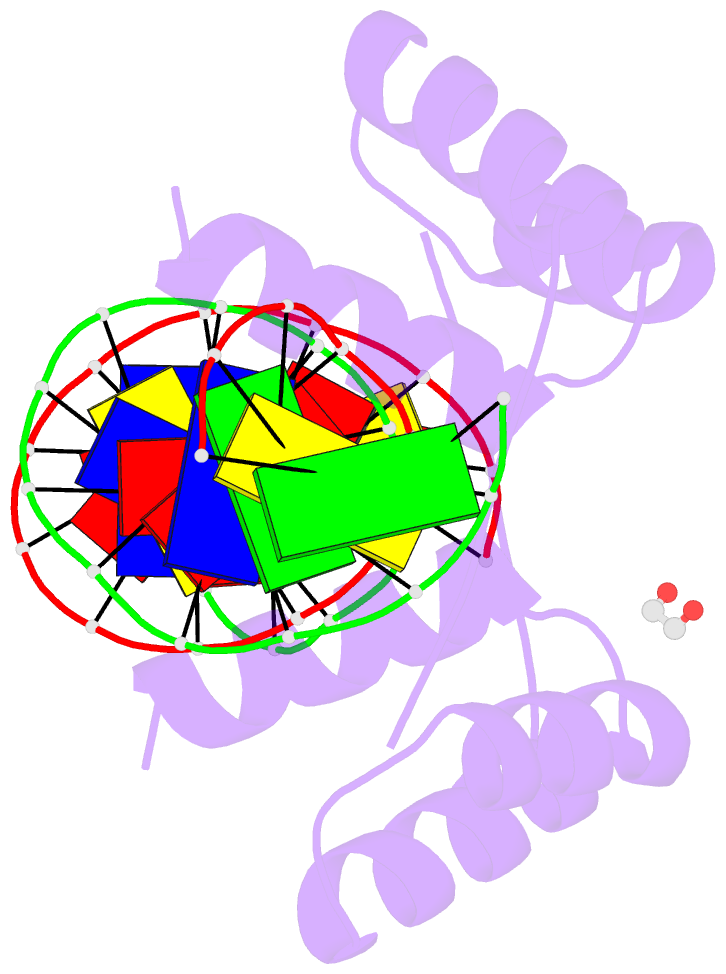
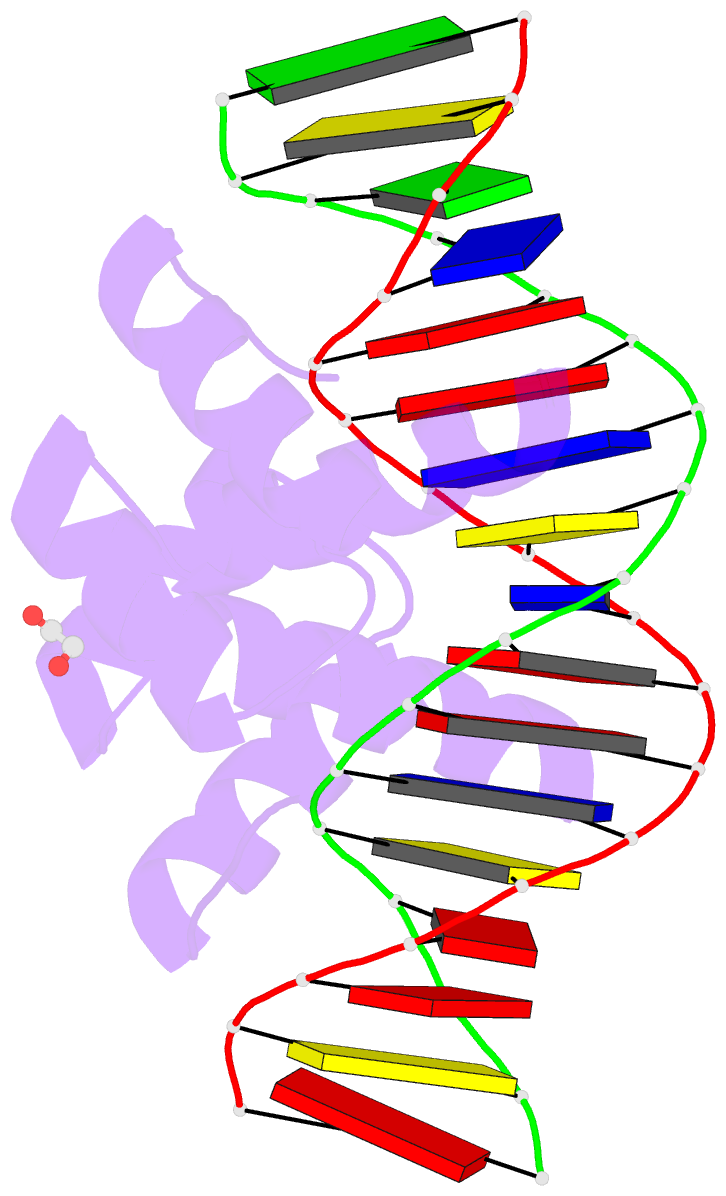
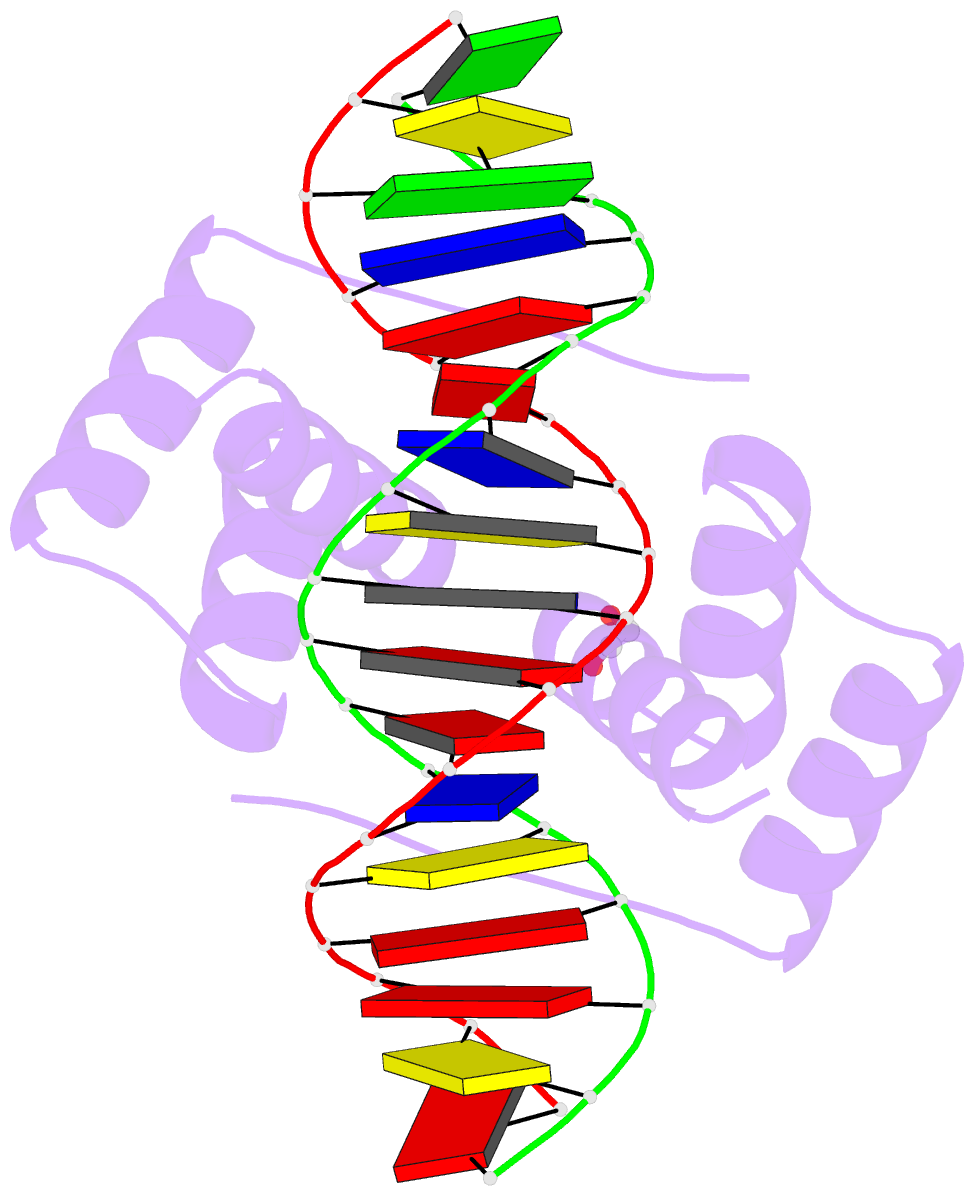
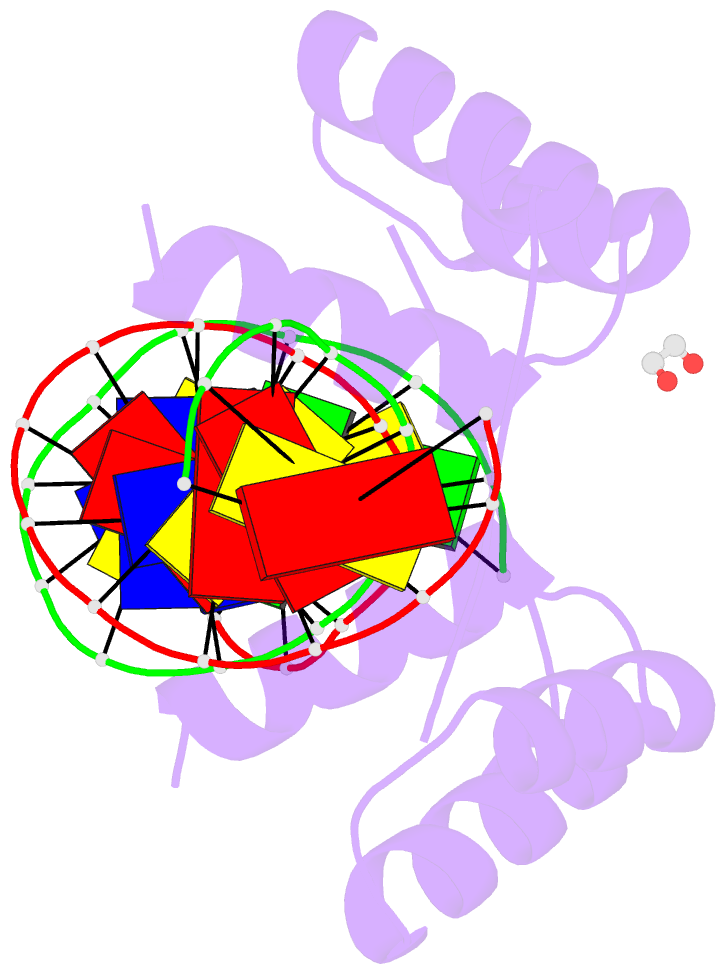
- Crystal structure of the homeodomain of platypus sdux
in complex with DNA
- Reference
-
Bosnakovski D, Toso EA, Ener ET, Gearhart MD, Yin L,
Luttmann FF, Magli A, Shi K, Kim J, Aihara H, Kyba M
(2023): "Antagonism
among DUX family members evolved from an ancestral toxic
single homeodomain protein." Iscience,
26, 107823. doi: 10.1016/j.isci.2023.107823.
- Abstract
- Double homeobox (DUX) genes are unique to eutherian
mammals, expressed transiently during zygotic genome
activation (ZGA) and involved in facioscapulohumeral
muscular dystrophy (FSHD) and cancer when misexpressed. We
evaluate the 3 human DUX genes and the ancestral single
homeobox gene sDUX from the non-eutherian mammal, platypus,
and find that DUX4 cytotoxicity is not shared with DUXA or
DUXB, but surprisingly is shared with platypus sDUX, which
binds DNA as a homodimer and activates numerous ZGA genes
and long terminal repeat (LTR) elements. DUXA, although
transcriptionally inactive, has DNA binding overlap with
DUX4, and DUXA-VP64 activates DUX4 targets and is
cytotoxic. DUXA competition antagonizes the activity of
DUX4 on its target genes, including in FSHD patient cells.
Since DUXA is a DUX4 target gene, this competition
potentiates feedback inhibition, constraining the window of
DUX4 activity. The DUX gene family therefore comprises
antagonistic members of opposing function, with
implications for their roles in ZGA, FSHD, and cancer.