Summary information and primary citation
- PDB-id
-
8dej;
DSSR-derived features in text and
JSON formats
- Class
- DNA binding protein-DNA-RNA
- Method
- cryo-EM (2.86 Å)
- Summary
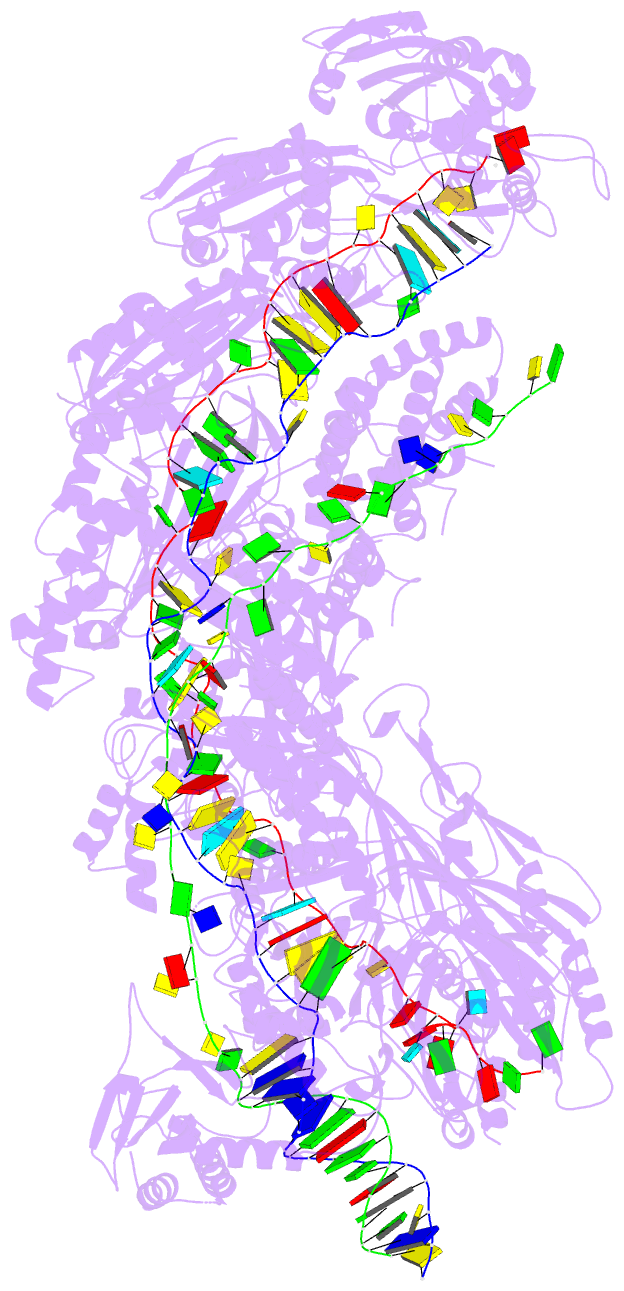
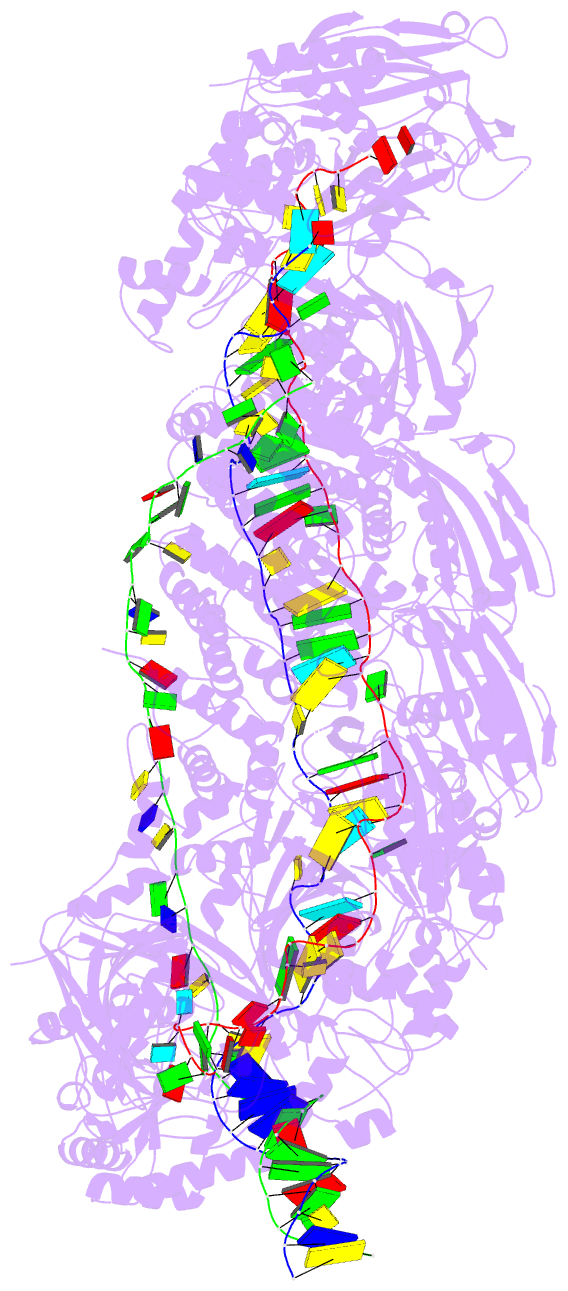
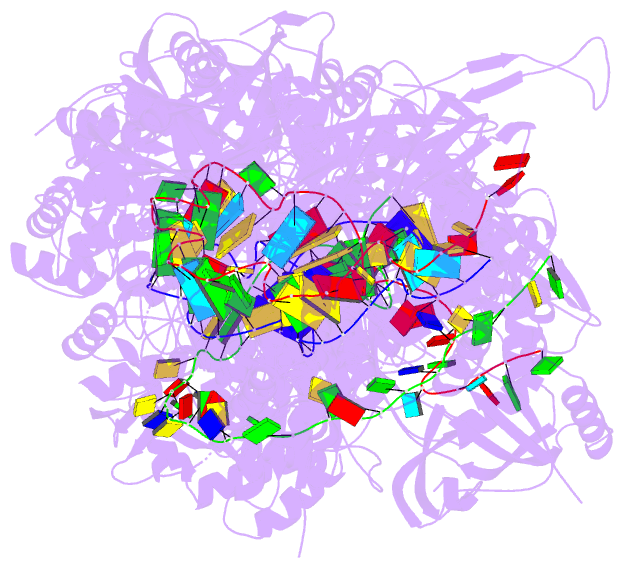
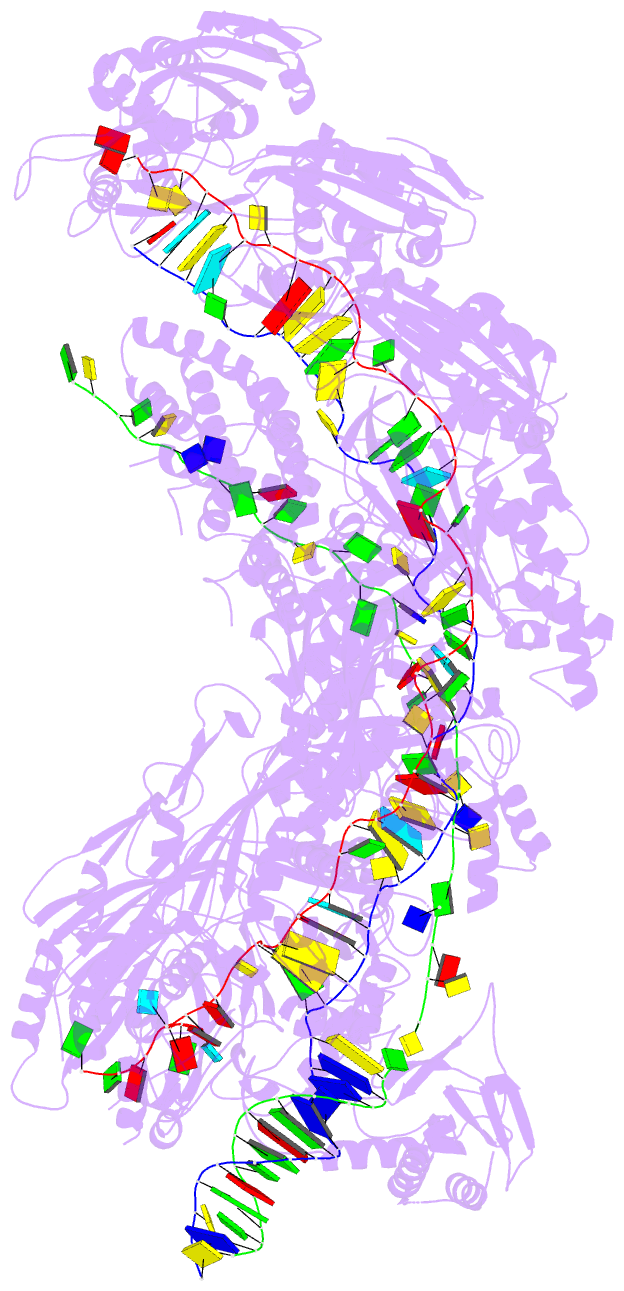
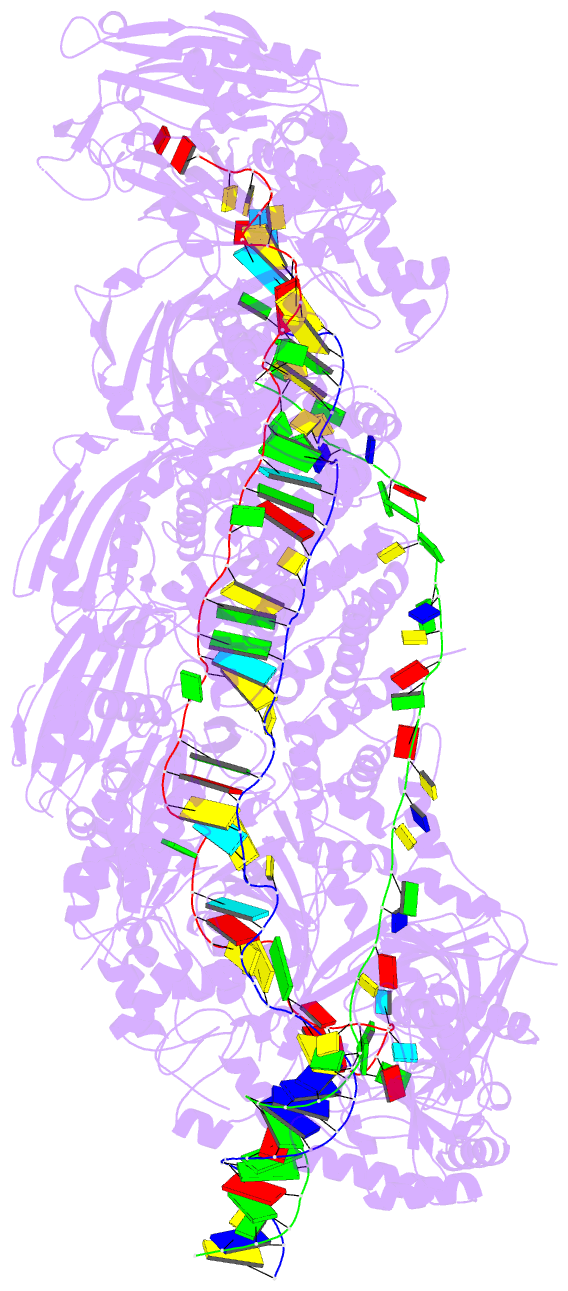
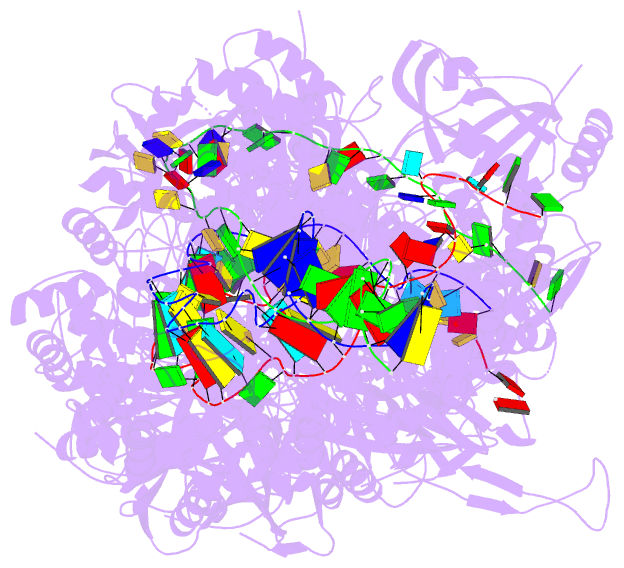
- D. vulgaris type i-c cascade bound to dsDNA target
- Reference
-
O'Brien RE, Bravo JPK, Ramos D, Hibshman GN, Wright JT,
Taylor DW (2023): "Structural
snapshots of R-loop formation by a type I-C CRISPR
Cascade." Mol.Cell, 83,
746. doi: 10.1016/j.molcel.2023.01.024.
- Abstract
- Type I CRISPR-Cas systems employ multi-subunit Cascade
effector complexes to target foreign nucleic acids for
destruction. Here, we present structures of
D. vulgaris type I-C Cascade at various stages of
double-stranded (ds)DNA target capture, revealing
mechanisms that underpin PAM recognition and Cascade
allosteric activation. We uncover an interesting mechanism
of non-target strand (NTS) DNA stabilization via stacking
interactions with the "belly" subunits, securing the NTS in
place. This "molecular seatbelt" mechanism facilitates
efficient R-loop formation and prevents dsDNA reannealing.
Additionally, we provide structural insights into how two
anti-CRISPR (Acr) proteins utilize distinct strategies to
achieve a shared mechanism of type I-C Cascade inhibition
by blocking PAM scanning. These observations form a
structural basis for directional R-loop formation and
reveal how different Acr proteins have converged upon
common molecular mechanisms to efficiently shut down CRISPR
immunity.