Summary information and primary citation
- PDB-id
-
8cvm;
DSSR-derived features in text and
JSON formats
- Class
- antibiotic
- Method
- cryo-EM (2.66 Å)
- Summary
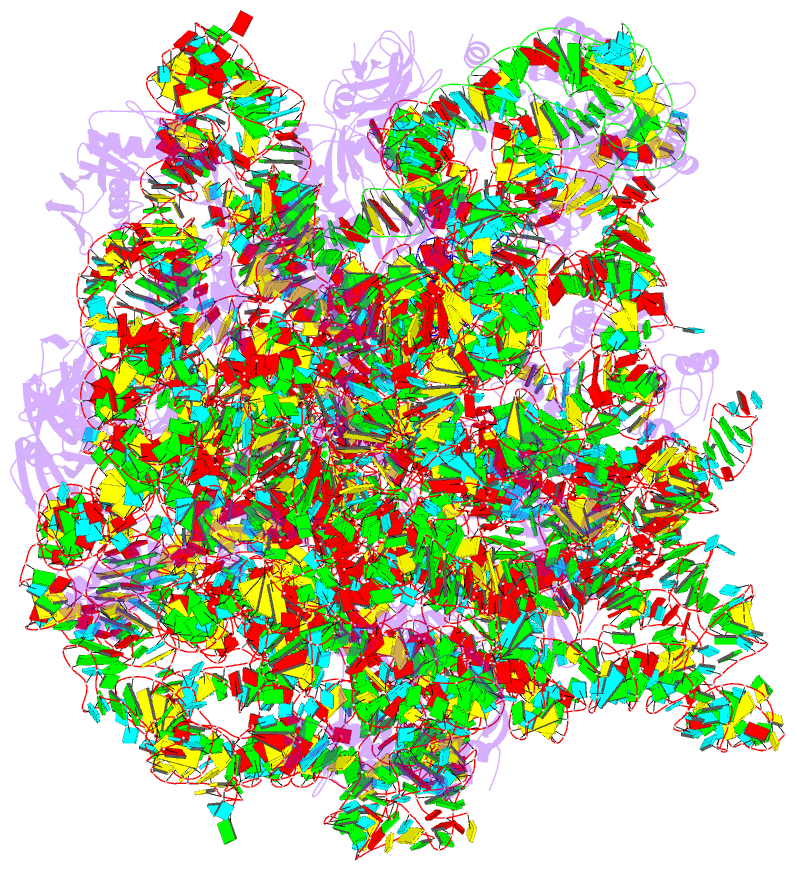
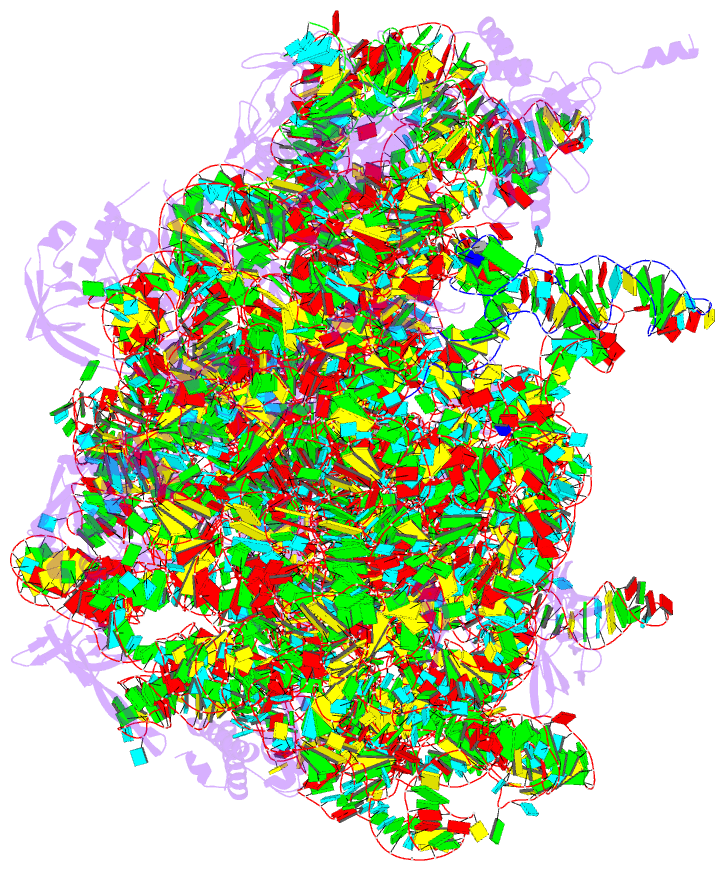
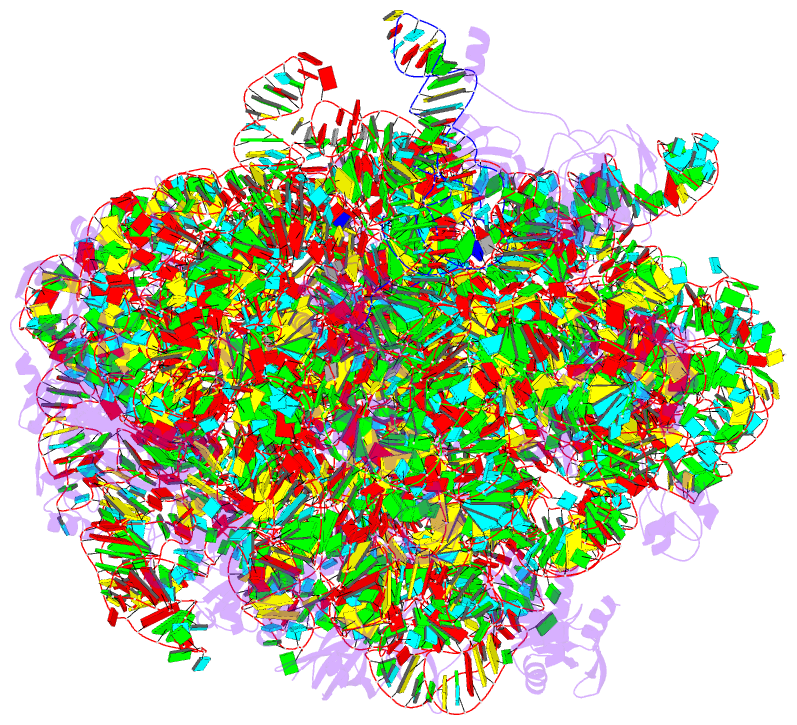
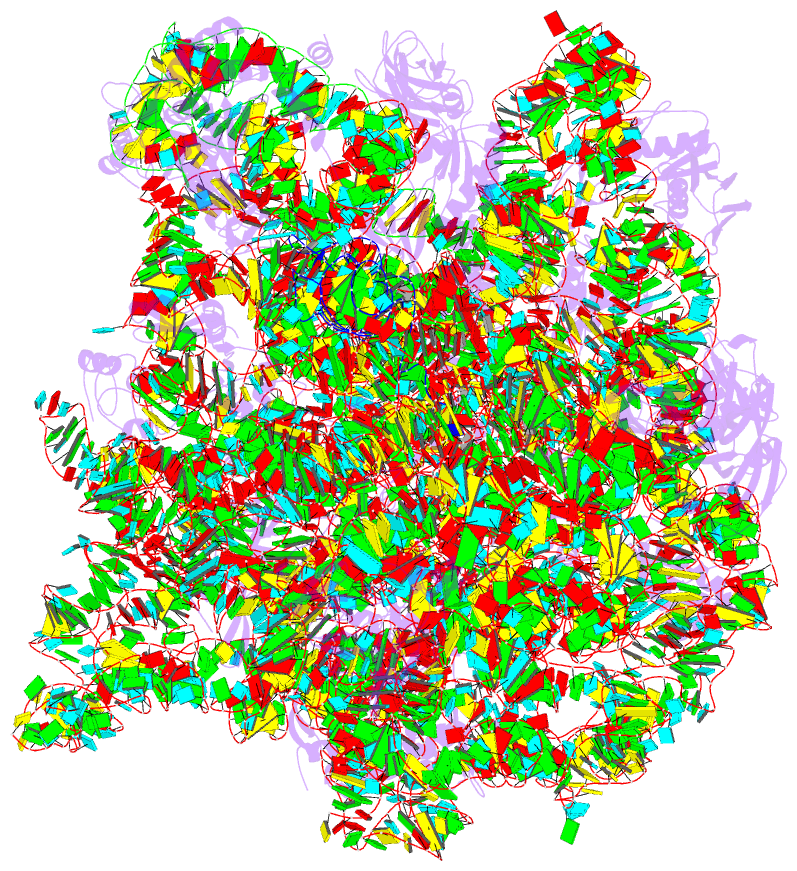
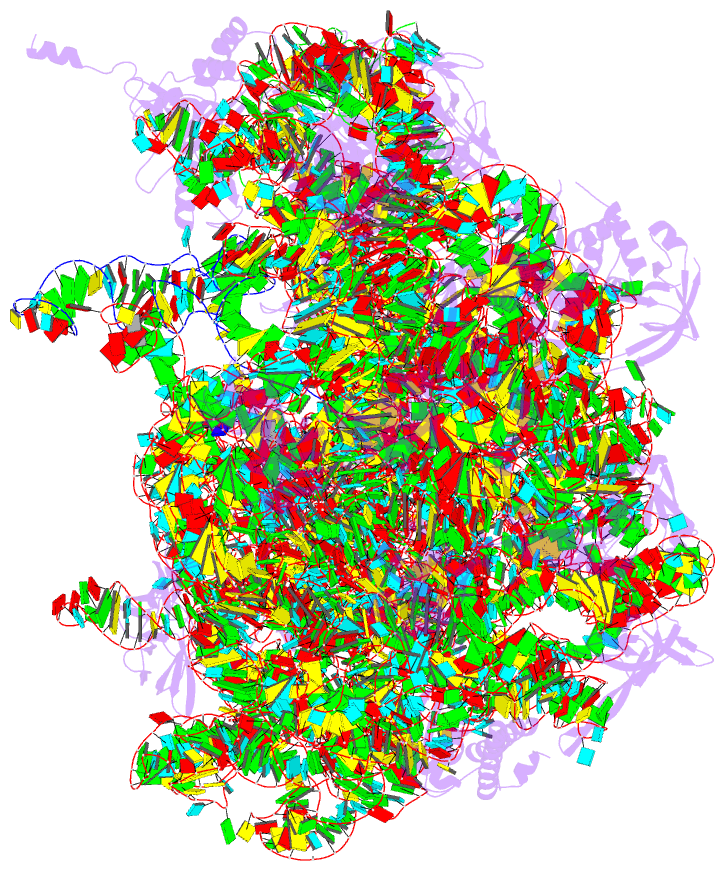
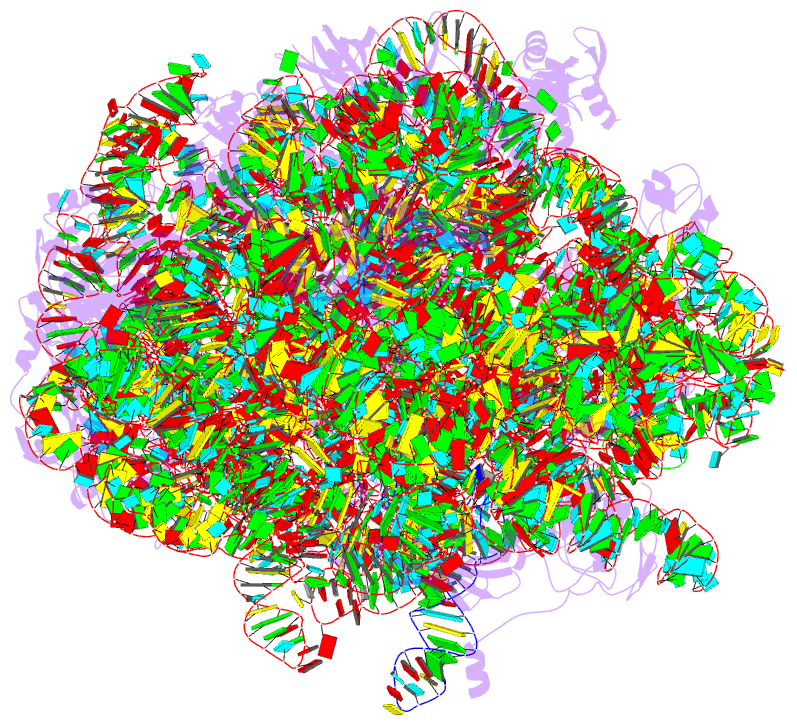
- Cutibacterium acnes 50s ribosomal subunit with p-site
trna and sarecycline bound in the local refined map
- Reference
-
Lomakin IB, Devarkar SC, Patel S, Grada A, Bunick CG
(2023): "Sarecycline
inhibits protein translation in Cutibacterium acnes 70S
ribosome using a two-site mechanism." Nucleic
Acids Res., 51, 2915-2930. doi:
10.1093/nar/gkad103.
- Abstract
- Acne vulgaris is a chronic disfiguring skin disease
affecting ∼1 billion people worldwide, often having
persistent negative effects on physical and mental health.
The Gram-positive anaerobe, Cutibacterium acnes is
implicated in acne pathogenesis and is, therefore, a main
target for antibiotic-based acne therapy. We determined a
2.8-Å resolution structure of the 70S ribosome of
Cutibacterium acnes by cryogenic electron microscopy and
discovered that sarecycline, a narrow-spectrum antibiotic
against Cutibacterium acnes, may inhibit two active sites
of this bacterium's ribosome in contrast to the one site
detected previously on the model ribosome of Thermus
thermophilus. Apart from the canonical binding site at the
mRNA decoding center, the second binding site for
sarecycline exists at the nascent peptide exit tunnel,
reminiscent of the macrolides class of antibiotics. The
structure also revealed Cutibacterium acnes-specific
features of the ribosomal RNA and proteins. Unlike the
ribosome of the Gram-negative bacterium Escherichia coli,
Cutibacterium acnes ribosome has two additional proteins,
bS22 and bL37, which are also present in the ribosomes of
Mycobacterium smegmatis and Mycobacterium tuberculosis. We
show that bS22 and bL37 have antimicrobial properties and
may be involved in maintaining the healthy homeostasis of
the human skin microbiome.