Summary information and primary citation
- PDB-id
-
7z4j;
DSSR-derived features in text and
JSON formats
- Class
- hydrolase
- Method
- cryo-EM (2.99 Å)
- Summary
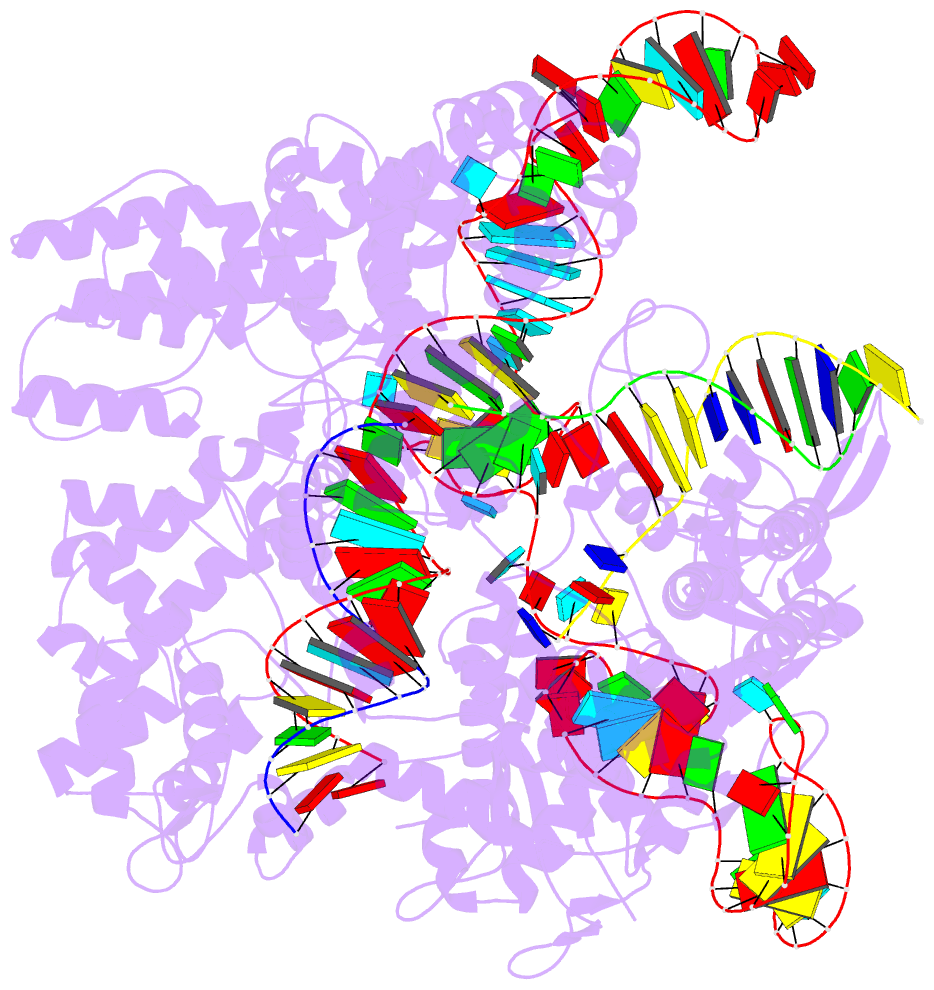
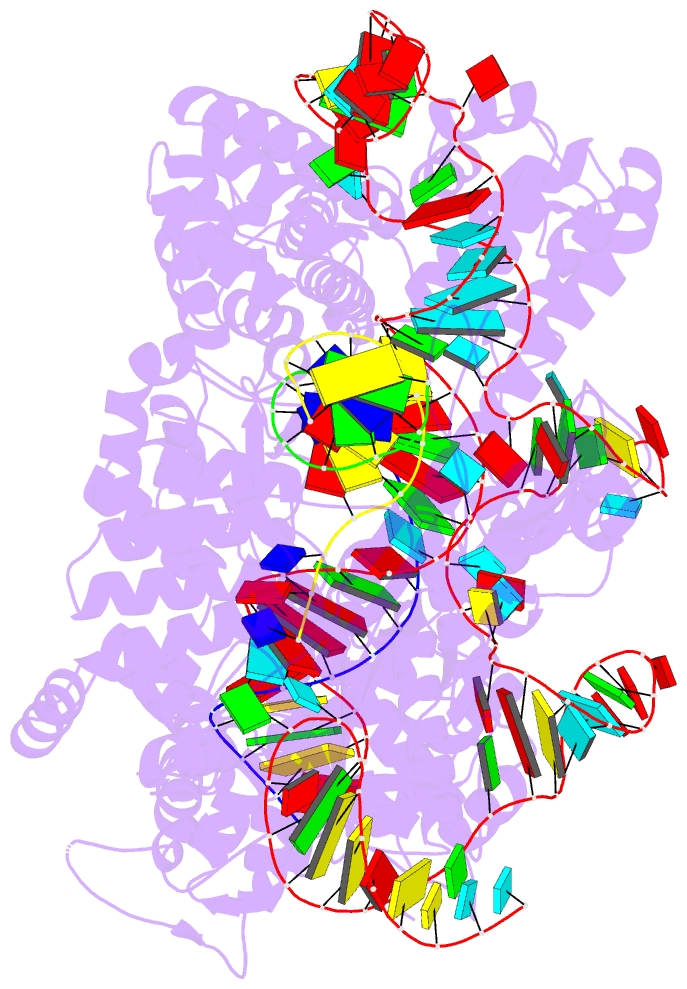
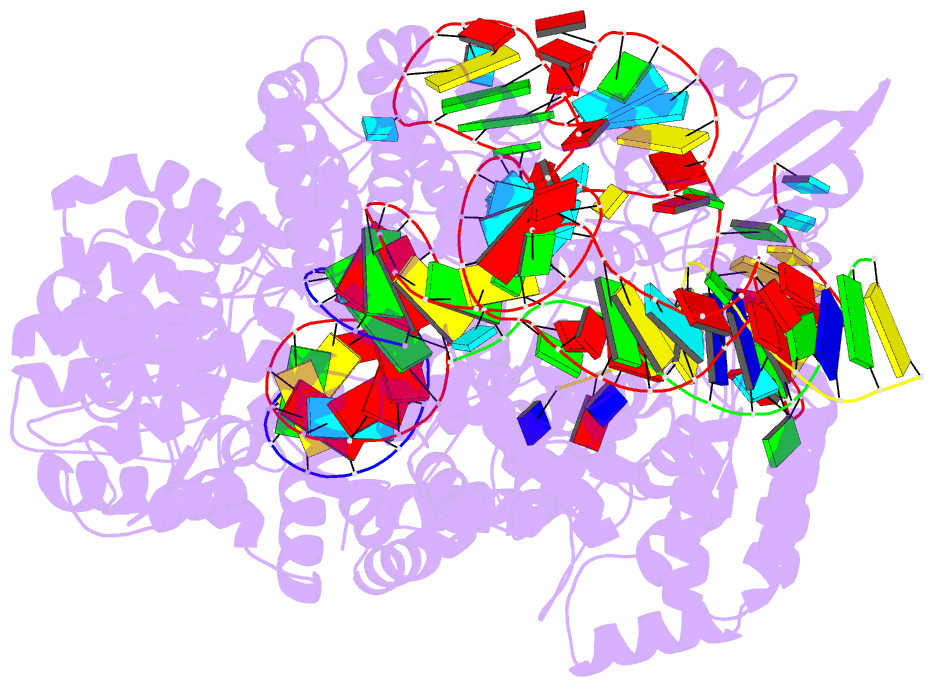
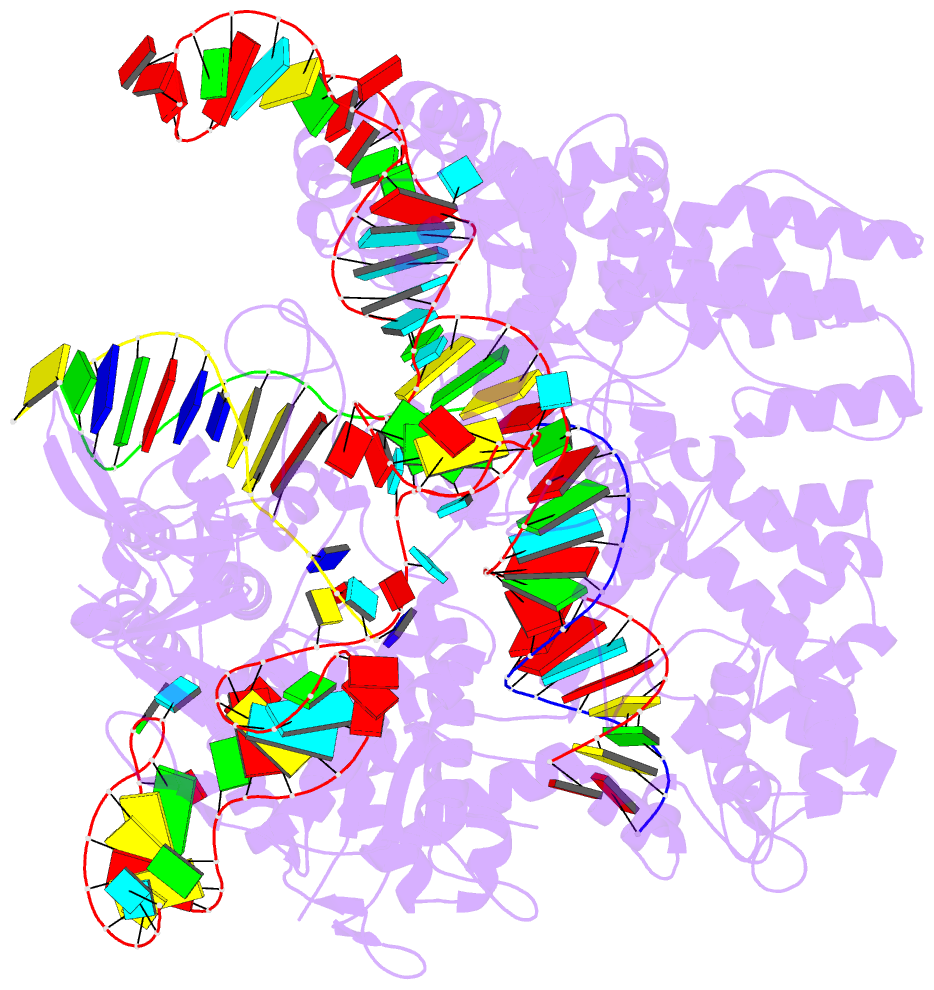
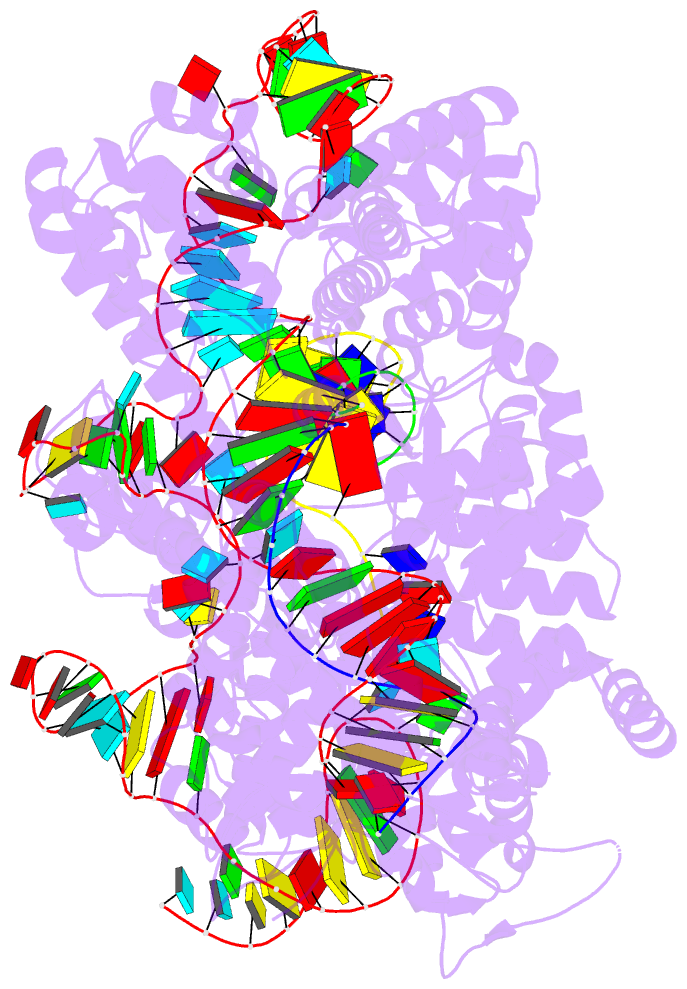
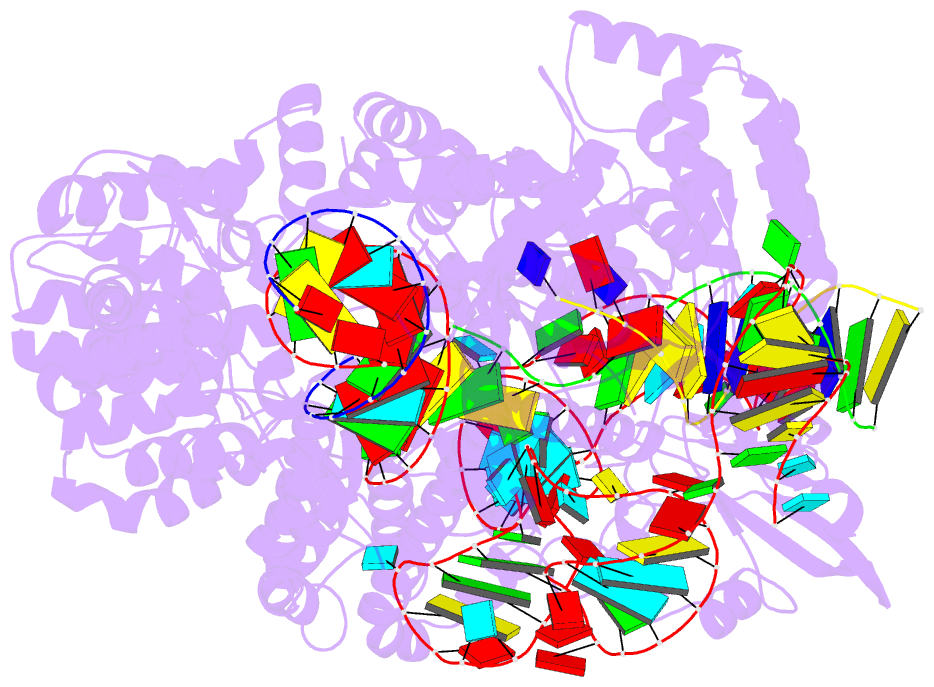
- Spcas9 bound to 18-nucleotide complementary DNA
substrate in the catalytic state
- Reference
-
Pacesa M, Loeff L, Querques I, Muckenfuss LM, Sawicka M,
Jinek M (2022): "R-loop
formation and conformational activation mechanisms of
Cas9." Nature, 609,
191-196. doi: 10.1038/s41586-022-05114-0.
- Abstract
- Cas9 is a CRISPR-associated endonuclease capable of
RNA-guided, site-specific DNA
cleavage<sub>1-3</sub>. The programmable
activity of Cas9 has been widely utilized for genome
editing applications<sub>4-6</sub>, yet its
precise mechanisms of target DNA binding and off-target
discrimination remain incompletely understood. Here we
report a series of cryo-electron microscopy structures of
Streptococcus pyogenes Cas9 capturing the directional
process of target DNA hybridization. In the early phase of
R-loop formation, the Cas9 REC2 and REC3 domains form a
positively charged cleft that accommodates the distal end
of the target DNA duplex. Guide-target hybridization past
the seed region induces rearrangements of the REC2 and REC3
domains and relocation of the HNH nuclease domain to assume
a catalytically incompetent checkpoint conformation.
Completion of the guide-target heteroduplex triggers
conformational activation of the HNH nuclease domain,
enabled by distortion of the guide-target heteroduplex, and
complementary REC2 and REC3 domain rearrangements.
Together, these results establish a structural framework
for target DNA-dependent activation of Cas9 that sheds
light on its conformational checkpoint mechanism and may
facilitate the development of novel Cas9 variants and guide
RNA designs with enhanced specificity and activity.