Summary information and primary citation
- PDB-id
-
7v01;
DSSR-derived features in text and
JSON formats
- Class
- hydrolase-RNA
- Method
- cryo-EM (3.67 Å)
- Summary
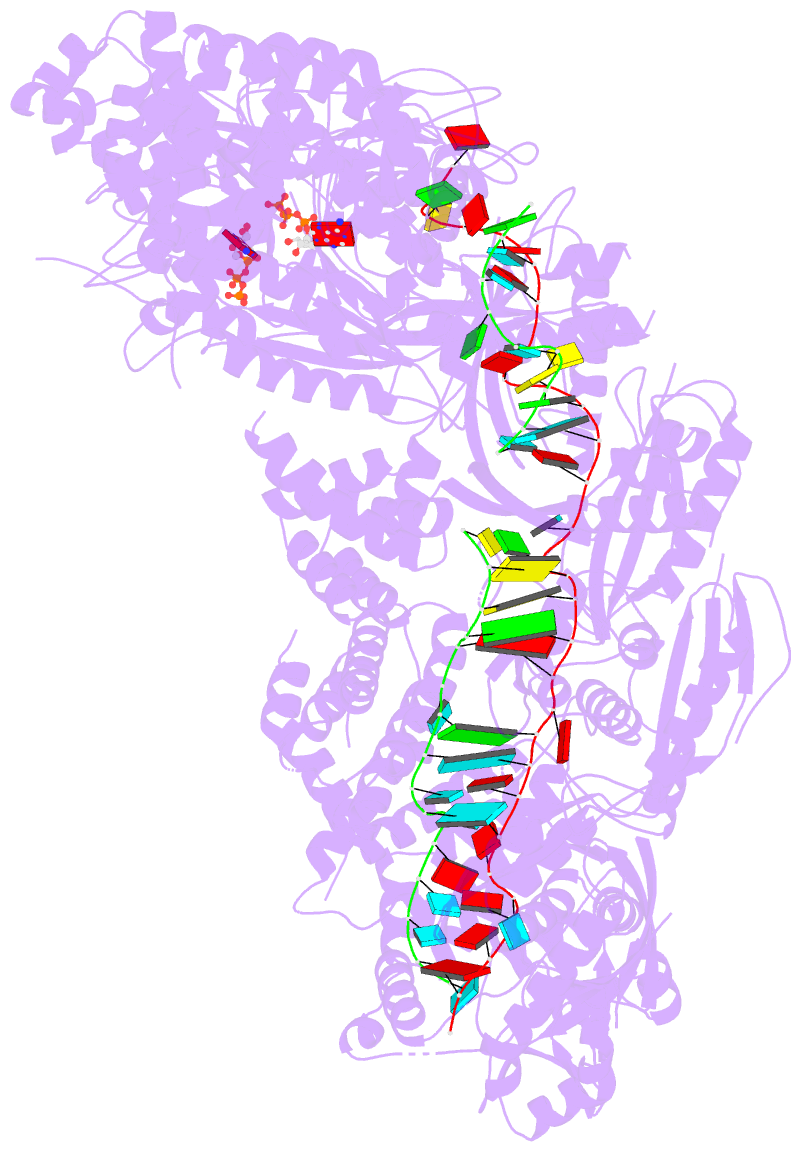
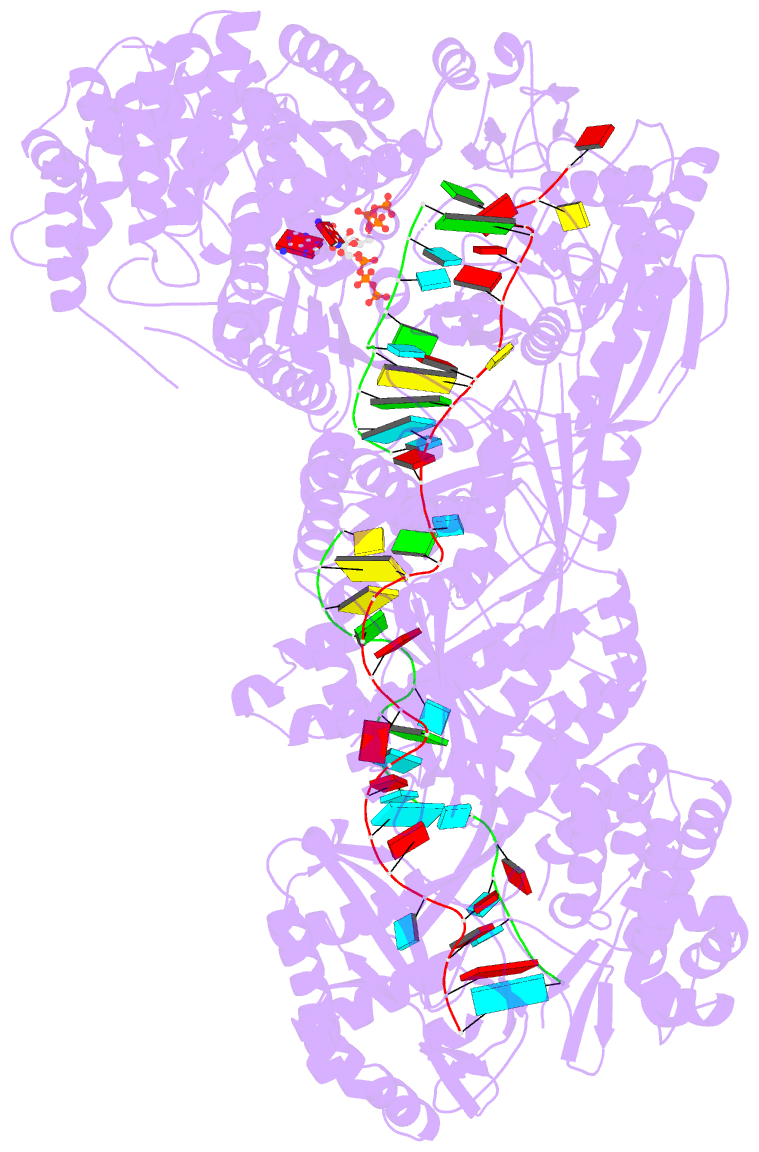
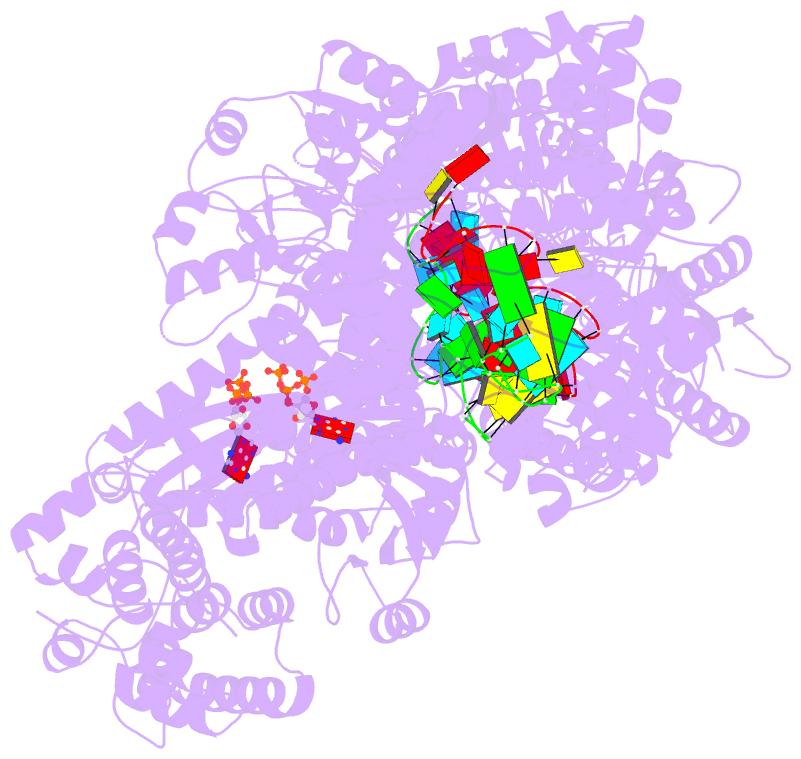
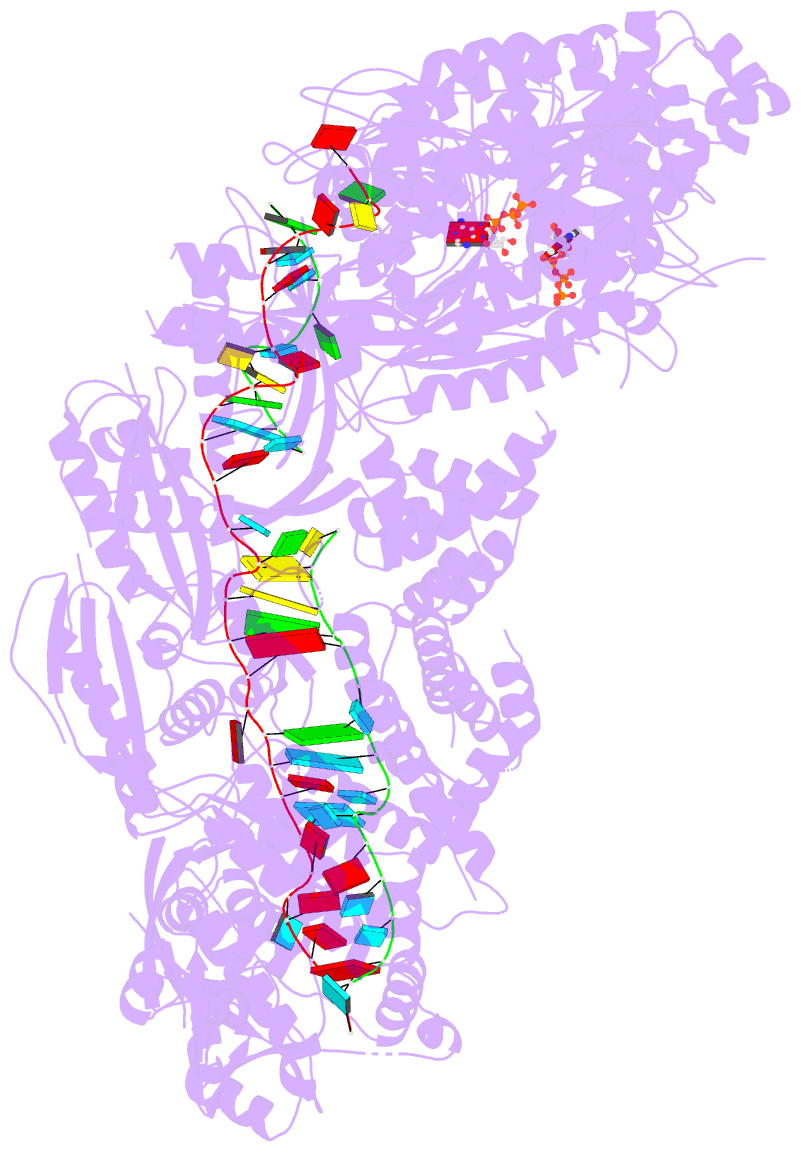
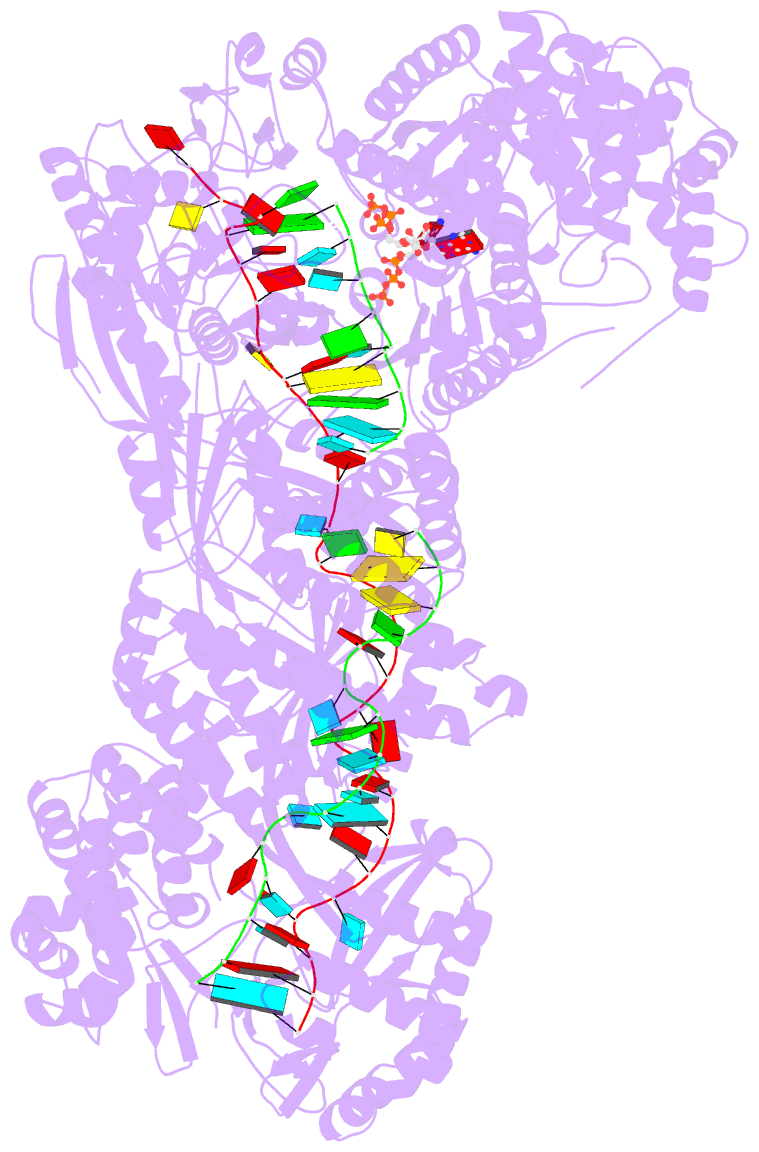
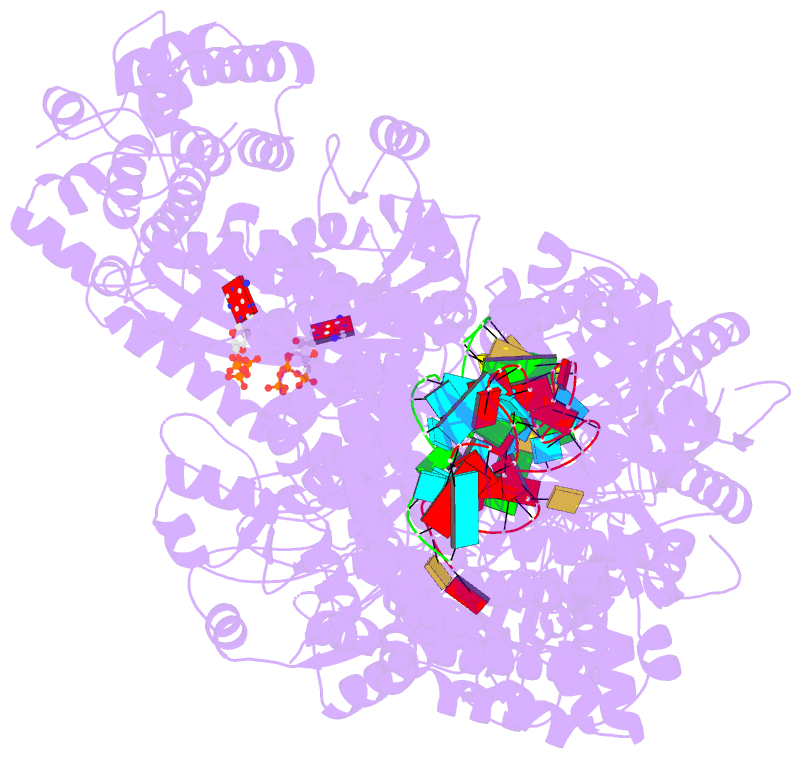
- Staphylococcus epidermidis rp62a crispr short effector
complex with self RNA target and atp
- Reference
-
Smith EM, Ferrell S, Tokars VL, Mondragon A (2022):
"Structures
of an active type III-A CRISPR effector complex."
Structure, 30, 1109-1128.e6.
doi: 10.1016/j.str.2022.05.013.
- Abstract
- Clustered regularly interspaced short palindromic
repeats (CRISPR) and their CRISPR-associated proteins (Cas)
provide many prokaryotes with an adaptive immune system
against invading genetic material. Type III CRISPR systems
are unique in that they can degrade both RNA and DNA. In
response to invading nucleic acids, they produce cyclic
oligoadenylates that act as secondary messengers,
activating cellular nucleases that aid in the immune
response. Here, we present seven single-particle cryo-EM
structures of the type III-A Staphylococcus epidermidis
CRISPR effector complex. The structures reveal the intact
S. epidermidis effector complex in an apo, ATP-bound,
cognate target RNA-bound, and non-cognate target RNA-bound
states and illustrate how the effector complex binds and
presents crRNA. The complexes bound to target RNA capture
the type III-A effector complex in a post-RNA cleavage
state. The ATP-bound structures give details about how ATP
binds to Cas10 to facilitate cyclic oligoadenylate
production.