Summary information and primary citation
- PDB-id
-
7ur5;
DSSR-derived features in text and
JSON formats
- Class
- RNA
- Method
- cryo-EM (2.6 Å)
- Summary
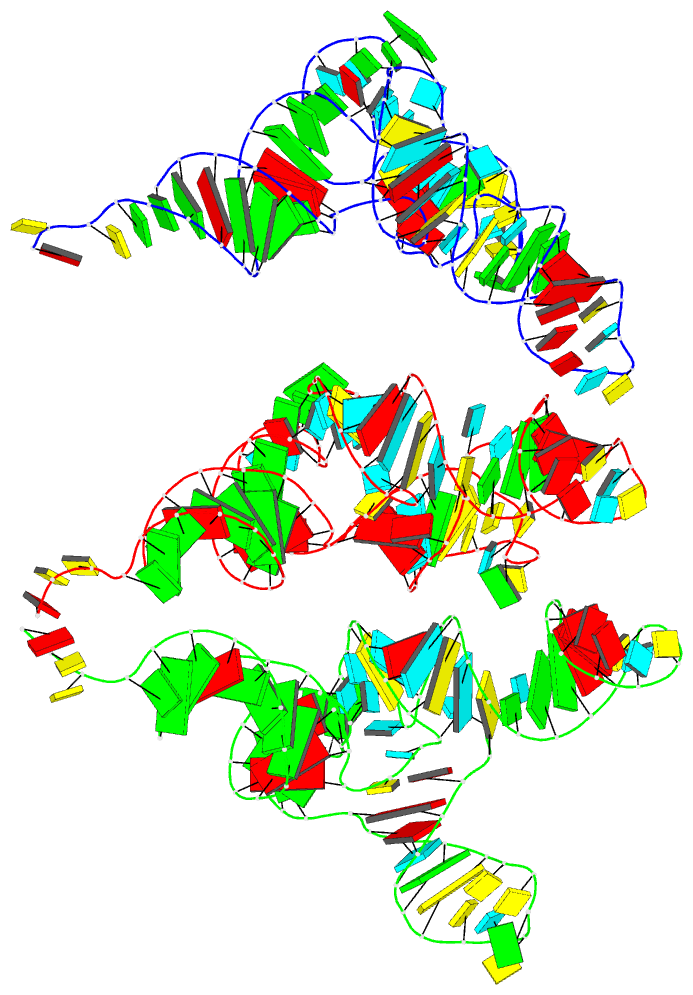
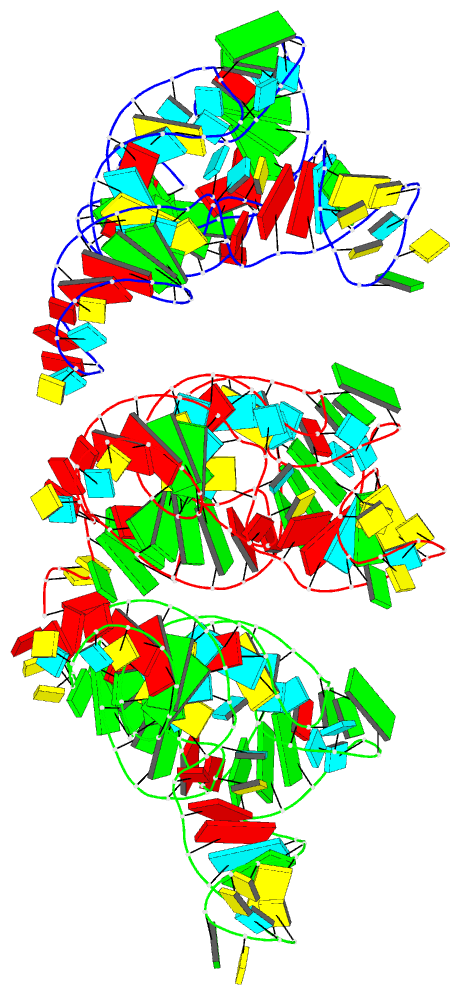
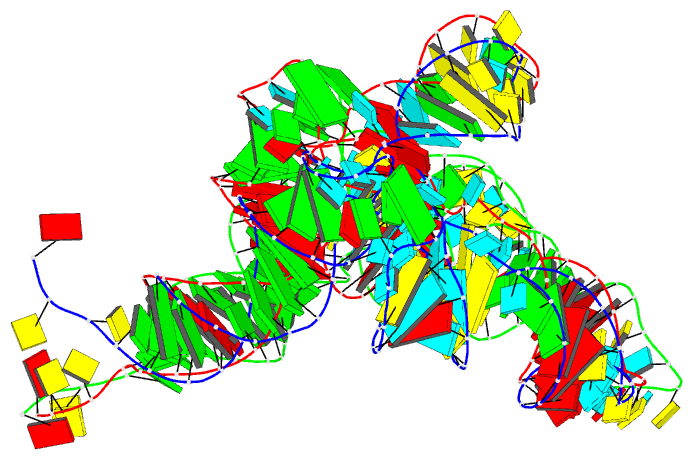
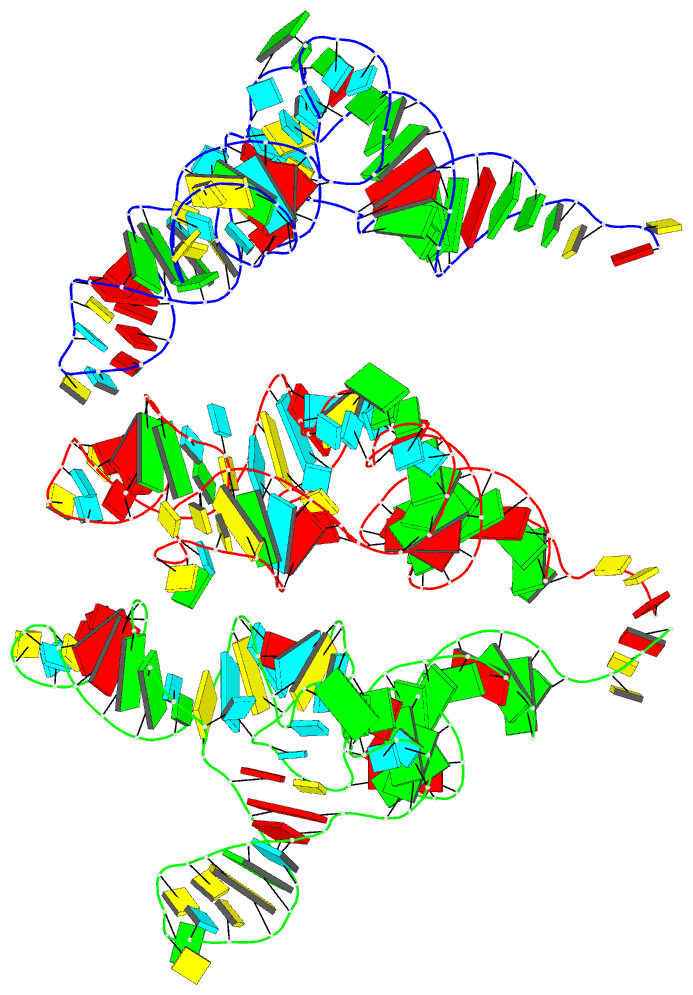
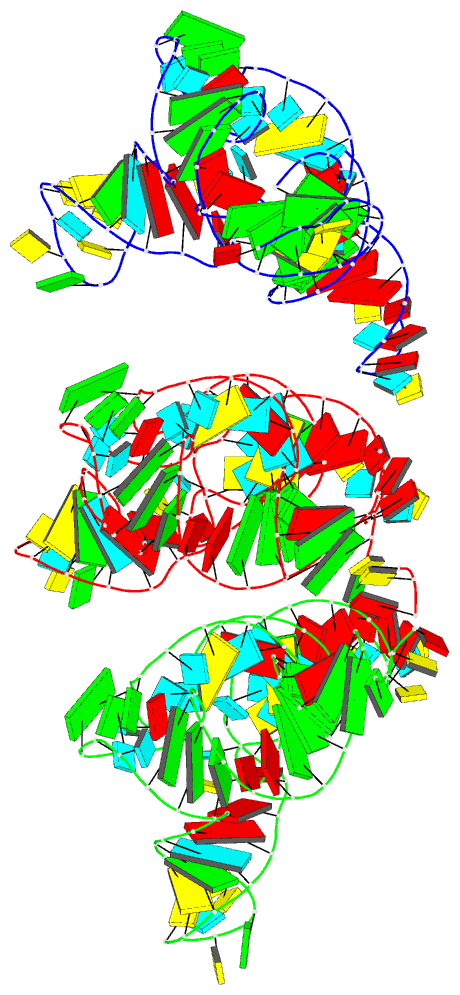
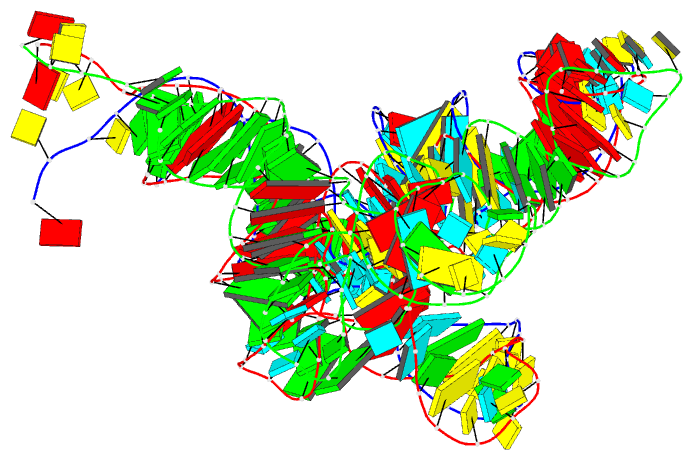
- Allo-trnautu1 in the a, p, and e sites of the e. coli
ribosome
- Reference
-
Prabhakar A, Krahn N, Zhang J, Vargas-Rodriguez O,
Krupkin M, Fu Z, Acosta-Reyes FJ, Ge X, Choi J, Crnkovic
A, Ehrenberg M, Puglisi EV, Soll D, Puglisi J (2022):
"Uncovering
translation roadblocks during the development of a
synthetic tRNA." Nucleic Acids Res.,
50, 10201-10211. doi: 10.1093/nar/gkac576.
- Abstract
- Continued expansion of the genetic code has required
the use of synthetic tRNAs for decoding. Some of these
synthetic tRNAs have unique structural features that are
not observed in canonical tRNAs. Here, the authors applied
single-molecule, biochemical and structural methods to
determine whether these distinct features were deleterious
for efficient protein translation on the ribosome. With a
focus on selenocysteine insertion, the authors explored an
allo-tRNA with a 9/3 acceptor domain. They observed a
translational roadblock that occurred in A to P site
tRNA translocation. This block was mediated by a tertiary
interaction across the tRNA core, directing the variable
arm position into an unfavorable conformation. A
single-nucleotide mutation disrupted this interaction,
providing flexibility in the variable arm and promoting
efficient protein production.