Summary information and primary citation
- PDB-id
-
7um0;
DSSR-derived features in text and
JSON formats
- Class
- transcription
- Method
- cryo-EM (3.8 Å)
- Summary
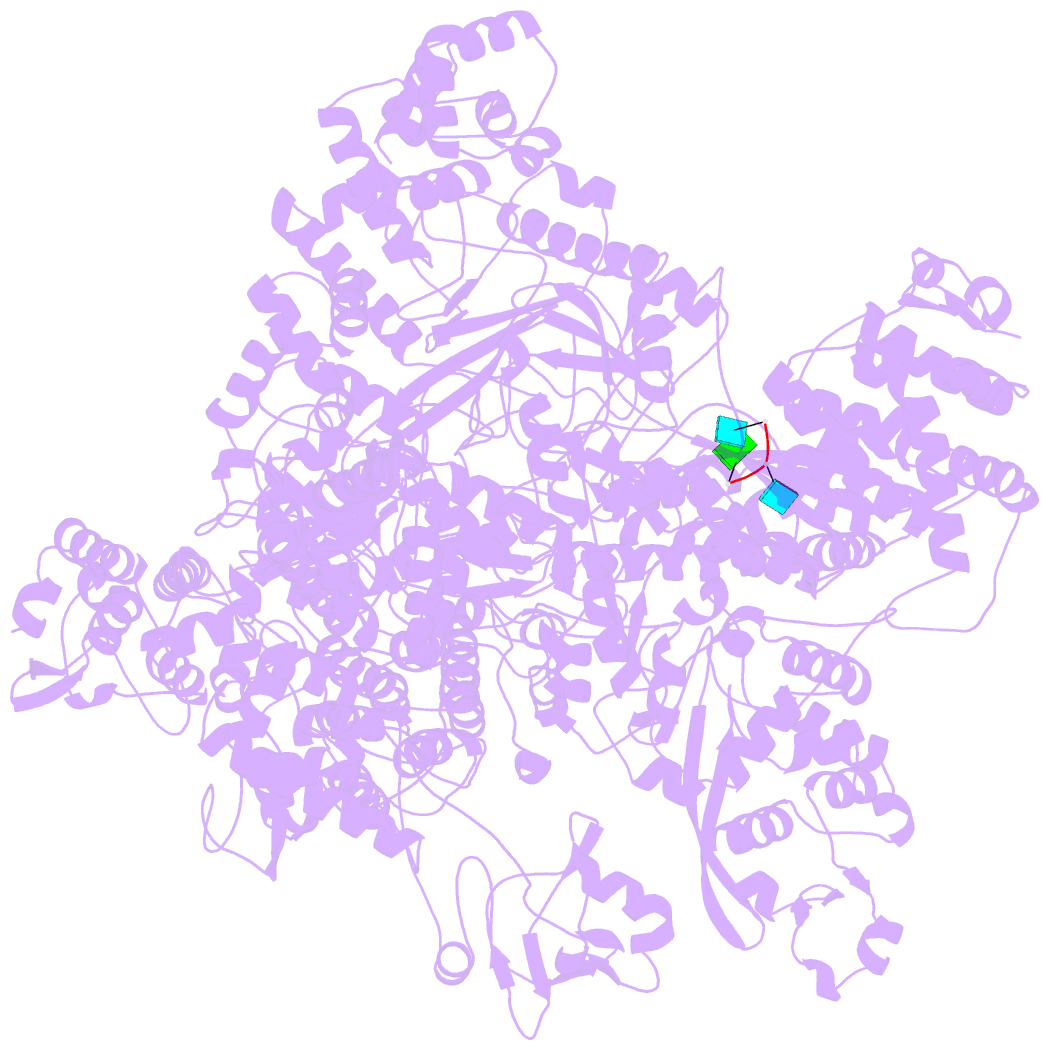
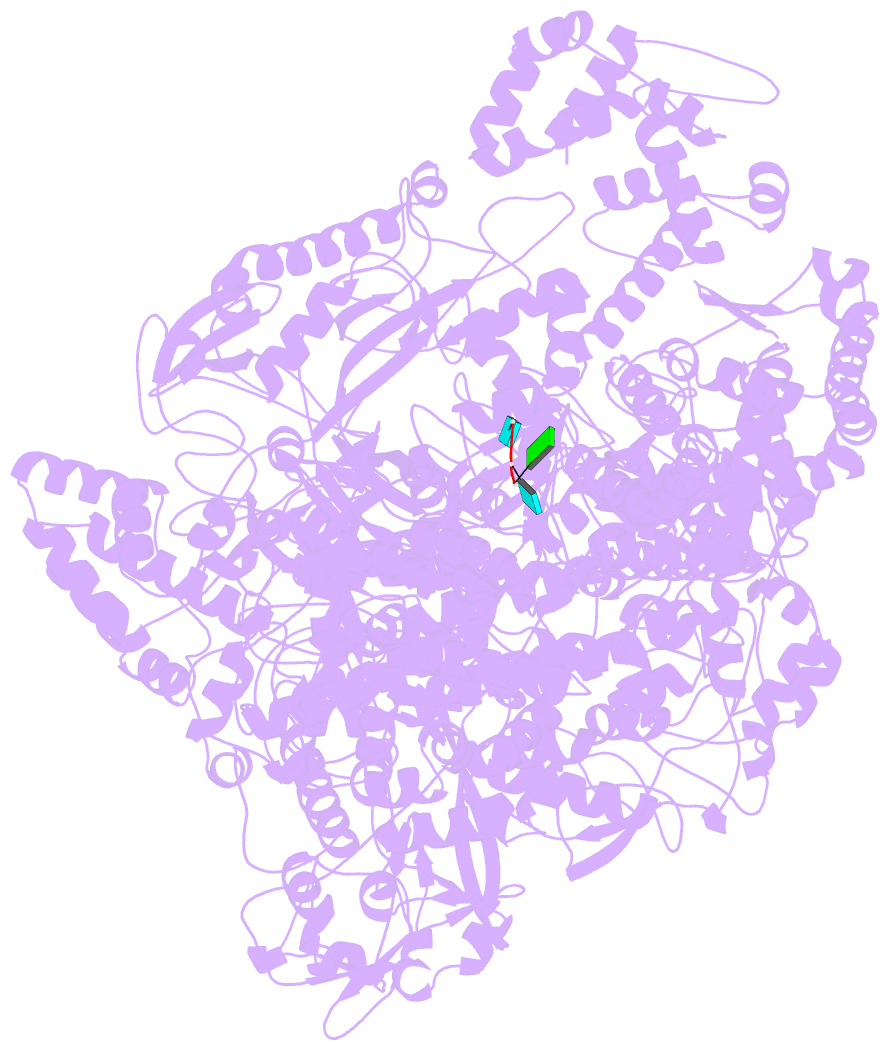
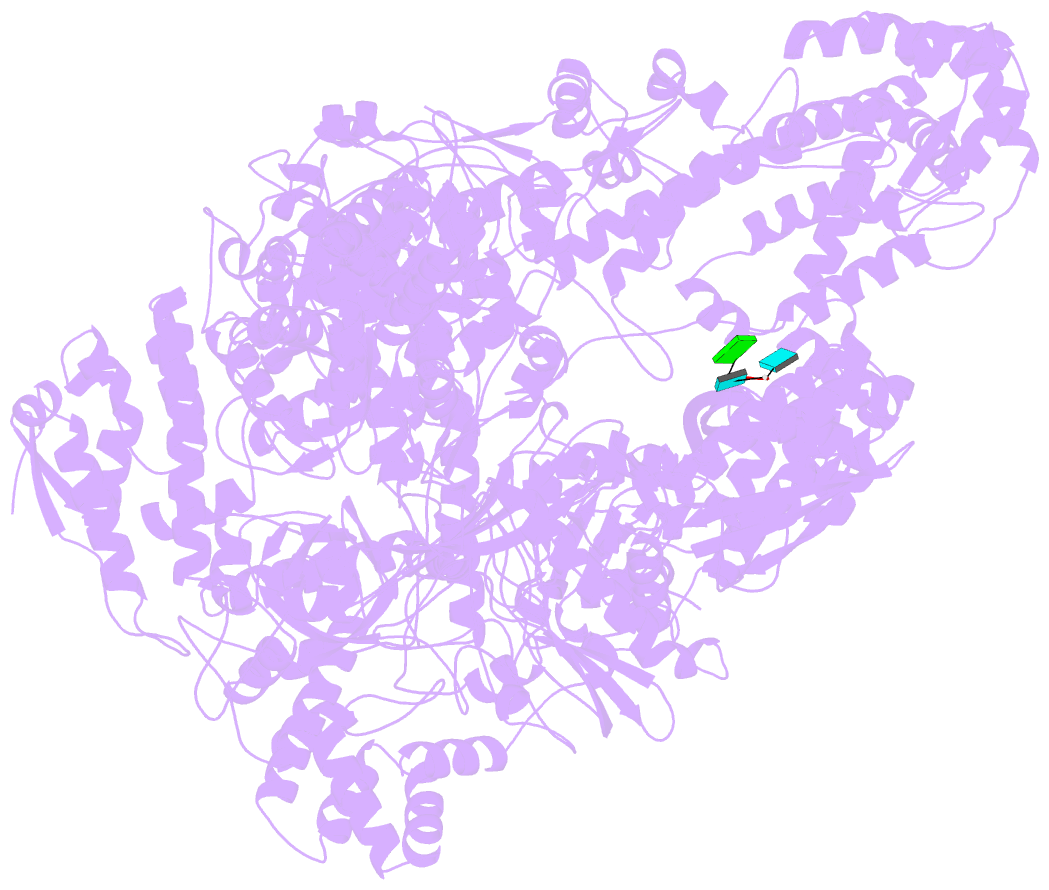
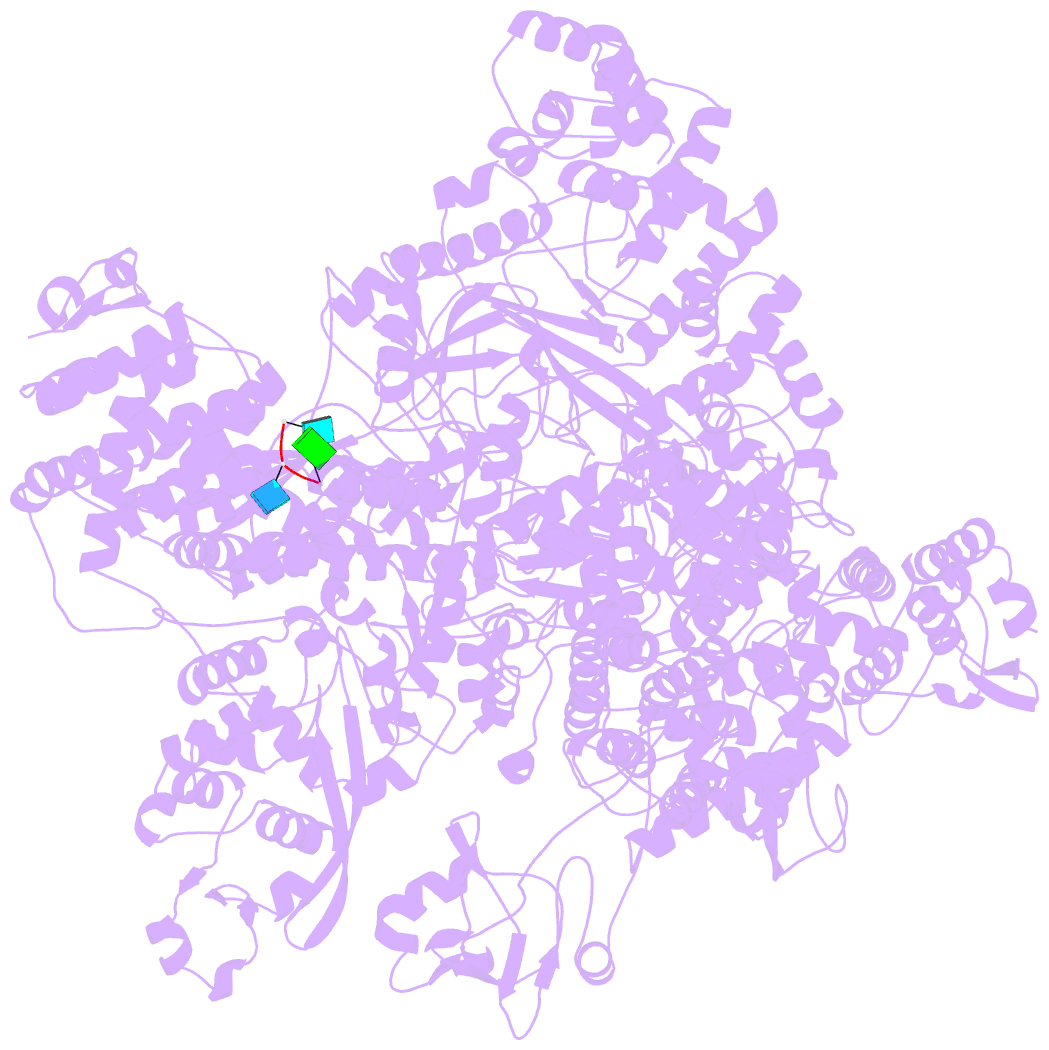
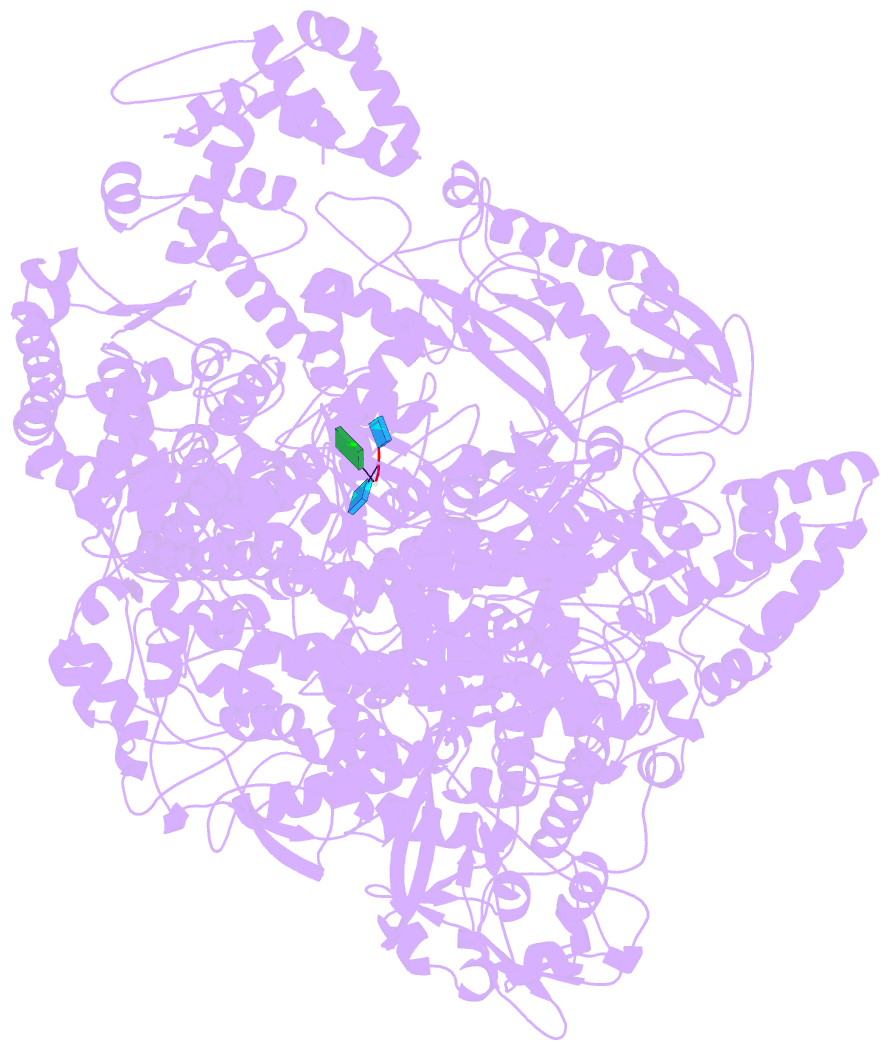
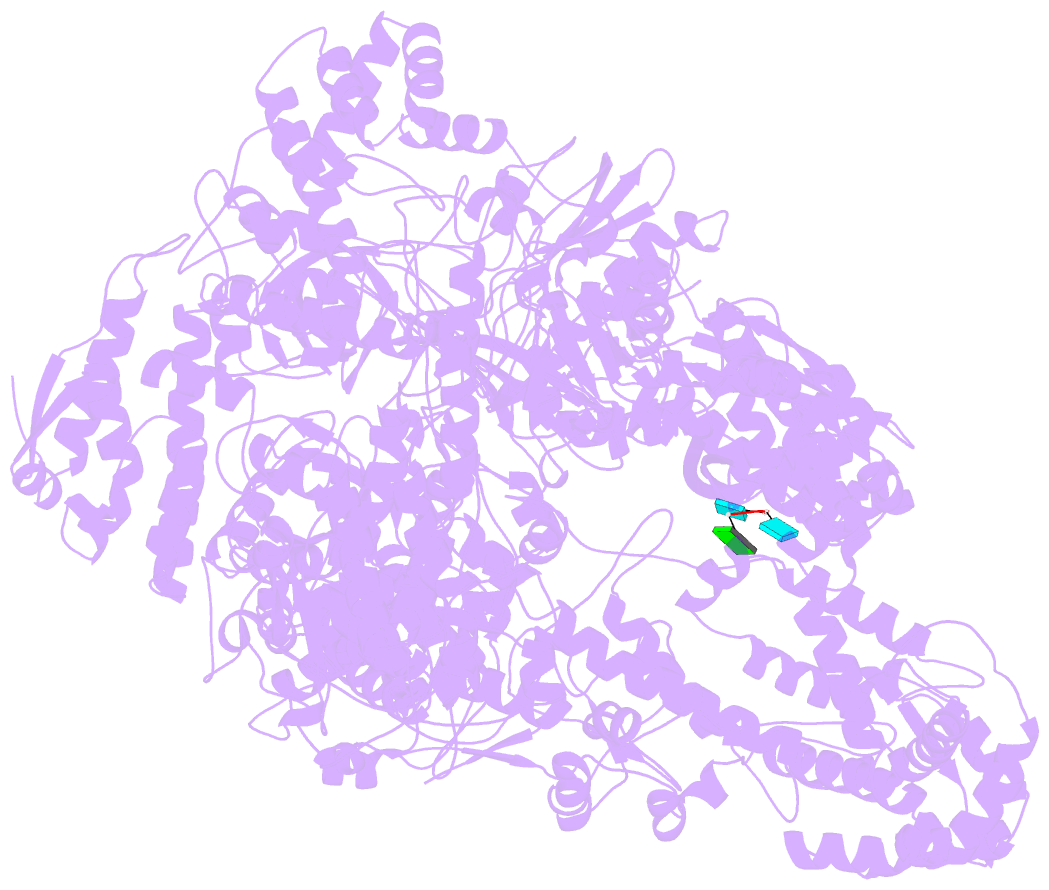
- Structure of the phage ar9 non-virion RNA polymerase
holoenzyme in complex with two DNA oligonucleotides
containing the ar9 p077 promoter as determined by
cryo-EM
- Reference
-
Fraser A, Sokolova ML, Drobysheva AV, Gordeeva JV,
Borukhov S, Jumper J, Severinov KV, Leiman PG (2022):
"Structural
basis of template strand deoxyuridine promoter
recognition by a viral RNA polymerase." Nat
Commun, 13, 3526. doi: 10.1038/s41467-022-31214-6.
- Abstract
- Recognition of promoters in bacterial RNA polymerases
(RNAPs) is controlled by sigma subunits. The key sequence
motif recognized by the sigma, the -10 promoter element, is
located in the non-template strand of the double-stranded
DNA molecule ~10 nucleotides upstream of the transcription
start site. Here, we explain the mechanism by which the
phage AR9 non-virion RNAP (nvRNAP), a bacterial RNAP
homolog, recognizes the -10 element of its
deoxyuridine-containing promoter in the template strand.
The AR9 sigma-like subunit, the nvRNAP enzyme core, and the
template strand together form two nucleotide base-accepting
pockets whose shapes dictate the requirement for the
conserved deoxyuridines. A single amino acid substitution
in the AR9 sigma-like subunit allows one of these pockets
to accept a thymine thus expanding the promoter consensus.
Our work demonstrates the extent to which viruses can
evolve host-derived multisubunit enzymes to make
transcription of their own genes independent of the
host.