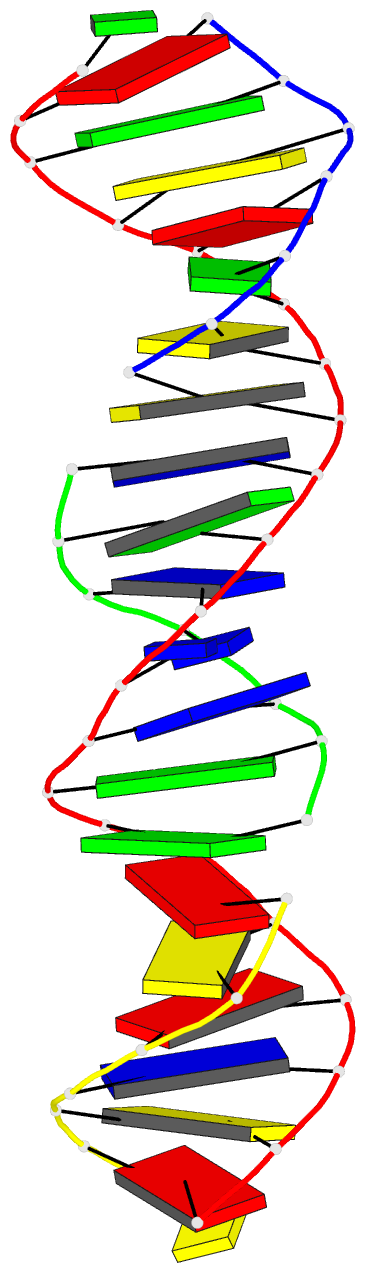
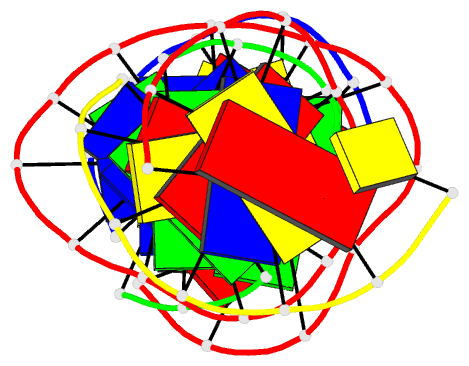
Summary information and primary citation
- PDB-id
-
7sd6;
DSSR-derived features in text and
JSON formats
- Class
- DNA
- Method
- X-ray (3.53 Å)
- Summary
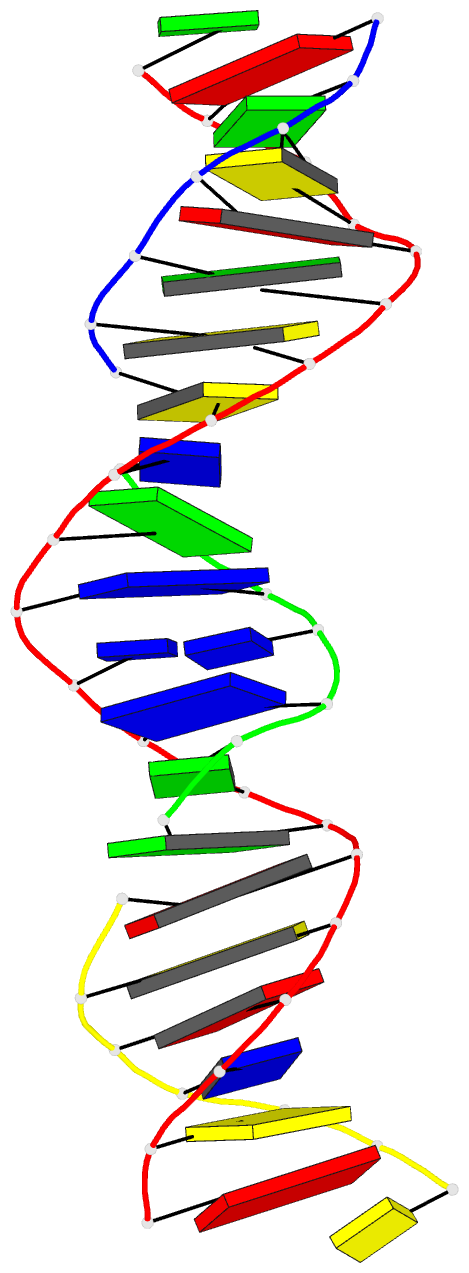
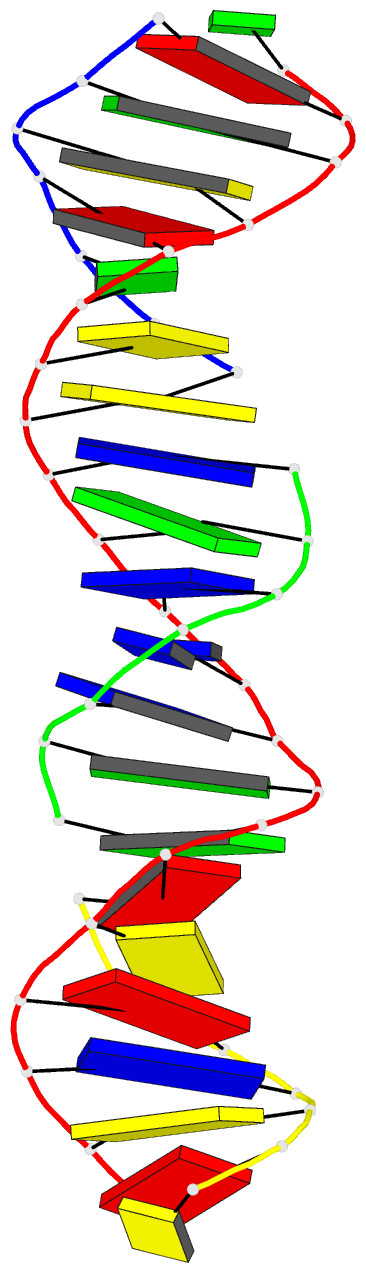
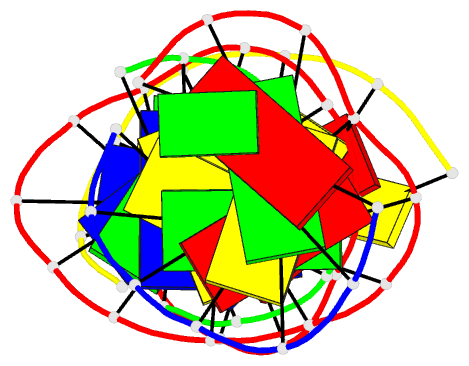
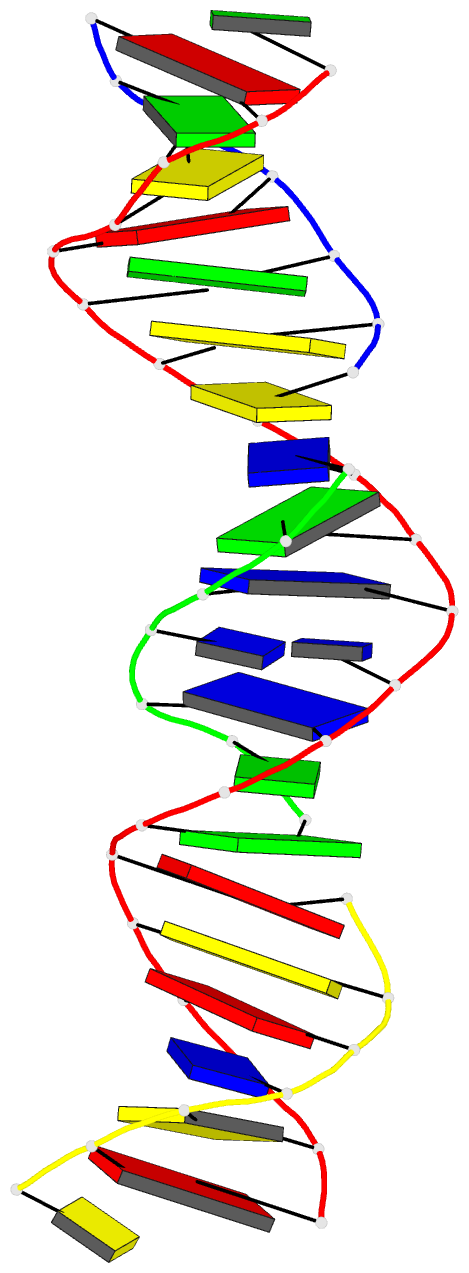
- [t:hg2+:t] metal-mediated DNA base pair in a
self-assembling rhombohedral lattice
- Reference
-
Vecchioni S, Lu B, Livernois W, Ohayon YP, Yoder JB, Yang
CF, Woloszyn K, Bernfeld W, Anantram MP, Canary JW,
Hendrickson WA, Rothschild LJ, Mao C, Wind SJ, Seeman NC,
Sha R (2023): "Metal-Mediated
DNA Nanotechnology in 3D: Structural Library by Templated
Diffraction." Adv Mater, e2201938. doi:
10.1002/adma.202201938.
- Abstract
- DNA double helices containing metal-mediated DNA
(mmDNA) base pairs have been constructed from
Ag<sub>+</sub> and Hg<sub>2+</sub>
ions between pyrimidine:pyrimidine pairs with the promise
of nanoelectronics. Rational design of mmDNA nanomaterials
has been impractical without a complete lexical and
structural description. Here, we explore the
programmability of structural DNA nanotechnology toward its
founding mission of self-assembling a diffraction platform
for biomolecular structure determination. We employed the
tensegrity triangle to build a comprehensive structural
library of mmDNA pairs via X-ray diffraction and elucidated
generalized design rules for mmDNA construction. We
uncovered two binding modes: N3-dominant, centrosymmetric
pairs and major groove binders driven by 5-position ring
modifications. Energy gap calculations showed additional
levels in the lowest unoccupied molecular orbitals (LUMO)
of mmDNA structures, rendering them attractive molecular
electronic candidates. This article is protected by
copyright. All rights reserved.