Summary information and primary citation
- PDB-id
-
7qtt;
DSSR-derived features in text and
JSON formats
- Class
- splicing
- Method
- cryo-EM (3.1 Å)
- Summary
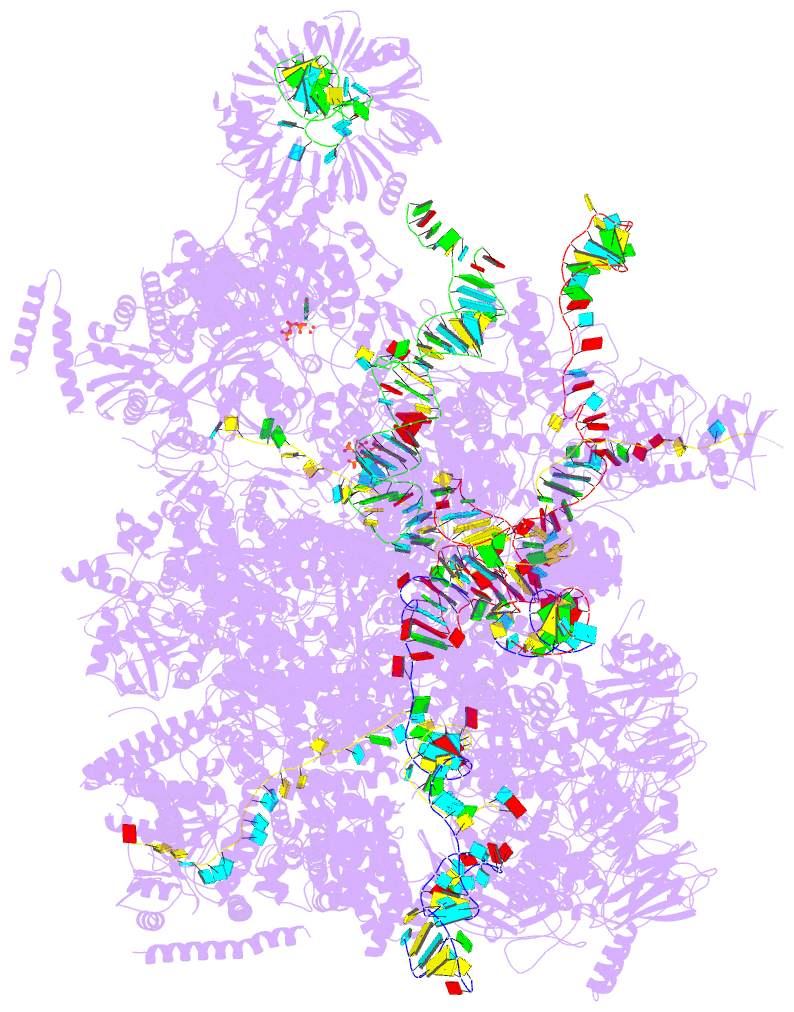
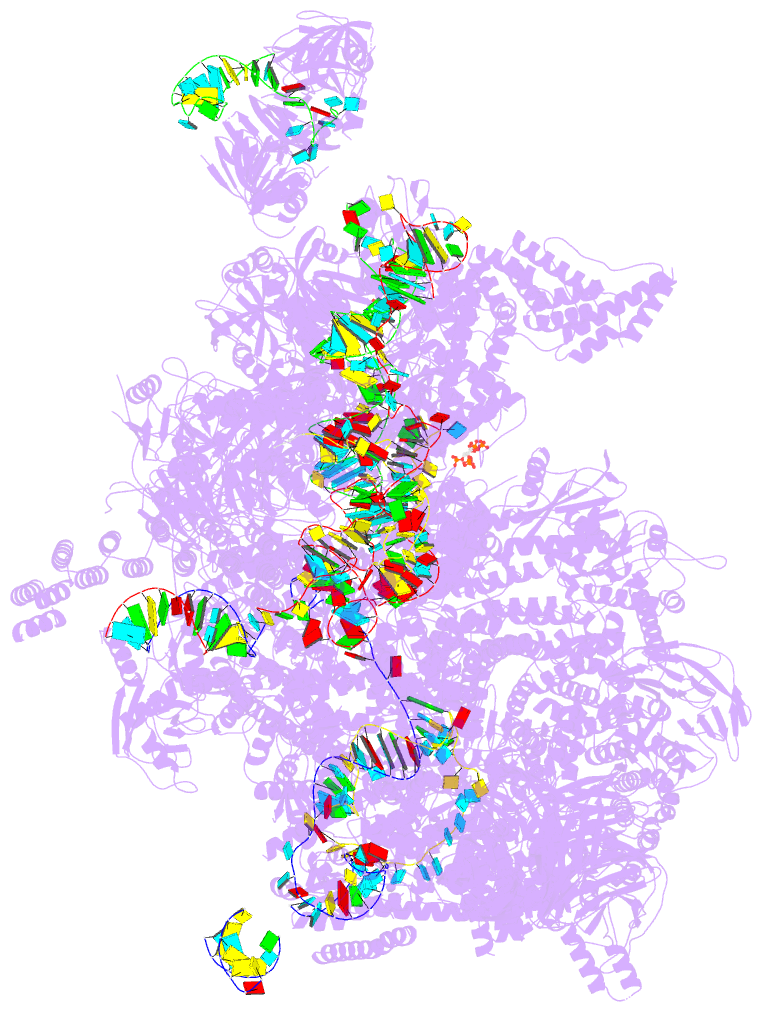
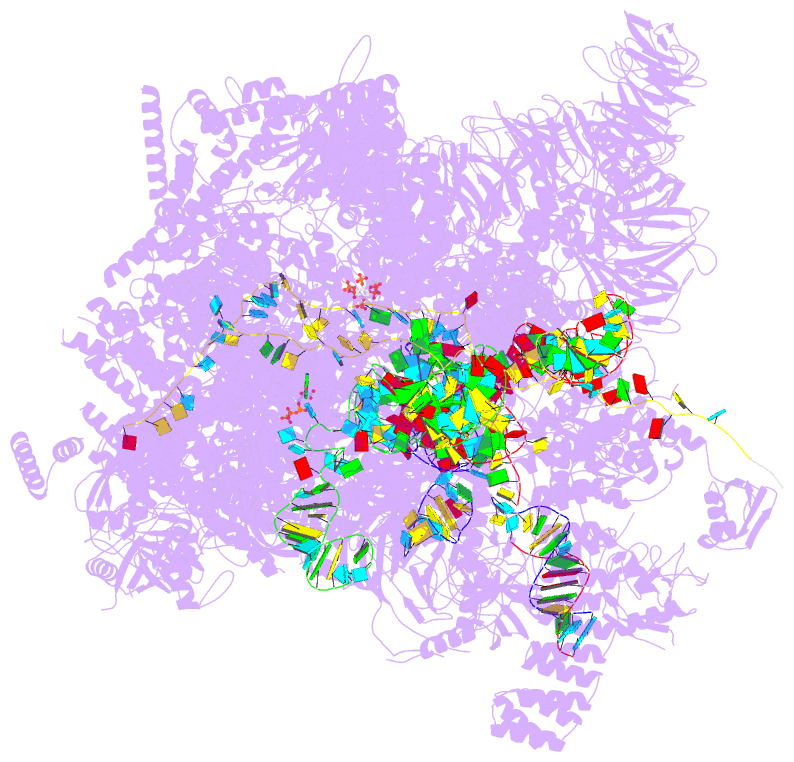
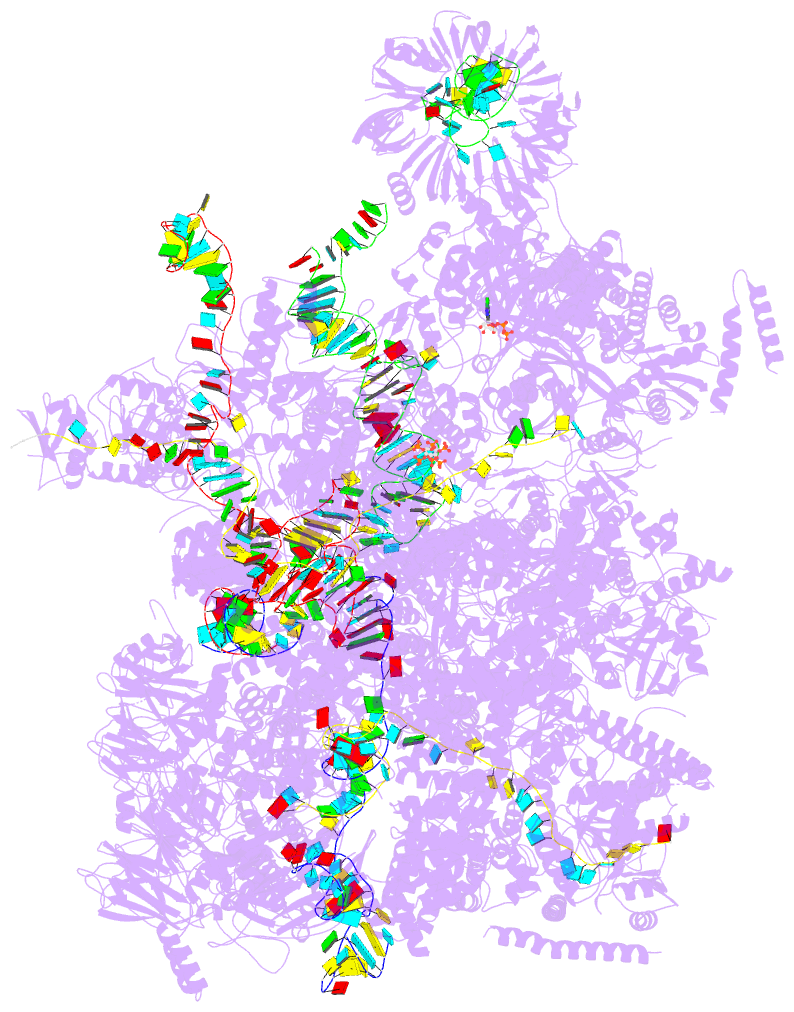
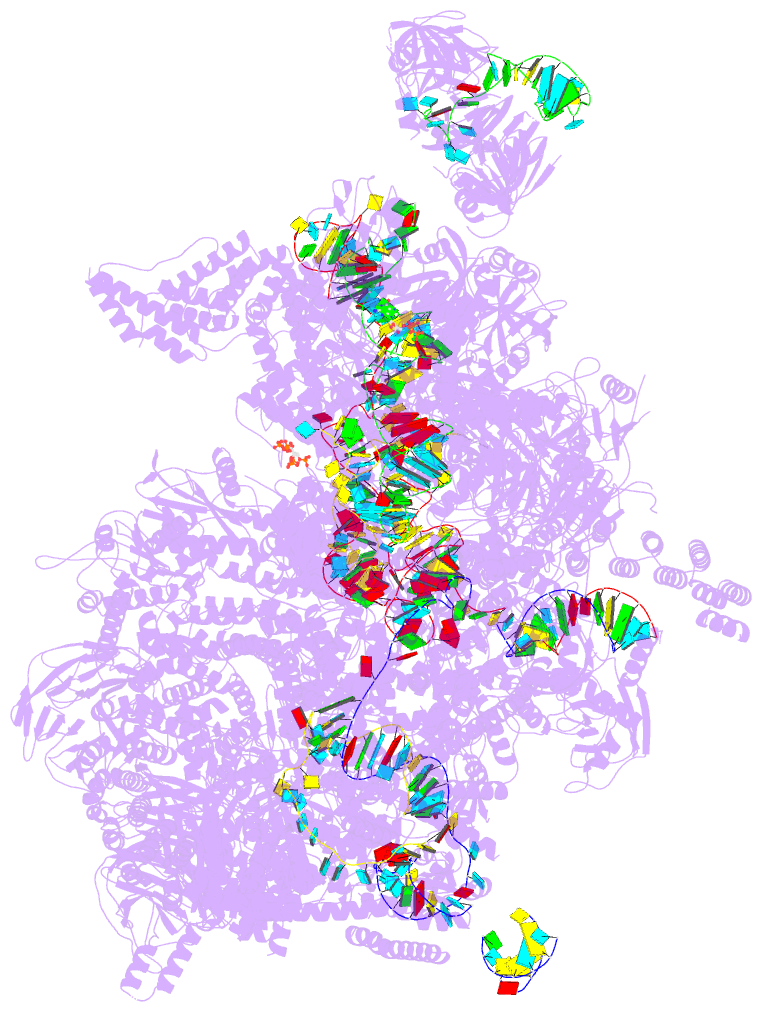
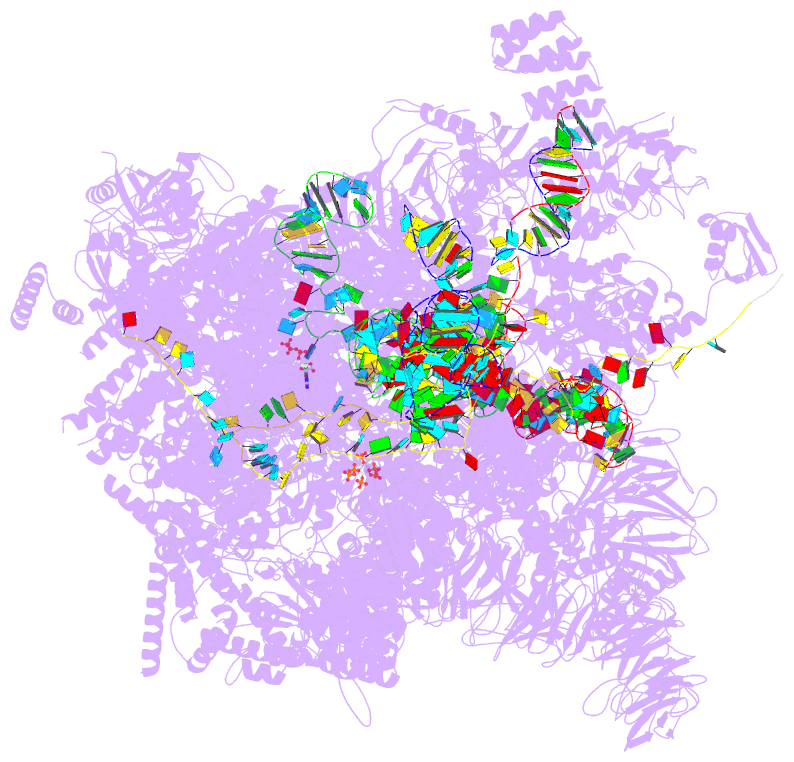
- Structural organization of a late activated human
spliceosome (baqr, core region)
- Reference
-
Schmitzova J, Cretu C, Dienemann C, Urlaub H, Pena V
(2023): "Structural
basis of catalytic activation in human splicing."
Nature, 617, 842-850. doi:
10.1038/s41586-023-06049-w.
- Abstract
- Pre-mRNA splicing follows a pathway driven by
ATP-dependent RNA helicases. A crucial event of the
splicing pathway is the catalytic activation, which takes
place at the transition between the
activated B<sub>act</sub> and the
branching-competent B<sub>*</sub>
spliceosomes. Catalytic activation occurs through an
ATP-dependent remodelling mediated by the helicase PRP2
(also known as DHX16)<sub>1-3</sub>. However,
because PRP2 is observed only at the periphery of
spliceosomes<sub>3-5</sub>, its function has
remained elusive. Here we show that catalytic activation
occurs in two ATP-dependent stages driven by two helicases:
PRP2 and Aquarius. The role of Aquarius in splicing has
been enigmatic<sub>6,7</sub>. Here the
inactivation of Aquarius leads to the stalling of a
spliceosome intermediate-the
B<sub>AQR</sub> complex-found halfway through
the catalytic activation process. The cryogenic electron
microscopy structure of B<sub>AQR</sub> reveals
how PRP2 and Aquarius remodel B<sub>act</sub>
and B<sub>AQR</sub>, respectively. Notably,
PRP2 translocates along the intron while it strips away the
RES complex, opens the SF3B1 clamp and unfastens the branch
helix. Translocation terminates six nucleotides downstream
of the branch site through an assembly of PPIL4, SKIP and
the amino-terminal domain of PRP2. Finally, Aquarius
enables the dissociation of PRP2, plus the SF3A and SF3B
complexes, which promotes the relocation of the branch
duplex for catalysis. This work elucidates catalytic
activation in human splicing, reveals how a DEAH helicase
operates and provides a paradigm for how helicases can
coordinate their activities.