Summary information and primary citation
- PDB-id
-
7mlx;
DSSR-derived features in text and
JSON formats
- Class
- RNA-immune system
- Method
- X-ray (2.09 Å)
- Summary
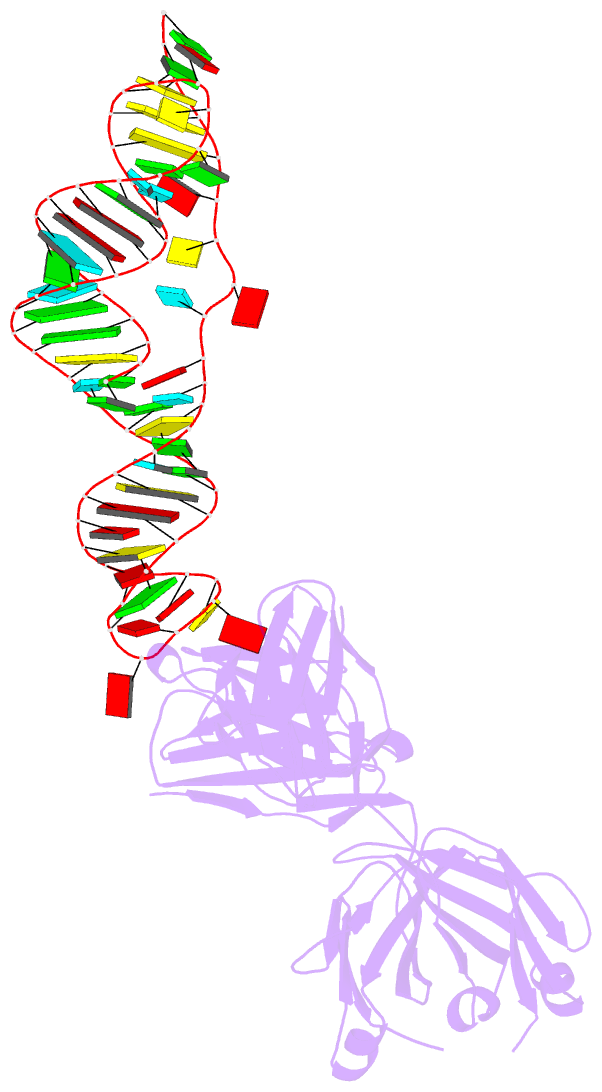
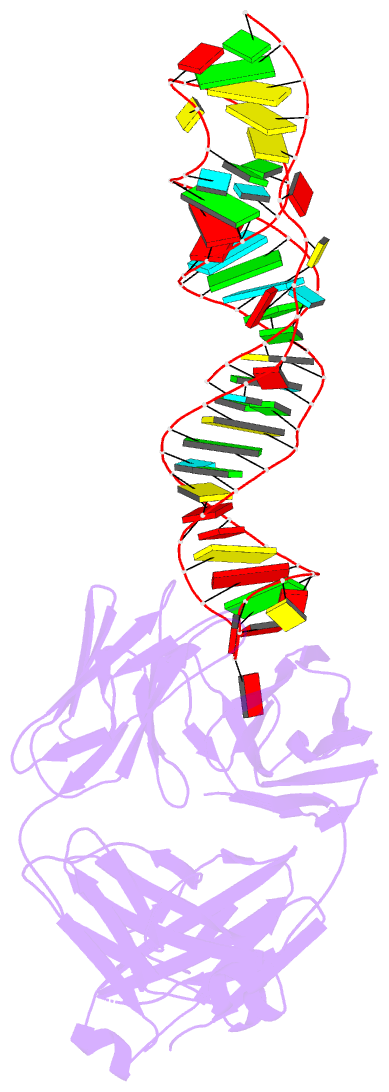
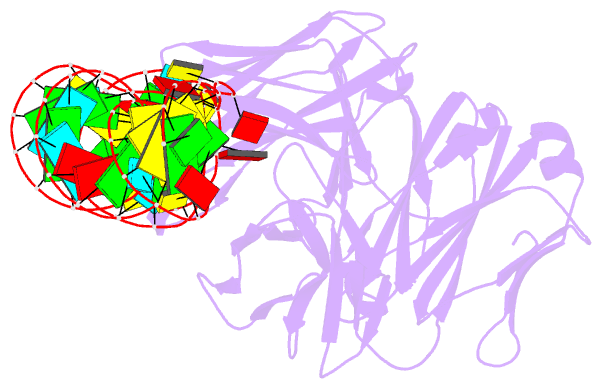
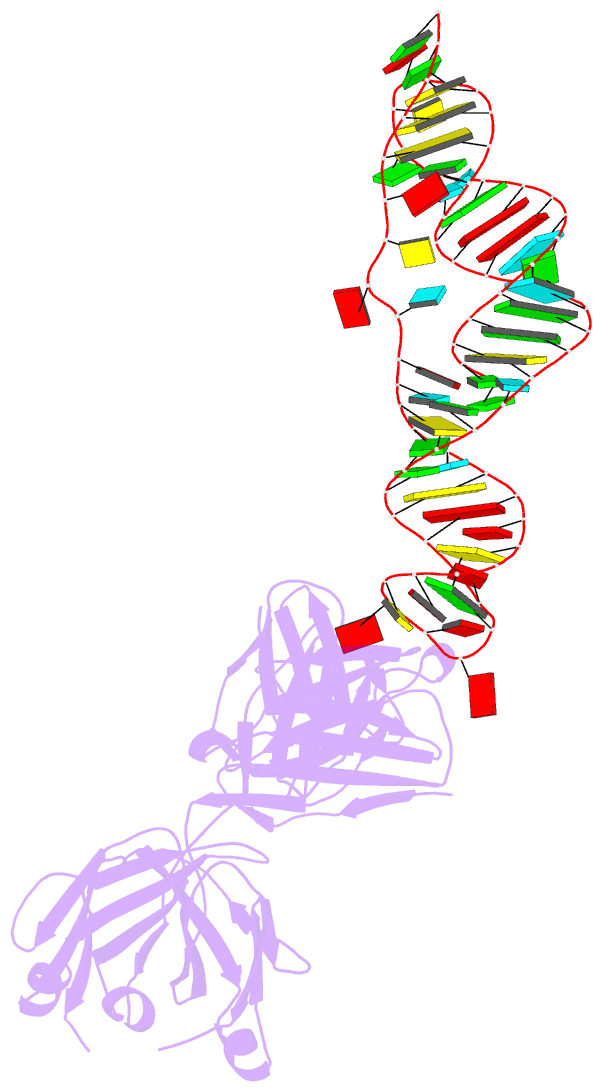
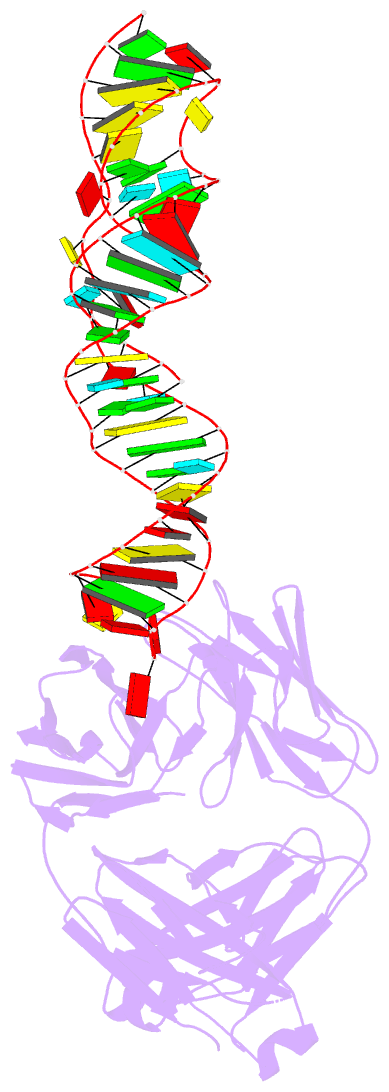
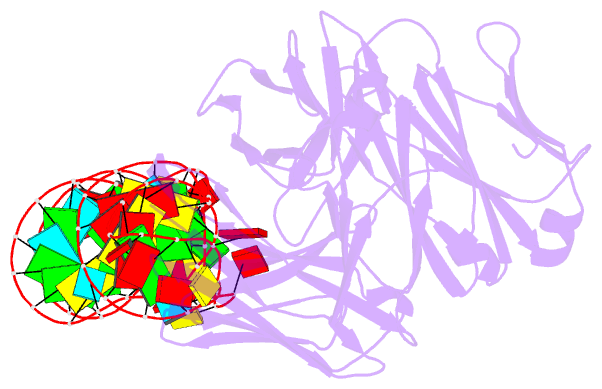
- Sars-cov-2 programmed -1 frameshifting element three
stem h-type pseudoknot
- Reference
-
Roman C, Lewicka A, Koirala D, Li NS, Piccirilli JA
(2021): "The
SARS-CoV-2 Programmed -1 Ribosomal Frameshifting Element
Crystal Structure Solved to 2.09 angstrom Using
Chaperone-Assisted RNA Crystallography." Acs
Chem.Biol., 16, 1469-1481. doi:
10.1021/acschembio.1c00324.
- Abstract
- The programmed -1 ribosomal frameshifting element
(PFSE) of SARS-CoV-2 is a well conserved structured RNA
found in all coronaviruses' genomes. By adopting a
pseudoknot structure in the presence of the ribosome, the
PFSE promotes a ribosomal frameshifting event near the stop
codon of the first open reading frame Orf1a during
translation of the polyprotein pp1a. Frameshifting results
in continuation of pp1a via a new open reading frame,
Orf1b, that produces the longer pp1ab polyprotein.
Polyproteins pp1a and pp1ab produce nonstructural proteins
NSPs 1-10 and NSPs 1-16, respectively, which contribute
vital functions during the viral life cycle and must be
present in the proper stoichiometry. Both drugs and
sequence alterations that affect the stability of the -1
programmed ribosomal frameshifting element disrupt the
stoichiometry of the NSPs produced, which compromise viral
replication. For this reason, the -1 programmed
frameshifting element is considered a promising drug
target. Using chaperone assisted RNA crystallography, we
successfully crystallized and solved the three-dimensional
structure of the PFSE. We observe a three-stem H-type
pseudoknot structure with the three stems stacked in a
vertical orientation stabilized by two triple base pairs at
the stem 1/stem 2 and stem 1/stem 3 junctions. This
structure provides a new conformation of PFSE distinct from
the bent conformations inferred from midresolution cryo-EM
models and provides a high-resolution framework for
mechanistic investigations and structure-based drug
design.