Summary information and primary citation
- PDB-id
-
7et6;
DSSR-derived features in text and
JSON formats
- Class
- DNA binding protein-DNA
- Method
- X-ray (2.7 Å)
- Summary
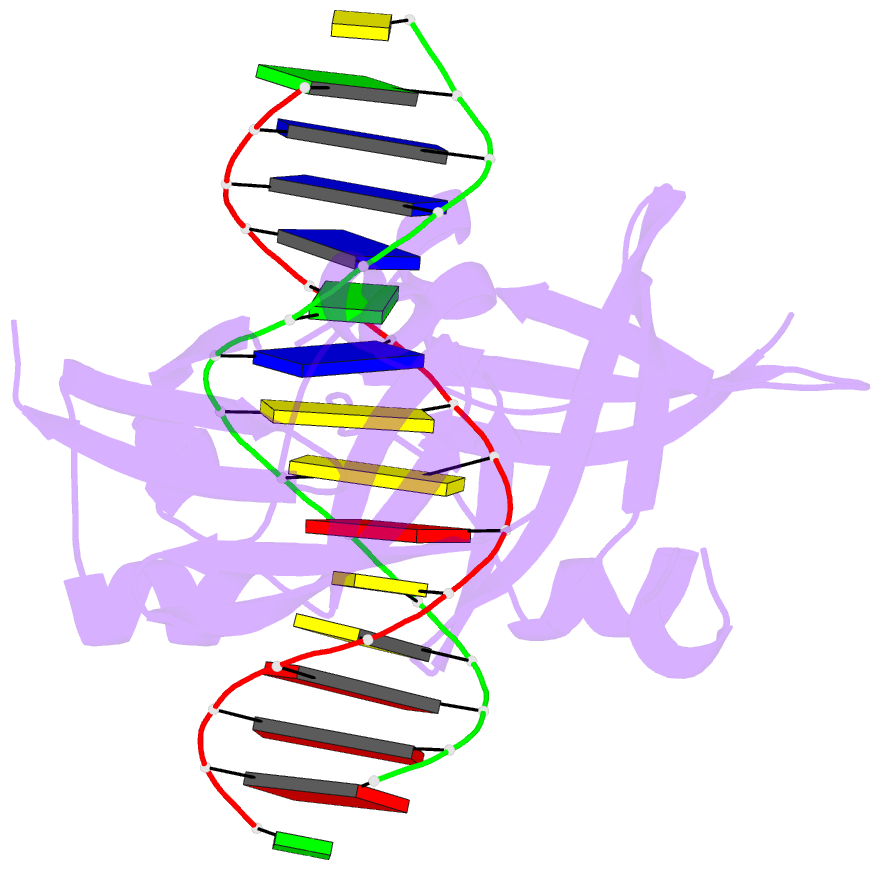
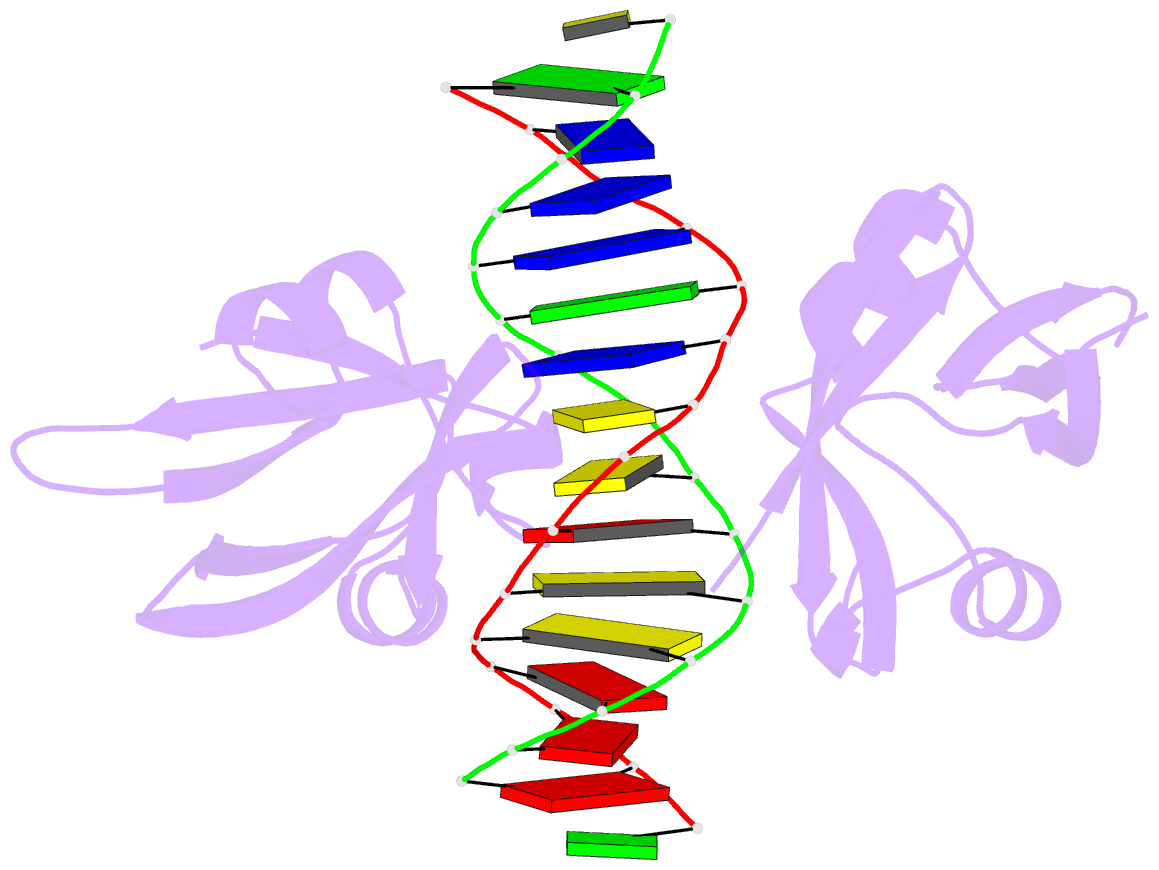
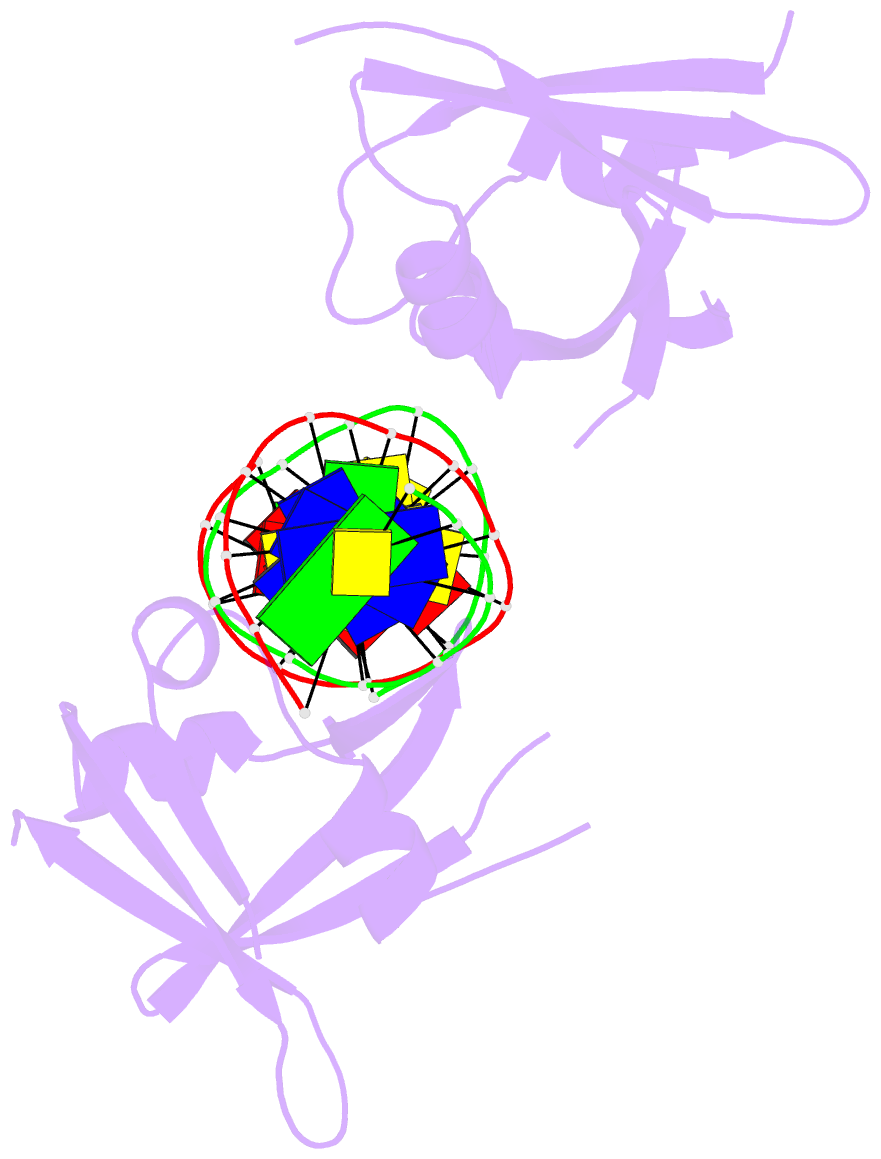
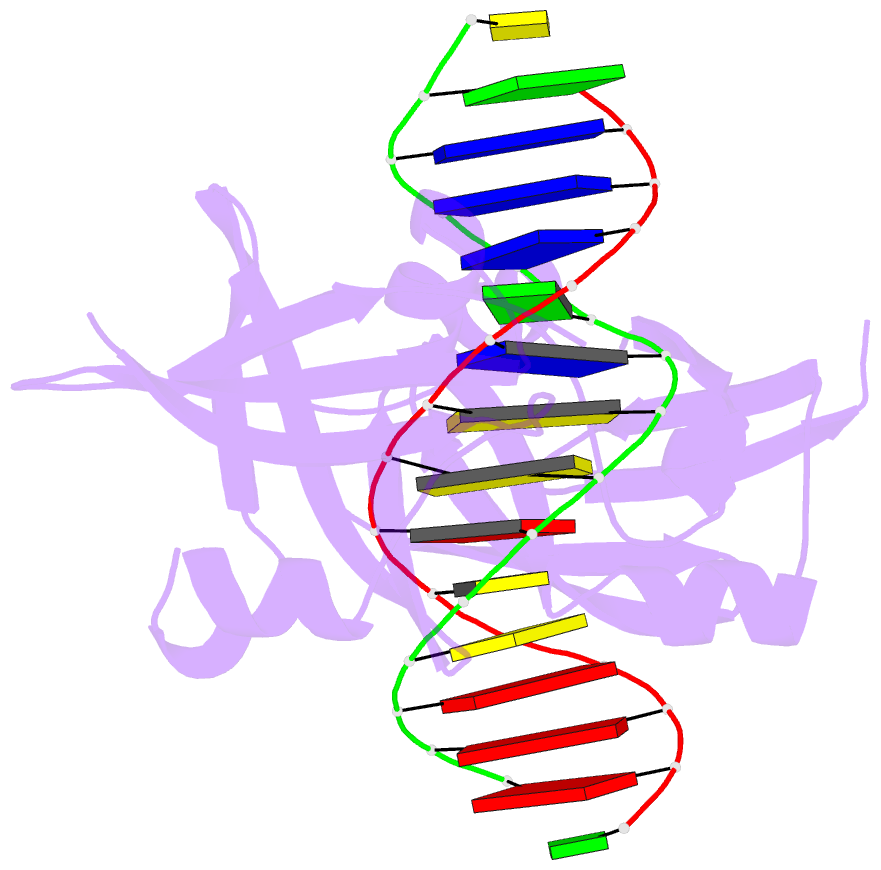
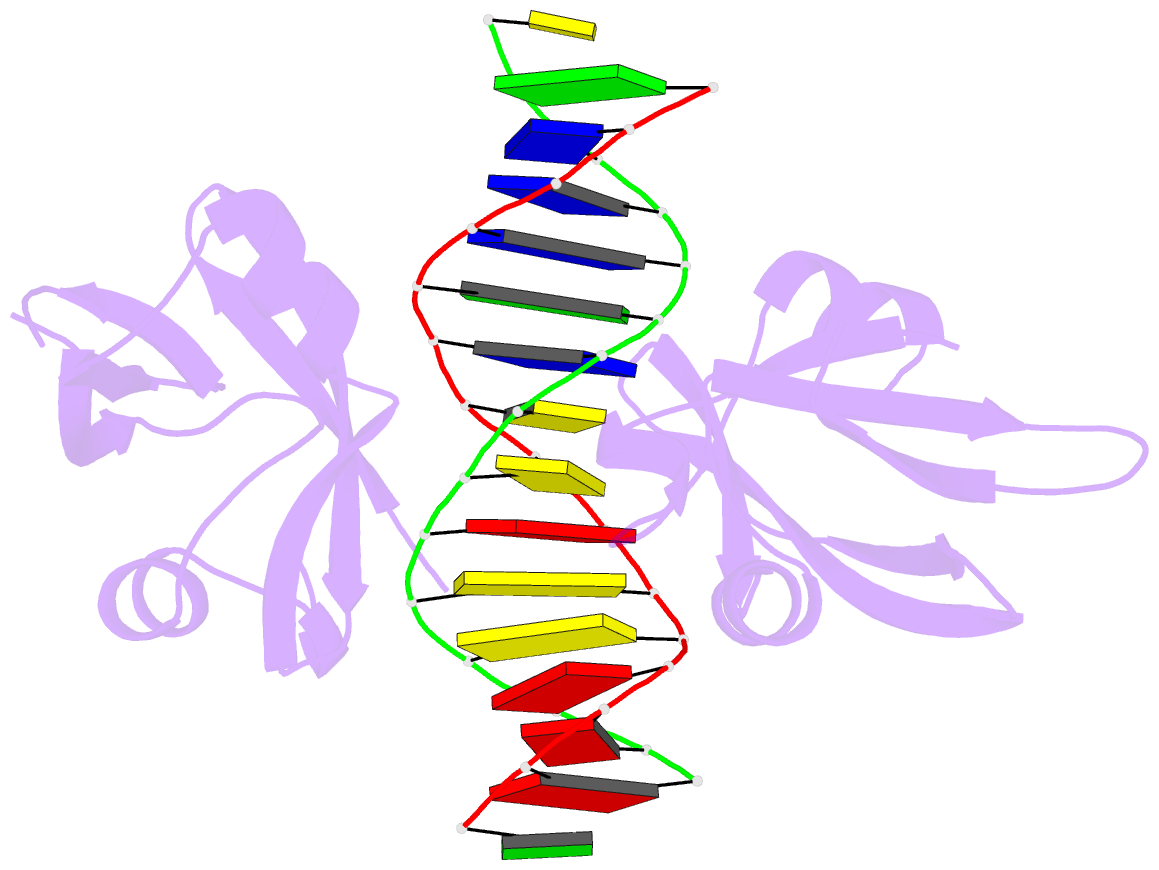
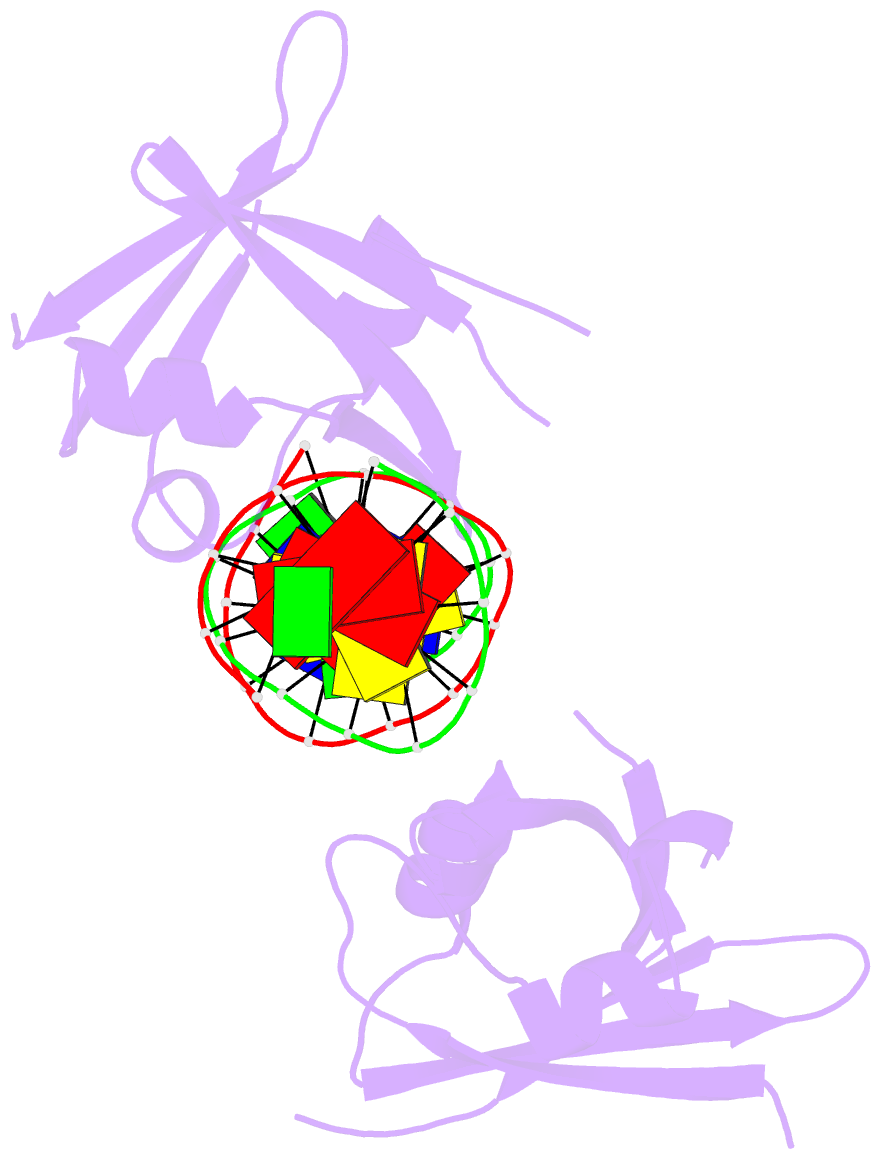
- Crystal structure of arabidopsis tem1 b3-DNA
complex
- Reference
-
Hu H, Tian S, Xie G, Liu R, Wang N, Li S, He Y, Du J
(2021): "TEM1
combinatorially binds to FLOWERING LOCUS T and recruits a
Polycomb factor to repress the floral transition in
Arabidopsis." Proc.Natl.Acad.Sci.USA,
118. doi: 10.1073/pnas.2103895118.
- Abstract
- <i>Arabidopsis</i> TEMPRANILLO 1 (TEM1) is
a transcriptional repressor that participates in multiple
flowering pathways and negatively regulates the
juvenile-to-adult transition and the flowering transition.
To understand the molecular basis for the site-specific
regulation of <i>FLOWERING LOCUS T</i>
(<i>FT</i>) by TEM1, we determined the
structures of the two plant-specific DNA-binding domains in
TEM1, AP2 and B3, in complex with their target DNA
sequences from the <i>FT</i> gene
5'-untranslated region (5'-UTR), revealing the molecular
basis for TEM1 specificity for its DNA targets. In vitro
binding assays revealed that the combination of the AP2 and
B3 binding sites greatly enhanced the overall binding of
TEM1 to the <i>FT</i> 5'-UTR, indicating TEM1
combinatorically recognizes the <i>FT</i> gene
5'-UTR. We further showed that TEM1 recruits the Polycomb
repressive complex 2 (PRC2) to the <i>FT</i>
5'-UTR. The simultaneous binding of the TEM1 AP2 and B3
domains to <i>FT</i> is necessary for
deposition of H3K27me3 at the <i>FT</i> 5'-UTR
and for the flowering repressor function of TEM1. Overall,
our data suggest that the combinatorial recognition of
<i>FT</i> 5'-UTR by TEM1 ensures H3K27me3
deposition to precisely regulate the floral
transition.