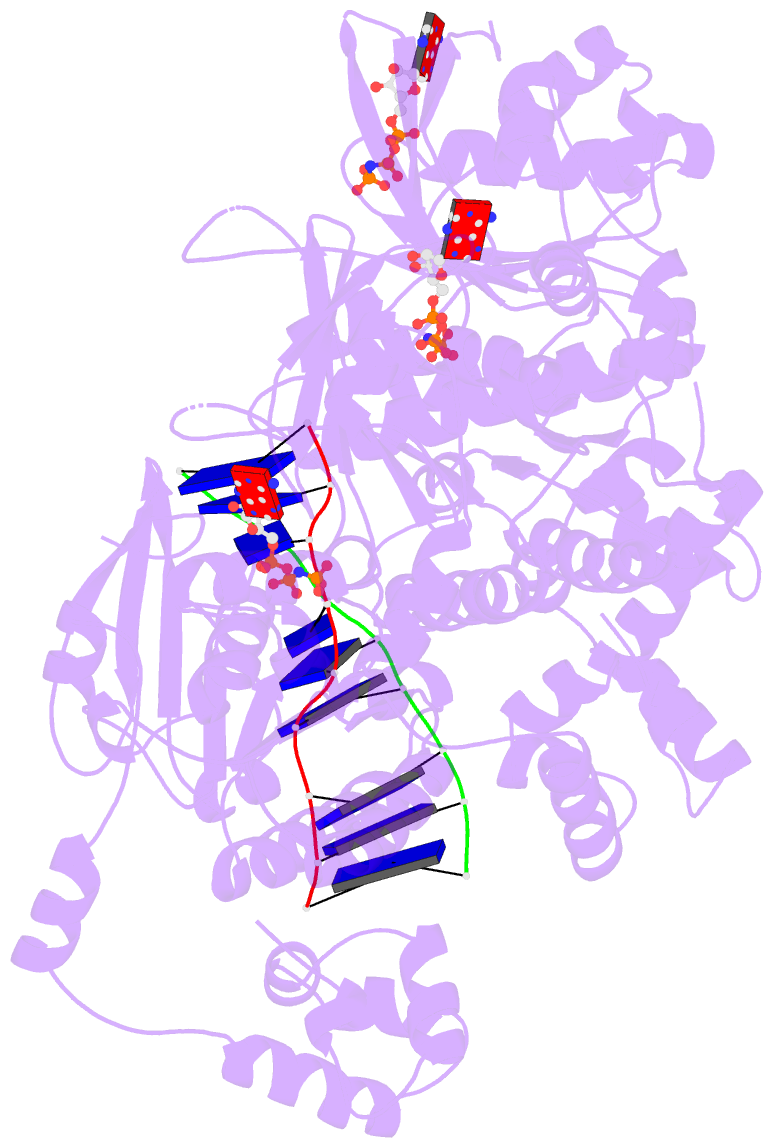
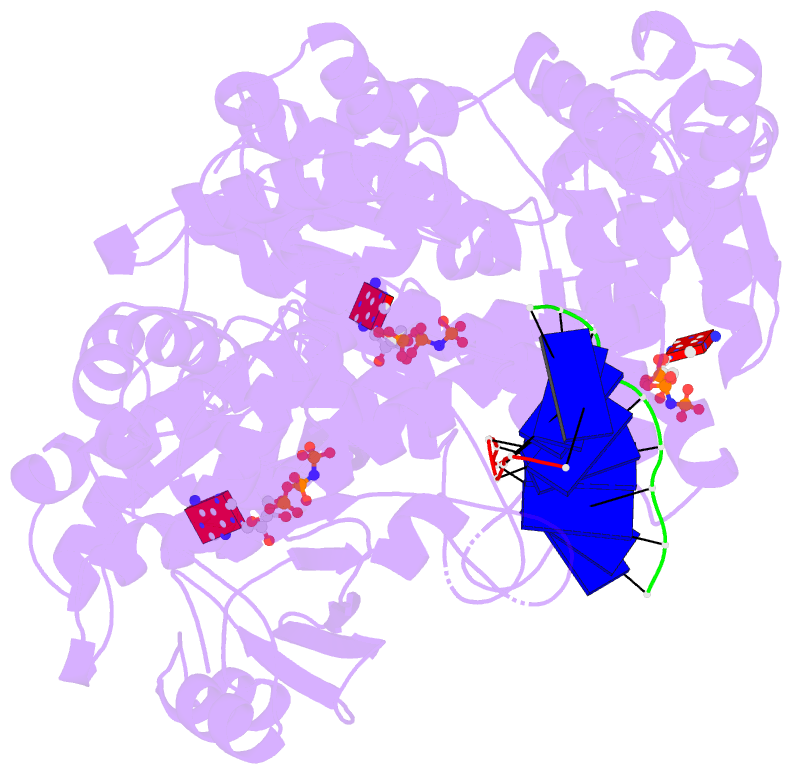
Summary information and primary citation
- PDB-id
-
7eje;
DSSR-derived features in text and
JSON formats
- Class
- DNA binding protein-DNA
- Method
- cryo-EM (3.98 Å)
- Summary
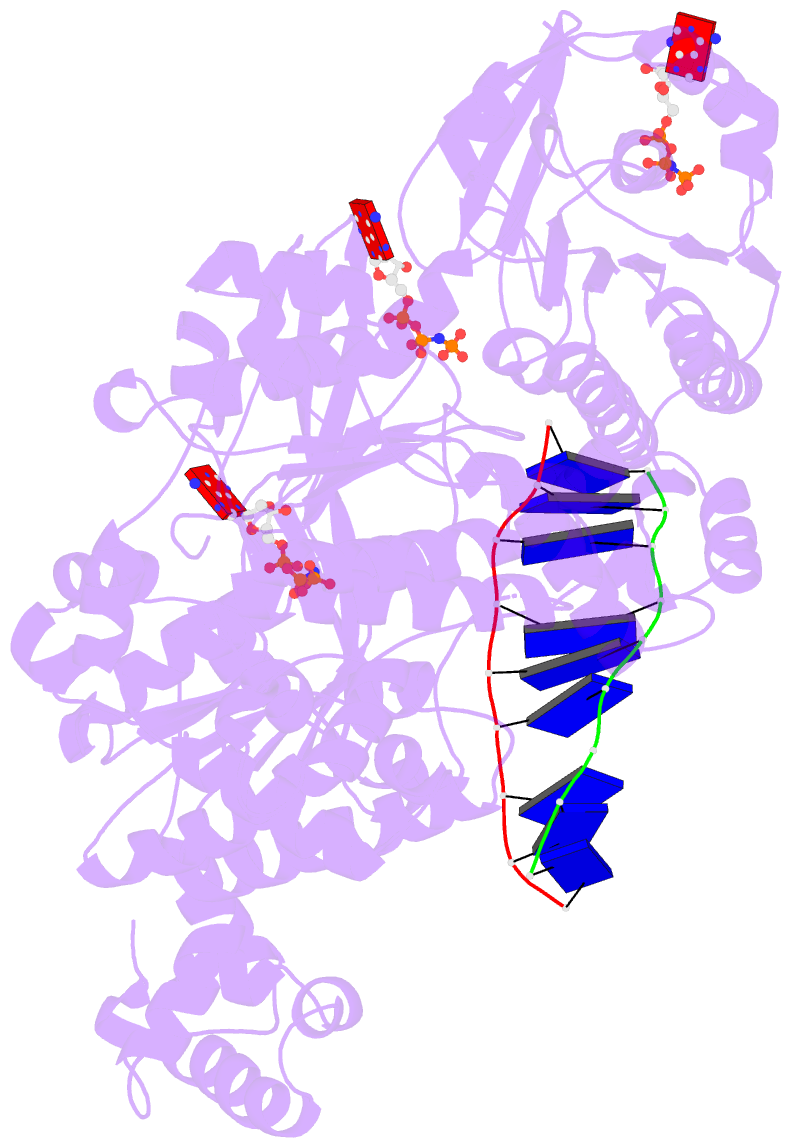
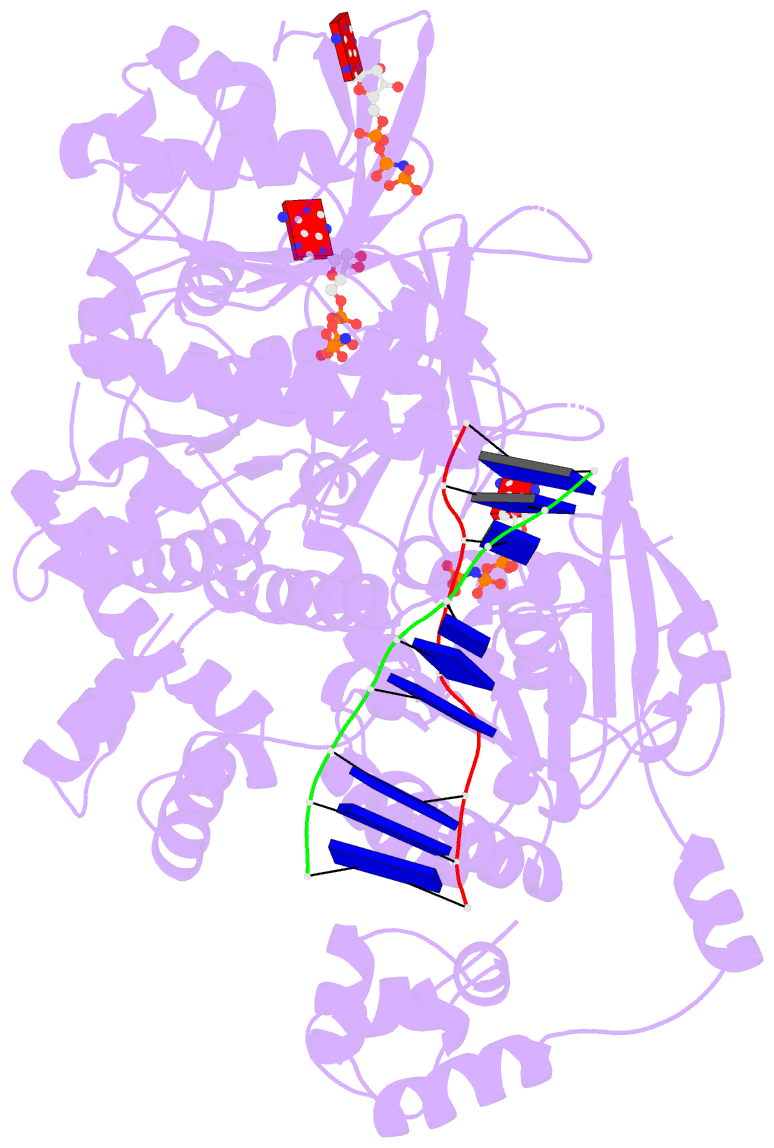
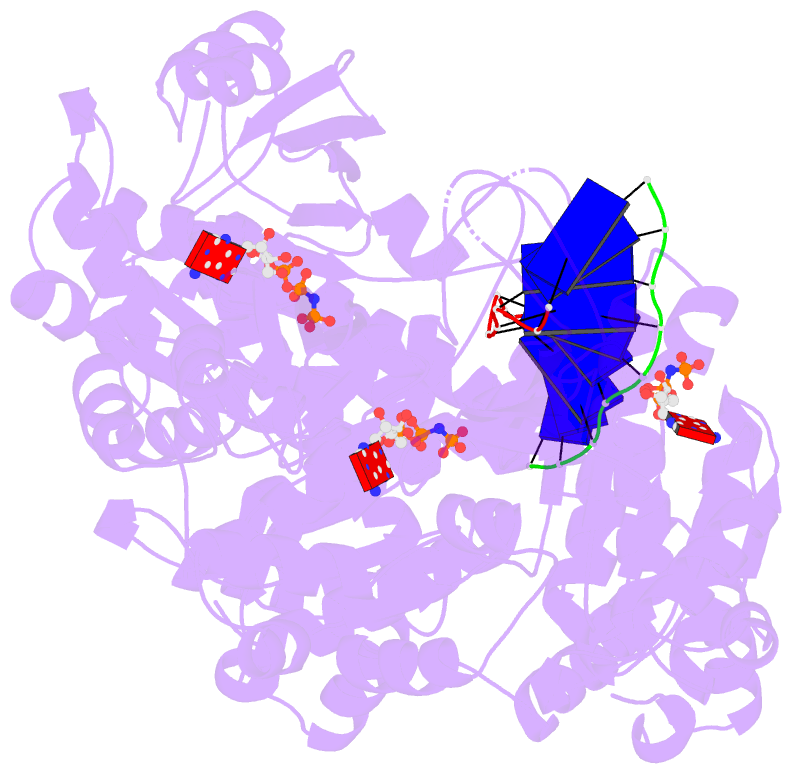
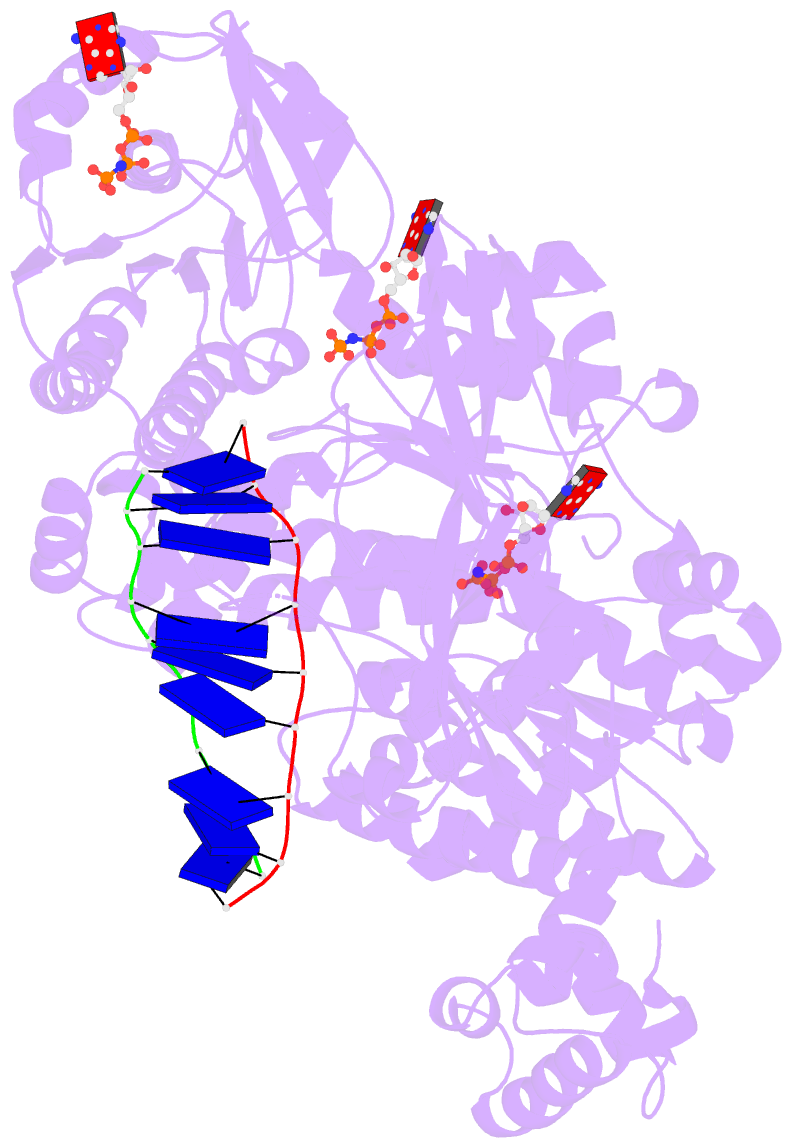
- Human rad51 post-synaptic complex
- Reference
-
Xu J, Zhao L, Peng S, Chu H, Liang R, Tian M, Connell PP,
Li G, Chen C, Wang HW (2021): "Mechanisms
of distinctive mismatch tolerance between Rad51 and Dmc1
in homologous recombination." Nucleic Acids
Res., 49, 13135-13149. doi:
10.1093/nar/gkab1141.
- Abstract
- Homologous recombination (HR) is a primary DNA
double-strand breaks (DSBs) repair mechanism. The
recombinases Rad51 and Dmc1 are highly conserved in the
RecA family; Rad51 is mainly responsible for DNA repair in
somatic cells during mitosis while Dmc1 only works during
meiosis in germ cells. This spatiotemporal difference is
probably due to their distinctive mismatch tolerance during
HR: Rad51 does not permit HR in the presence of mismatches,
whereas Dmc1 can tolerate certain mismatches. Here, the
cryo-EM structures of Rad51-DNA and Dmc1-DNA complexes
revealed that the major conformational differences between
these two proteins are located in their Loop2 regions,
which contain invading single-stranded DNA (ssDNA) binding
residues and double-stranded DNA (dsDNA) complementary
strand binding residues, stabilizing ssDNA and dsDNA in
presynaptic and postsynaptic complexes, respectively. By
combining molecular dynamic simulation and single-molecule
FRET assays, we identified that V273 and D274 in the Loop2
region of human RAD51 (hRAD51), corresponding to P274 and
G275 of human DMC1 (hDMC1), are the key residues regulating
mismatch tolerance during strand exchange in HR. This HR
accuracy control mechanism provides mechanistic insights
into the specific roles of Rad51 and Dmc1 in DNA
double-strand break repair and may shed light on the
regulatory mechanism of genetic recombination in mitosis
and meiosis.