Summary information and primary citation
- PDB-id
-
7chd;
DSSR-derived features in text and
JSON formats
- Class
- transferase
- Method
- X-ray (3.804 Å)
- Summary
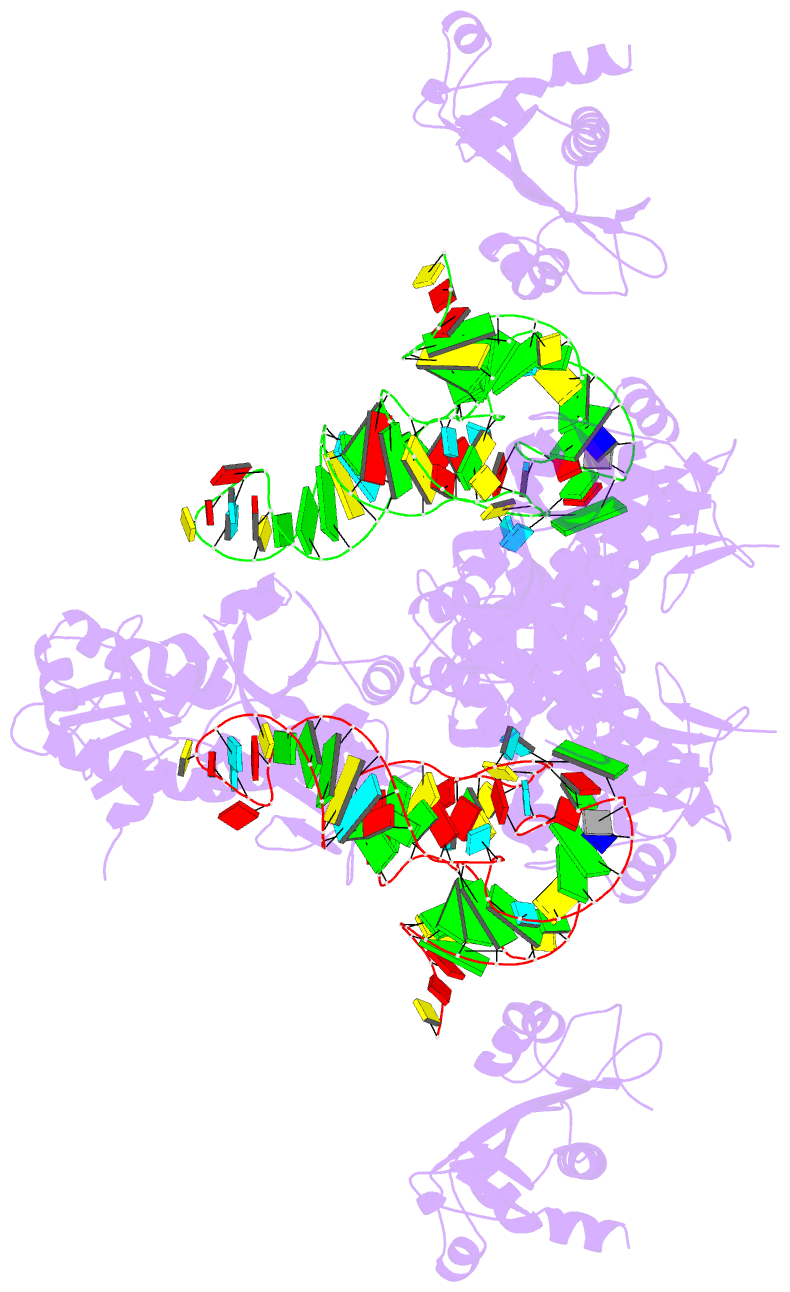
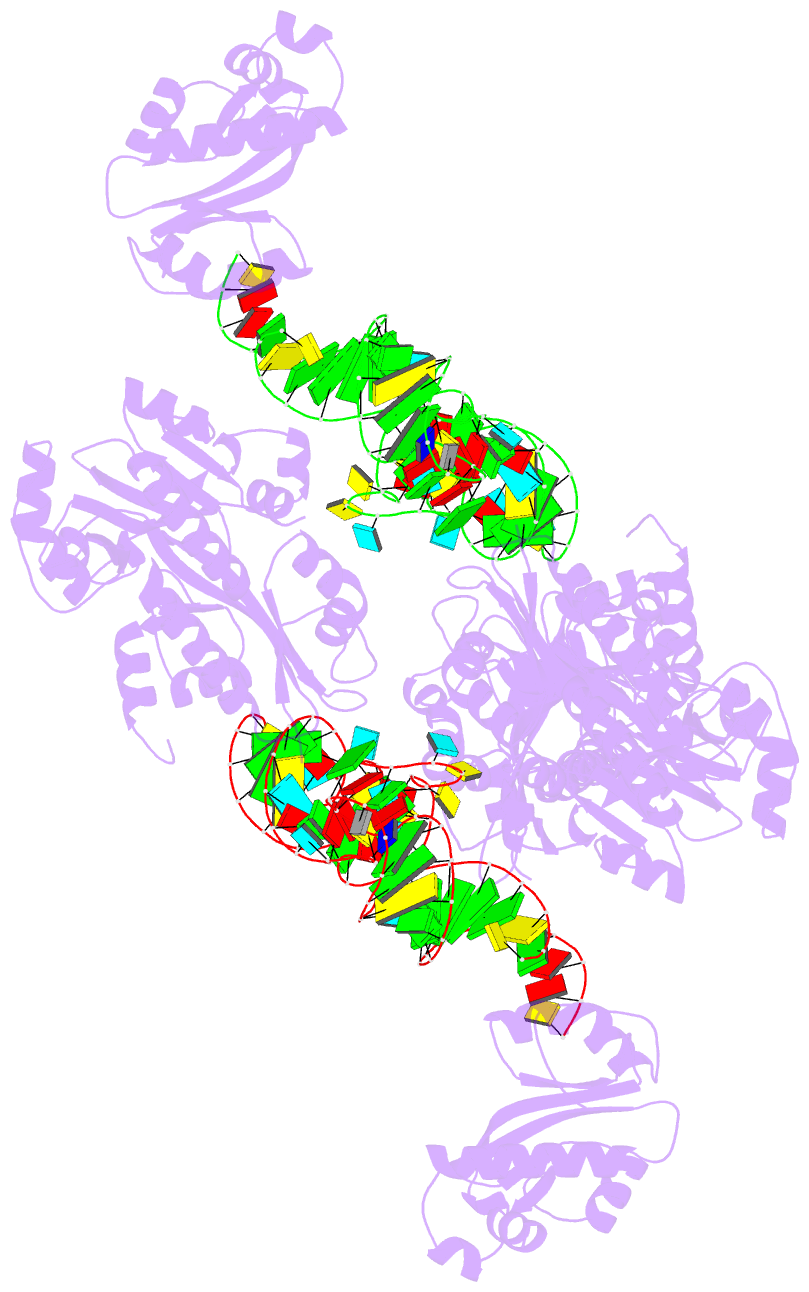
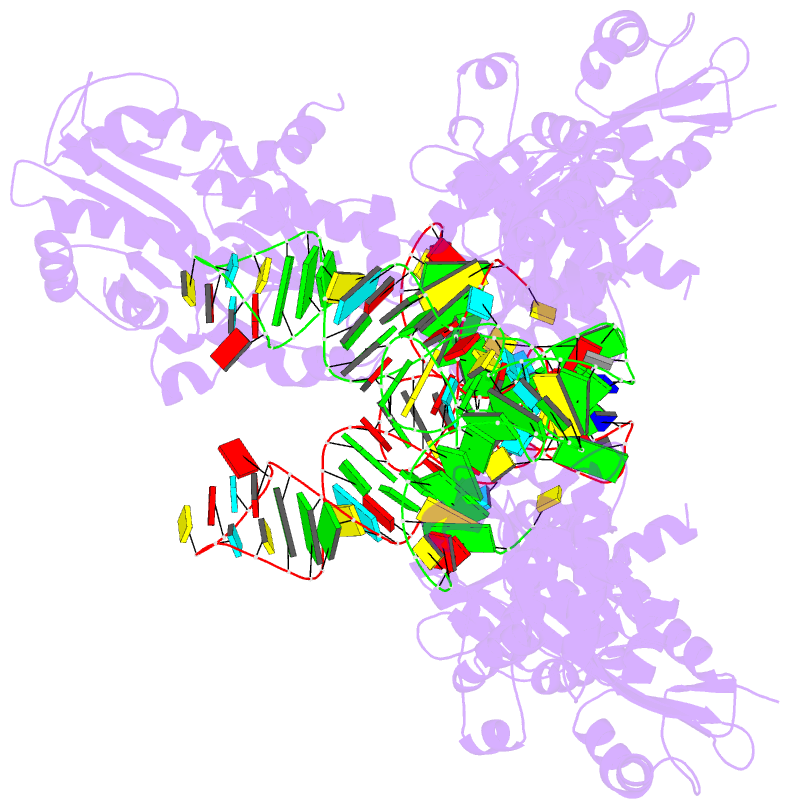
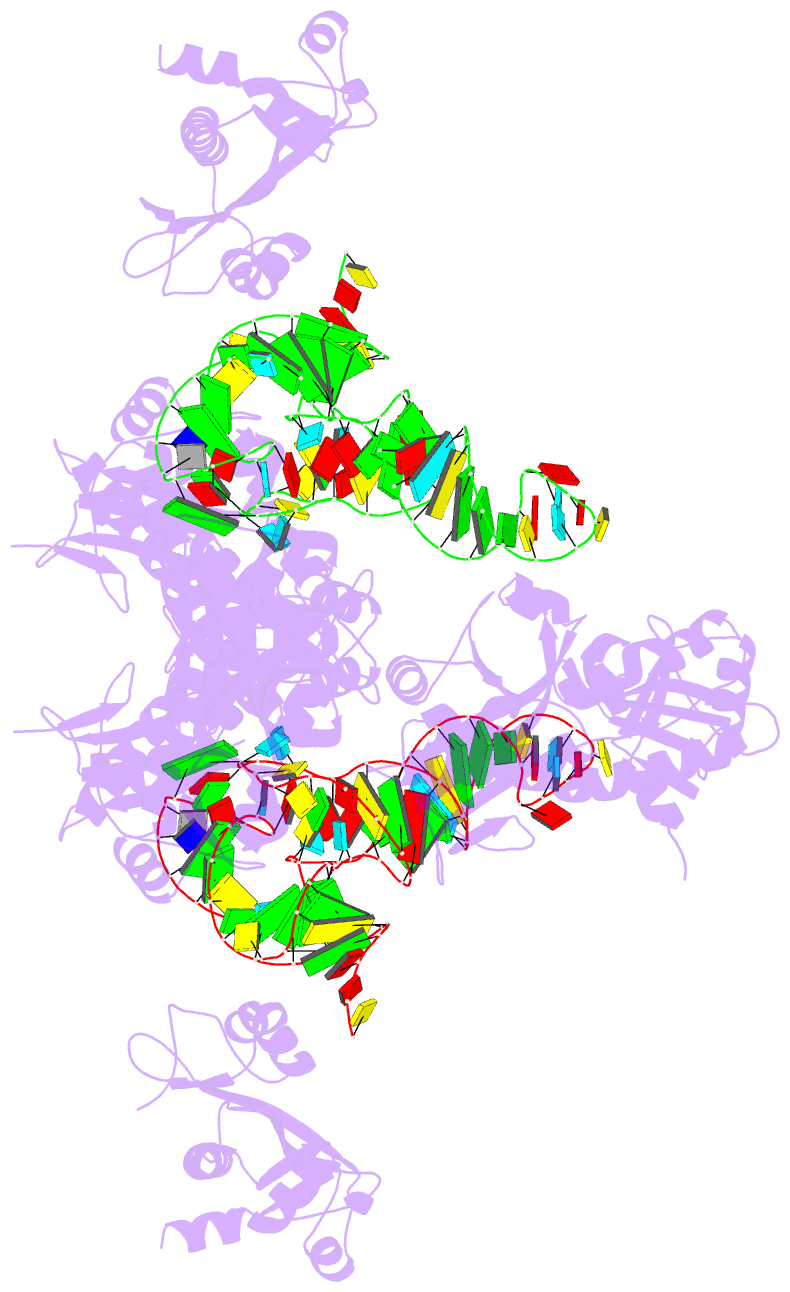
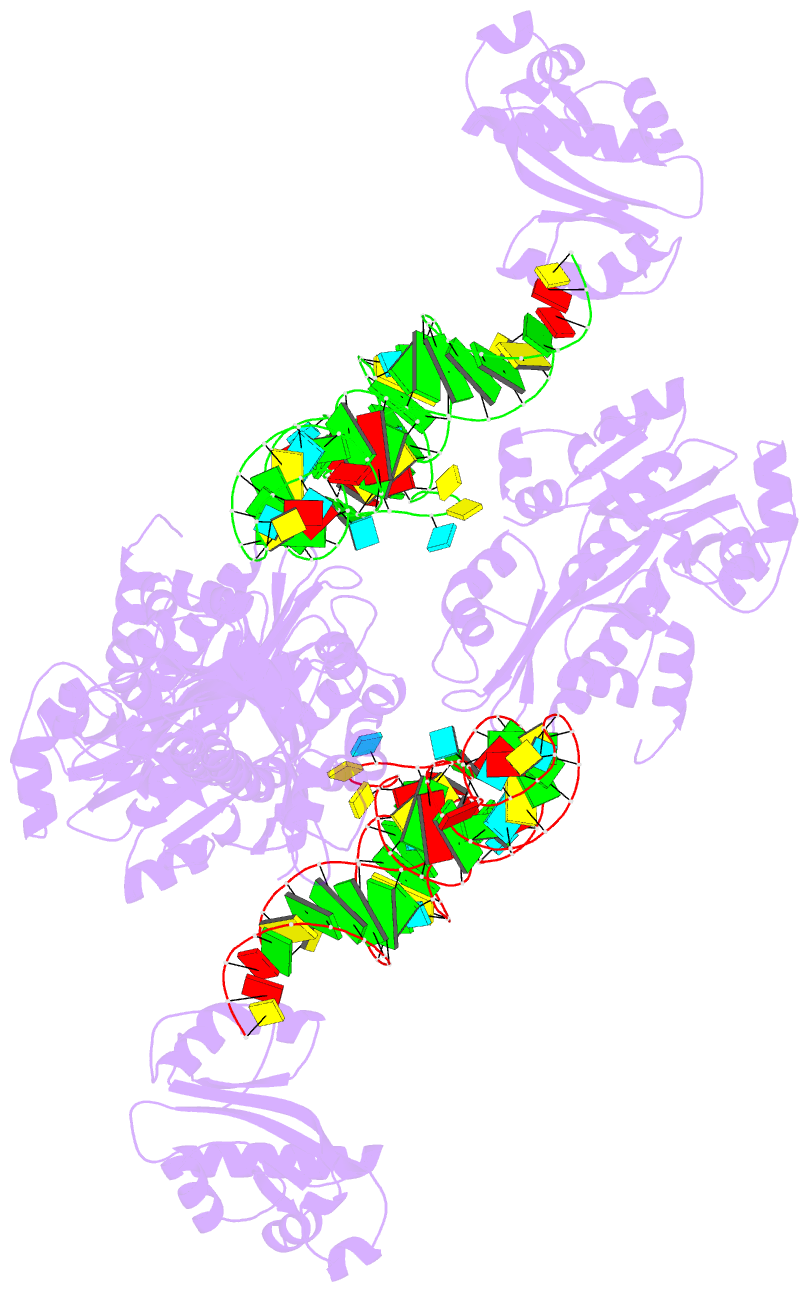
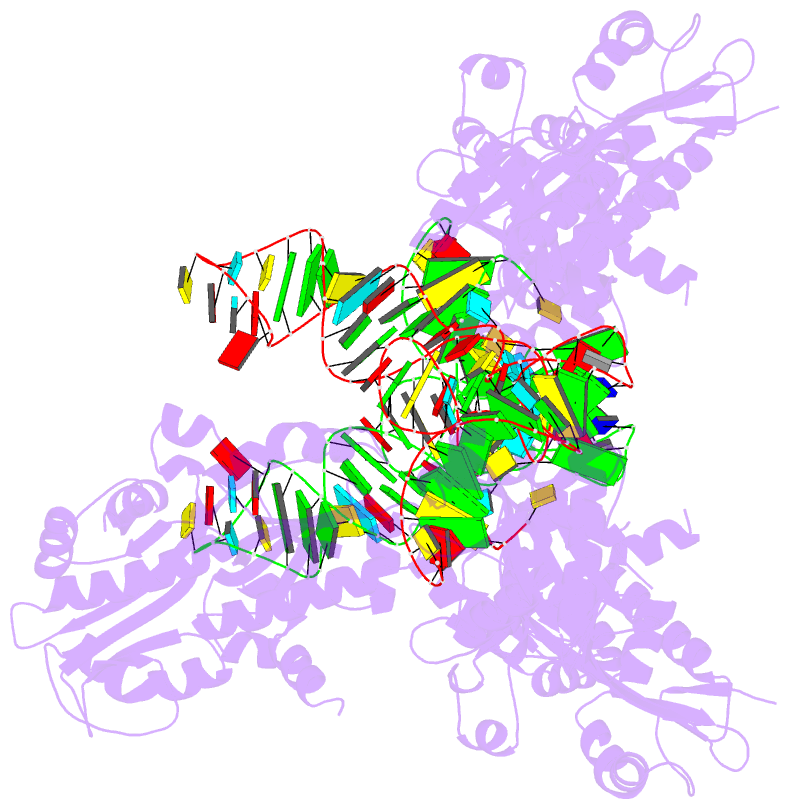
- Atat complexed with acetyl-methionyl-trnafmet
- Reference
-
Yashiro Y, Sakaguchi Y, Suzuki T, Tomita K (2020):
"Mechanism
of aminoacyl-tRNA acetylation by an aminoacyl-tRNA
acetyltransferase AtaT from enterohemorrhagic E.
coli." Nat Commun, 11,
5438. doi: 10.1038/s41467-020-19281-z.
- Abstract
- Toxin-antitoxin systems in bacteria contribute to
stress adaptation, dormancy, and persistence. AtaT, a
type-II toxin in enterohemorrhagic E. coli, reportedly
acetylates the α-amino group of the aminoacyl-moiety of
initiator Met-tRNAf<sub>Met</sub>, thus
inhibiting translation initiation. Here, we show that AtaT
has a broader specificity for aminoacyl-tRNAs than
initially claimed. AtaT efficiently acetylates
Gly-tRNA<sub>Gly</sub>,
Trp-tRNA<sub>Trp</sub>,
Tyr-tRNA<sub>Tyr</sub> and
Phe-tRNA<sub>Phe</sub> isoacceptors, in
addition to Met-tRNAf<sub>Met</sub>, and
inhibits global translation. AtaT interacts with the
acceptor stem of tRNAf<sub>Met</sub>, and the
consecutive G-C pairs in the bottom-half of the acceptor
stem are required for acetylation. Consistently,
tRNA<sub>Gly</sub>,
tRNA<sub>Trp</sub>,
tRNA<sub>Tyr</sub> and
tRNA<sub>Phe</sub> also possess consecutive G-C
base-pairs in the bottom halves of their acceptor stems.
Furthermore, misaminoacylated
valyl-tRNAf<sub>Met</sub> and
isoleucyl-tRNAf<sub>Met</sub> are not
acetylated by AtaT. Therefore, the substrate selection by
AtaT is governed by the specific acceptor stem sequence and
the properties of the aminoacyl-moiety of
aminoacyl-tRNAs.