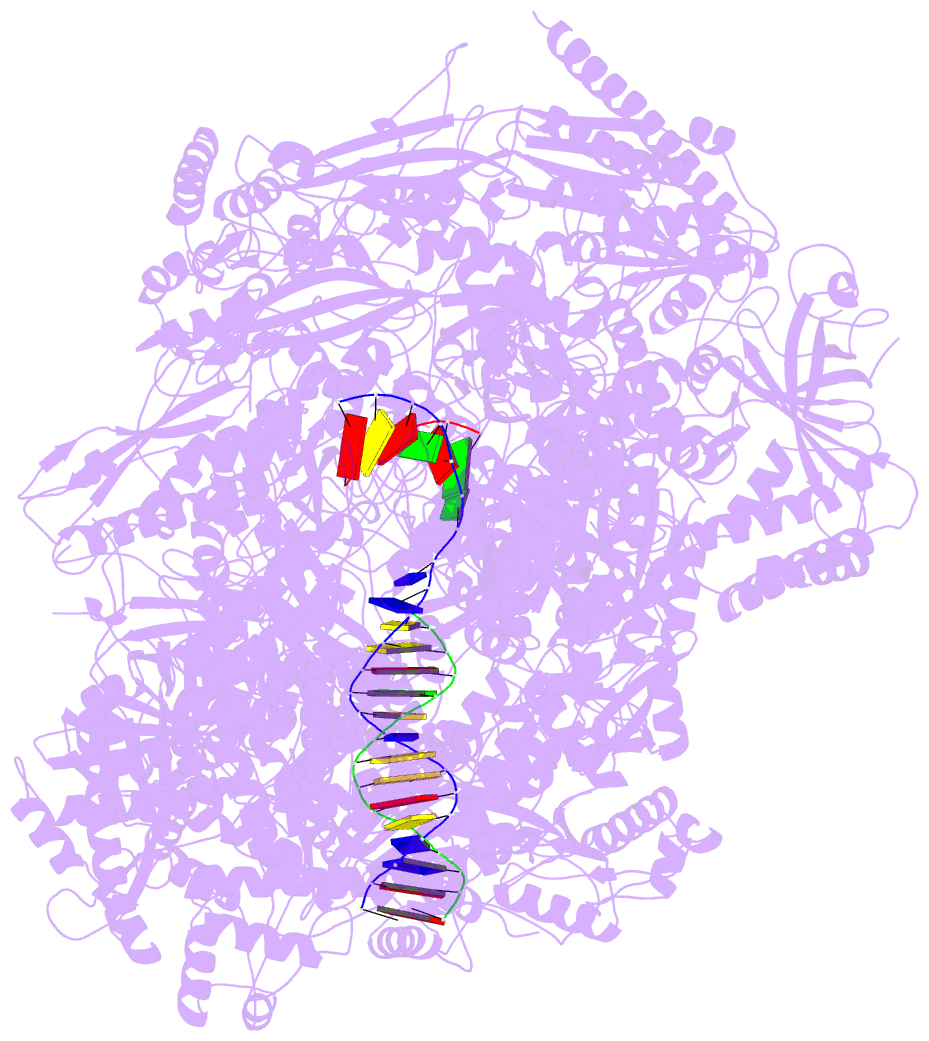
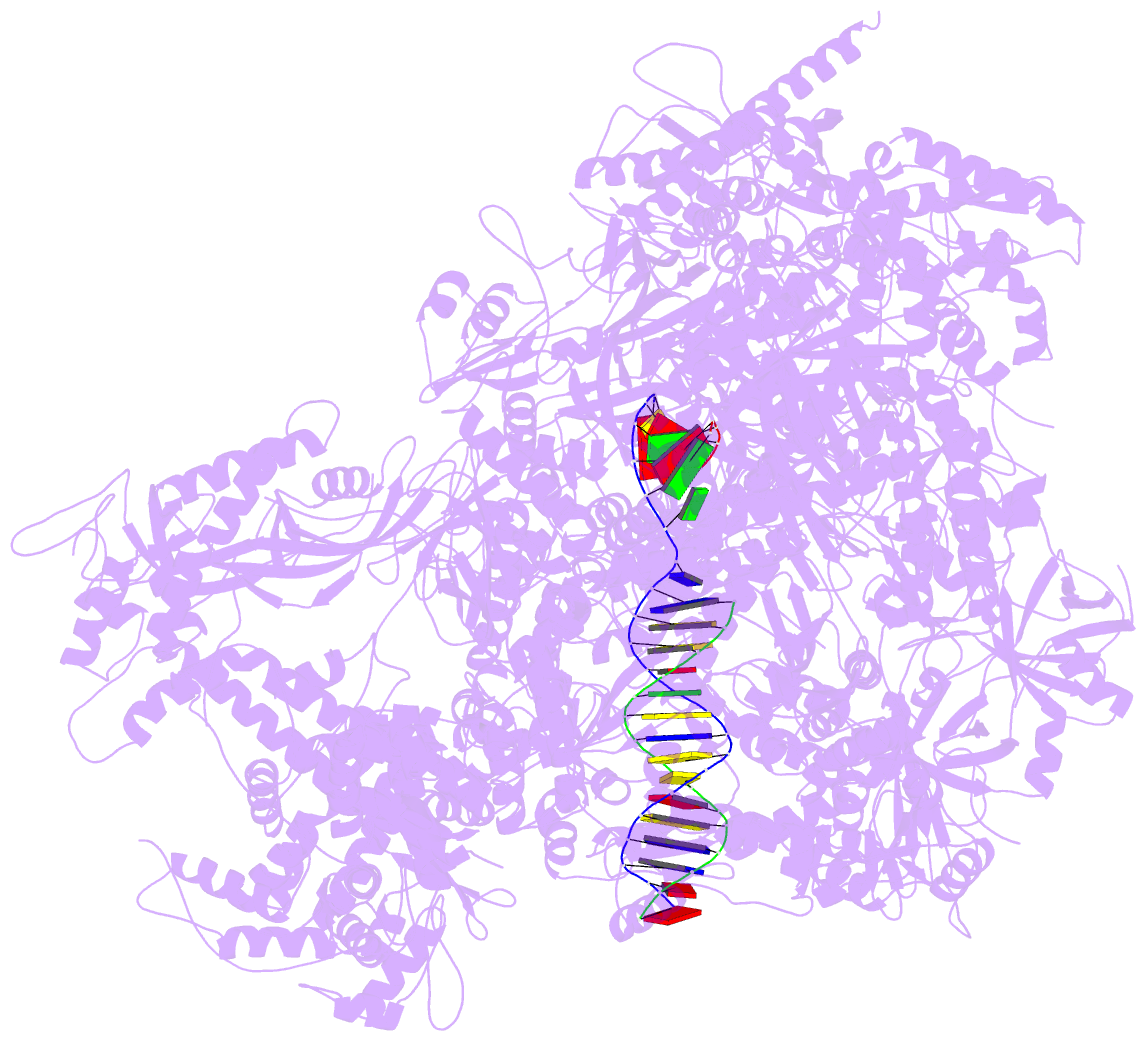
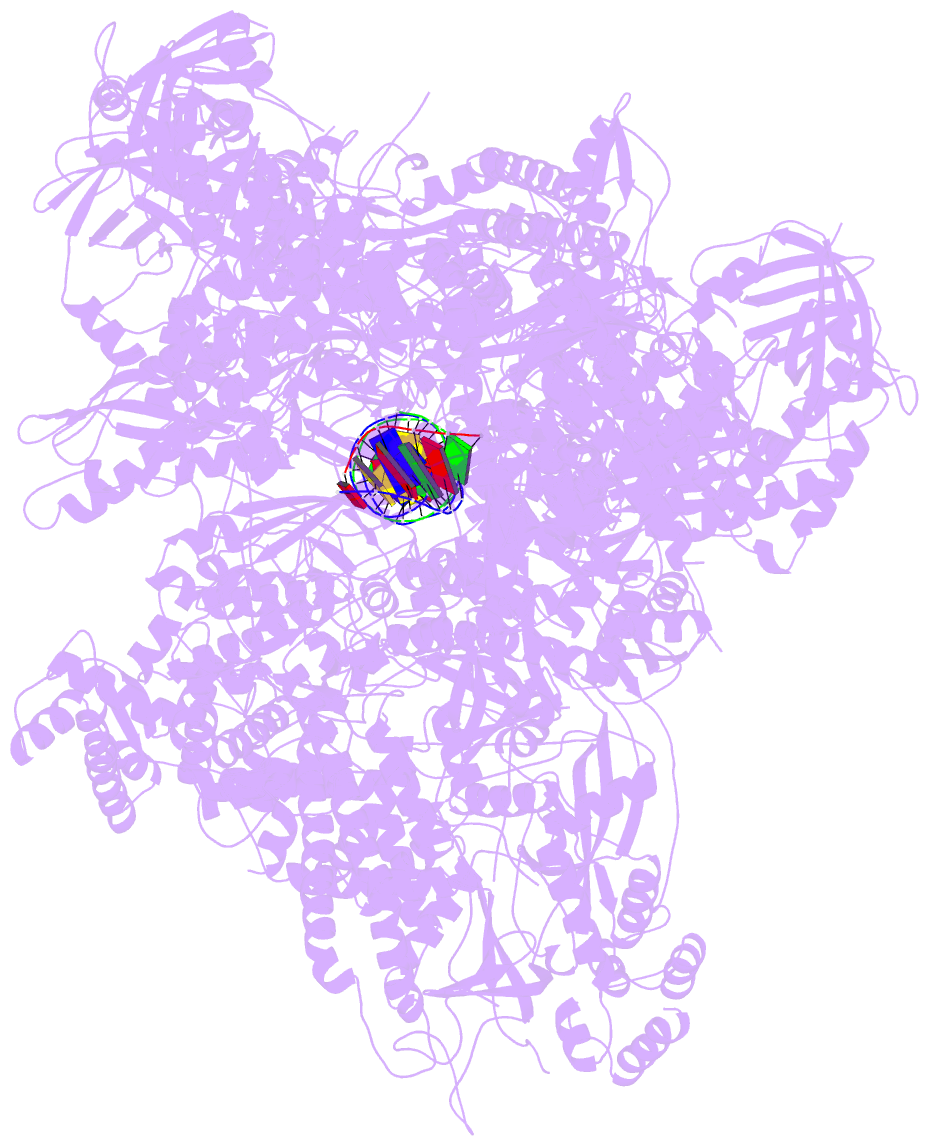
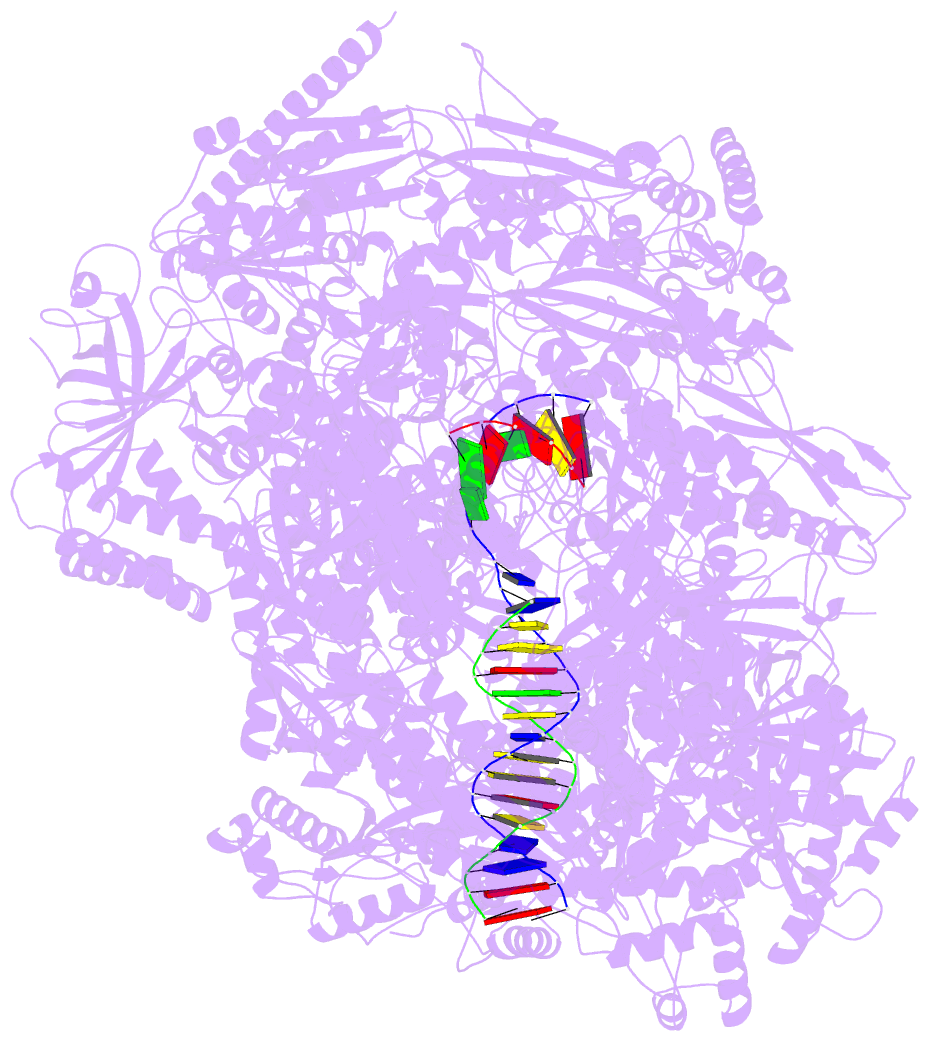
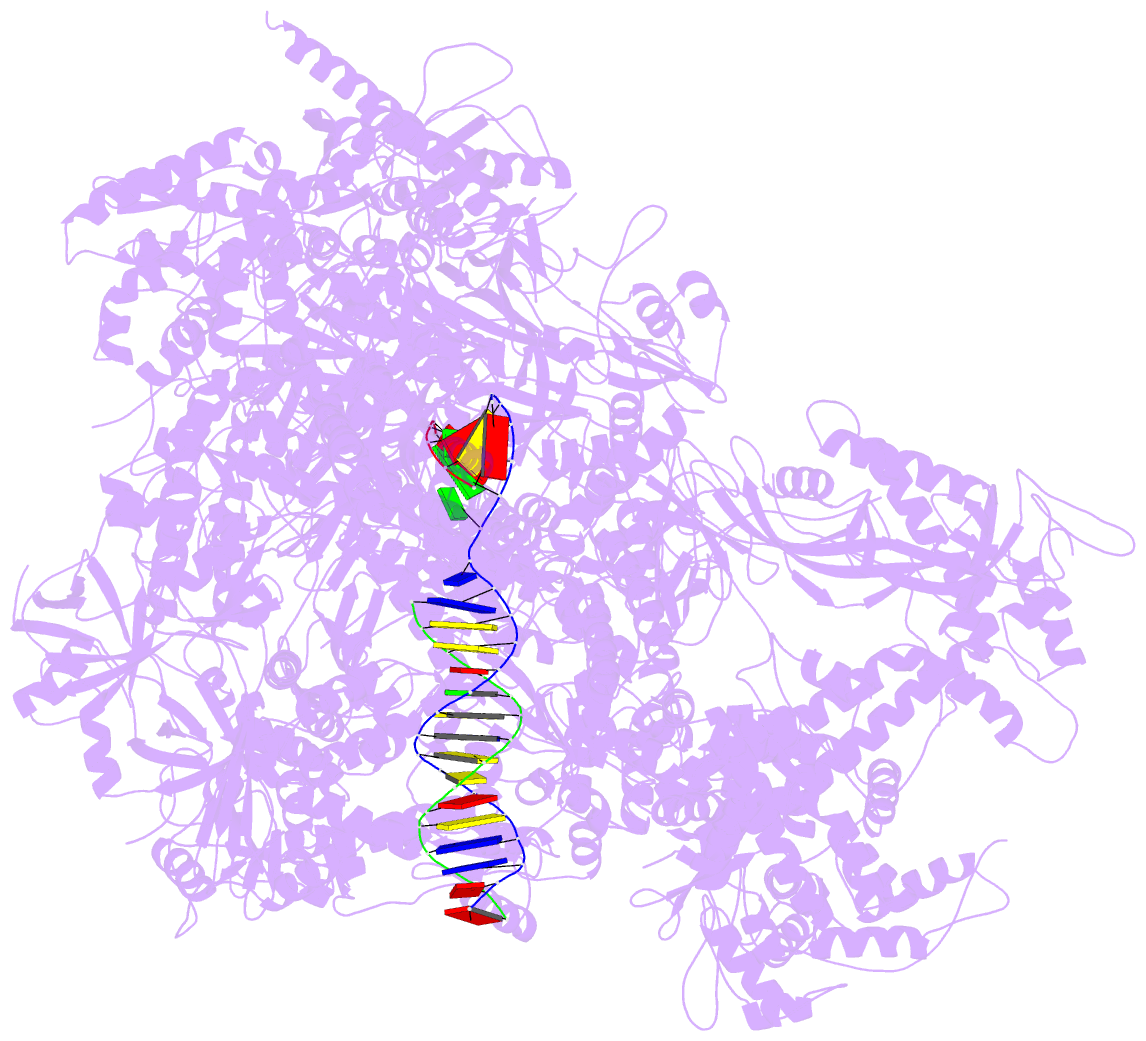
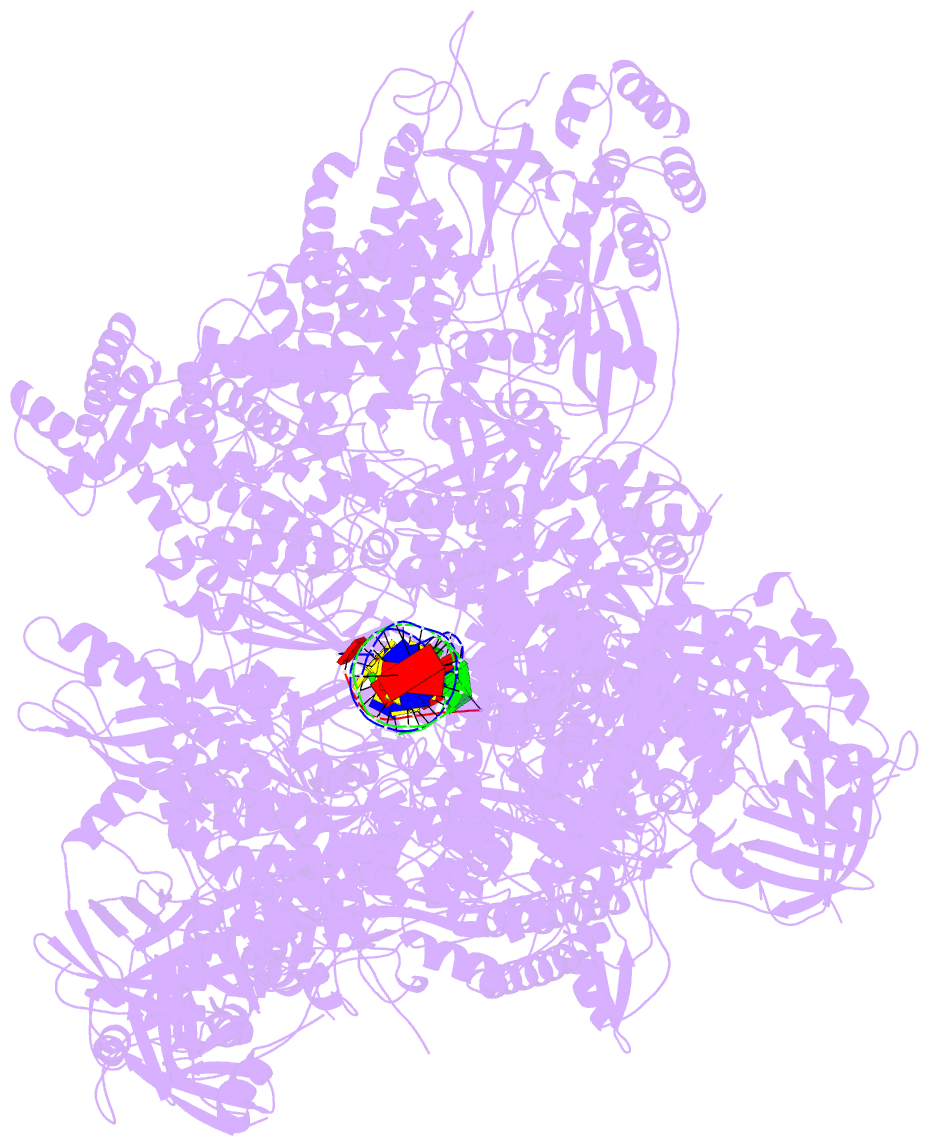
Summary information and primary citation
- PDB-id
-
7ae3;
DSSR-derived features in text and
JSON formats
- Class
- transcription
- Method
- cryo-EM (3.1 Å)
- Summary
- cryo-EM structure of human RNA polymerase iii
elongation complex 3
- Reference
-
Girbig M, Misiaszek AD, Vorlander MK, Lafita A, Grotsch
H, Baudin F, Bateman A, Muller CW (2021): "Cryo-EM
structures of human RNA polymerase III in its unbound and
transcribing states." Nat.Struct.Mol.Biol.,
28, 210-219. doi: 10.1038/s41594-020-00555-5.
- Abstract
- RNA polymerase III (Pol III) synthesizes transfer RNAs
and other short, essential RNAs. Human Pol III
misregulation is linked to tumor transformation,
neurodegenerative and developmental disorders, and
increased sensitivity to viral infections. Here, we present
cryo-electron microscopy structures at 2.8 to 3.3 Å
resolution of transcribing and unbound human Pol III. We
observe insertion of the TFIIS-like subunit RPC10 into the
polymerase funnel, providing insights into how RPC10
triggers transcription termination. Our structures resolve
elements absent from Saccharomyces cerevisiae Pol III such
as the winged-helix domains of RPC5 and an iron-sulfur
cluster, which tethers the heterotrimer subcomplex to the
core. The cancer-associated RPC7α isoform binds the
polymerase clamp, potentially interfering with Pol III
inhibition by tumor suppressor MAF1, which may explain why
overexpressed RPC7α enhances tumor transformation. Finally,
the human Pol III structure allows mapping of
disease-related mutations and may contribute to the
development of inhibitors that selectively target Pol III
for therapeutic interventions.