Summary information and primary citation
- PDB-id
-
6va2;
DSSR-derived features in text and
JSON formats
- Class
- RNA
- Method
- NMR
- Summary
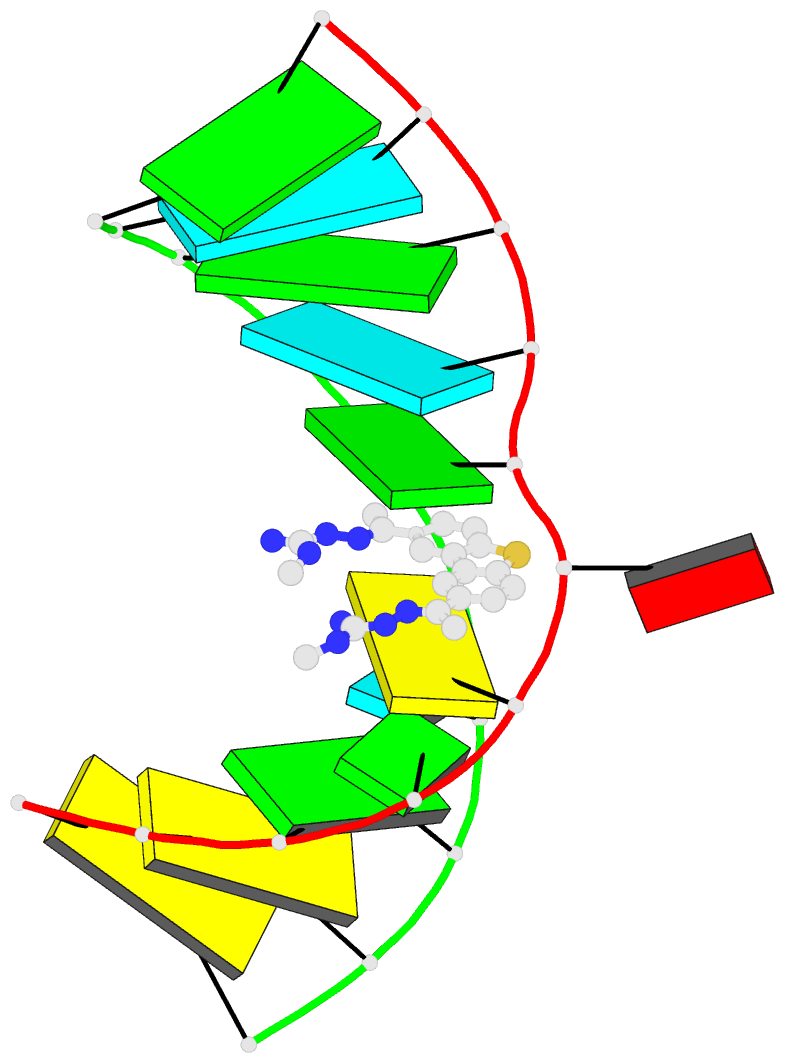
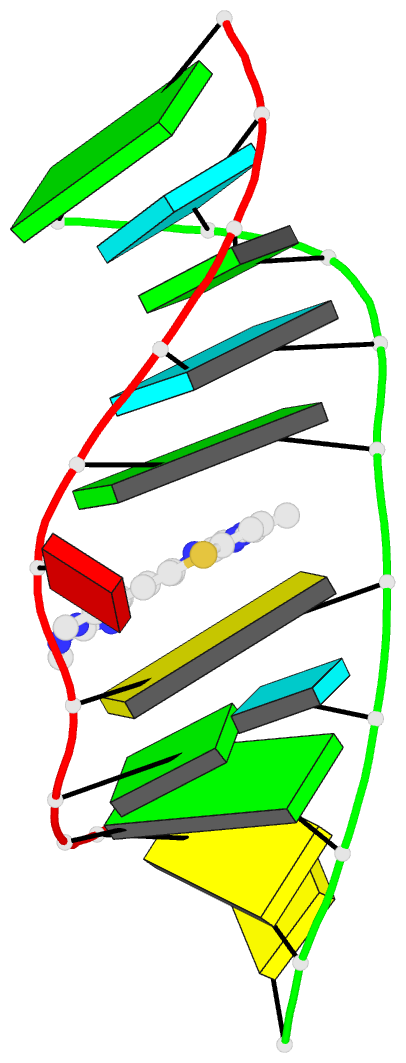
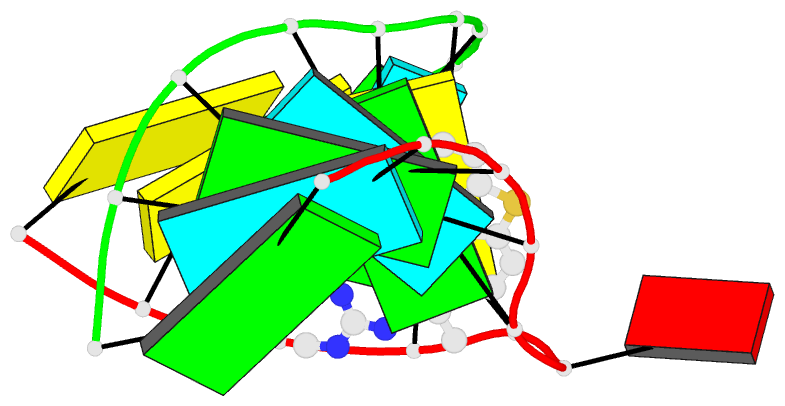
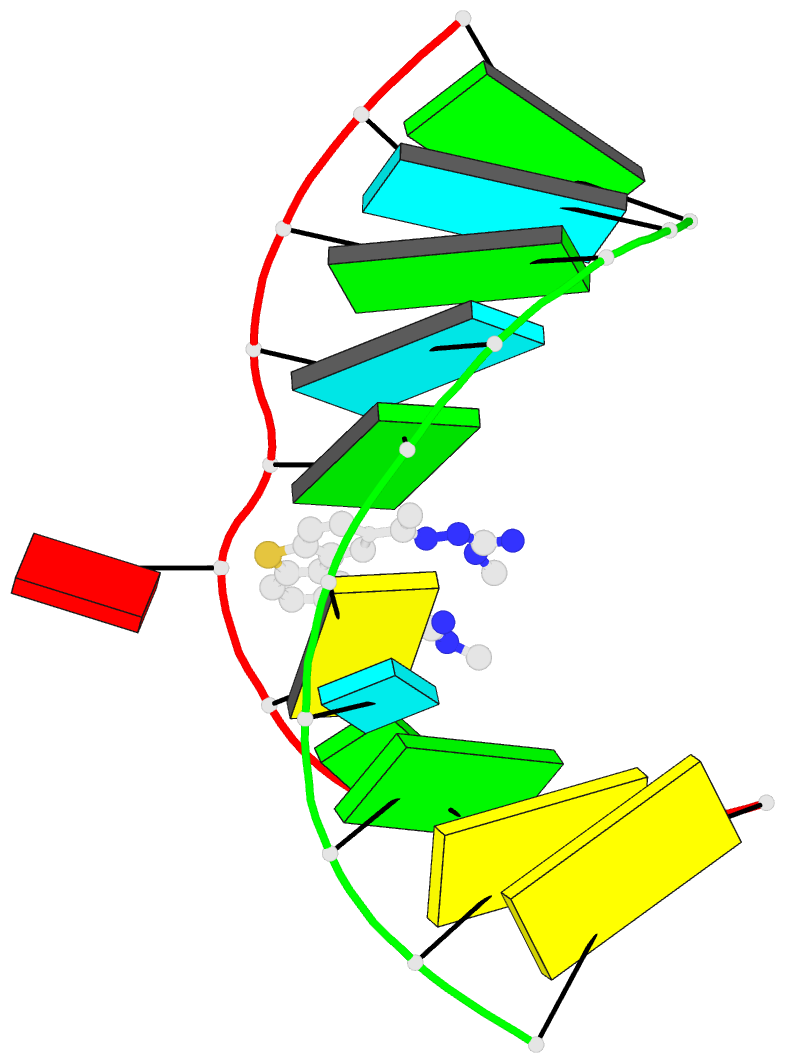
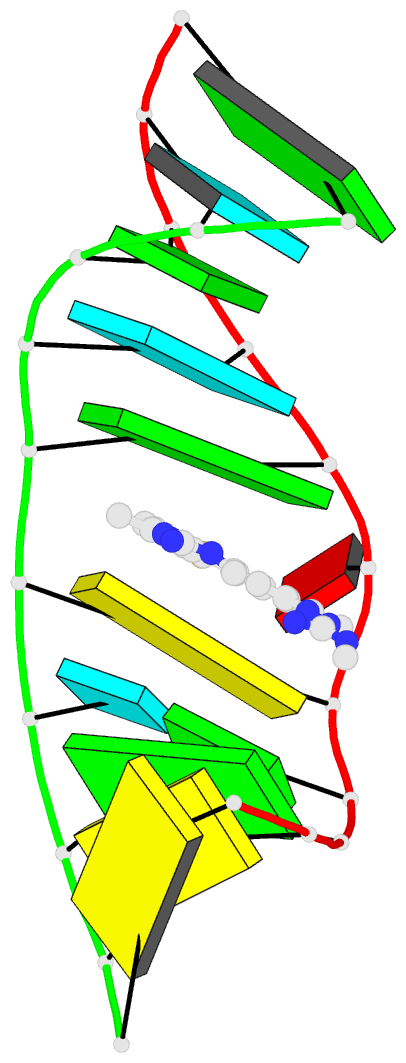
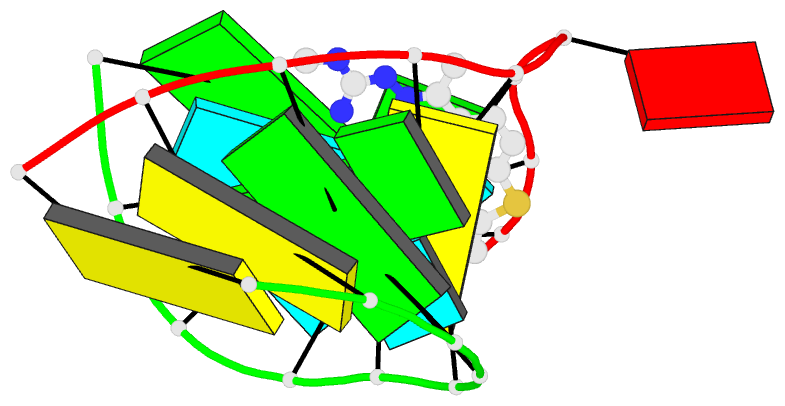
- Solution structure of the tau pre-mrna exon 10 splicing
regulatory element bound to mh5
- Reference
-
Chen JL, Zhang P, Abe M, Aikawa H, Zhang L, Frank AJ,
Zembryski T, Hubbs C, Park H, Withka J, Steppan C, Rogers
L, Cabral S, Pettersson M, Wager TT, Fountain MA,
Rumbaugh G, Childs-Disney JL, Disney MD (2020): "Design,
Optimization, and Study of Small Molecules That Target
Tau Pre-mRNA and Affect Splicing."
J.Am.Chem.Soc., 142, 8706-8727.
doi: 10.1021/jacs.0c00768.
- Abstract
- Approximately 95% of human genes are alternatively
spliced, and aberrant splicing events can cause disease.
One pre-mRNA that is alternatively spliced and linked to
neurodegenerative diseases is tau (microtubule-associated
protein tau), which can cause frontotemporal dementia and
parkinsonism linked to chromosome 17 (FTDP-17) and can
contribute to Alzheimer's disease. Here, we describe the
design of structure-specific lead small molecules that
directly target tau pre-mRNA from sequence. This was
followed by hit expansion and analogue synthesis to further
improve upon these initial lead molecules. The emergent
compounds were assessed for functional activity in a
battery of assays, including binding assays and an assay
that mimics molecular recognition of tau pre-mRNA by a U1
small nuclear ribonucleoprotein (snRNP) splicing factor.
Compounds that emerged from these studies had enhanced
potency and selectivity for the target RNA relative to the
initial hits, while also having significantly improved
drug-like properties. The compounds are shown to directly
target tau pre-mRNA in cells, via chemical cross-linking
and isolation by pull-down target profiling, and to rescue
disease-relevant splicing of tau pre-mRNA in a variety of
cellular systems, including primary neurons. More broadly,
this study shows that lead, structure-specific compounds
can be designed from sequence and then further optimized
for their physicochemical properties while at the same time
enhancing their activity.