Summary information and primary citation
- PDB-id
-
6t3r;
DSSR-derived features in text and
JSON formats
- Class
- RNA
- Method
- X-ray (3.57 Å)
- Summary
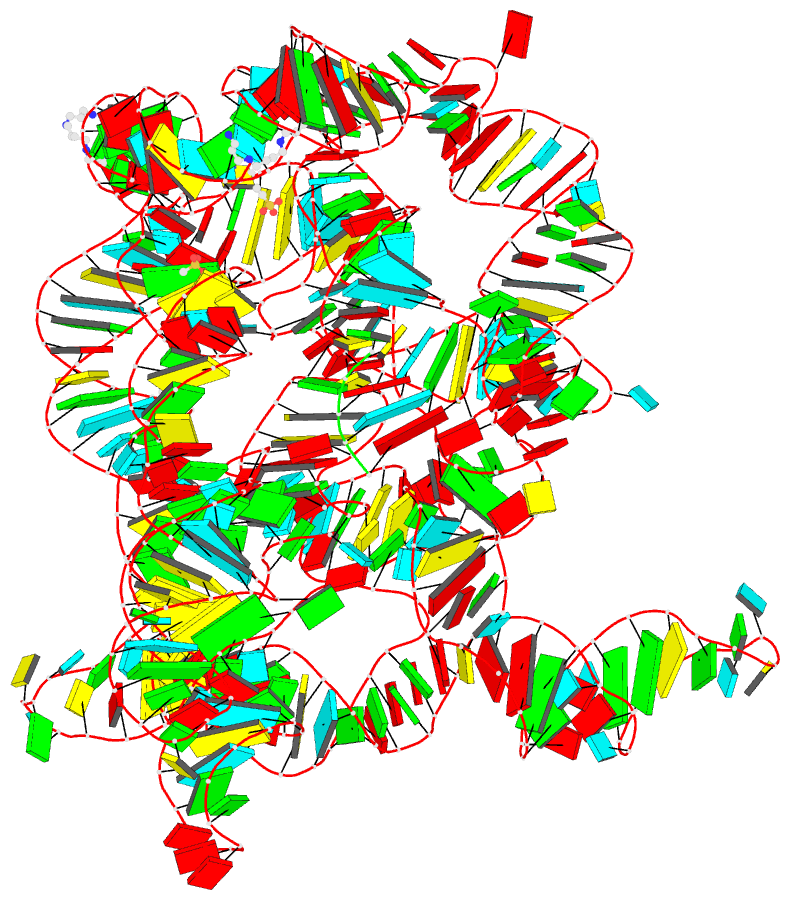
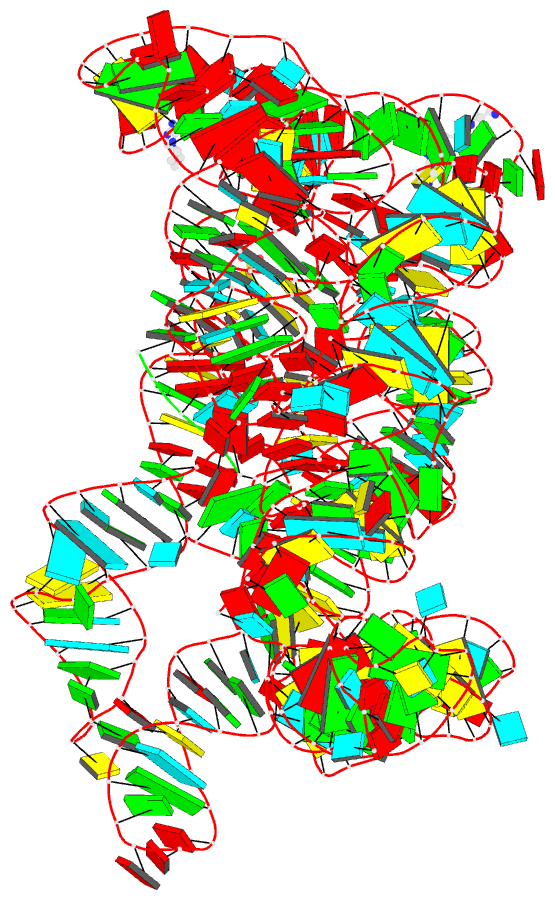
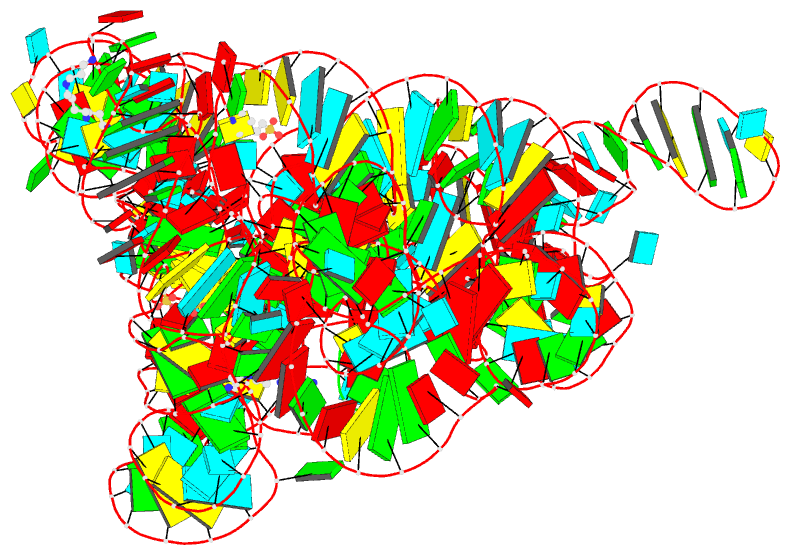
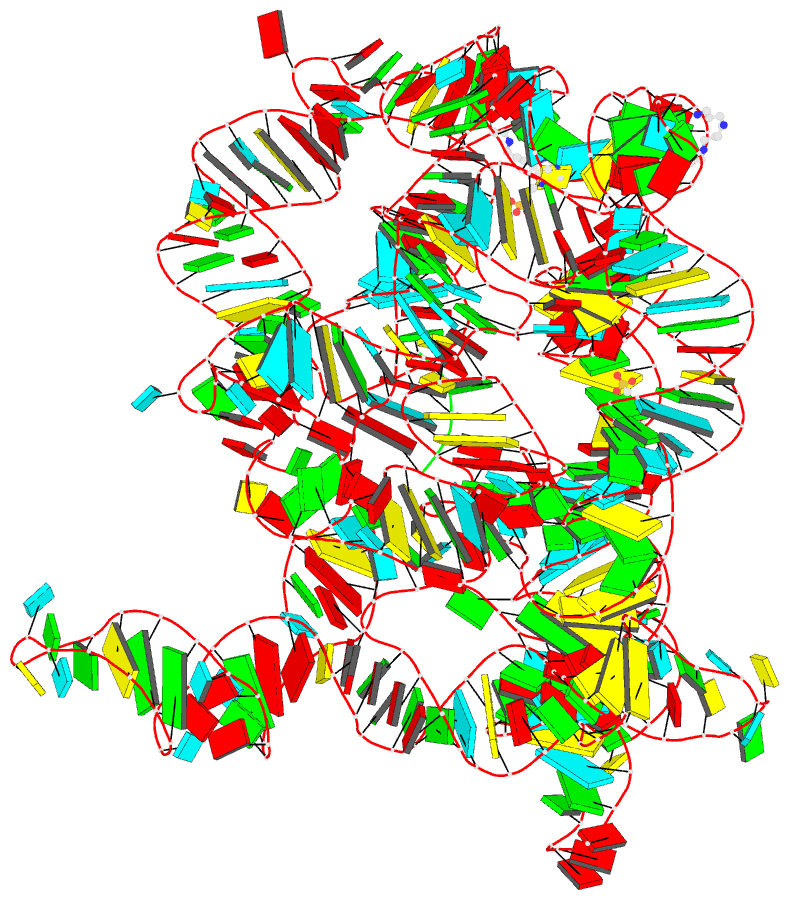
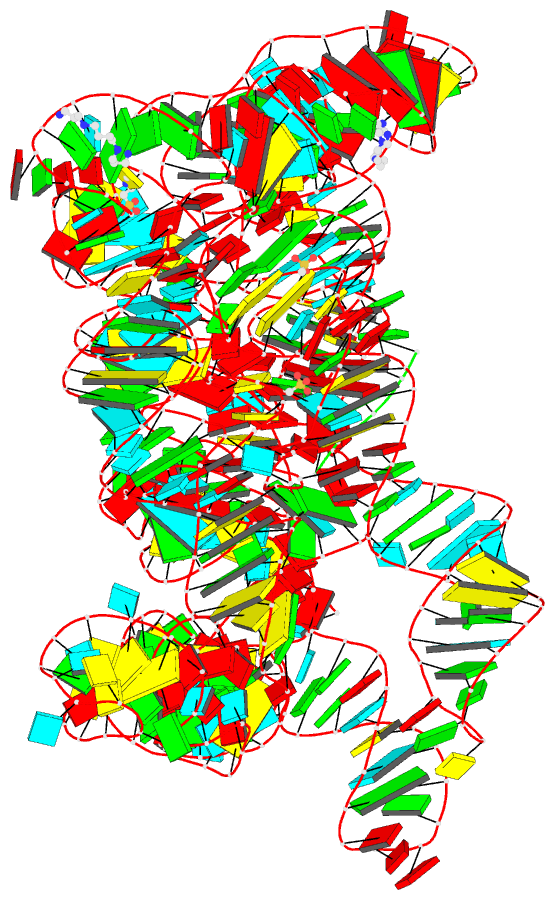
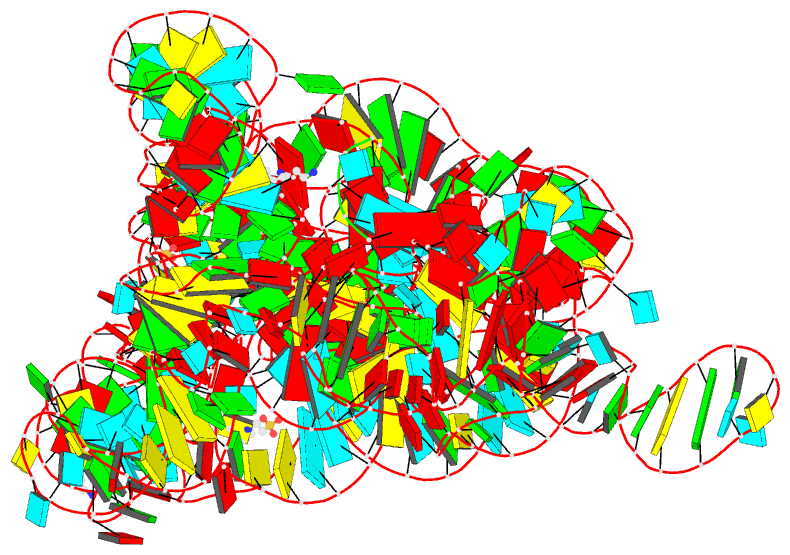
- Structure of oceanobacillus iheyensis group ii intron
u-mutant (c289u-c358u-g385a) in the presence of k+, mg2+
and 5'-exon
- Reference
-
Manigrasso J, Chillon I, Genna V, Vidossich P, Somarowthu
S, Pyle AM, De Vivo M, Marcia M (2020): "Visualizing
group II intron dynamics between the first and second
steps of splicing." Nat Commun,
11, 2837. doi: 10.1038/s41467-020-16741-4.
- Abstract
- Group II introns are ubiquitous self-splicing ribozymes
and retrotransposable elements evolutionarily and
chemically related to the eukaryotic spliceosome, with
potential applications as gene-editing tools. Recent
biochemical and structural data have captured the intron in
multiple conformations at different stages of catalysis.
Here, we employ enzymatic assays, X-ray crystallography,
and molecular simulations to resolve the spatiotemporal
location and function of conformational changes occurring
between the first and the second step of splicing. We show
that the first residue of the highly-conserved catalytic
triad is protonated upon 5'-splice-site scission, promoting
a reversible structural rearrangement of the active site
(toggling). Protonation and active site dynamics induced by
the first step of splicing facilitate the progression to
the second step. Our insights into the mechanism of group
II intron splicing parallels functional data on the
spliceosome, thus reinforcing the notion that these
evolutionarily-related molecular machines share the same
enzymatic strategy.