Summary information and primary citation
- PDB-id
-
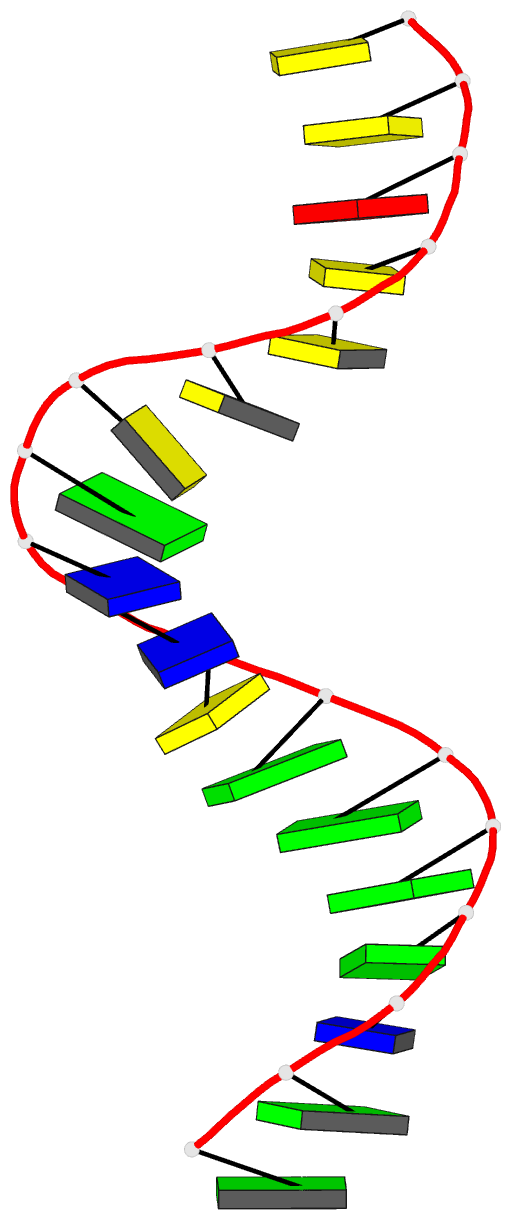
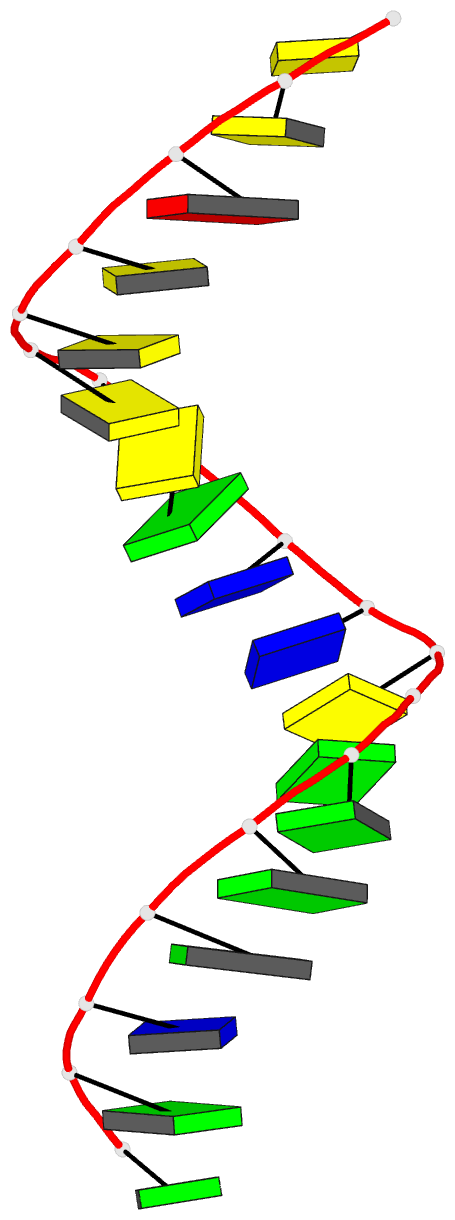
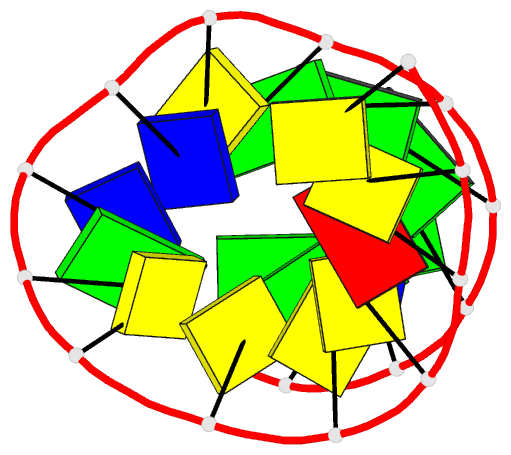
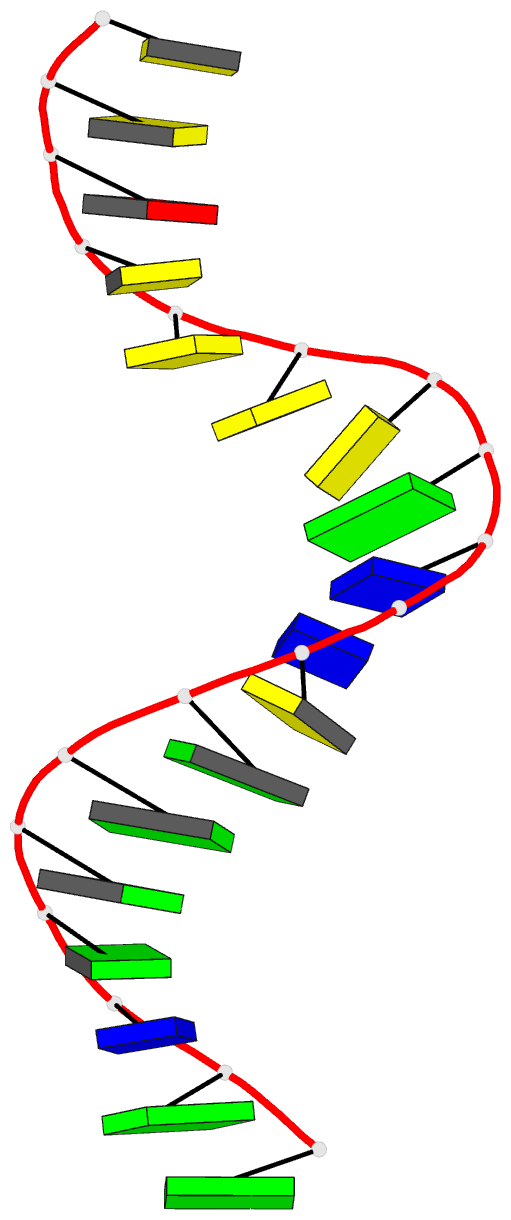
6ros;
DSSR-derived features in text and
JSON formats
- Class
- DNA
- Method
- X-ray (2.7 Å)
- Summary
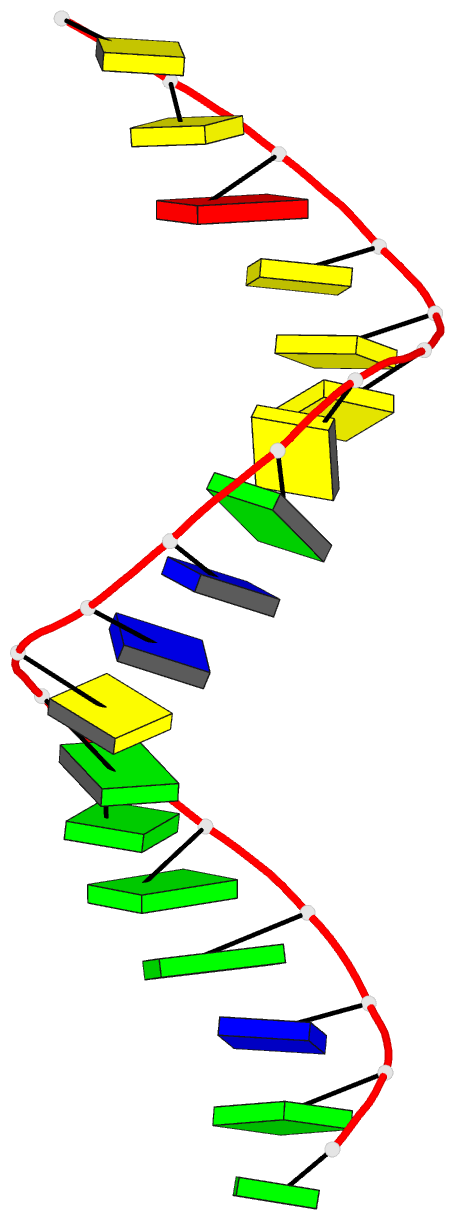
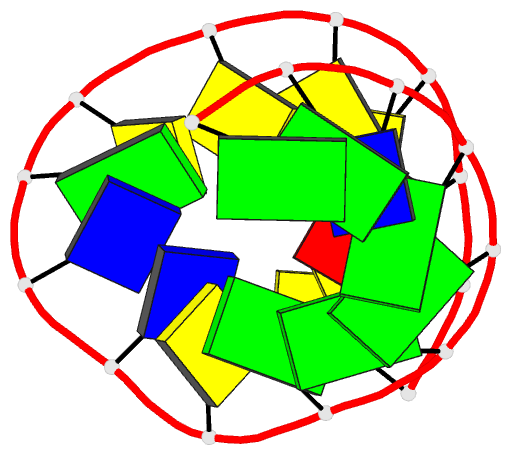
- Rep related 18-mer DNA
- Reference
-
Kolenko P, Svoboda J, Cerny J, Charnavets T, Schneider B
(2020): "Structural
variability of CG-rich DNA 18-mers accommodating double
T-T mismatches." Acta Crystallogr D Struct
Biol, 76, 1233-1243. doi: 10.1107/S2059798320014151.
- Abstract
- Solution and crystal data are reported for DNA 18-mers
with sequences related to those of bacterial noncoding
single-stranded DNA segments called repetitive extragenic
palindromes (REPs). Solution CD and melting data showed
that the CG-rich, near-palindromic REPs from various
bacterial species exhibit dynamic temperature-dependent and
concentration-dependent equilibria, including architectures
compatible with not only hairpins, which are expected to be
biologically relevant, but also antiparallel duplexes and
bimolecular tetraplexes. Three 18-mer oligonucleotides
named Hpar-18 (PDB entry 6rou), Chom-18 (PDB entry 6ros)
and its brominated variant Chom-18Br (PDB entry 6ror)
crystallized as isomorphic right-handed A-like duplexes.
The low-resolution crystal structures were solved with the
help of experimental phases for Chom-18Br. The center of
the duplexes is formed by two successive T-T noncanonical
base pairs (mismatches). They do not deform the
double-helical geometry. The presence of T-T mismatches
prompted an analysis of the geometries of these and other
noncanonical pairs in other DNA crystals in terms of their
fit to the experimental electron densities (RSCC) and their
geometric fit to the NtC (dinucleotide conformational)
classes (https://dnatco.datmos.org/). Throughout this work,
knowledge of the NtC classes was used to refine and
validate the crystal structures, and to analyze the
mismatches.