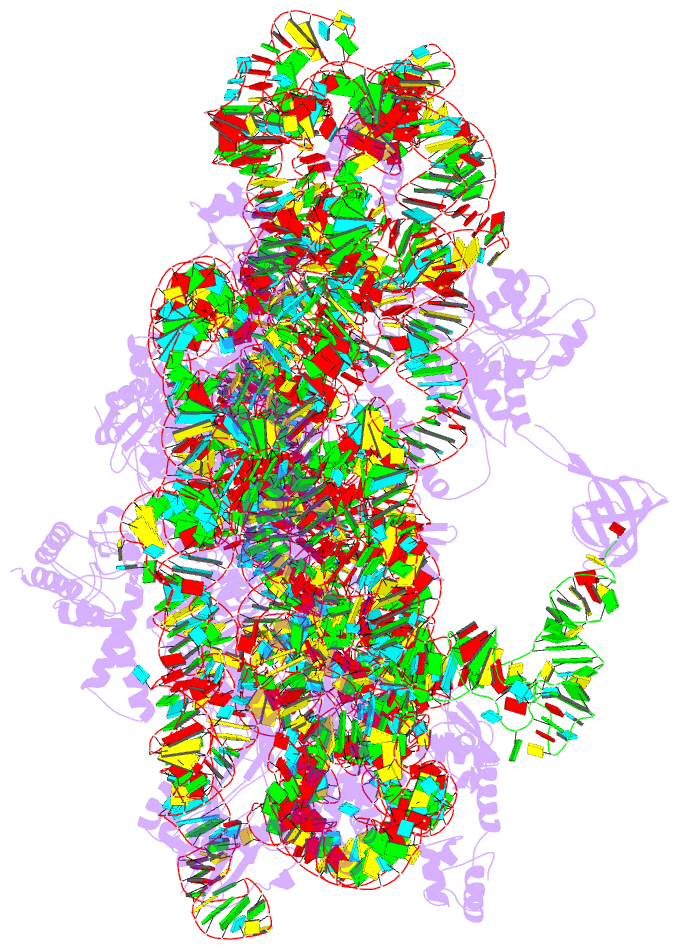
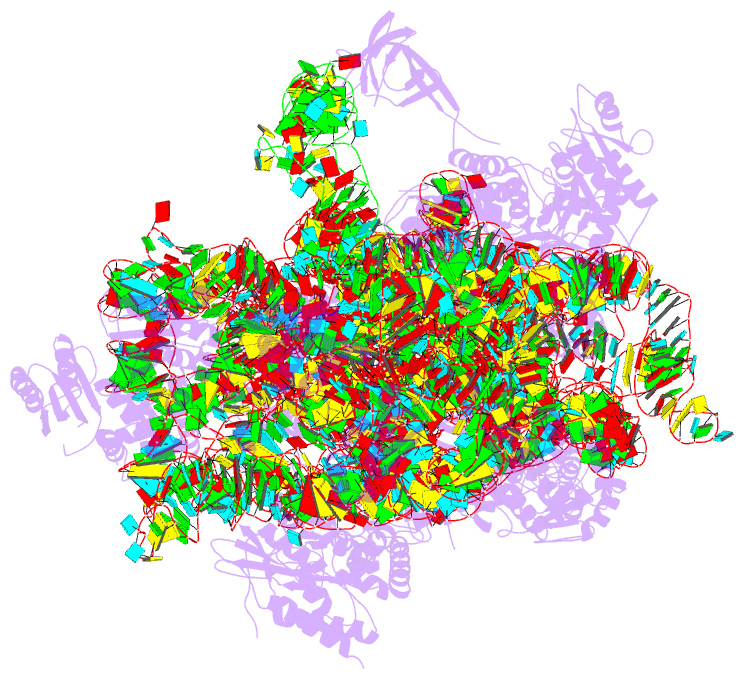
Summary information and primary citation
- PDB-id
-
6o7k;
DSSR-derived features in text and
JSON formats
- Class
- ribosome
- Method
- cryo-EM (4.2 Å)
- Summary
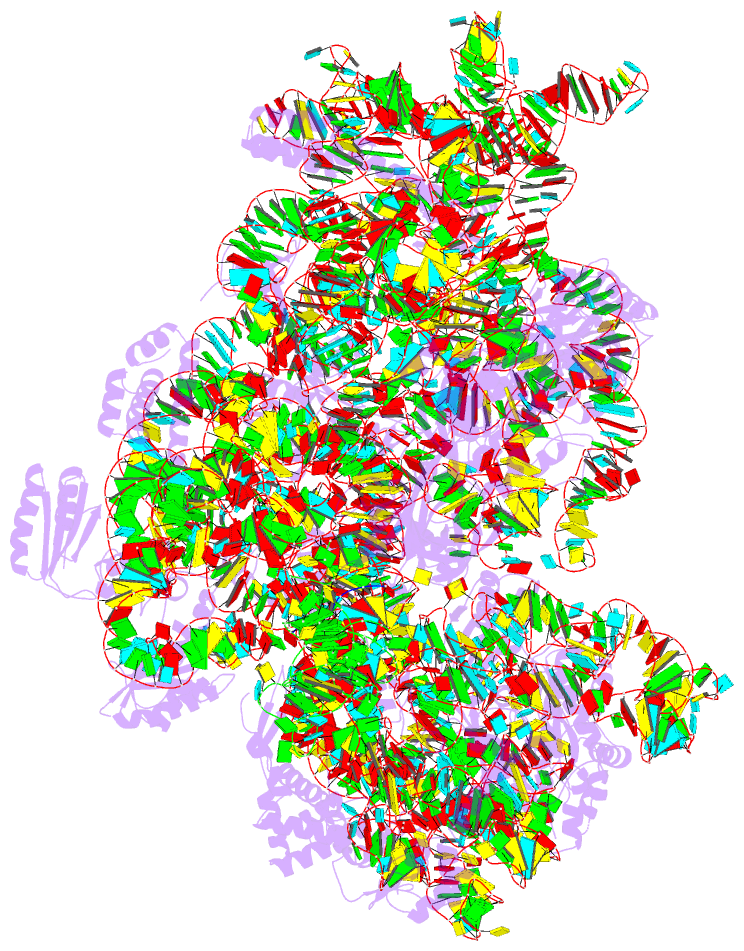
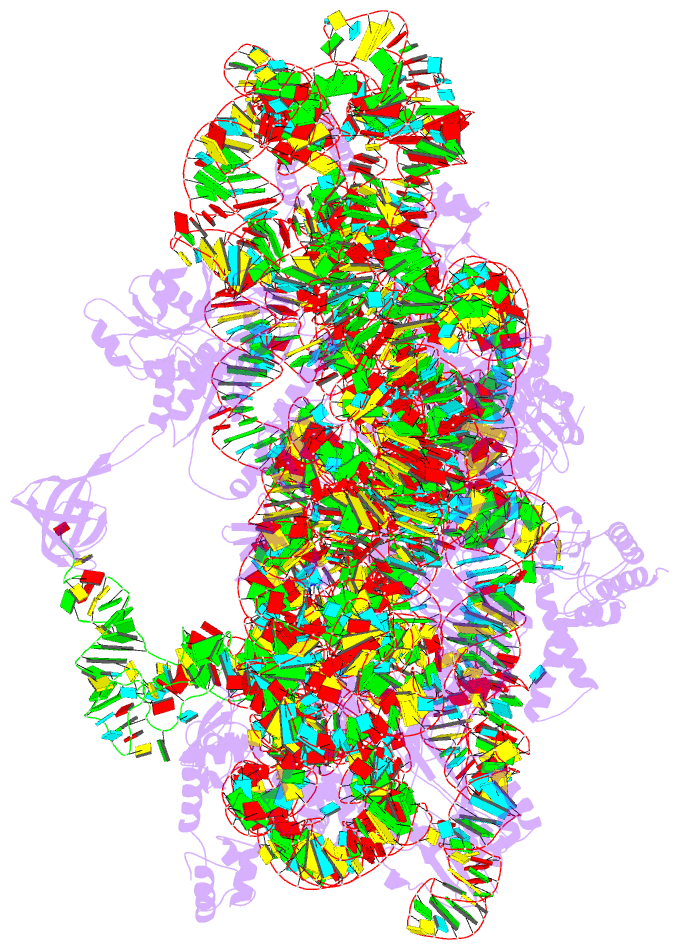
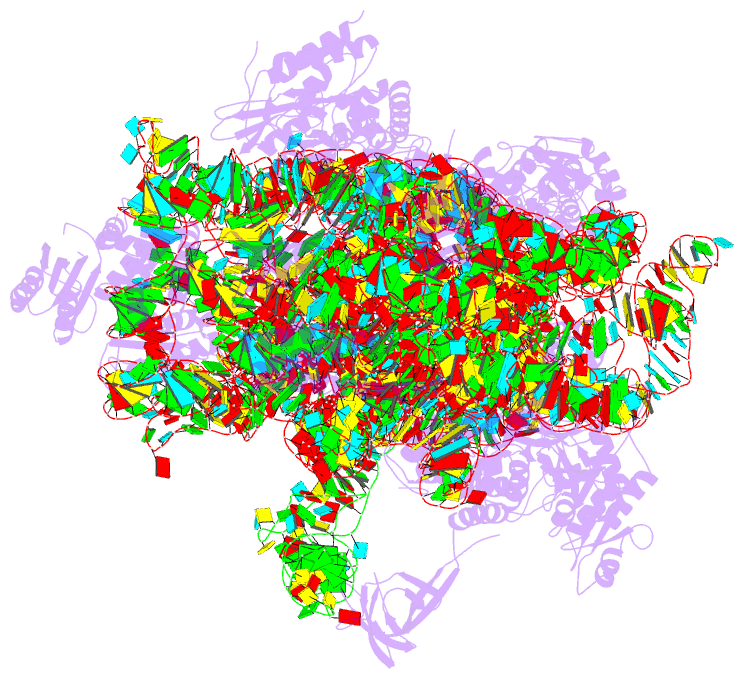
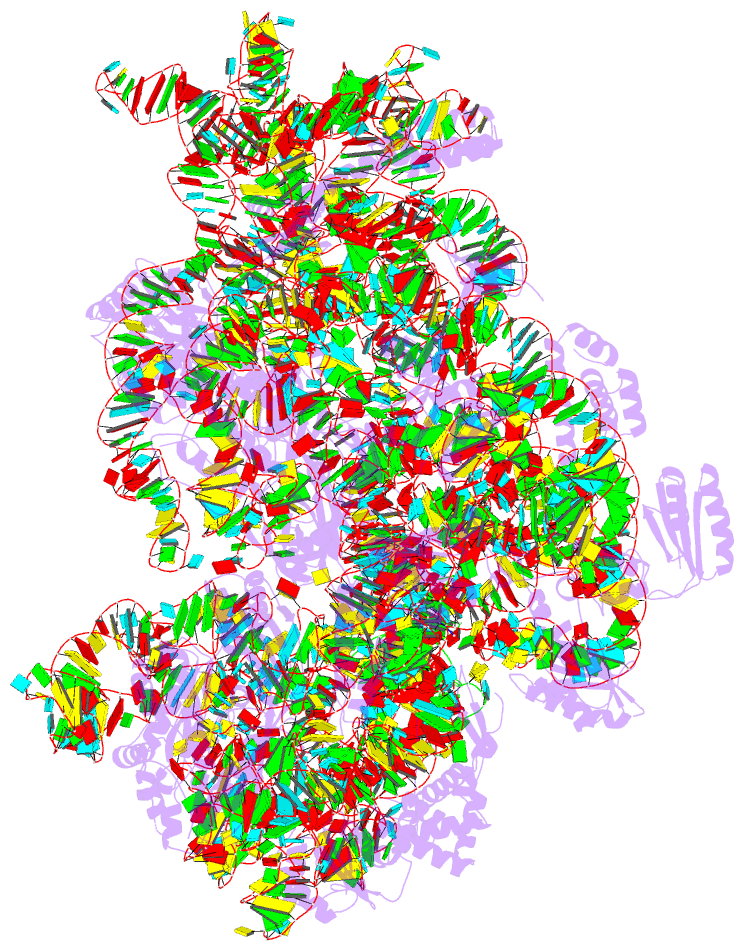
- 30s initiation complex
- Reference
-
Kaledhonkar S, Fu Z, Caban K, Li W, Chen B, Sun M,
Gonzalez Jr RL, Frank J (2019): "Late steps
in bacterial translation initiation visualized using
time-resolved cryo-EM." Nature,
570, 400-404. doi: 10.1038/s41586-019-1249-5.
- Abstract
- The initiation of bacterial translation involves the
tightly regulated joining of the 50S ribosomal subunit to
an initiator transfer RNA
(fMet-tRNA<sub>fMet</sub>)-containing 30S
ribosomal initiation complex to form a 70S initiation
complex, which subsequently matures into a 70S
elongation-competent complex. Rapid and accurate formation
of the 70S initiation complex is promoted by initiation
factors, which must dissociate from the 30S initiation
complex before the resulting 70S elongation-competent
complex can begin the elongation of
translation<sub>1</sub>. Although comparisons
of the structures of the 30S<sub>2-5</sub> and
70S<sub>4,6-8</sub> initiation complexes have
revealed that the ribosome, initiation factors and
fMet-tRNA<sub>fMet</sub> can acquire different
conformations in these complexes, the timing of
conformational changes during formation of the 70S
initiation complex, the structures of any intermediates
formed during these rearrangements, and the contributions
that these dynamics might make to the mechanism and
regulation of initiation remain unknown. Moreover, the
absence of a structure of the 70S elongation-competent
complex formed via an initiation-factor-catalysed reaction
has precluded an understanding of the rearrangements to the
ribosome, initiation factors and
fMet-tRNA<sub>fMet</sub> that occur during
maturation of a 70S initiation complex into a 70S
elongation-competent complex. Here, using time-resolved
cryogenic electron microscopy<sub>9</sub>, we
report the near-atomic-resolution view of how a
time-ordered series of conformational changes drive and
regulate subunit joining, initiation factor dissociation
and fMet-tRNA<sub>fMet</sub> positioning during
formation of the 70S elongation-competent complex. Our
results demonstrate the power of time-resolved cryogenic
electron microscopy to determine how a time-ordered series
of conformational changes contribute to the mechanism and
regulation of one of the most fundamental processes in
biology.