Summary information and primary citation
- PDB-id
-
6m7o;
DSSR-derived features in text and
JSON formats
- Class
- transferase-DNA
- Method
- X-ray (3.0 Å)
- Summary
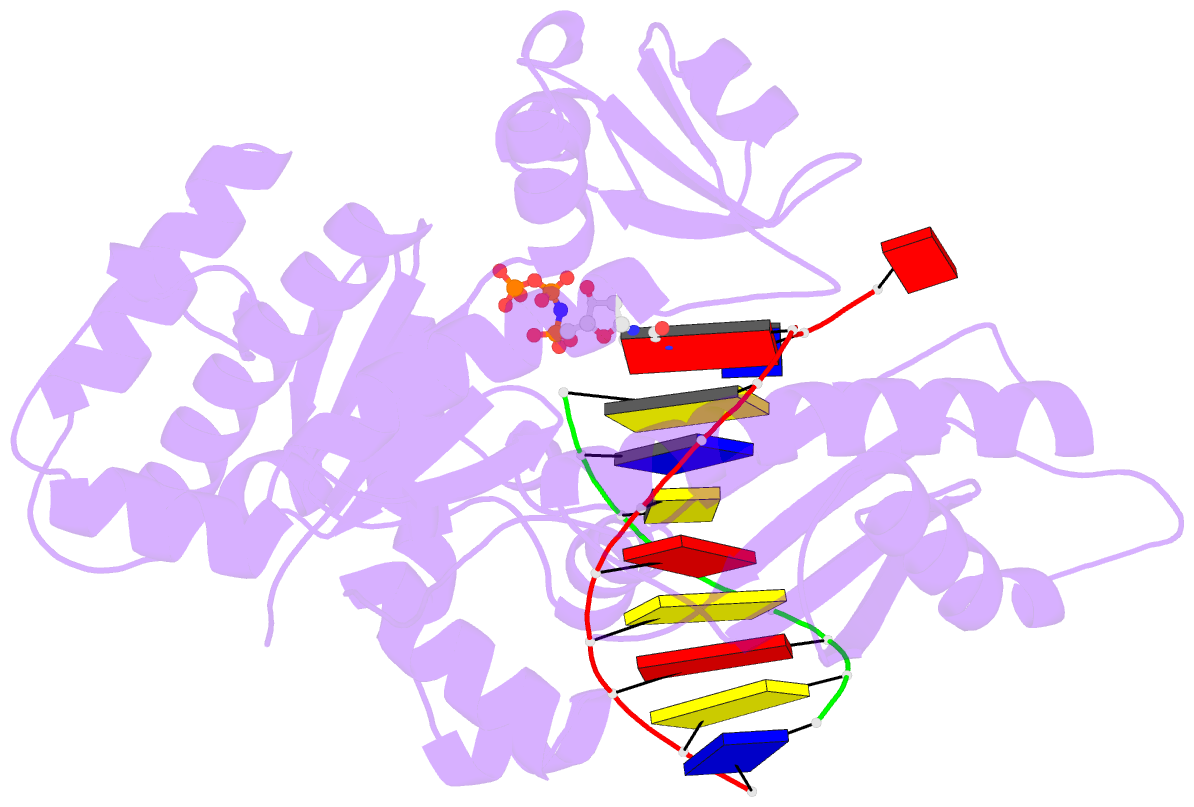
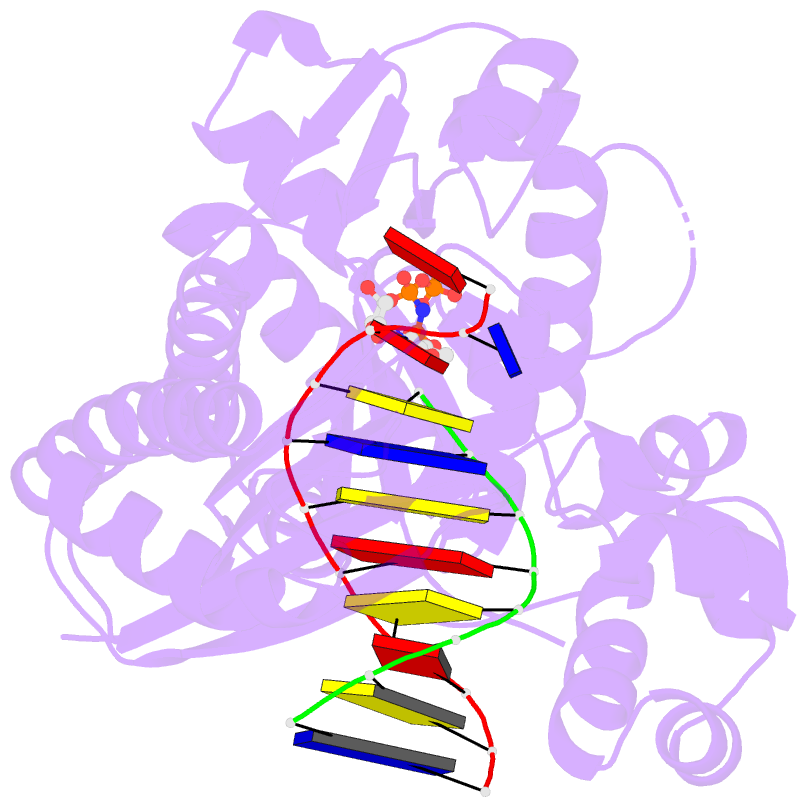
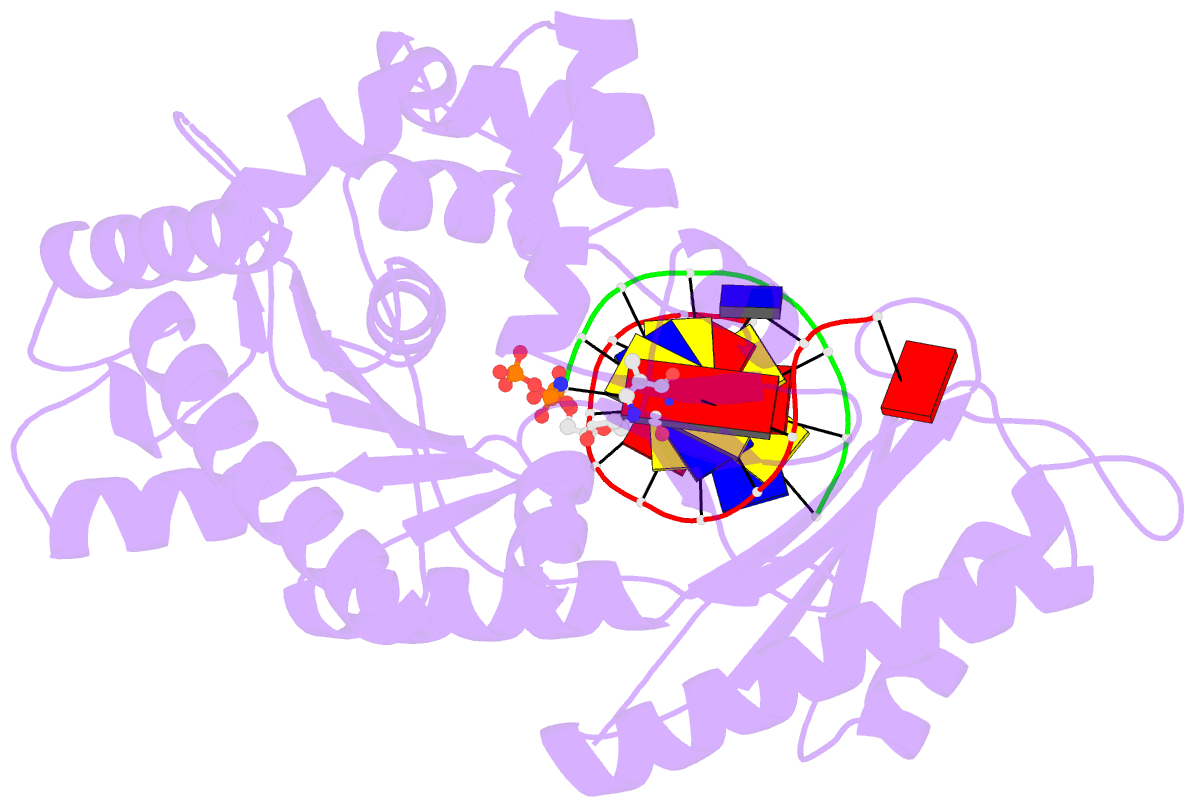
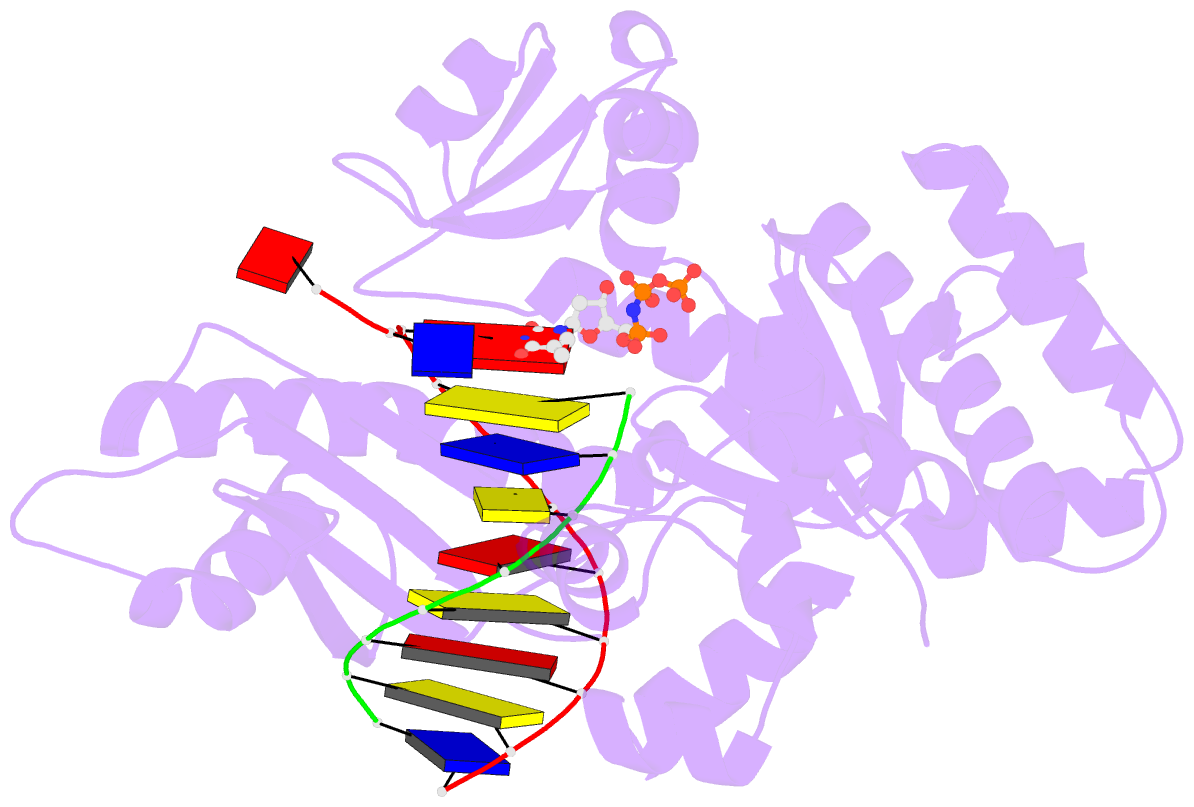
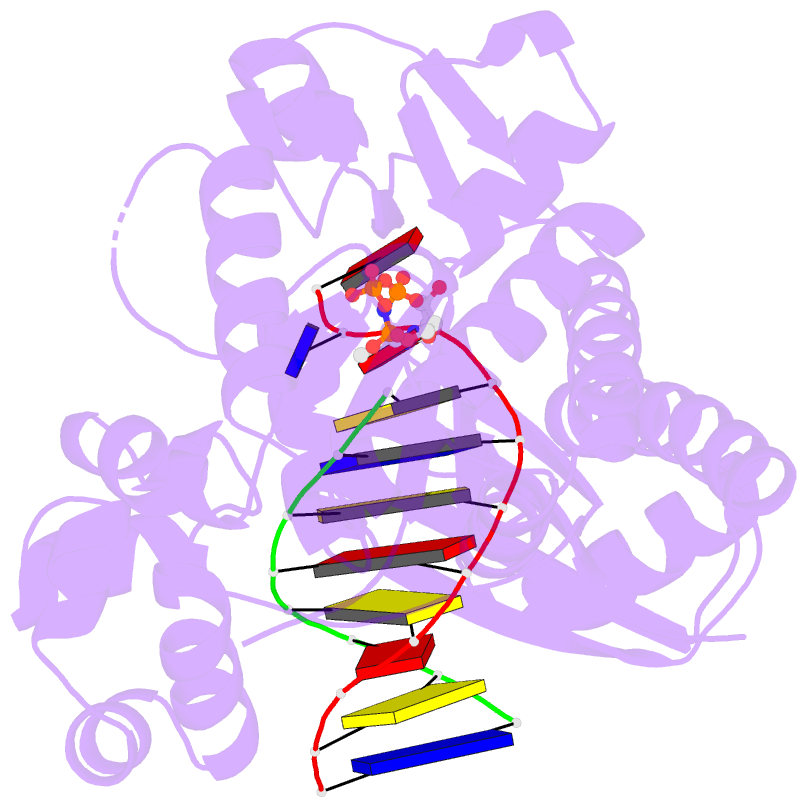
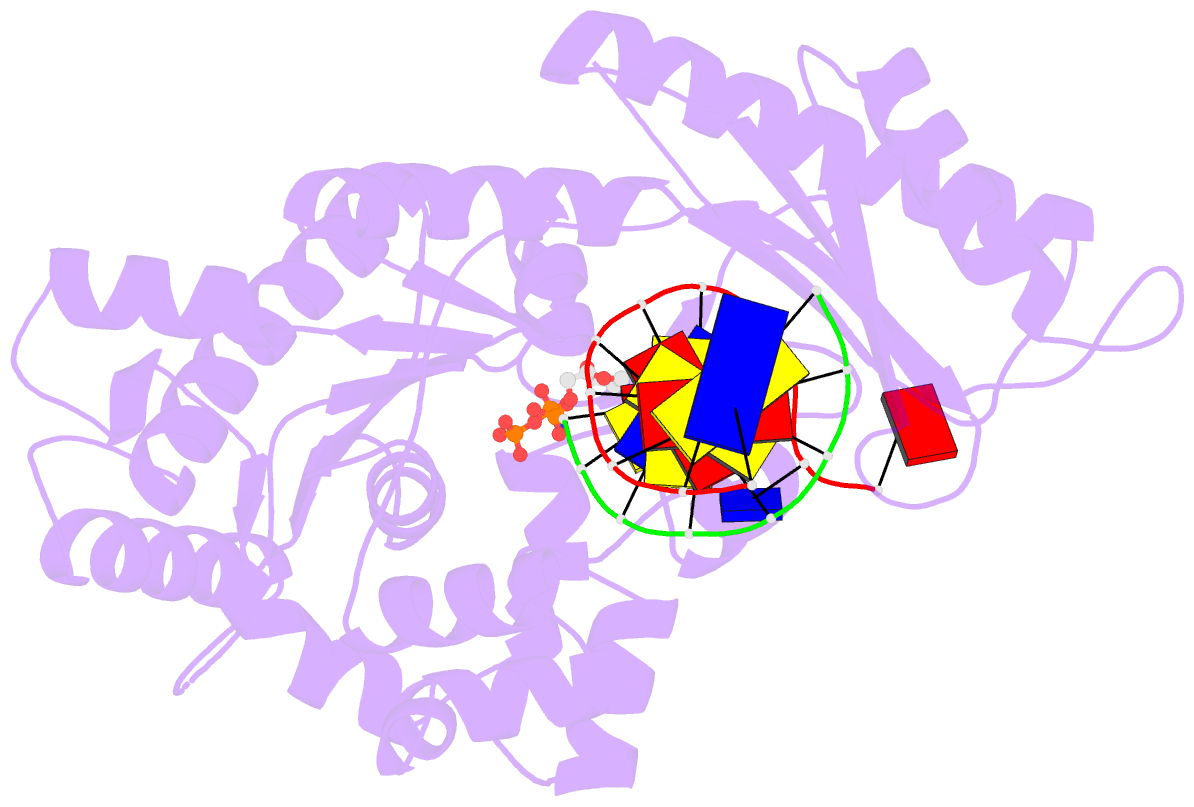
- Human DNA polymerase eta ternary complex with mn2+ and
dtmpnpp oppositing cda
- Reference
-
Weng PJ, Gao Y, Gregory MT, Wang P, Wang Y, Yang W
(2018): "Bypassing
a 8,5'-cyclo-2'-deoxyadenosine lesion by human DNA
polymerase eta at atomic resolution." Proc. Natl.
Acad. Sci. U.S.A., 115,
10660-10665. doi: 10.1073/pnas.1812856115.
- Abstract
- Oxidatively induced DNA lesions
8,5'-cyclopurine-2'-deoxynucleosides (cdPus) are prevalent
and cytotoxic by impeding DNA replication and
transcription. Both the 5'<i>R</i>- and
5'<i>S</i>-diastereomers of cdPu can be removed
by nucleotide excision repair; however, the
5'<i>S</i>-cdPu is more resistant to repair
than the 5'<i>R</i> counterpart. Here, we
report the crystal structures of human polymerase (Pol) η
bypassing
5'<i>S</i>-8,5'-cyclo-2'-deoxyadenosine (cdA)
in insertion and the following two extension steps. The
cdA-containing DNA structures vary in response to the
protein environment. Supported by the "molecular splint" of
Pol η, the structure of 5'<i>S</i>-cdA at
1.75-Å resolution reveals that the backbone is pinched
toward the minor groove and the adenine base is tilted. In
the templating position, the cdA takes up the extra space
usually reserved for the thymine dimer, and dTTP is
efficiently incorporated by Pol η in the presence of
Mn<sub>2+</sub> Rigid distortions of the DNA
duplex by cdA, however, prevent normal base pairing and
hinder immediate primer extension by Pol η. Our results
provide structural insights into the strong replication
blockage effect and the mutagenic property of the cdPu
lesions in cells.