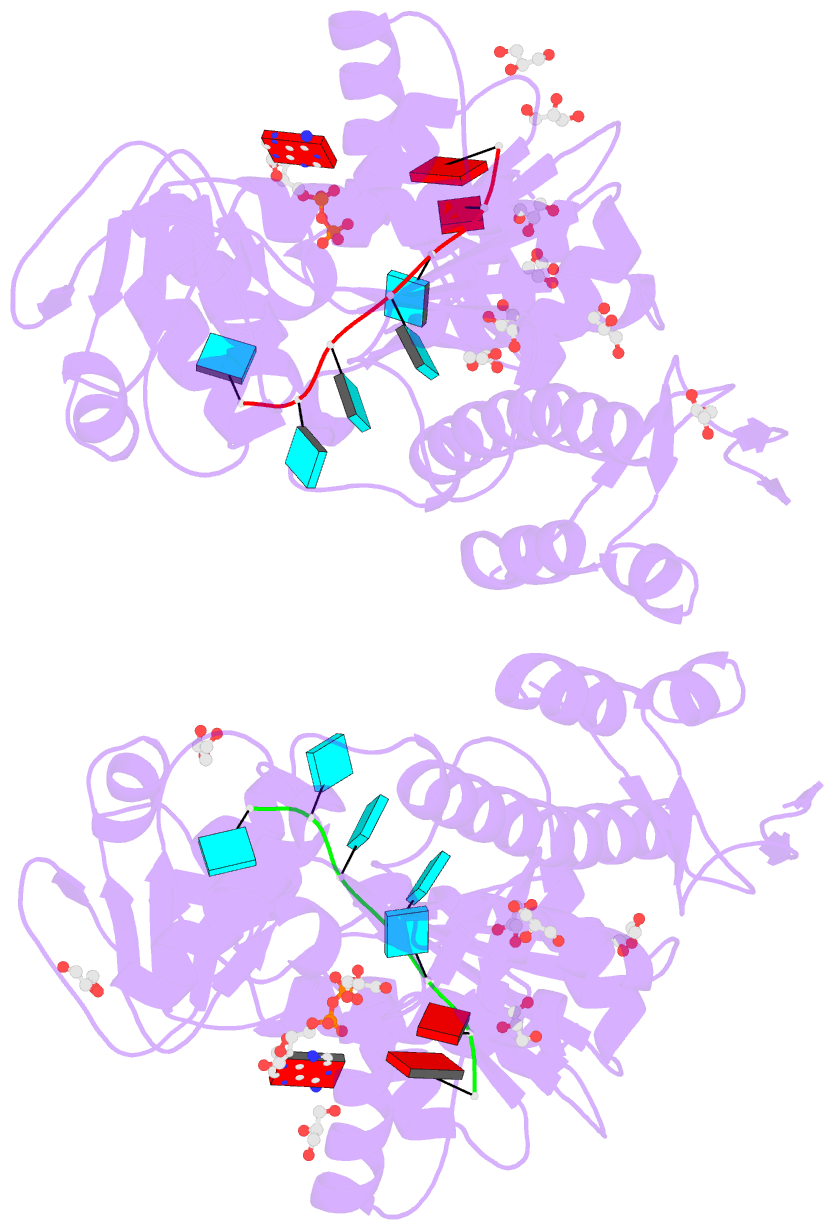
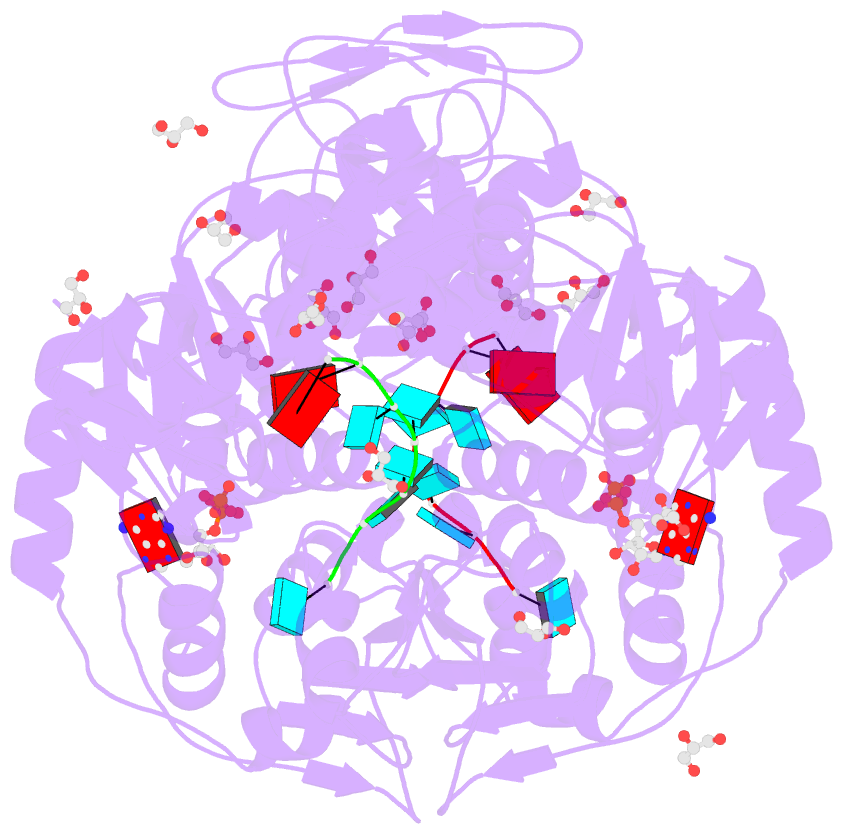
Summary information and primary citation
- PDB-id
-
6jim;
DSSR-derived features in text and
JSON formats
- Class
- viral protein-RNA
- Method
- X-ray (2.0 Å)
- Summary
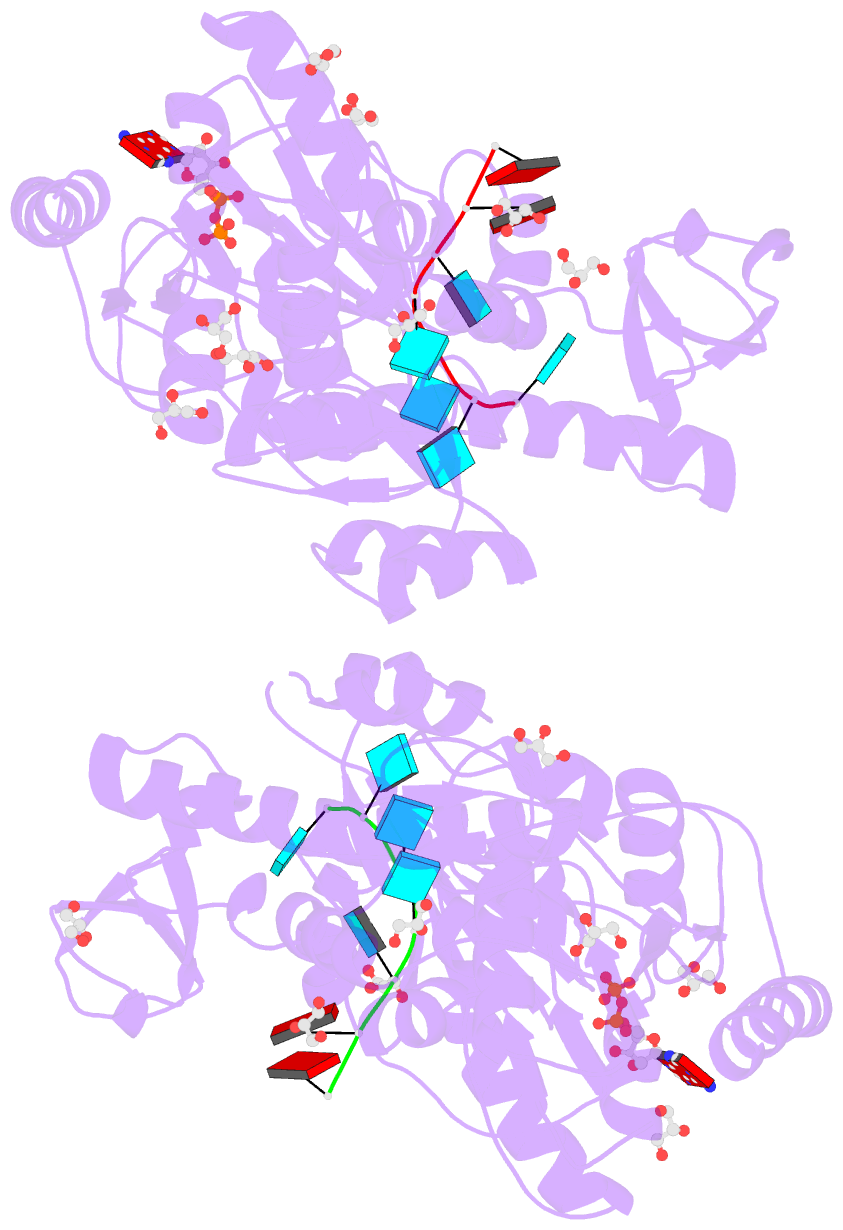
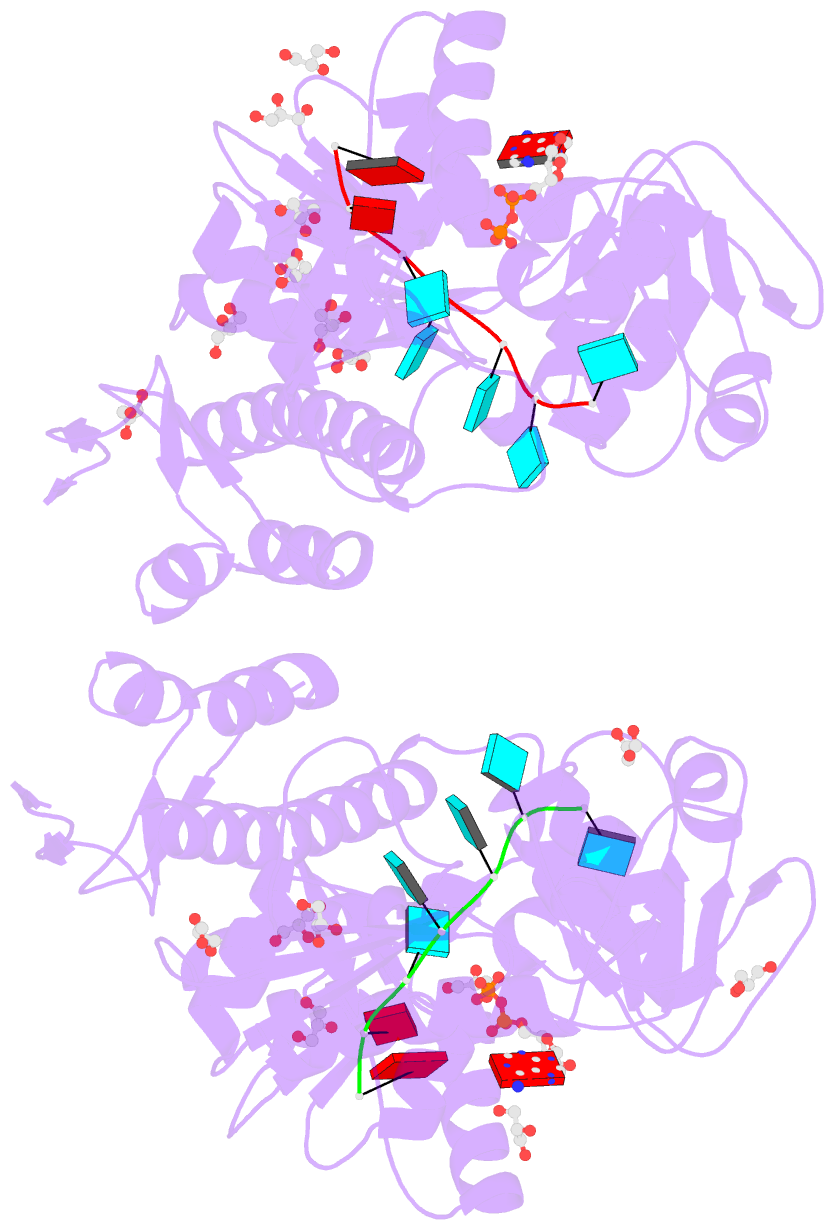
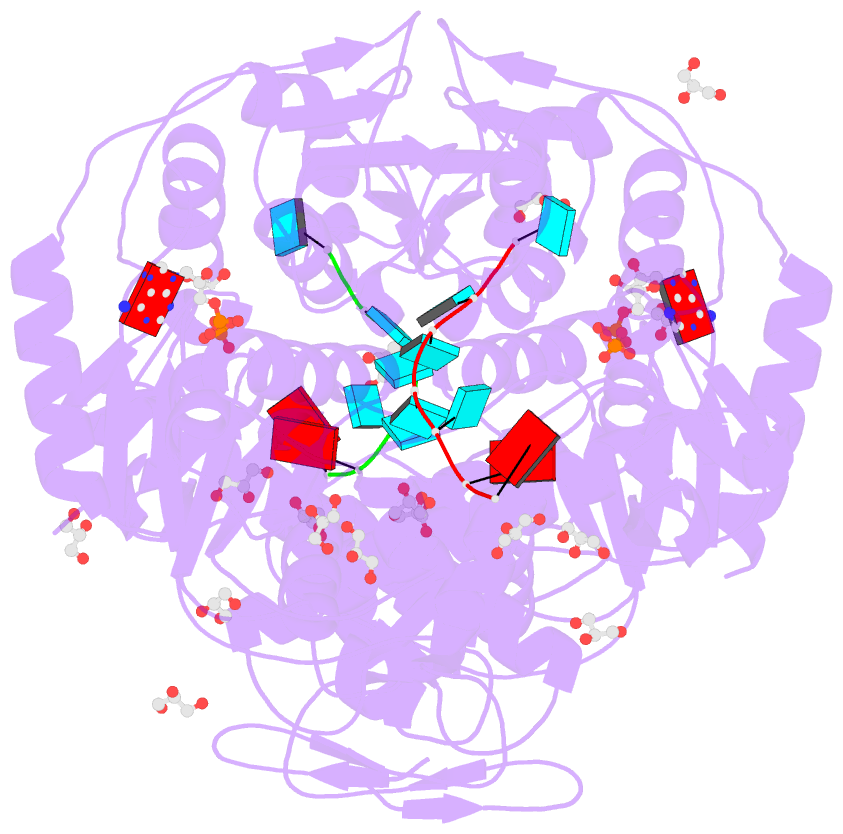
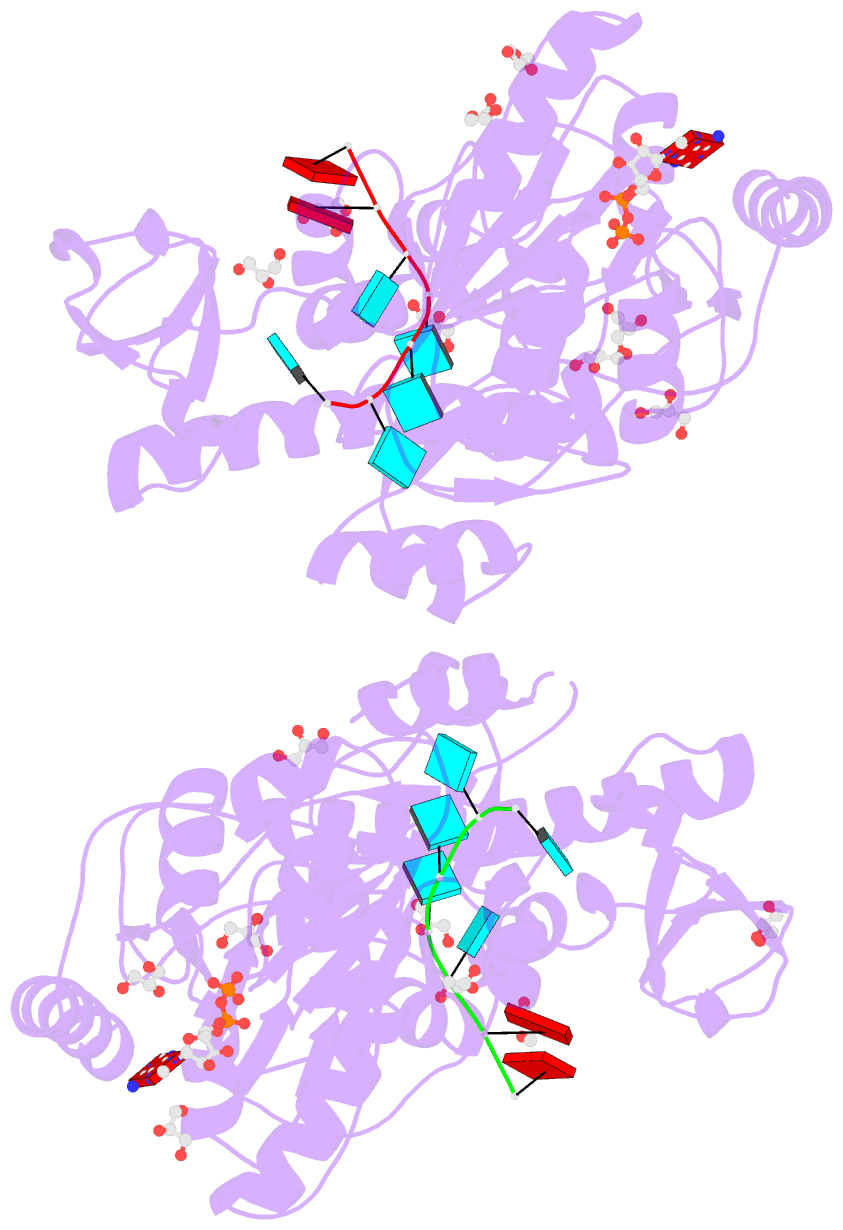
- Viral helicase protein
- Reference
-
Law YS, Utt A, Tan YB, Zheng J, Wang S, Chen MW, Griffin
PR, Merits A, Luo D (2019): "Structural
insights into RNA recognition by the Chikungunya virus
nsP2 helicase." Proc.Natl.Acad.Sci.USA,
116, 9558-9567. doi: 10.1073/pnas.1900656116.
- Abstract
- Chikungunya virus (CHIKV) is transmitted to humans
through mosquitoes and causes Chikungunya fever.
Nonstructural protein 2 (nsP2) exhibits the protease and
RNA helicase activities that are required for viral RNA
replication and transcription. Unlike for the C-terminal
protease, the structure of the N-terminal RNA helicase
(nsP2h) has not been determined. Here, we report the
crystal structure of the nsP2h bound to the conserved
3'-end 14 nucleotides of the CHIKV genome and the
nonhydrolyzable transition-state nucleotide analog
ADP-AlF<sub>4</sub> Overall, the structural
analysis revealed that nsP2h adopts a uniquely folded
N-terminal domain followed by a superfamily 1 RNA helicase
fold. The conserved helicase motifs establish polar
contacts with the RNA backbone. There are three hydrophobic
residues (Y161, F164, and F287) which form stacking
interactions with RNA bases and thereby bend the RNA
backbone. An F287A substitution that disrupted these
stacking interactions increased the basal ATPase activity
but decreased the RNA binding affinity. Furthermore, the
F287A substitution reduced viral infectivity by attenuating
subgenomic RNA synthesis. Replication of the mutant virus
was restored by pseudoreversion (A287V) or adaptive
mutations in the RecA2 helicase domain (T358S or V410I).
Y161A and/or F164A substitutions, which were designed to
disrupt the interactions with the RNA molecule, did not
affect the ATPase activity but completely abolished the
replication and transcription of viral RNA and the
infectivity of CHIKV. Our study sheds light on the roles of
the RNA helicase region in viral replication and provides
insights that might be applicable to alphaviruses and other
RNA viruses in general.