Summary information and primary citation
- PDB-id
-
6j80;
DSSR-derived features in text and
JSON formats
- Class
- hydrolase-DNA
- Method
- X-ray (1.812 Å)
- Summary
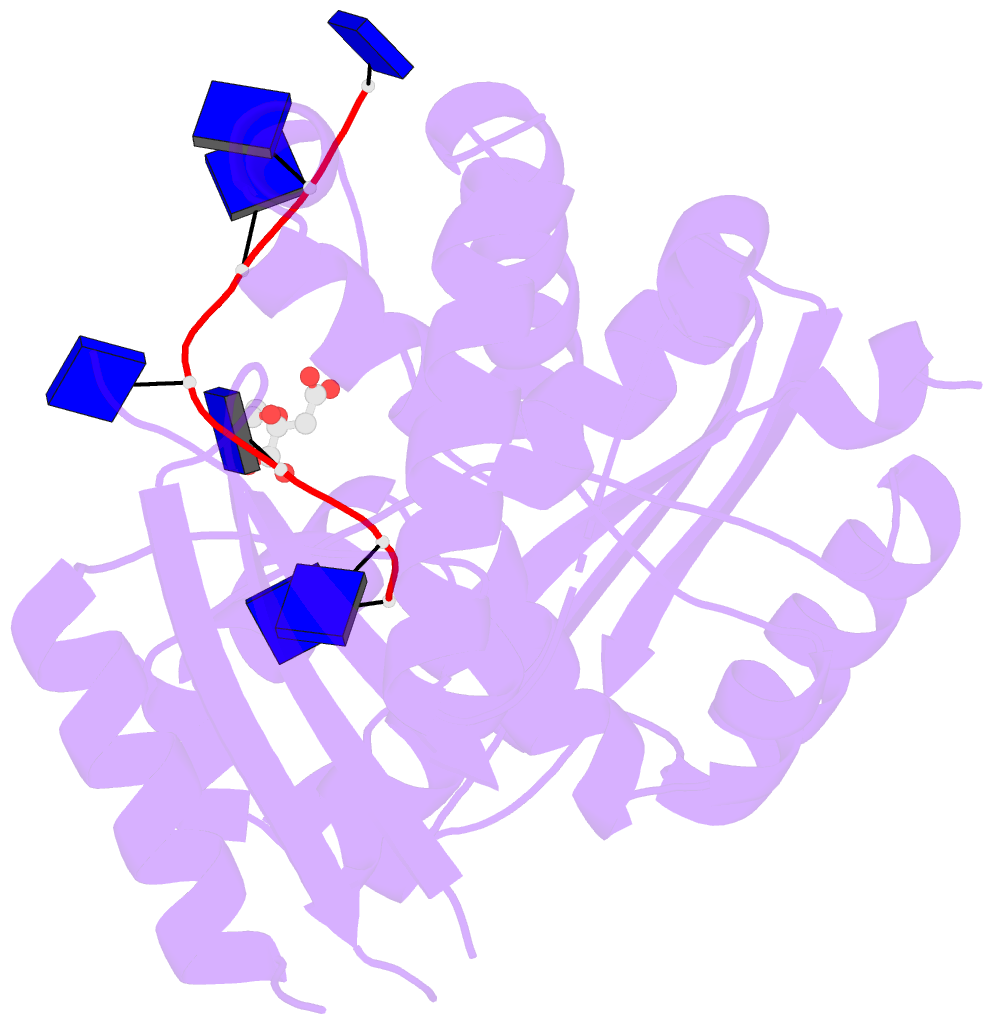
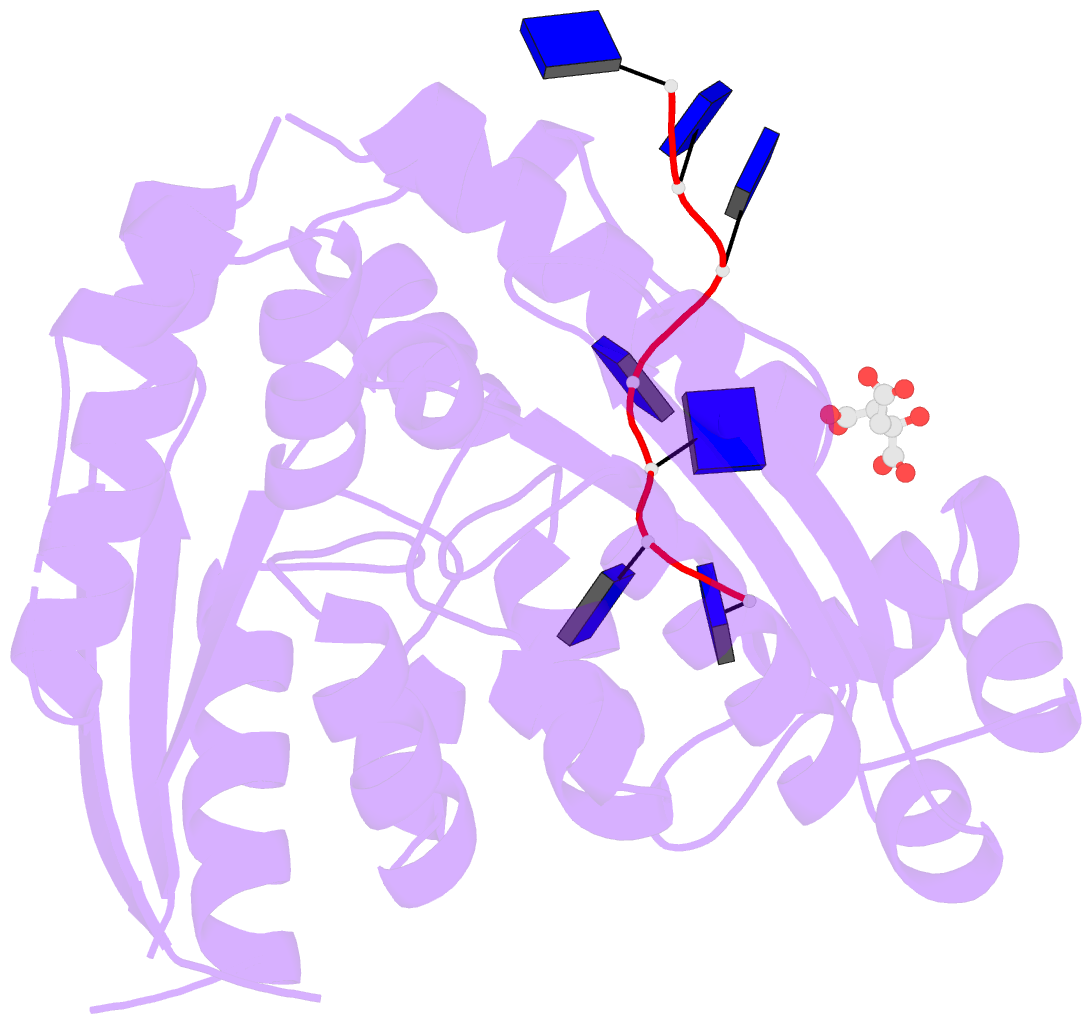
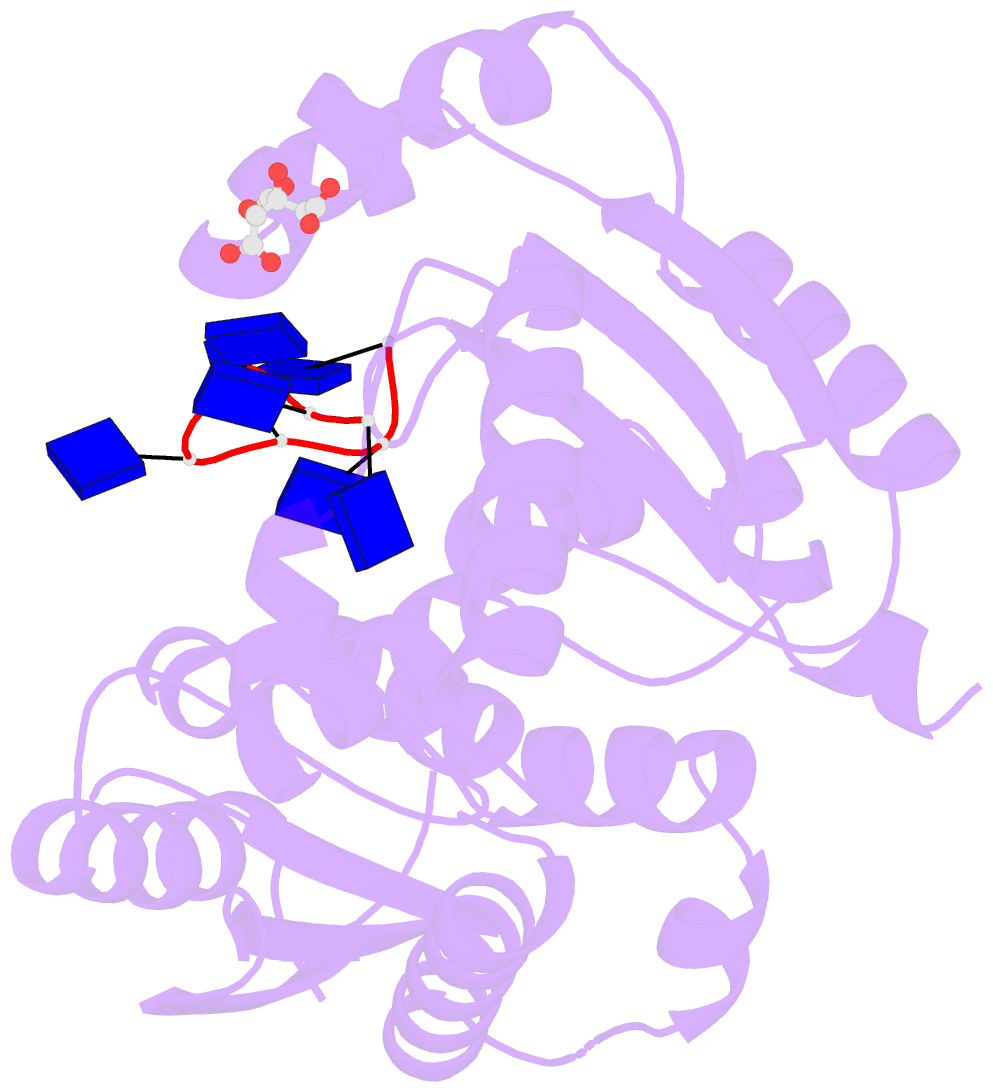
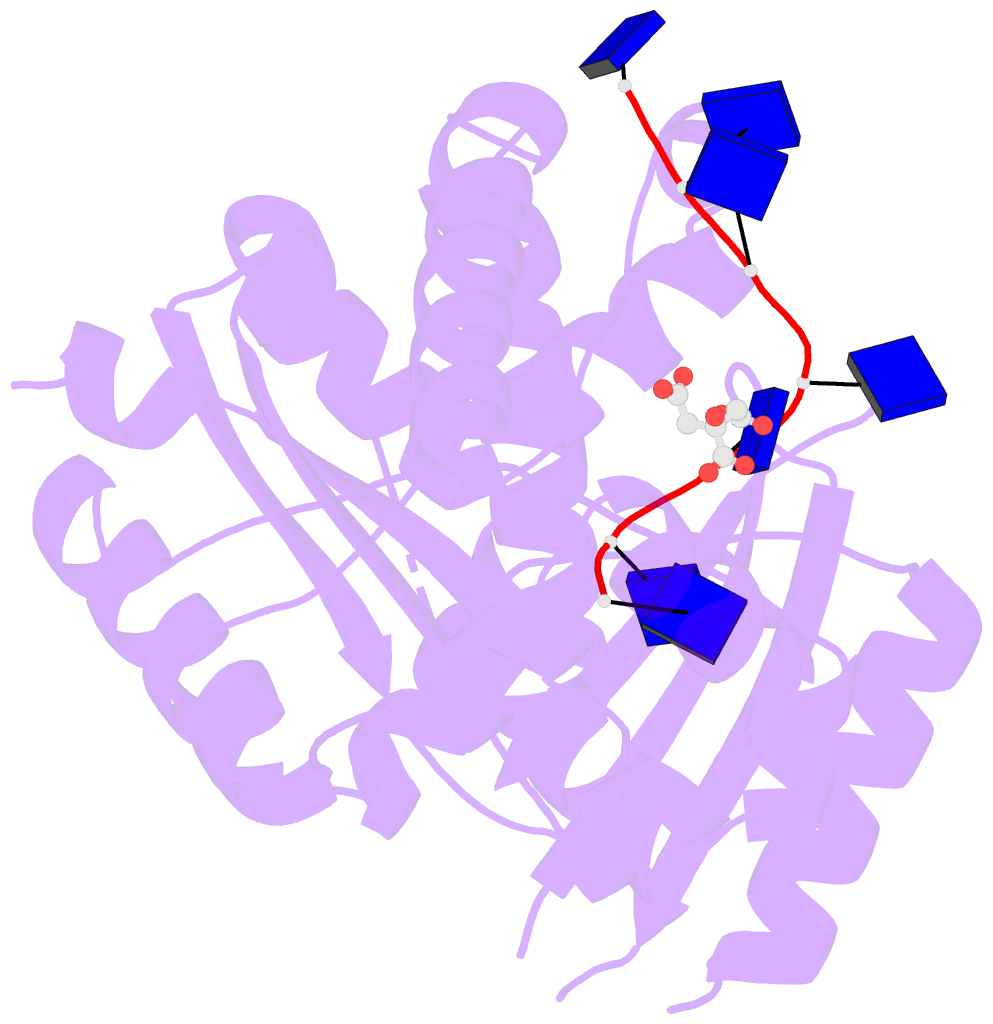
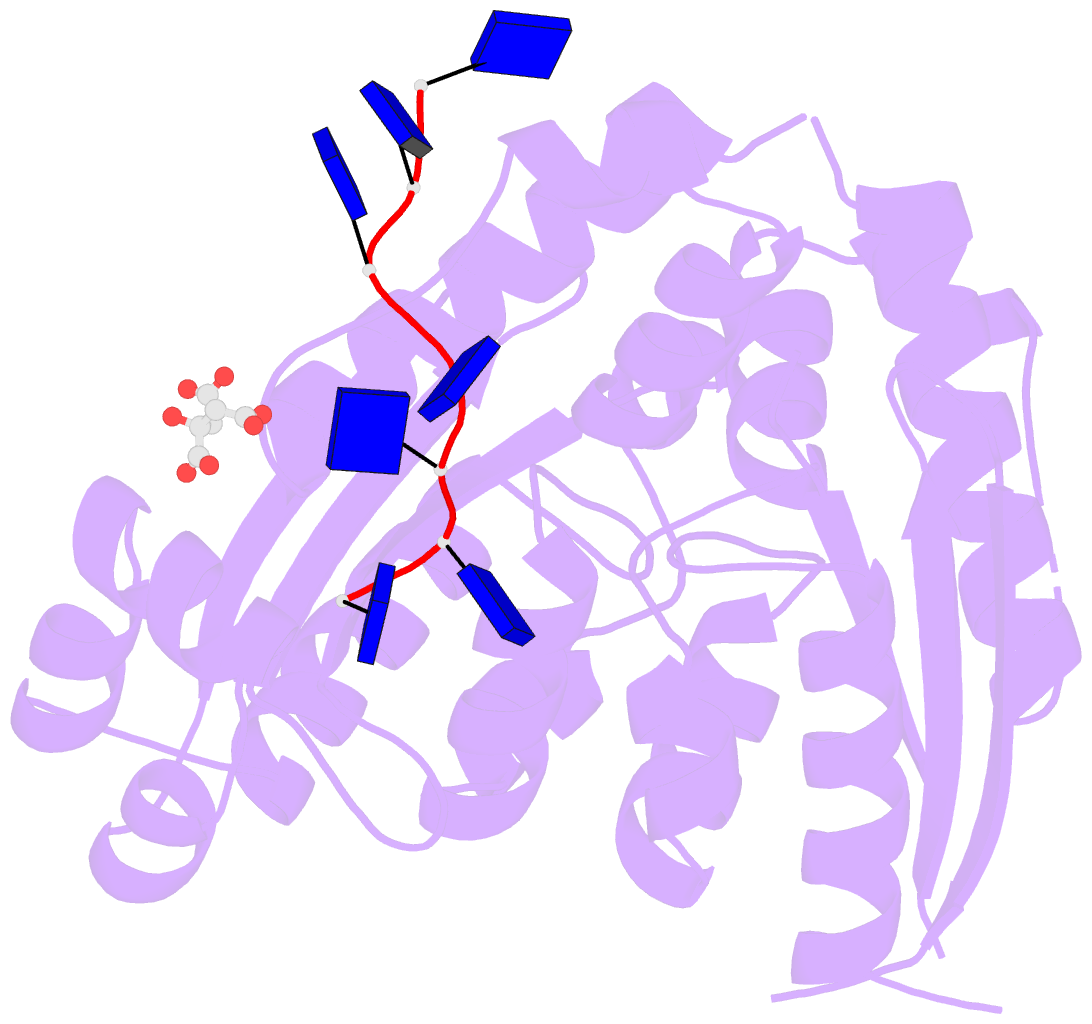
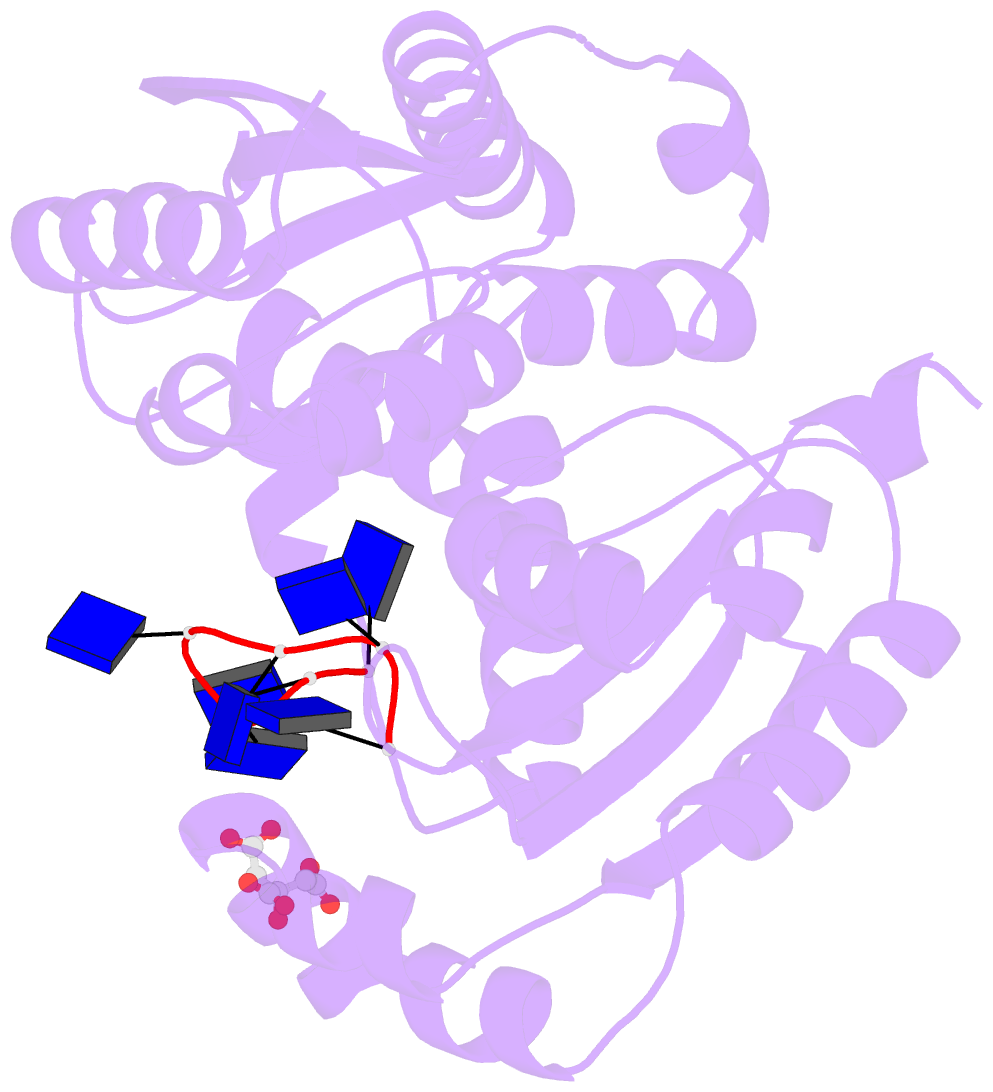
- Human mitochondrial oligoribonuclease in complex with
poly-dt DNA
- Reference
-
Chu LY, Agrawal S, Chen YP, Yang WZ, Yuan HS (2019):
"Structural
insights into nanoRNA degradation by human Rexo2."
Rna, 25, 737-746. doi: 10.1261/rna.070557.119.
- Abstract
- Human RNA exoribonuclease 2 (Rexo2) is an
evolutionarily conserved 3'-to-5' DEDDh-family exonuclease
located primarily in mitochondria. Rexo2 degrades small RNA
oligonucleotides of <5 nucleotides (nanoRNA) in a way
similar to <i>Escherichia coli</i>
Oligoribonuclease (ORN), suggesting that it plays a role in
RNA turnover in mitochondria. However, how Rexo2
preferentially binds and degrades nanoRNA remains elusive.
Here, we show that Rexo2 binds small RNA and DNA
oligonucleotides with the highest affinity, and it is most
robust in degrading small nanoRNA into mononucleotides in
the presence of magnesium ions. We further determined three
crystal structures of Rexo2 in complex with single-stranded
RNA or DNA at resolutions of 1.8-2.2 Å. Rexo2 forms a
homodimer and interacts mainly with the last two 3'-end
nucleobases of substrates by hydrophobic and π-π stacking
interactions via Leu53, Trp96, and Tyr164, signifying its
preference in binding and degrading short oligonucleotides
without sequence specificity. Crystal structure of Rexo2 is
highly similar to that of the RNA-degrading enzyme ORN,
revealing a two-magnesium-ion-dependent hydrolysis
mechanism. This study thus provides the molecular basis for
human Rexo2, showing how it binds and degrades nanoRNA into
nucleoside monophosphates and plays a crucial role in RNA
salvage pathways in mammalian mitochondria.