Summary information and primary citation
- PDB-id
-
6b0b;
DSSR-derived features in text and
JSON formats
- Class
- hydrolase-RNA
- Method
- X-ray (3.28 Å)
- Summary
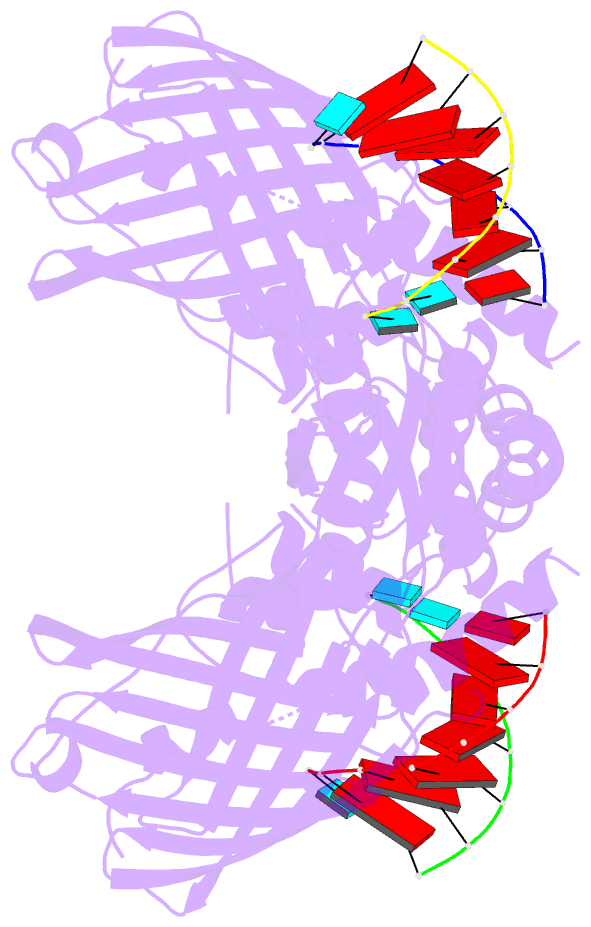
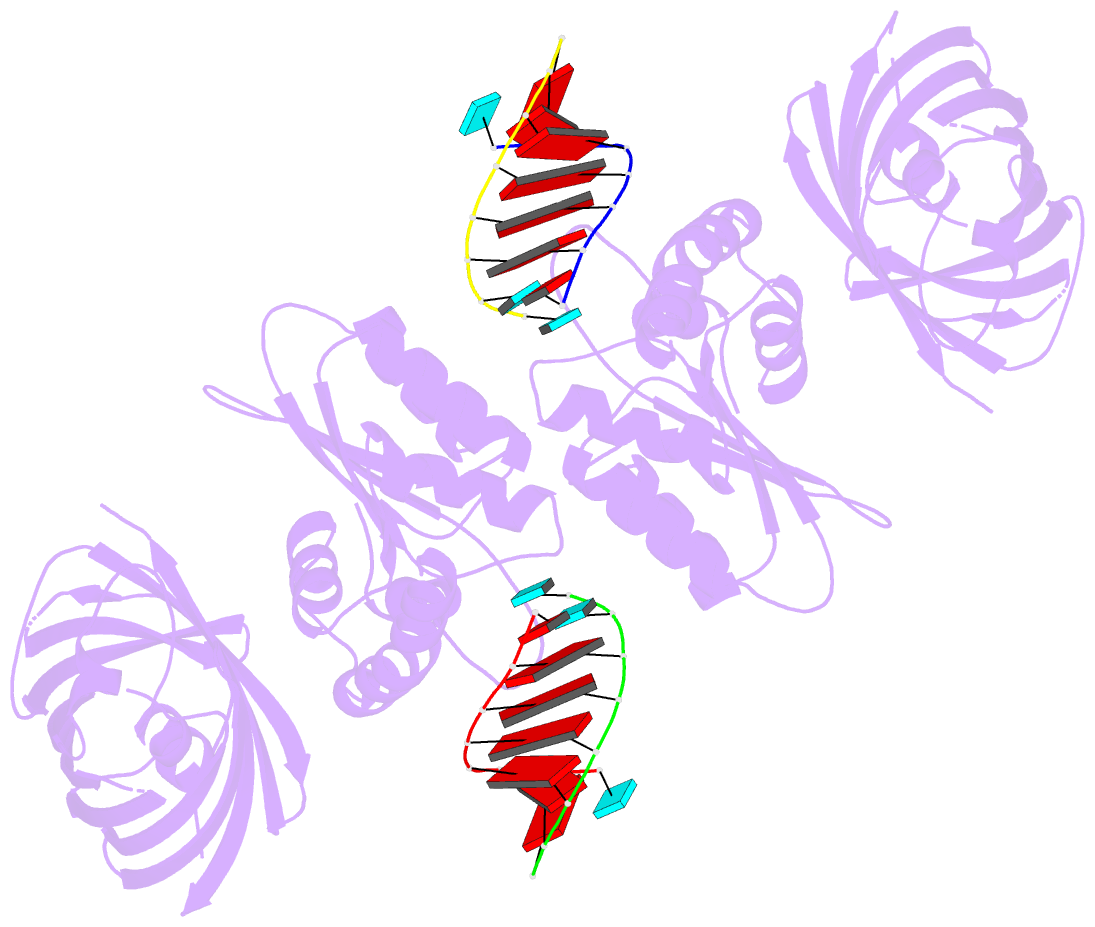
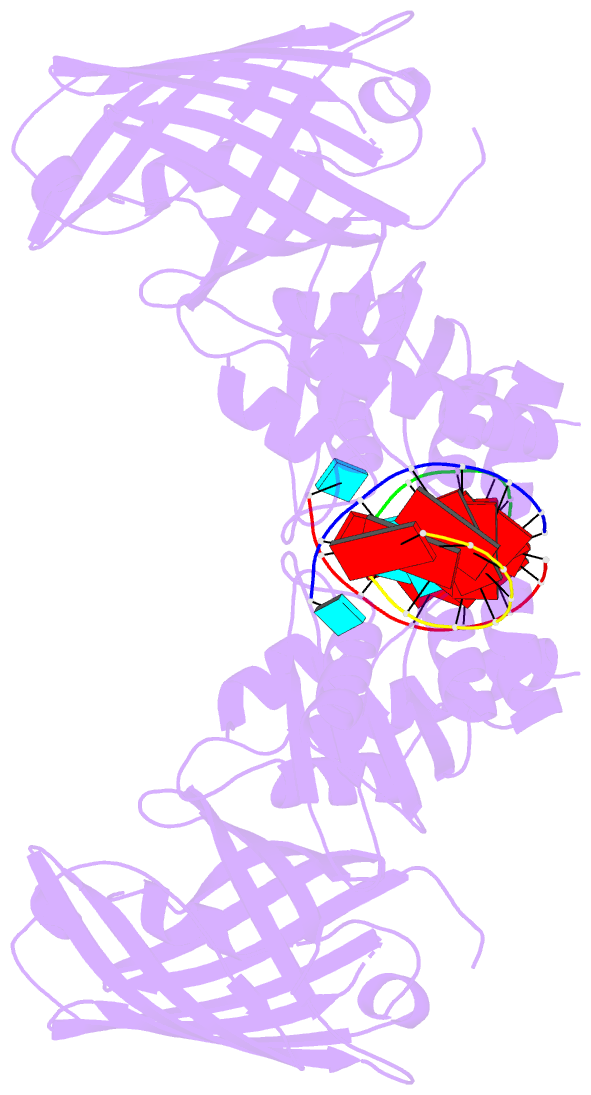
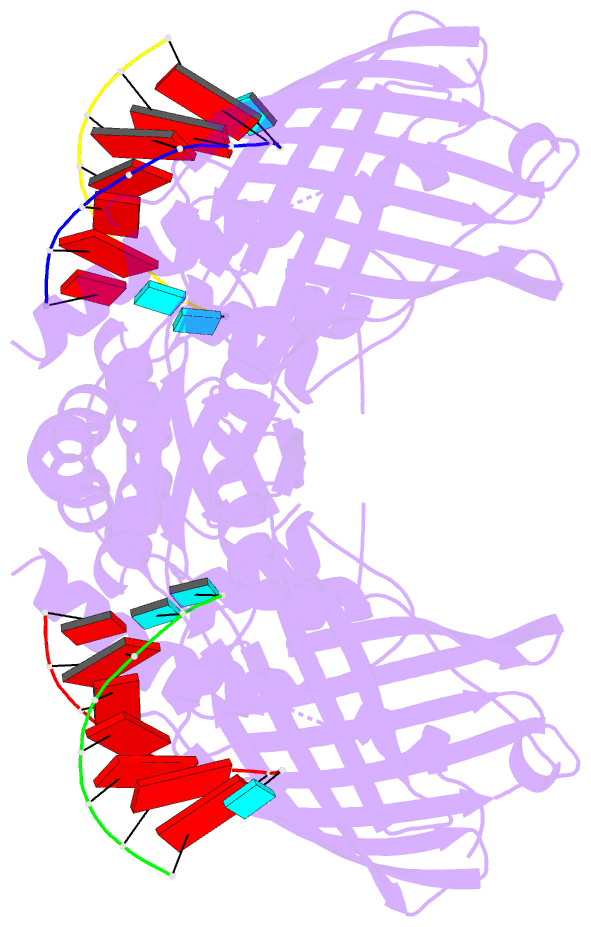
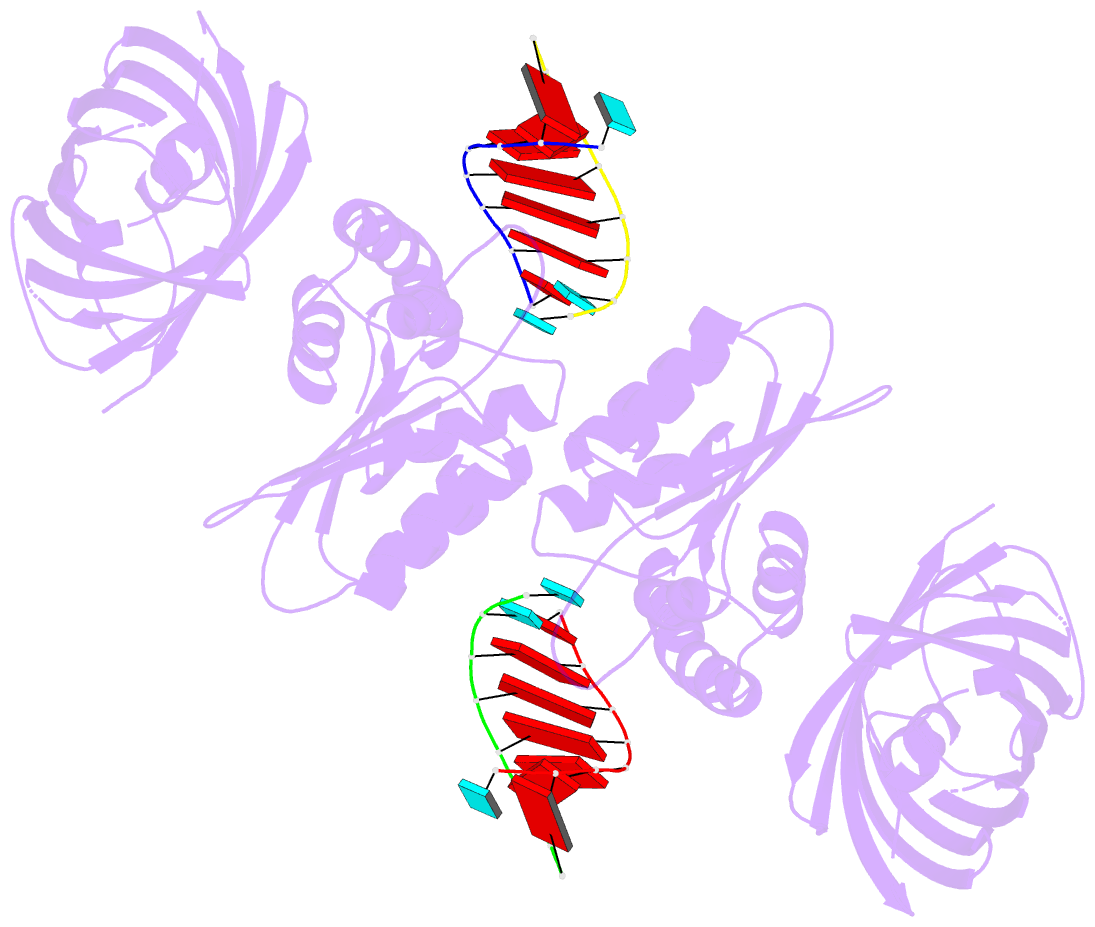
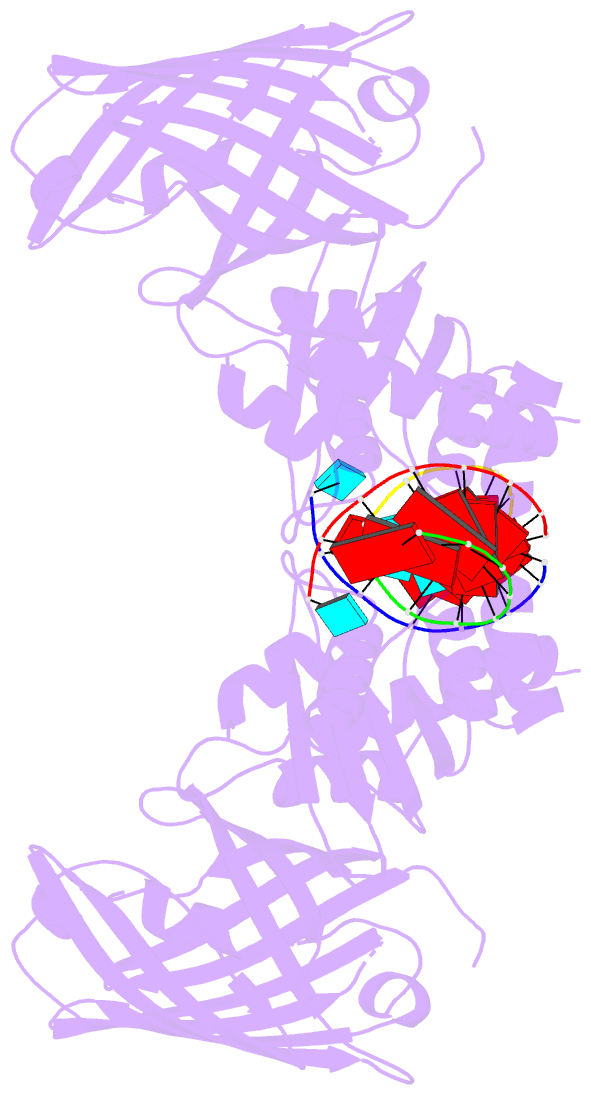
- Crystal structure of human apobec3h
- Reference
-
Shaban NM, Shi K, Lauer KV, Carpenter MA, Richards CM,
Salamango D, Wang J, Lopresti MW, Banerjee S, Levin-Klein
R, Brown WL, Aihara H, Harris RS (2018): "The
Antiviral and Cancer Genomic DNA Deaminase APOBEC3H Is
Regulated by an RNA-Mediated Dimerization Mechanism."
Mol. Cell, 69, 75-86.e9. doi:
10.1016/j.molcel.2017.12.010.
- Abstract
- Human APOBEC3H and homologous single-stranded DNA
cytosine deaminases are unique to mammals. These
DNA-editing enzymes function in innate immunity by
restricting the replication of viruses and transposons.
APOBEC3H also contributes to cancer mutagenesis. Here, we
address the fundamental nature of RNA in regulating human
APOBEC3H activities. APOBEC3H co-purifies with RNA as an
inactive protein, and RNase A treatment enables strong DNA
deaminase activity. RNA-binding-defective mutants
demonstrate clear separation of function by becoming DNA
hypermutators. Biochemical and crystallographic data
demonstrate a mechanism in which double-stranded RNA
mediates enzyme dimerization. Additionally, APOBEC3H
separation-of-function mutants show that RNA binding is
required for cytoplasmic localization, packaging into HIV-1
particles, and antiviral activity. Overall, these results
support a model in which structured RNA negatively
regulates the potentially harmful DNA deamination activity
of APOBEC3H while, at the same time, positively regulating
its antiviral activity.