Summary information and primary citation
- PDB-id
-
5ws2;
DSSR-derived features in text and
JSON formats
- Class
- hydrolase
- Method
- X-ray (2.398 Å)
- Summary
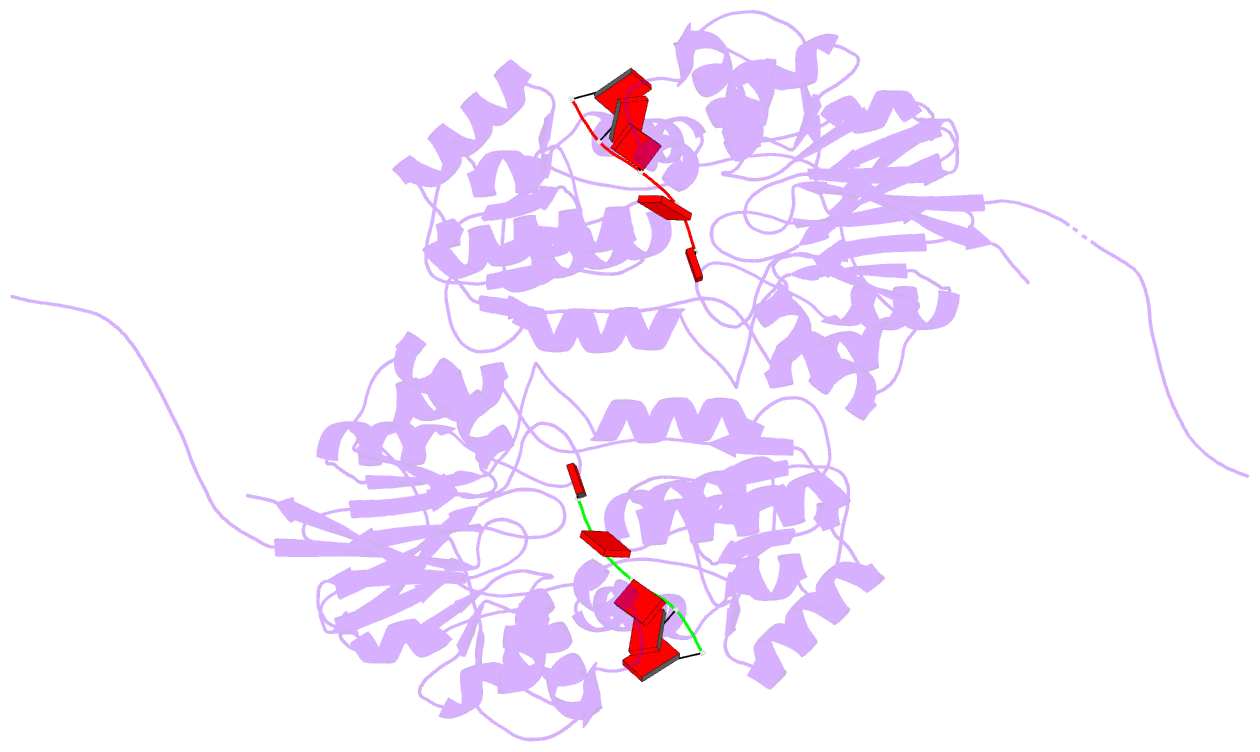
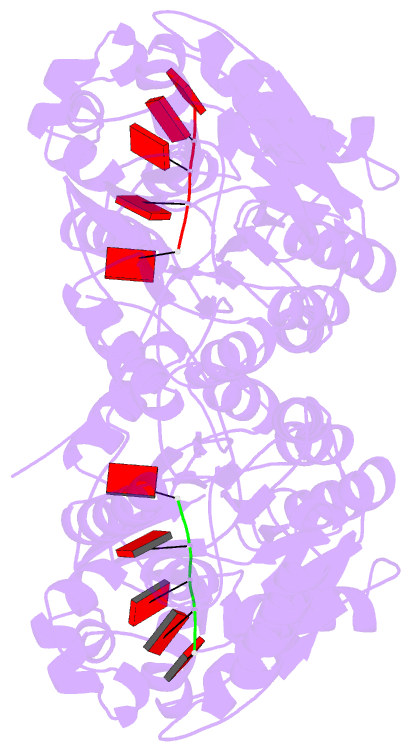
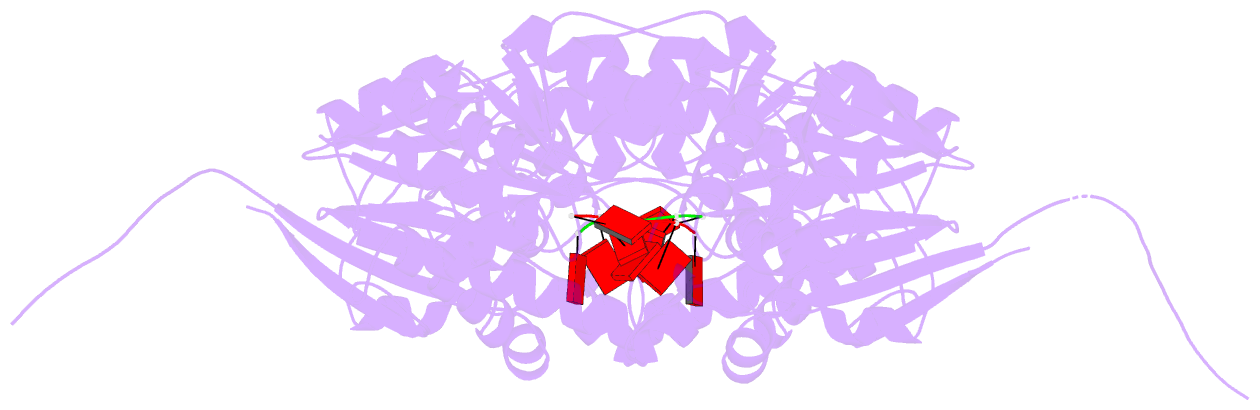
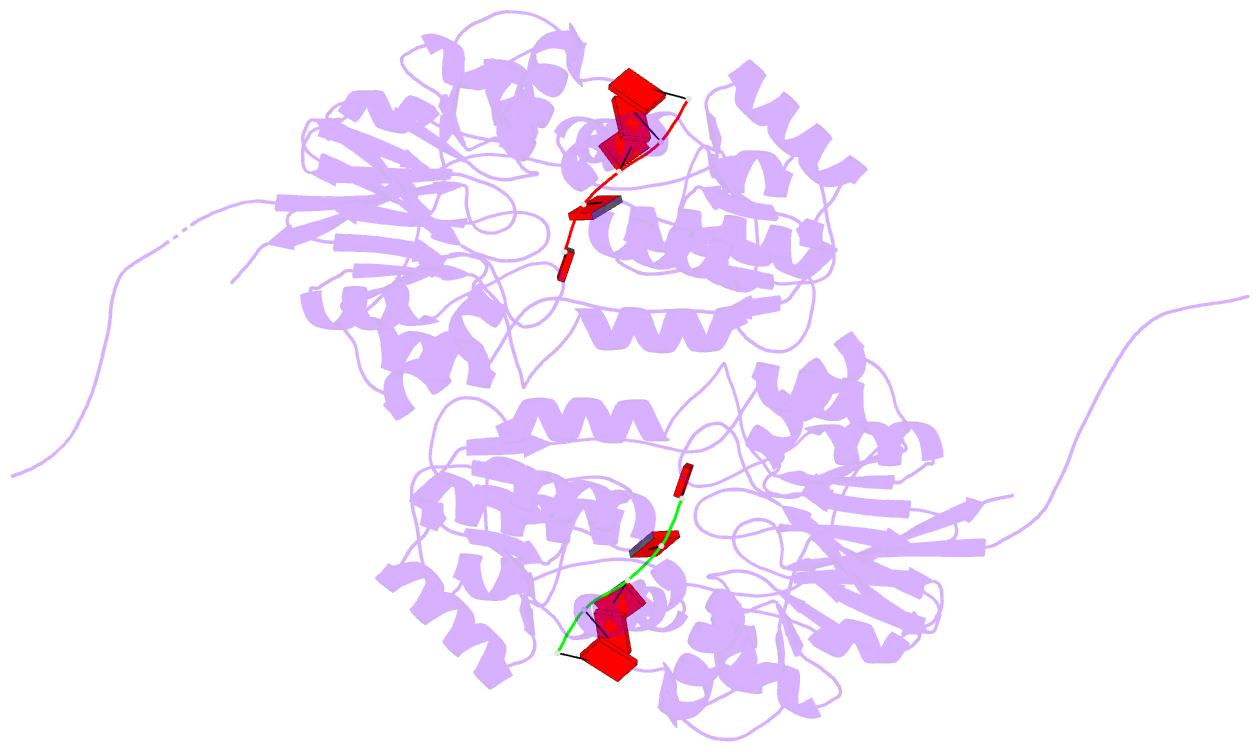
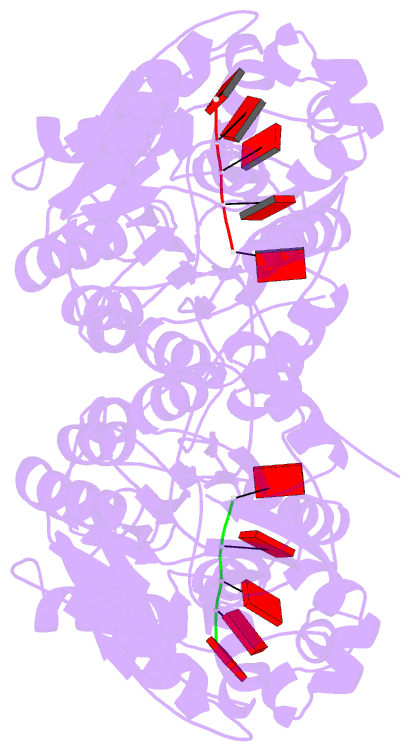
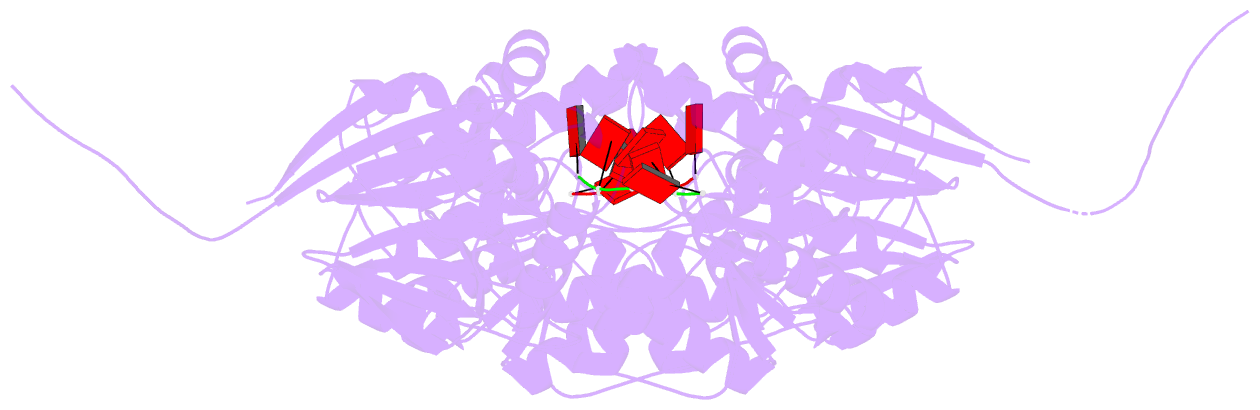
- Crystal structure of mpy-rnase j (mutant s247a), an
archaeal rnase j from methanolobus psychrophilus r15,
complex with RNA
- Reference
-
Zheng X, Feng N, Li D, Dong X, Li J (2017): "New
molecular insights into an archaeal RNase J reveal a
conserved processive exoribonucleolysis mechanism of the
RNase J family." Mol. Microbiol.,
106, 351-366. doi: 10.1111/mmi.13769.
- Abstract
- RNase J, a prokaryotic 5'-3' exo/endoribonuclease,
contributes to mRNA decay, rRNA maturation and
post-transcriptional regulation. Yet the
processive-exoribonucleolysis mechanism remains obscure.
Here, we solved the first RNA-free and RNA-bound structures
of an archaeal RNase J, and through intensive biochemical
studies provided detailed mechanistic insights into the
catalysis and processivity. Distinct
dimerization/tetramerization patterns were observed for
archaeal and bacterial RNase Js, and unique archaeal Loops
I and II were found involved in RNA interaction. A
hydrogen-bond-network was identified for the first time
that assists catalysis by facilitating efficient proton
transfer in the catalytic center. A conserved
5'-monophosphate-binding pocket that coordinates the RNA
5'-end ensures the 5'-monophosphate preferential
exoribonucleolysis. To achieve exoribonucleolytic
processivity, the 5'-monophosphate-binding pocket and
nucleotide +4 binding site anchor RNA within the catalytic
track; the 5'-capping residue Leu37 of the sandwich pocket
coupled with the 5'-monophosphate-binding pocket are
dedicated to translocating and controlling the RNA
orientation for each exoribonucleolytic cycle. The
processive-exoribonucleolysis mechanism was verified as
conserved in bacterial RNase J and also exposes striking
parallels with the non-homologous eukaryotic 5'-3'
exoribonuclease, Xrn1. The findings in this work shed light
on not only the molecular mechanism of the RNase J family,
but also the evolutionary convergence of divergent
exoribonucleases.